

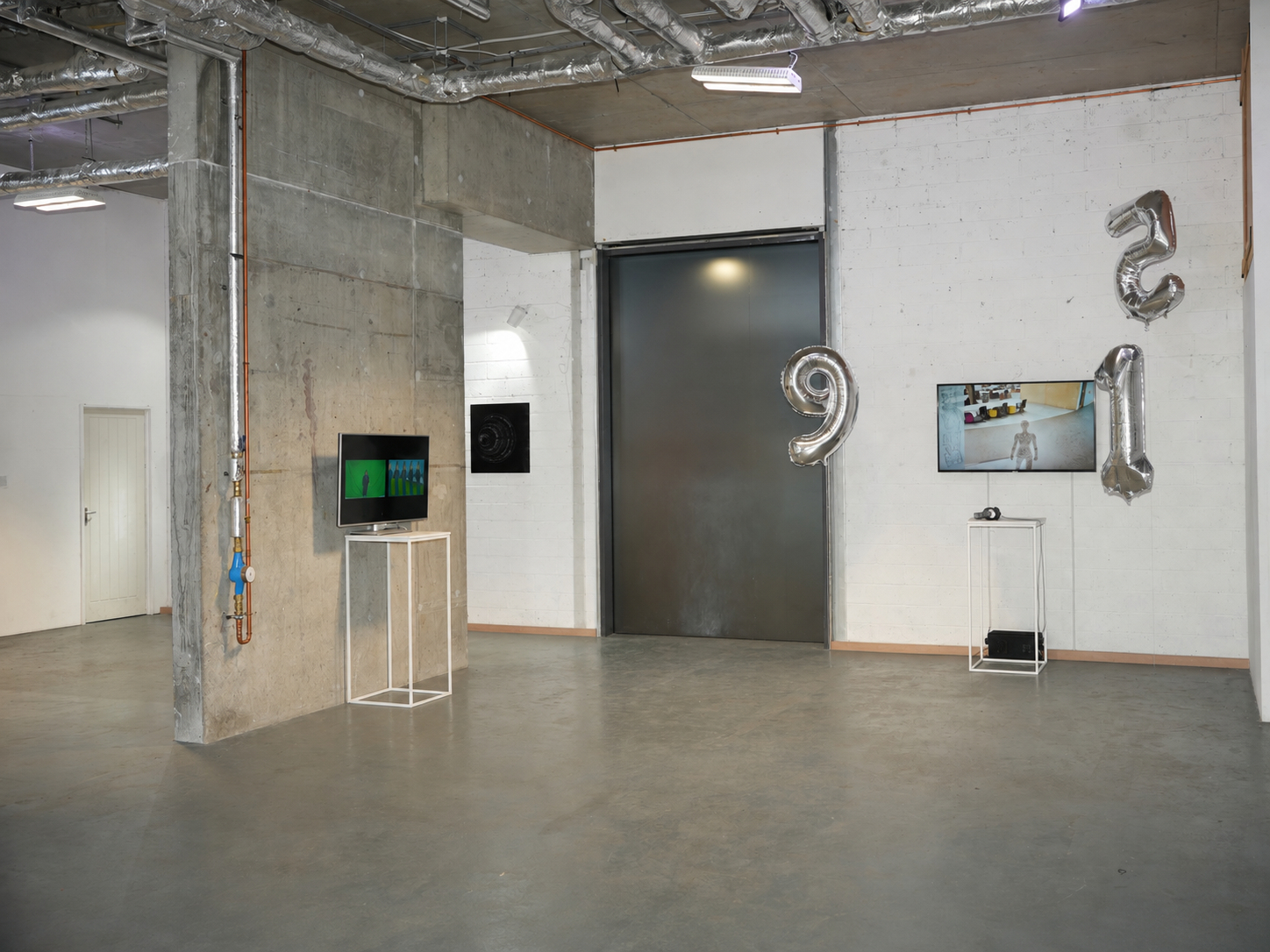
What do scanning, modelling, replication, prediction, memory and planning have in common? Each creates a version of reality through which something can be viewed, entered or used. A building may be encountered through a digital model before it is physically reached. An inaccessible landscape can become legible through remote sensing, while a disappeared place may return through archives, reconstruction or memory.
Yet these versions do more than provide access. Each selects and organises what it represents, and eventually enters the decisions made around it. Reality Overwriting, held at Indra Gallery in London from 31 July to 4 August 2026, brought together thirteen artists and spatial practitioners to examine this movement. Across the exhibition, representations gradually shift from ways of seeing reality towards processes that participate in its formation.
This begins with technologies that make otherwise inaccessible realities visible. Claude Dutson’s The Platform reconstructs Meta’s MPK20 campus from more than 3,500 publicly available photographs and video stills. Dutson has never entered the building, yet OSINT, PAI and Unreal Engine allow these dispersed fragments to become a navigable environment. The work reverses an existing imbalance of visibility, turning information circulating through digital platforms into a means of examining the architecture of the company behind them.
Tiancheng Zhao’s Operational Landscapes extends this question from architecture to territory. Developed through research into Camp Century and nuclear waste governance, its suspended aluminium images combine remote sensing with environmental information. Glacial movement, contamination and long-term risk acquire visual form through technical systems that also participate in monitoring and planning. Here, representation already carries an operational role.
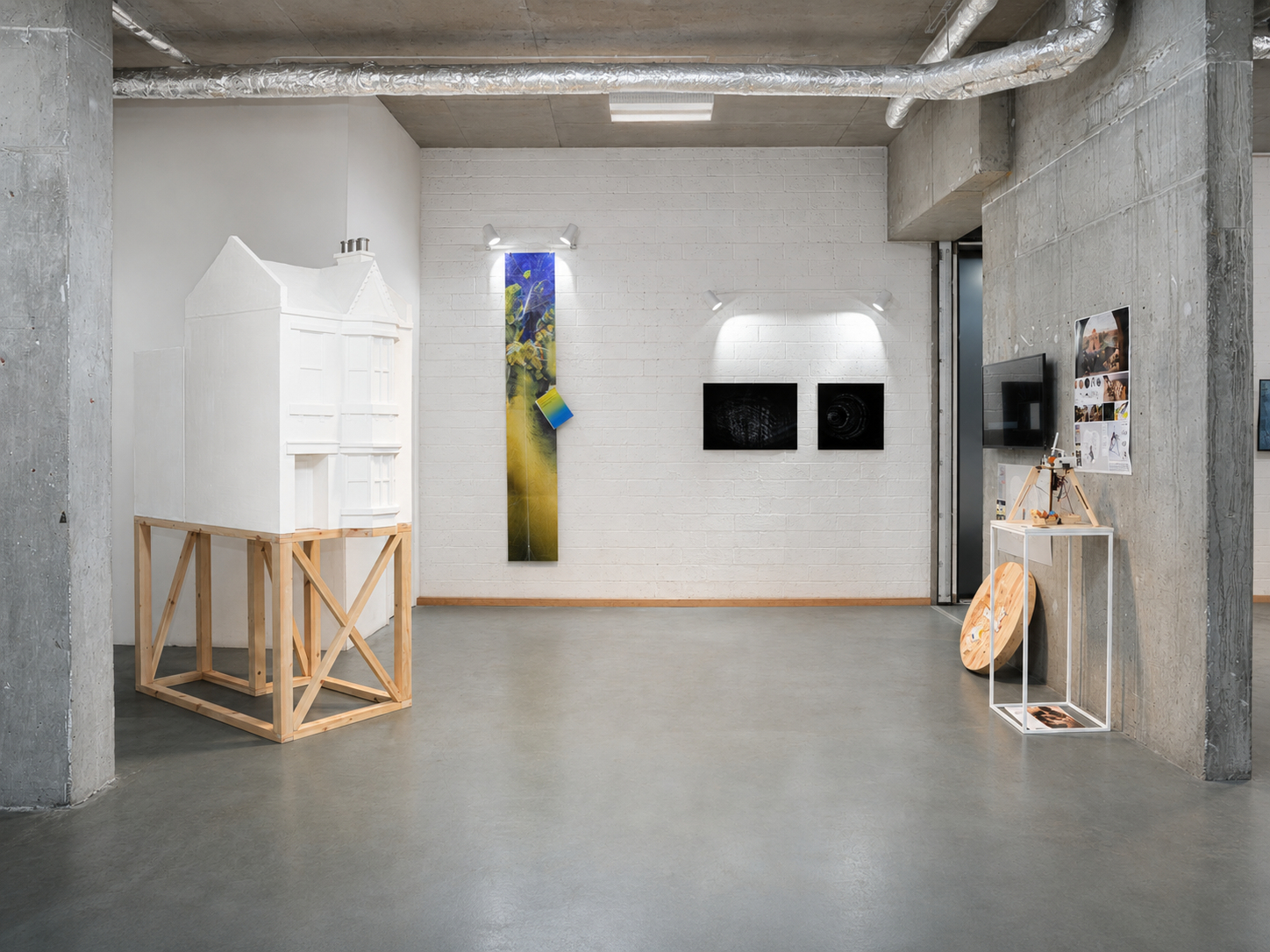
Wimolrat Poolsiri’s Para-orama complicates this confidence in technological vision. Using DJI photography and 3D point-cloud scanning, she retains ruptures and distortions usually treated as errors. Bodies fragment and architectural space loses its apparent continuity. These failures expose the position of the machine itself, revealing that the technologies used to make space legible also construct particular versions of it.
Versions can also bring realities that have slipped from direct experience back into the present. Valeriia Chemerisova’s How to Circle Forward in Time? moves between archival photographs of Berlin’s Tempelhof Airport, AI-generated reconstructions and image-to-model transformations. Historical periods overlap and reorganise one another, allowing the site to remain open to changing interpretations of its past and future.
A similar movement takes spatial form in Lia Penela’s Bishopsgate Low Level: Between the Visible, Invisible and Possible. The London site has remained inaccessible for more than half a century. Penela works from surviving structures, vegetation and lines of sight, translating them through drawing and modelling into a possible public landscape. Reconstruction becomes a way of carrying what remains into what may come next.
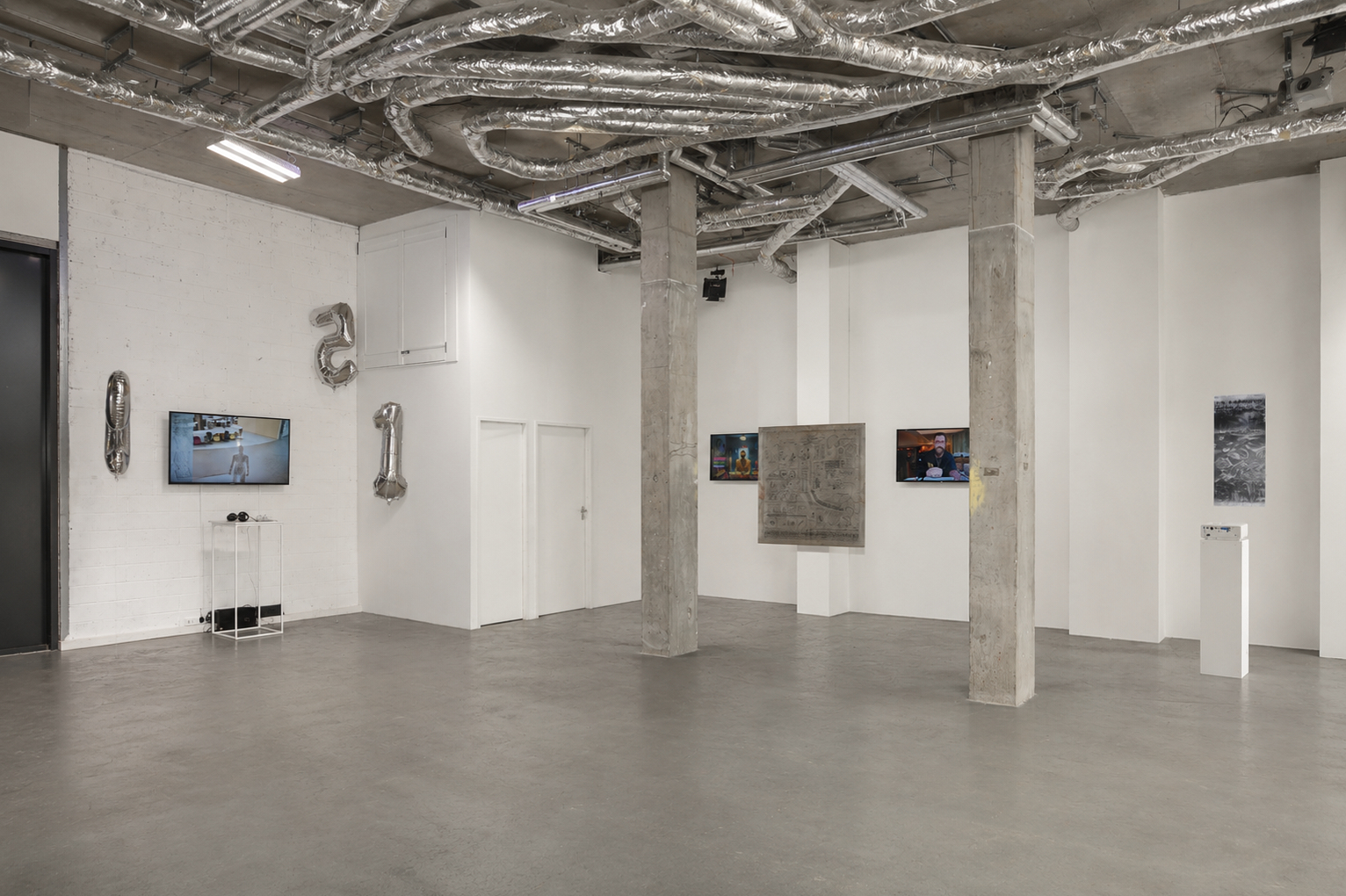
Shirin Naveed’s Black Country to Bhangra brings another history into material presence. Tracing Bhangra from Punjabi harvest traditions through post-war migration to Smethwick, the project connects music with industrial labour and architecture through film, etched steel and South Asian metalwork. Her living counter-archive gives migrant cultural experience a spatial role within the history of British deindustrialisation. Across these works, reconstruction changes the present by determining which histories can regain form and how they can continue to act within a place.
Elsewhere, the exhibition brings this process closer to the object and the body. Madeleina Foley’s The Good is Goodremoves a section of Victorian architecture from its familiar setting and reconstructs it inside the gallery. Once detached from the street, the replica acquires a different scale, function and relationship with the viewer. Copying becomes productive, giving an existing form another spatial reality.
Xuening Wang’s Impossible Reality makes this feedback immediate. Participants observe themselves through a screen with slight latency and gradually adjust their posture according to the delayed image. Each bodily response returns to the screen and influences the next movement. A mediated version of the body therefore becomes one of the conditions producing physical behaviour.
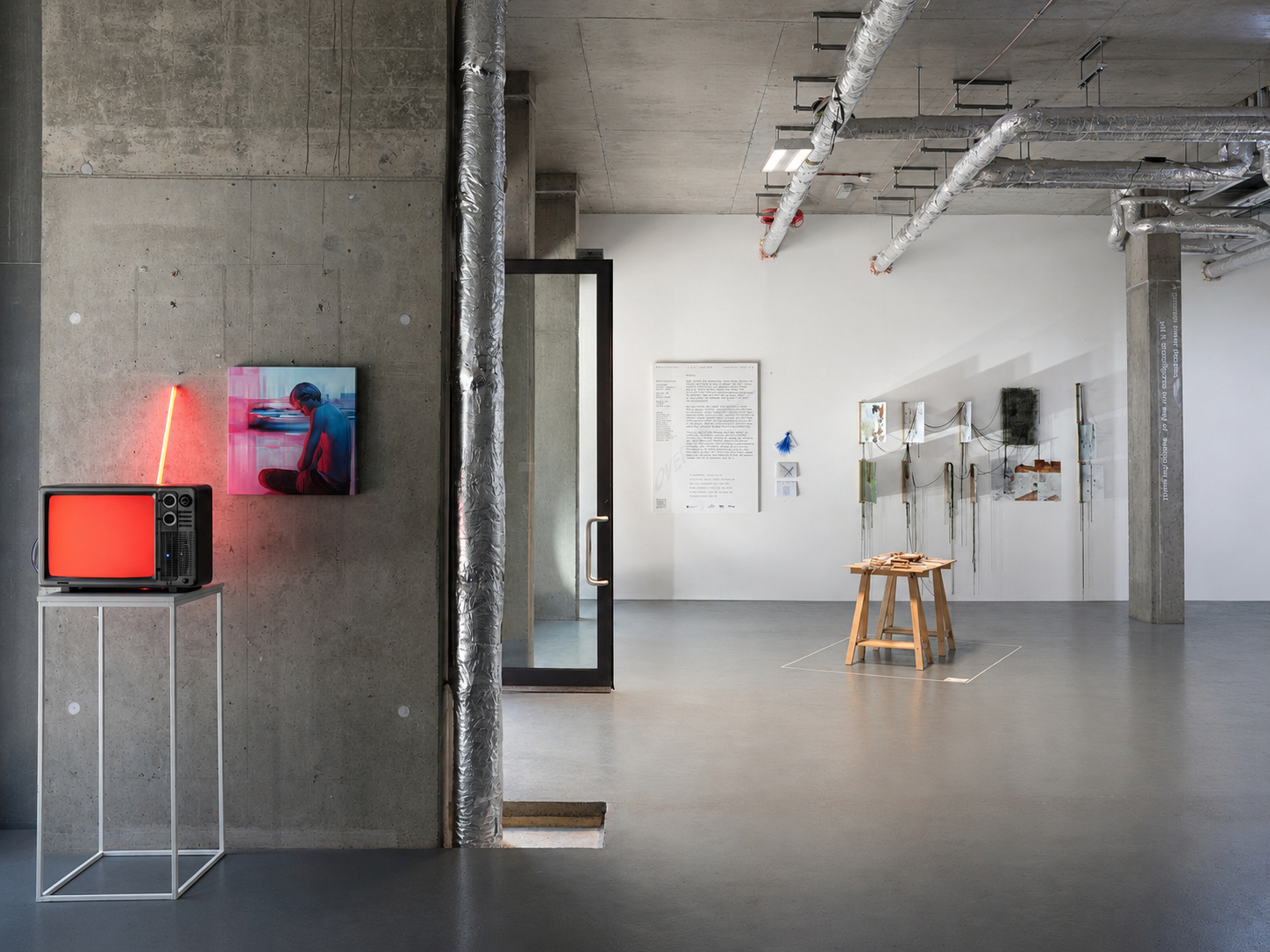
Kawai Chan’s Red locates this process inside perception. A continuous red screen is accompanied by narration and music, leaving viewers to construct absent people and spaces through their own memory. MemoryPics Studio’s Sensory Communion moves from individual perception into global infrastructure, considering how supply chains translate land, labour and embodied experience into information. Together, these works show reality being shaped through systems of perception that operate both intimately and across vast networks.
The final movement of the exhibition concerns versions that actively propose what reality might become. Robin Swartz’s Ports of Return reconfigures the cocoa warehouse in Côte d’Ivoire as infrastructure for local processing and trade. Maps and logistical interfaces first reveal how land and labour are organised across distance, while the architectural proposal intervenes in that structure by redistributing decision-making and economic value.
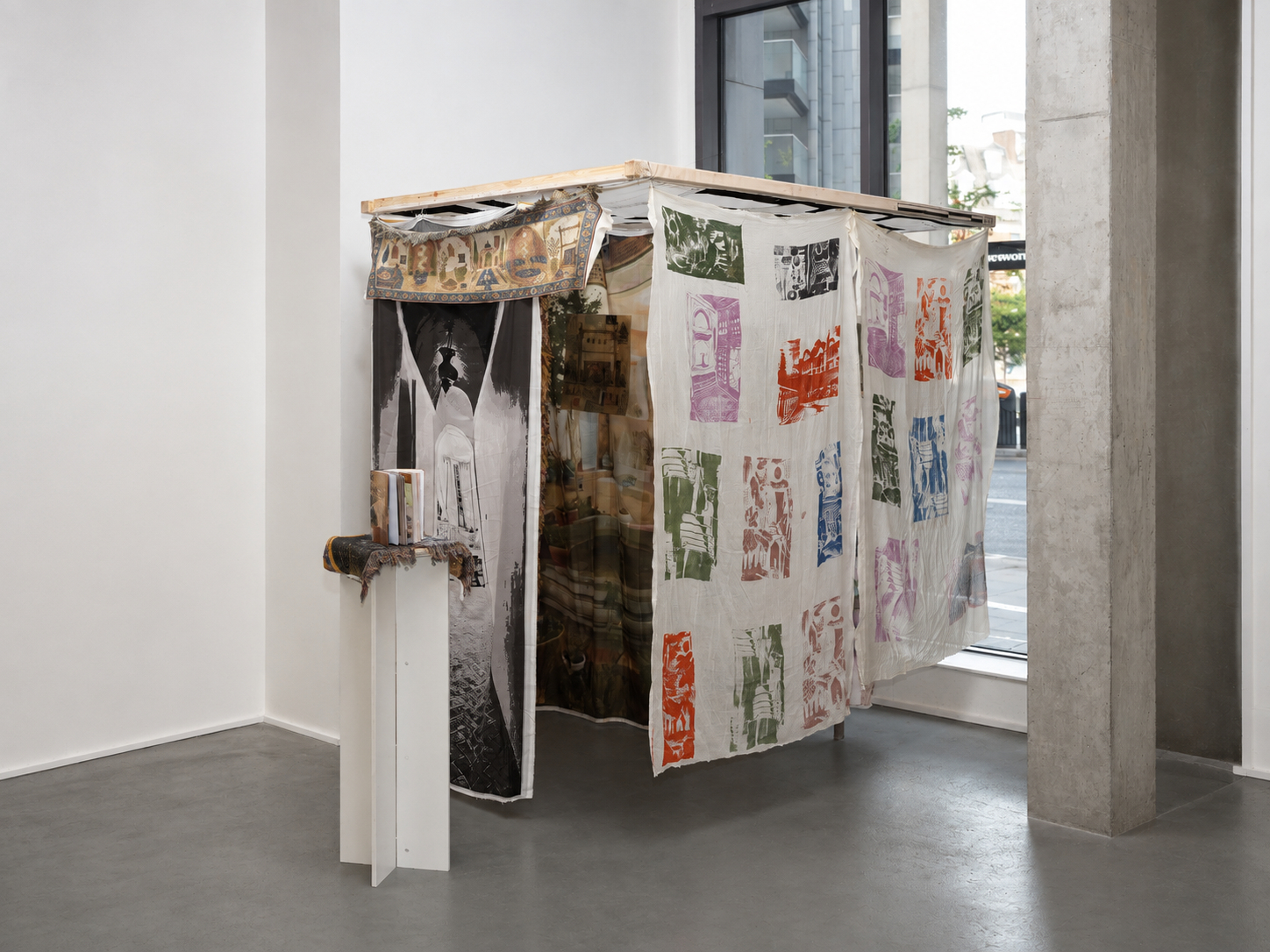
Shirel Tzfania’s Situated Rituals begins from a very different source. Iranian Jewish domestic rituals, family archives and personal memories are translated into textiles, drawings and installation. Knowledge carried through food, gathering and climate-responsive domestic practices becomes material for contemporary architectural thinking. Here, memory functions as a design resource with consequences for future space.
Songyan (Edwin) Tan’s Egg Park completes this movement through a particularly clear feedback loop. Lost towers, maps and urban fragments from Bologna are reorganised into a proposed public landscape, which is then developed as a VR environment. Twelve participants move through the virtual park while gaze, route choice and hesitation are recorded. Their responses return through Python and Grasshopper to influence geometry, slopes and visual cues. Historical traces generate a model, the model produces behaviour, and that behaviour reshapes the future design.
Across Reality Overwriting, a version begins as a means of encountering reality, and gradually gains the ability to organise it. Images define what can be seen, reconstruction determines how the past returns, mediated environments influence bodies, and models enter decisions about future spaces. Reality therefore emerges through an ongoing exchange with the forms created to represent it. The exhibition asks what happens when these versions become embedded deeply enough in everyday life that encountering the world also means encountering the interpretations already shaping it.
Curatorial Team
Lead Organizer / Curator
Yu He
Co-Curators
Tan Yuran (Ryan)
Guodong Yang
Design Directors
Jiawei Wan
Neko Zhang
Visual Designers
Junyi Liu
Exhibition Installation
Huicong Wang, Yi Zhou, Zihao Wan
Participating Artists
Claude Dutson
Kawai Chan
Lia Penela
Madeleina Foley
MemoryPics Studio
Robin Swartz
Shirin Naveed
Shirel Tzfania
Songyan (Edwin) Tan
Tiancheng Zhao
Valeriia Chemerisova
Wimolrat Poolsiri
Xuening Wang
Reality Overwriting | Artwork List:
Valeriia Chemerisova, How to Circle Forward in Time?, 2025
Wimolrat Poolsiri, Para-orama, 2025
Claude Dutson, The Platform (Part 1 of Seeing Through the Walls of Silicon Valley), 2026
Xuening Wang, Impossible Reality, 2023
Madeleina Foley, The Good is Good, 2026
Tiancheng Zhao, Operational Landscapes: Sensing, Mapping, and the Governance of Nuclear Territory, 2025
Robin Swartz, Ports of Return: Rerouting Value in the Afterlives of Extraction, 2026
Shirel Tzfania, Situated Rituals, 2026
Shirin Naveed, Black Country to Bhangra, 2026
Songyan (Edwin) Tan, Do You Want to Join Egg Park, 2026
Kawai Chan, Red, 2026
MemoryPics Studio, Sensory Communion, 2025
Lia Penela, Bishopsgate Low Level: Between the Visible, Invisible and Possible, 2026

