

A campaign can begin in many places: on a rough sketch, a passing thought, or an image stored up for later. Soon, that humble start can appear on screens, city walls, social media feeds, and magazine pages. Though the format can vary, a great idea should sound familiar in any context in which people hear it.
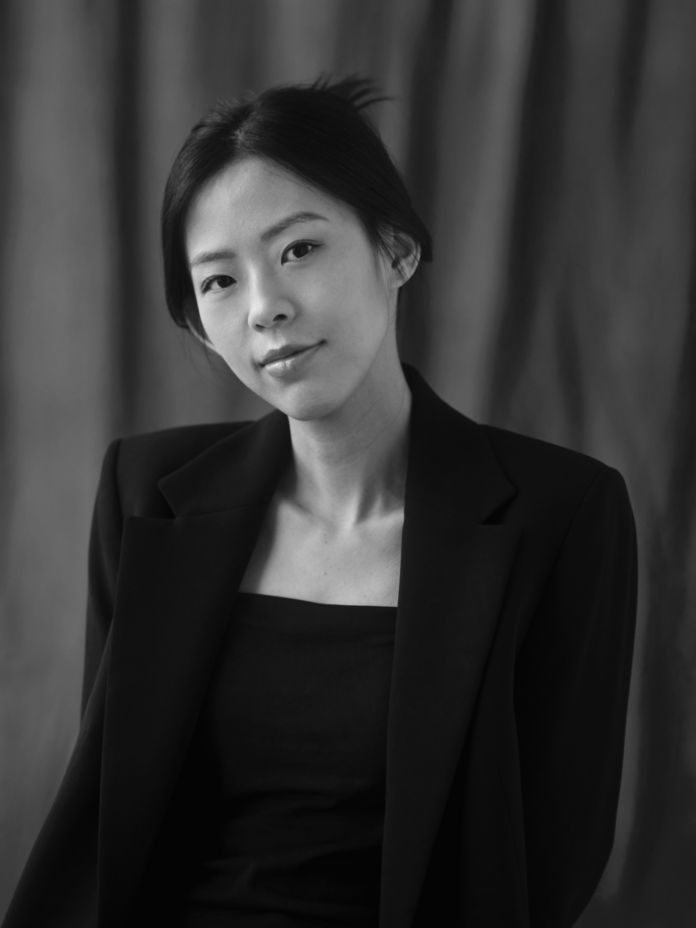
Tianyi Xie spends much of her time helping ideas make that journey. As a Senior Art Director at BBDO Chicago, she develops campaign concepts and shapes how they look and feel from the first presentation to the finished work. Her projects have involved brands connected with Brown-Forman, Bayer, and Mars Wrigley.
Her own journey into advertising began with a camera. It later took her from China to the United States and into creative rooms where she gradually learned to trust her instincts and speak up for the ideas she believed in.
Discovering a Feel for Images
Xie began taking photographs in high school after her parents gave her a camera. She shared the images on Instagram, where people began commenting on her work and asking how she had captured certain shots.
She had yet to study photography formally, but she already understood how light, composition, and emotion could work together. Much of it felt intuitive.
Over time, individual photographs began to feel limiting. Xie wanted to use her visual instincts on something larger, with more room for storytelling and problem-solving. Advertising gave her that space. It connected creative decisions to a clear purpose and allowed one idea to take different forms across several channels.
That shift gave her photography a wider context. A strong image still mattered, though it now belonged to a campaign with an audience, a strategy, and a larger visual identity.
Learning to Think Across Formats
Xie’s approach to work took root at Michigan State University, where she graduated with a BA in Creative Advertising, an Art Direction concentration, in 2019.
The course was practical in nature since its inception. Students wrote campaigns, answered real-life briefs, pitched clients, and produced work for film, print, digital, and other media. Xie also learned graphic design and photography, developing her understanding of typography, color, lighting, camera angles, and composition.
Together, these subjects trained her to see a campaign as a connected body of work. A commercial and a social post might require different creative choices, but audiences should still be able to recognize that they belong to the same idea.
Xie later worked at Güd Marketing and FCB Chicago. At Güd, she contributed to statewide public-information campaigns. Her work at FCB included health and wellness brands. She was also part of the creative team working on Kotex’s “Own Your Flow” platform, contributing to its launch film and campaign activations.
Finding the Look of a Campaign
At BBDO Chicago, Xie often becomes involved while an idea is still taking shape. She works alongside her copywriter partner to turn a brief into a campaign concept. From there, she helps define how that concept should look and feel. For Xie, a good campaign makes people feel something. “If a piece of work leaves people with nothing in their chest, it hasn’t done its job,” Xie says.
One of her most substantial recent projects was Extra’s “Chew Into It.” The campaign introduced Chewbert, a mascot resembling a piece of chewed gum. Xie developed the platform through its national launch, establishing its design system and art-directing assets for film, photography, social media, and a mural activation.
A character such as Chewbert gives a campaign a recognizable center, but every execution still has its own demands. A mural works at a different scale from a phone screen. Film brings movement, timing, and sound into the picture. Xie’s role involved adapting the idea while keeping its personality intact.
She also served as a lead creative on the global “Claritin Clears” platform, overseeing production for key markets. Her other responsibilities have included projects connected with Brown-Forman brands and established consumer products.
Carrying the Idea Through Execution
Idea development is only one stage of a campaign. The original idea then has to move through shoots, edits, client feedback, deadlines, and the needs of different platforms.
Xie works with directors, photographers, animators, and post-production teams during that process. Depending on the project, she may guide a live-action shoot, review large-format creative, or discuss how styling and color should support the intended mood.
Clear vision and communication matters here. Everyone involved must clearly understand what is critical and where they can be flexible. Art direction becomes an endless stream of creative decisions, ranging from big choices to small ones, that can take just a few seconds on screen.
The work also calls for creative agility. A director’s treatment or production realities can reshape how an idea unfolds, and collaboration often reveals possibilities that were not visible in the first sketch or moodboard. Xie’s responsibility is to keep the core vision anchored while allowing those discoveries to improve it.
Learning to Speak Up
The most challenging thing for Xie to learn was confidence. Imposter syndrome often came up in her early career when she needed to sell a big idea or explain a creative choice to senior stakeholders.
“Confidence doesn’t arrive before action; it’s built through repetition,” she reflects.
She started to take presentations seriously as another mode of the creative process. She carefully planned and rehearsed what she wanted to say about the visual intention and took every opportunity to speak to clients, even when it was uncomfortable for her. Each presentation made the next one more manageable.
Her willingness to question familiar answers reaches back further. Xie grew up in China and moved to the United States alone at 16. Living in a new country demanded resilience and brought pressure to fit in. She eventually decided to put more energy into strengthening her own creative perspective than hiding the qualities that made her different.
The independent streak she had as a child now helps her examine briefs from less predictable angles. Xie hopes to become a Creative Director and produce meaningful, award-winning work while making room for curiosity, health, and enjoyment throughout her career.
“My creative process is a lot of love and also a lot of labour,” Xie reflects. “It’s exhausting sometimes, but it’s also a privilege to live a life doing what you love.”

