

By Maria Bregman, a London-based art critic, writer, and curator. She has curated solo exhibitions for Zurab Tsereteli, president of a leading national academy of arts, and her criticism has been published in outlets such as ArtCulture.UK, Creativity’s UK, and international editions of ELLE, Cosmopolitan and Esquire. A member of several professional writers’ and journalists’ unions, her own literary work has been recognised with multiple international awards.
The works of Sasha Ryabchik are situated in the uncertain space between spoken and unspoken words. Here, language cannot stay within the boundaries of illustration anymore. Words are seen in the form of phrases that emerge as hints of a confession not completed, of a response delayed and of an incomplete idea. Words are painted, repeated, scratched out and partially hidden. They turn into something just as physical as the paint strokes themselves. Sasha Ryabchik’s artworks are the expression of a situation in which the emotion surpasses the language necessary to embrace it.
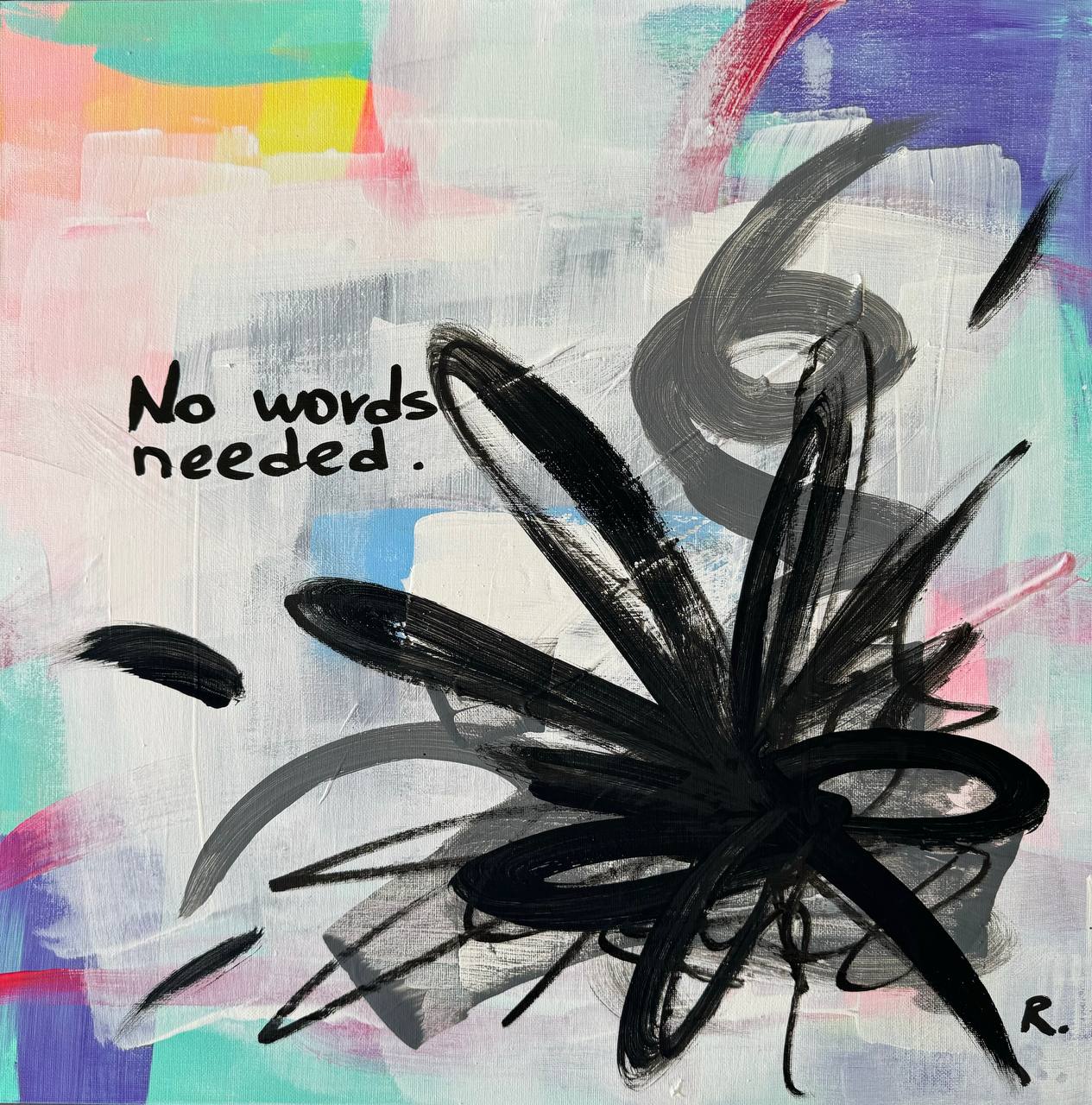
The tension between the two aspects is particularly evident in the artwork titled No Words Needed. The phrase is written in black over a light background of white, mint, blue and soft pink colors. At first glance, it seems peaceful or soothing in its suggestion. But beneath the phrase, there is a thick cluster of black loops, gathered with an intensity that appears almost violent. It can be viewed as a flower, a wild scribble or an emotional bundle gone out of control. Language is unnecessary here, but the paint tells us otherwise. There is an urgent necessity of communication here.
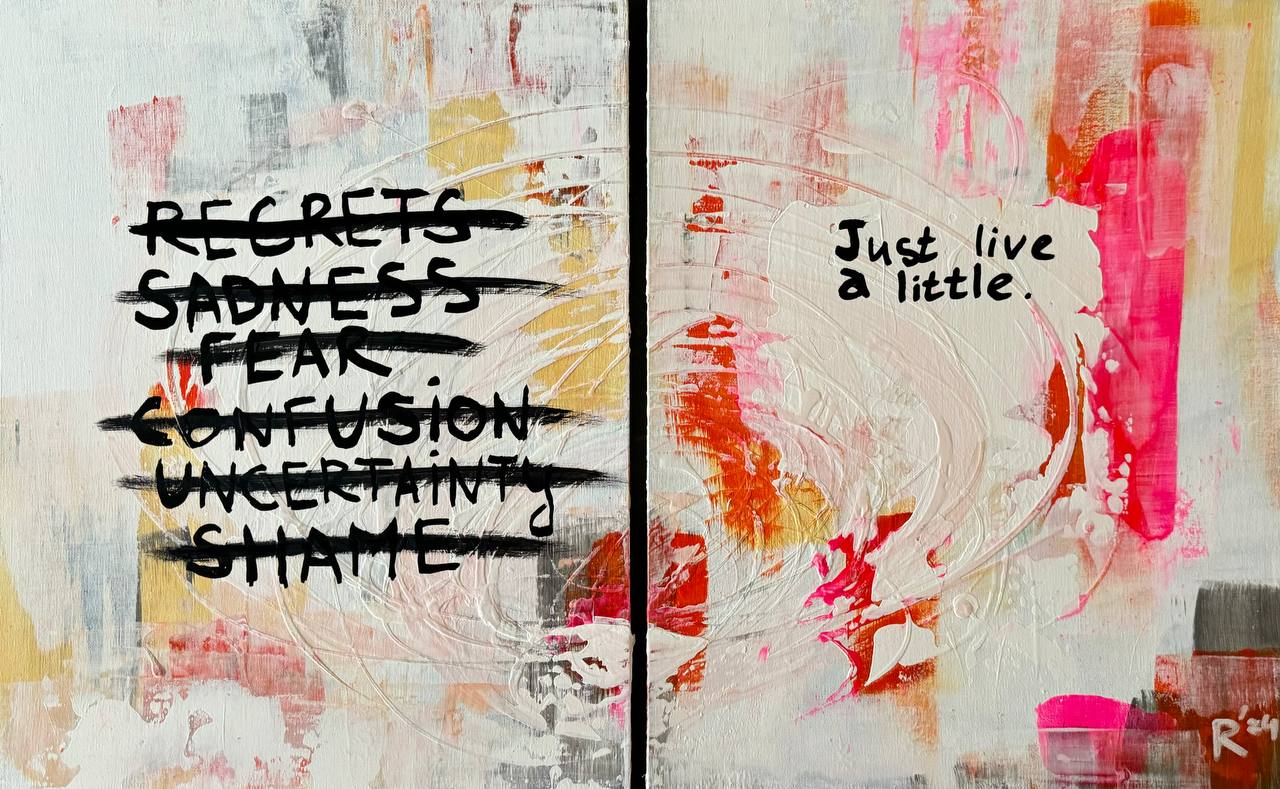
In the case of Just Live a Little, the psychological struggle finds expression in particularly clear terms. To the left we see the words “REGRETS”, “SADNESS”, “FEAR”, “CONFUSION”, “UNCERTAINTY” and “SHAME” that are thoroughly crossed out in black letters. On the right panel, the less severe phrase “Just live a little” is floating on the background that consists of pink, red, gold and white tones. The difference is obvious, but Ryabchik does not provide an easy juxtaposition of suffering and healing. Instead, the erased words are still clearly visible under the black strokes which seem to be aimed at erasing them.
Therefore, the invitation to “just live a little” sounds tender and vulnerable. It does not solve the more negative vocabulary that is seen on the opposite panel; it exists side by side with it. The use of paint is consistent with this interpretation because scraped layers, transparency and sudden explosions of colours demonstrate that the emotions can be painted but not erased.
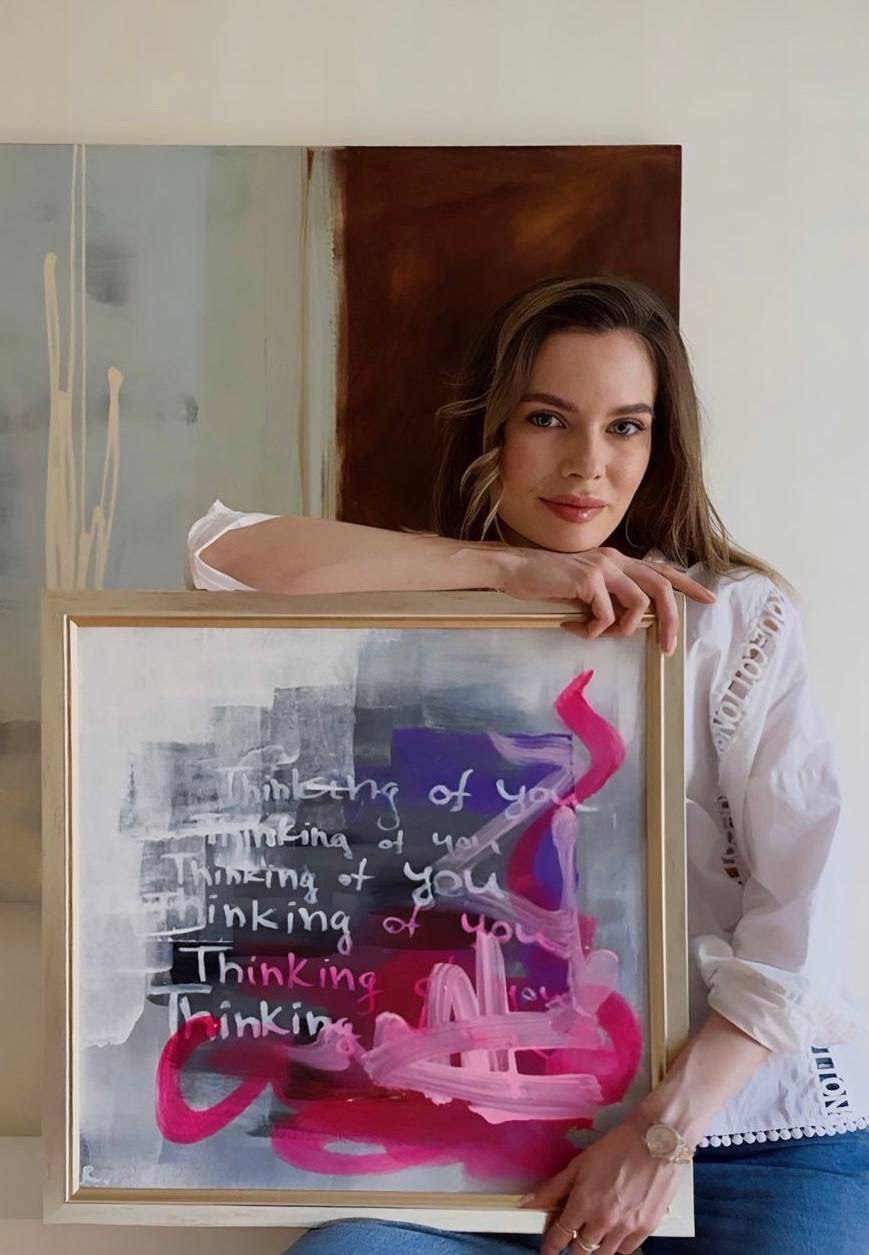
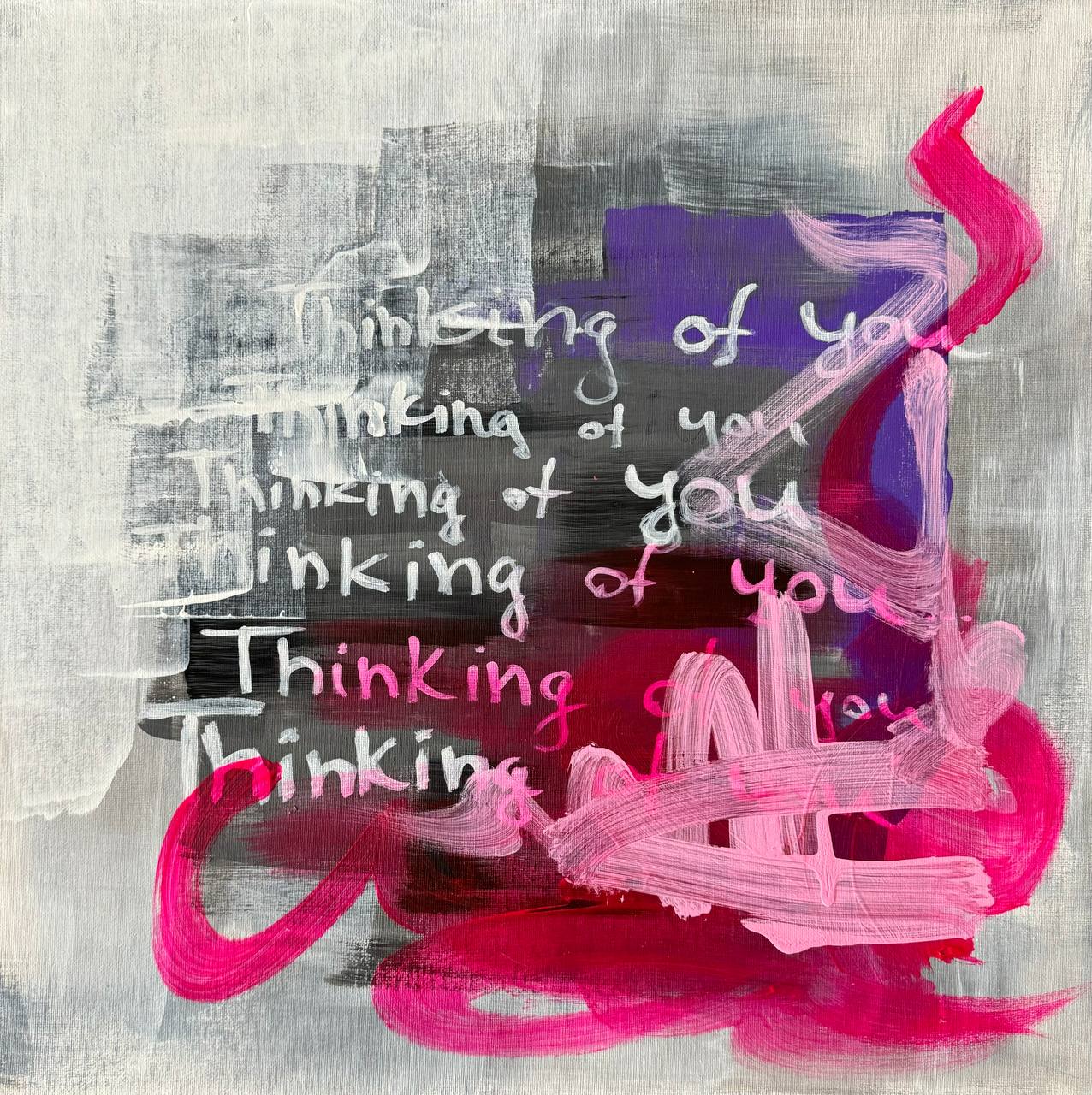
In other cases, repetition becomes a means of longing. Thus, in Thinking of You, the words are repeatedly written one after another in front of the layered dark background with interruptions of white and vivid pink elements.
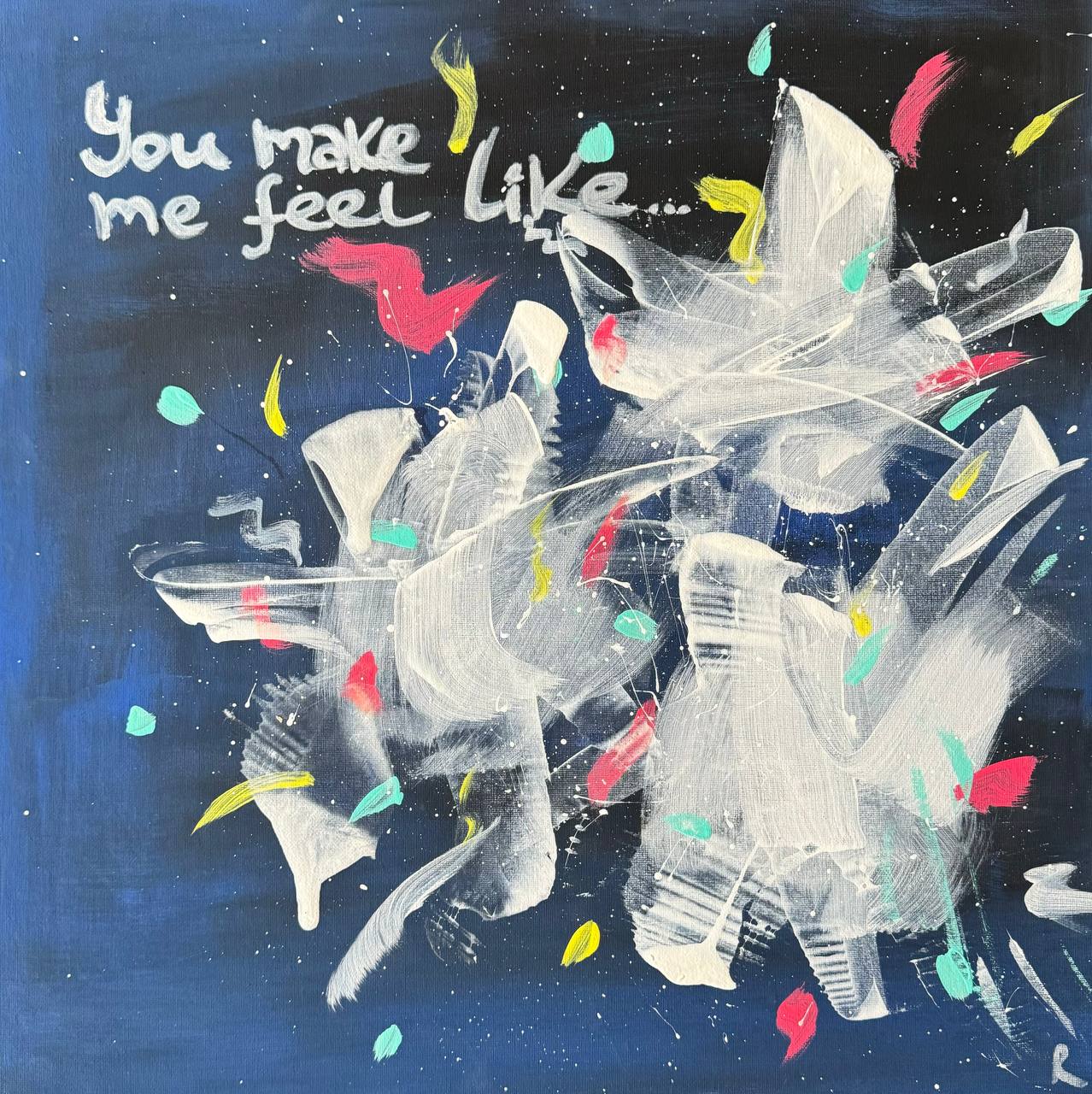
“You make me feel like…” is another variation on this theme and comes from a similar emotional place, even though its function is different. In this case, an incomplete phrase is set against the background of a deep navy blue and thus does not give a name to that particular feeling. The painting then shifts to white strokes, splashes of cyan, red, yellow, and transparent paint in place of words. There is no need for solving the phrase; on the contrary, it generates a space where a few emotions could coexist.
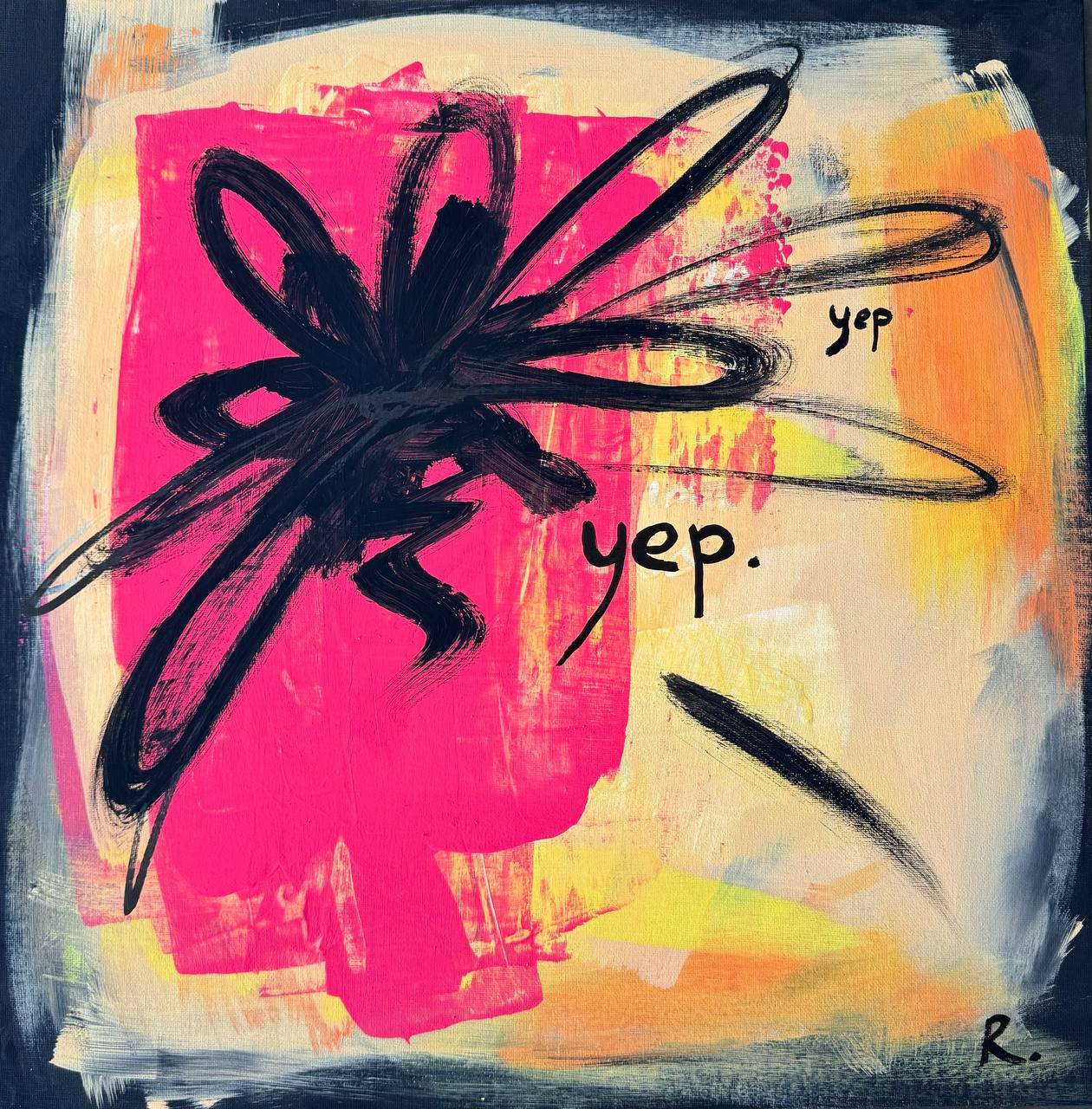
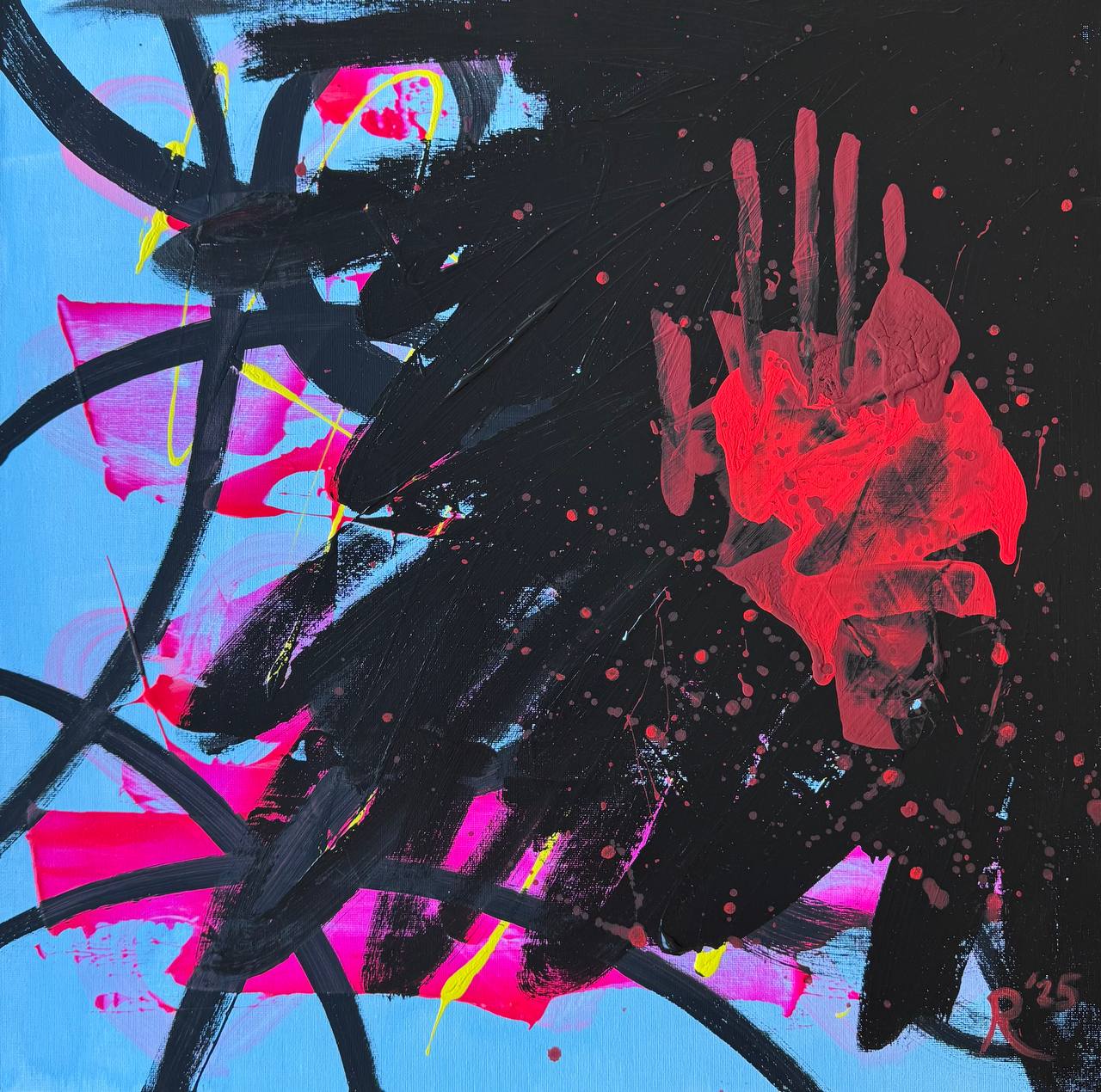
In the purely abstract paintings by Ryabchik, there is the same kind of tension, but without words. This is how a painting with a black shape and a red handprint works. Here, the hand is used to deliver the first message of presence – a touch, a warning or even a protest. At the same time, it is partly swallowed by the darkness around it, and so it stays somewhere between self-expression and concealment.
The accomplishment of Ryabchik lies in the fact that she makes words act like paint and paint act like words. Her sentences do not describe her paintings; rather, they are dissolved within them, where color, pressure, repetition and erasure have equal value. The image that lingers with us is a residue of the work: an unfinished sentence, a crossed-out word that can still be read, a gesture left unsaid.

