

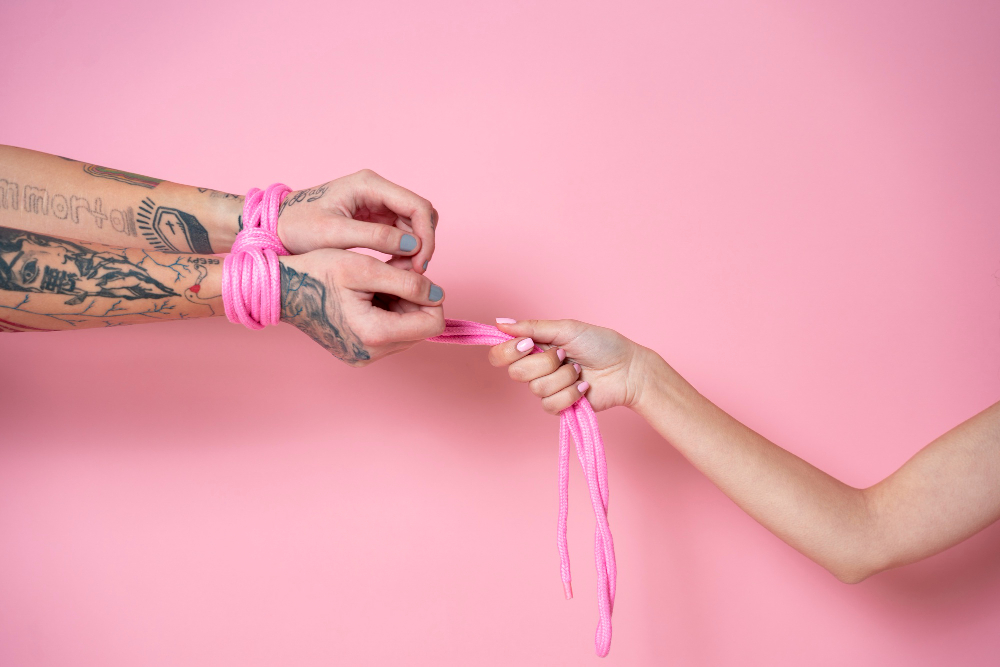
There was a time when fetish culture lived mostly behind closed doors, whispered about in private clubs, or tucked away in specialist shops.
Now? Latex appears on red carpets. Musicians dressed as dominatrixes turn up in music videos. Chokers, harnesses, leather, and PVC outfits are worn by people who have probably never once had to explain a safeword. Kink has moved from the shadows into fashion, entertainment, dating apps, social media, and everyday conversation.
So how did fetish culture become more mainstream? Well, it didn’t happen overnight… that’s for sure. Here’s how the world of kink went from underground curiosity to something even your grandparents are (worryingly) aware of.
When Fetish Culture Was Still Underground
Before fetish culture became easy to find online, it was far more hidden, local, and word-of-mouth. To find anything BDSM-related, you usually had to know someone, find the right bar, buy the right magazine, visit the right shop, or quietly work your way into a scene that was not exactly advertising itself on the high street.
Much of modern BDSM culture grew out of smaller leather, gay, queer, fetish, and underground club communities. Leather bars, private parties, motorcycle clubs, specialist publications, and discreet social networks all helped people find each other before the internet made everything searchable. These spaces had their own rules, signals, etiquette, dress codes, hierarchies, and expectations.
Some of that might sound a little extreme in this day and age, but when your sexuality could cost you your reputation, job, relationship, or even legal safety, discretion was survival. The UK’s Operation Spanner case in the late 1980s, which involved police action around consensual same-sex sadomasochistic activity, is a good example of why BDSM communities had reason to stay careful and semi-private.
That underground structure created strong communities, but it also made fetish culture difficult to enter. If you had, say, a fantasy about being tied up, you might spend years thinking you were strange simply because you had no easy way to meet anyone else who felt the same. Today, that same person can find terminology, forums, events, professional Mistresses, safety guides, and entire communities in one evening.
And Then Came The Internet
If fetish culture had a proper coming-out moment, the internet probably deserves most of the credit. Suddenly, people could search for BDSM, foot worship, femdom, bondage, and every other wonderfully specific little interest without having to say the words out loud to another human being.
That mattered because anonymity gave people room to be curious. Forums, chat rooms, blogs, educational sites, fetish directories, and later platforms like FetLife helped people realise they were not alone. What once felt like a private oddity became a shared interest with language, etiquette, communities, events, roles, and endless variations.
In short, the internet gave people the means and motivation needed to explore their kinks safely.
How Latex, Leather & Harnesses Took Over Fashion
Fashion has always loved stealing from the dangerous-looking corners of culture, and fetish wear has been one of its favourite victims.
Leather, latex, corsets, chokers, thigh-high boots, collars, harnesses, gloves, PVC, bondage straps, and sharply structured silhouettes all existed in fetish spaces long before they appeared on runways and red carpets. But high fashion realised very quickly that fetish imagery has power. It looks provocative. It looks controlled. It suggests danger, sex, confidence, discipline, and rebellion before anyone has even opened their mouth.
Designers such as Vivienne Westwood, Jean Paul Gaultier, Alexander McQueen, Mugler, and many others helped pull elements of fetish styling into mainstream fashion. Corsetry became glamorous rather than purely restrictive… harnesses became styling pieces… even latex moved from specialist fetish wardrobes to music videos and celebrity shoots. Chokers, once strongly associated with punk, goth, BDSM, and alternative fashion, became something people wore to brunch.
Film, TV & the Fifty Shades Effect
We cannot talk about mainstream kink without mentioning Fifty Shades of Grey. Yes, half the BDSM community had opinions… very strong opinions spoken through gritted teeth. Still, whether people loved it, hated it, or read it in secret on holiday, Fifty Shades changed the conversation. It put dominance, submission, restraint, spanking, contracts, red rooms, and sexual power exchange into book clubs, cinemas, daytime television debates, and ordinary relationships where kink had never been discussed before.
Was it a perfect representation of BDSM? No. Did it make millions of people curious? Absolutely. But Fifty Shades was only one part of a much bigger media shift. TV shows, films, music videos, podcasts, documentaries, and online articles began treating kink like something real adults might explore. Certain fetishes and examples of power exchange started appearing in storylines without always being framed as monstrous or deviant.
Social Media Made Kink More Visible
Instead of having to search for a specific BDSM forum, people began seeing kink-adjacent content in their feeds. This included the likes of latex outfits, pole performers, rope artists, dominatrix education, boudoir photography, and plenty of meme pages joking about praise kink and degradation. Not all of that content is serious BDSM, obviously, but watered-down visibility is still visibility at the end of the day. It makes fetish terminology more familiar, and gives people language for desires they may not have understood before.
The creator economy also played a huge role. Platforms like OnlyFans, clip sites, premium socials, and independent adult content gave fetish creators a way to build audiences around very specific interests. Suddenly, niche kinks were searchable, marketable, and in some cases extremely profitable. When you see thousands of others openly discussing foot worship, latex, chastity, femdom, pet play, impact play, or financial domination, it becomes harder to convince yourself that your fantasy is some lonely little secret no one else understands.
Why Fetishes Are No Longer Treated the Same Way
One of the biggest changes behind the scenes has been psychological and cultural rather than visual. For a long time, fetish interests were treated very differently by medical and social institutions. Anything outside conventional sexuality was often labelled as abnormal, deviant, unhealthy, or something that needed to be corrected. That attitude made people ashamed of desires that, in many cases, were harmless when explored between consenting adults.
Modern thinking is a lot more nuanced. There’s now a clearer distinction between having an unusual sexual interest and having a disorder. A fetish, kink, or paraphilia is not automatically treated as a problem simply because it’s unusual. The more important questions are whether everyone involved is consenting, whether the behaviour causes distress or harm, and whether boundaries are being respected. It also supports the wider sex-positive movement, where adults are encouraged to understand their desires honestly rather than burying them under shame.
Fetish Events Became Bigger, Bolder & More Public
Large-scale fetish events, club nights, pride-adjacent leather gatherings, BDSM markets, rope workshops, latex balls, and alternative nightlife events gave kink a physical presence. No longer were these just secret gatherings hidden in basements. Many became organised, ticketed, visible events with dress codes, performers, DJs, vendors, workshops, photographers, security, and proper rules around consent.
Events like Torture Garden helped make fetish nightlife feel theatrical, stylish, and social rather than purely sexual. In other countries, huge gatherings such as Folsom Street Fair showed that kink communities could take up public space openly, loudly, and with a frankly impressive amount of leather in direct sunlight. After some time, people began to understand that fetish culture was not just one thing. It could be nightlife. Fashion. Community. Education. Performance. Art. Sexual exploration. Political visibility. A place to meet people. A place to learn. A place to be stared at for the right reasons.
Dating Apps & Modern Dating Made Kink Easier to Discuss
There was once a time when telling someone you were into BDSM meant waiting until precisely the right moment, choosing your words carefully, and hoping they didn’t look at you like you were some freak. Now, plenty of people put kink references directly into dating profiles on platforms like Feeld. “Switch.” “Sub leaning.” “Domme.” “Open-minded.” “Praise kink.” “Into rope.” These little clues have made it much easier for people to find partners who are at least willing to talk about desire more openly.
Modern relationships have also become more comfortable with negotiation. People talk about boundaries, turn-ons, communication styles, emotional needs, sexual compatibility, open relationships, non-monogamy, and power exchange more than previous generations often did. Once people have the language, the next step becomes easier. And once the next step feels easier, suddenly fetish culture becomes a lot more normalised.
How Professional Dominatrixes Helped
As fetish culture became more visible, experienced Mistresses started appearing in documentaries, interviews, podcasts, blogs, social media posts and educational spaces, explaining what domination actually involves. They helped put proper language around things like submission, humiliation, restraint, worship, discipline, safewords, boundaries and aftercare. For many people, a Pro Domme is the first real-world example they see of BDSM being practised with confidence, structure, rules and consent
Professional mistress websites like Bed Domination also helped normalise fetish exploration. Instead of someone having to find a hidden club or know the right person, they could browse services, read about different kinks, learn what a session might involve and see that BDSM could be explored privately with someone experienced. That accessibility made fetish culture feel far less intimidating to newcomers.
So while fashion, media and the internet all helped fetish culture become more visible, professional mistresses helped make it understandable. They showed that BDSM can be skilled, negotiated, erotic, theatrical, educational and, when done properly, far more controlled than outsiders usually imagine.
Fetish Culture is Here to Stay
Fetish culture became more mainstream because the routes into kink changed. People found each other online, fashion borrowed the look, media pushed BDSM into everyday conversation, public events became more visible, and modern attitudes towards sex became less painfully narrow. What was once hidden behind private clubs, specialist shops, and quiet word-of-mouth networks slowly became easier to see, discuss, understand, and explore.
Kink was always there. The difference is that now, far more people know where to find it.

