

New York-based illustrator and visual designer Morain An has built a multidisciplinary body of work around subjects closely connected to everyday life. Food, wine, music, restaurants, neighborhood culture, and the ways people gather appear repeatedly across her illustrations and design projects. She is especially attentive to the objects and visual details that shape how a place is experienced, from menus and printed matter to the arrangement of a table and the atmosphere of a neighborhood street.
Working across editorial illustration, fashion, craftsmanship, and brand campaigns, Morain brings this attention to projects that vary widely in format and audience. Her work has appeared in publications and commissions for The New York Times, Los Angeles Times, Bon Appétit, T Magazine China, Food & Wine China, ELLEMEN, NYLON China, The Markup, Brooklyn Health, Métier, Oishi, Hudson Wilder, Social Supply, Choun Studio, and other cultural and commercial clients. Across these contexts, her illustrations retain a recognizable hand-drawn quality while responding to the specific subject and setting of each assignment.
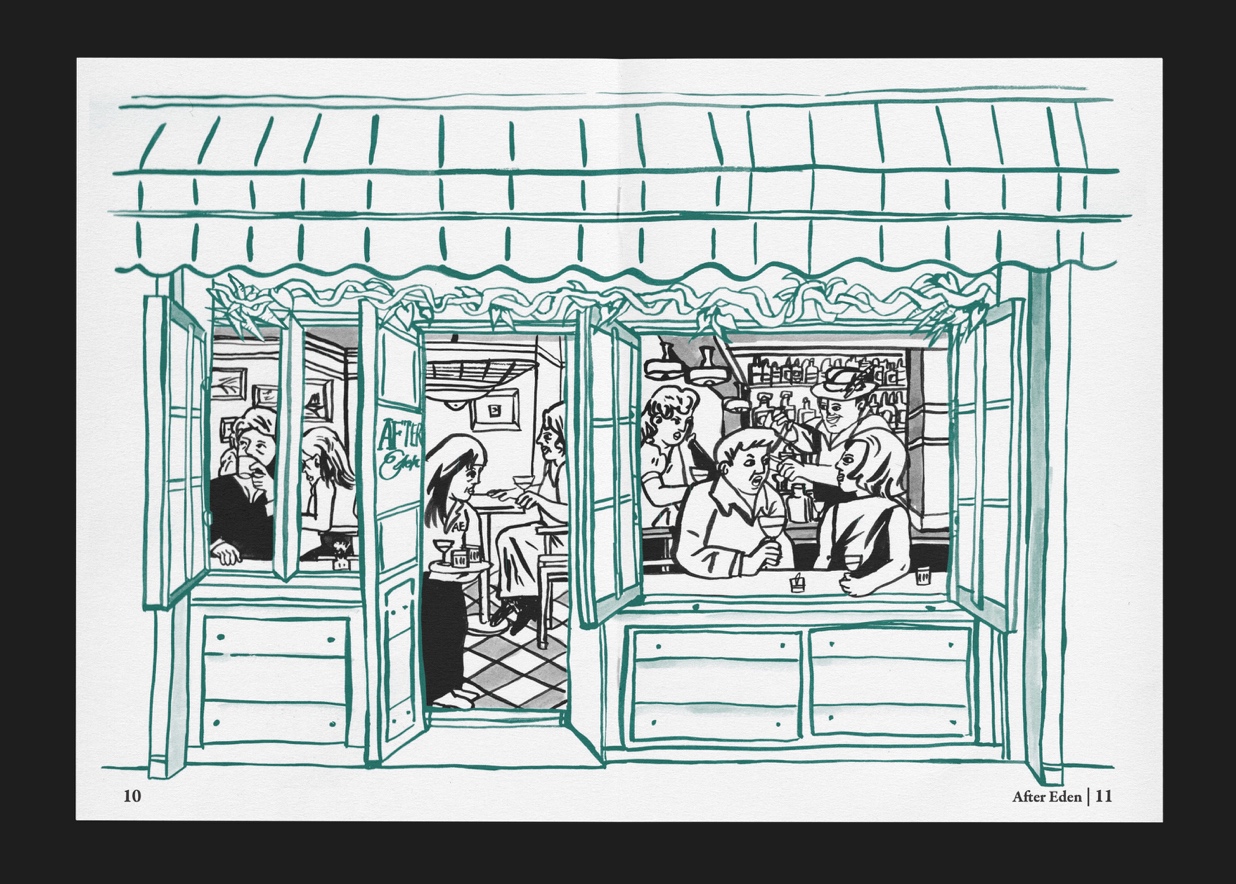
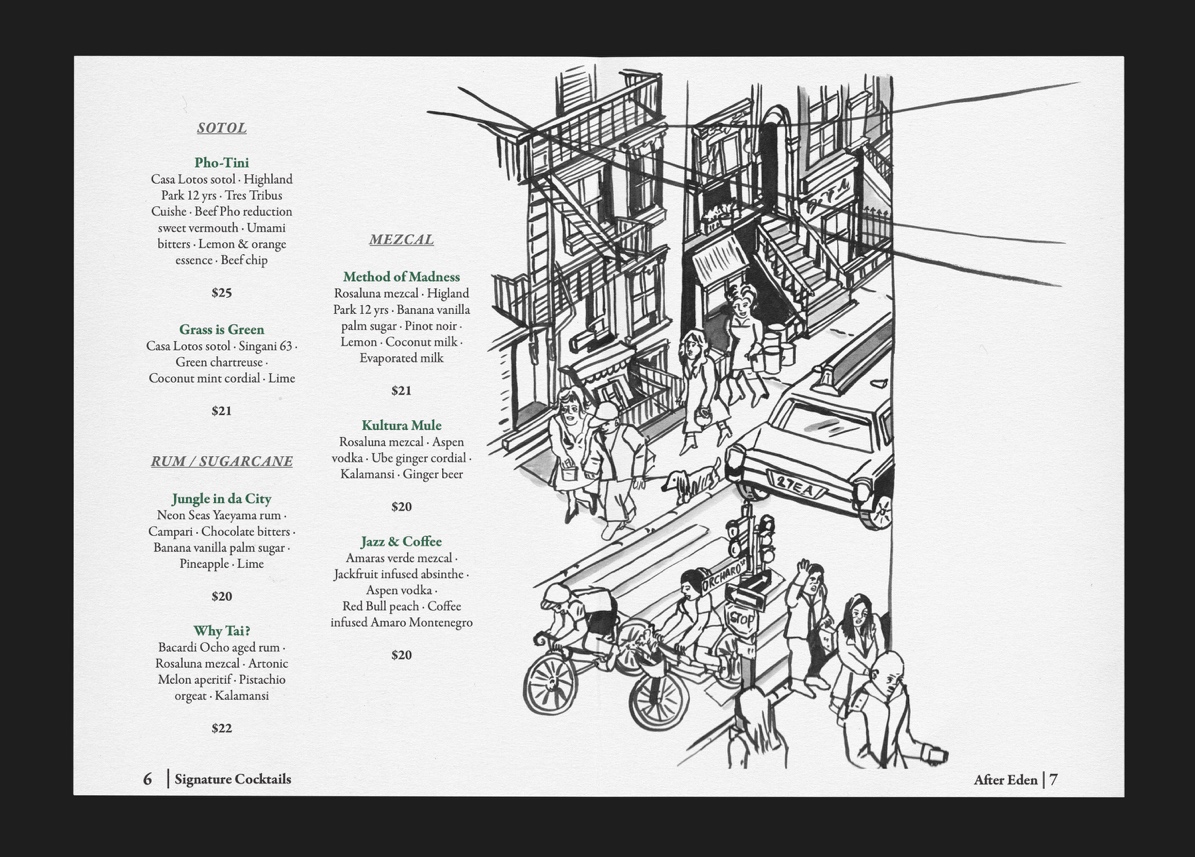
These interests come together particularly clearly in one of Morain’s recent projects for AFTER EDEN, a café and bar rooted in the cultural landscape of New York’s Lower East Side and Chinatown. The two neighboring areas have long been shaped by immigration, commerce, food, and street life. For the project, Morain focused on the everyday scenes surrounding the space, including shared tables, food and drinks, conversations, and fragments of the streets outside.
These elements appear throughout a 24-page illustrated zine, menus, and a series of accompanying artworks. Together, the pieces form a visual account of the environment around AFTER EDEN while reflecting the overlapping cultures that shape downtown New York. The project develops through a collection of observations in which people, objects, typography, and neighborhood details carry equal visual weight.
The zine format allows Morain to work across sequences of scenes, figures, text, and smaller details in a way that differs from a conventional standalone illustration. Hand-drawn imagery is combined with typography and editorial design so that the illustrations operate as part of a larger visual system. The menus and accompanying artworks carry that language into other parts of the café and bar experience, creating continuity across print, illustration, and the physical setting.
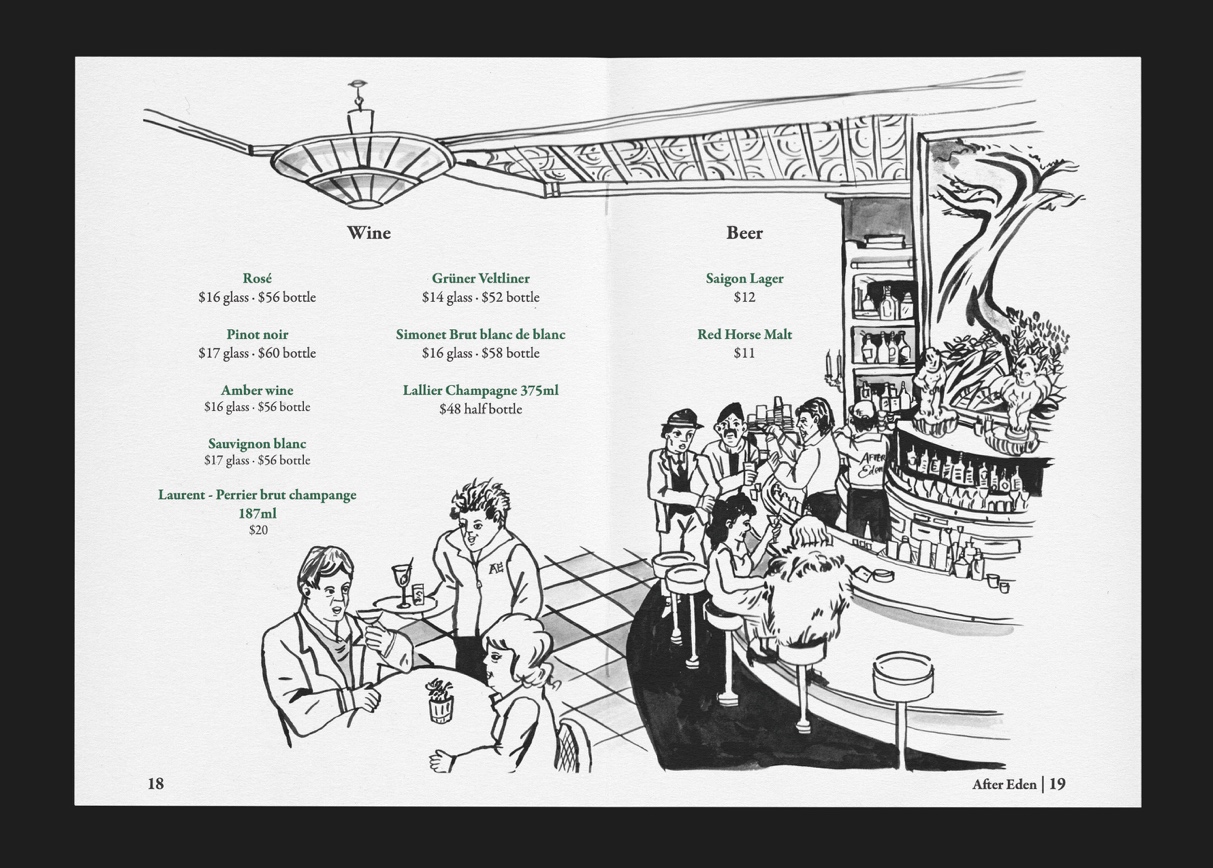
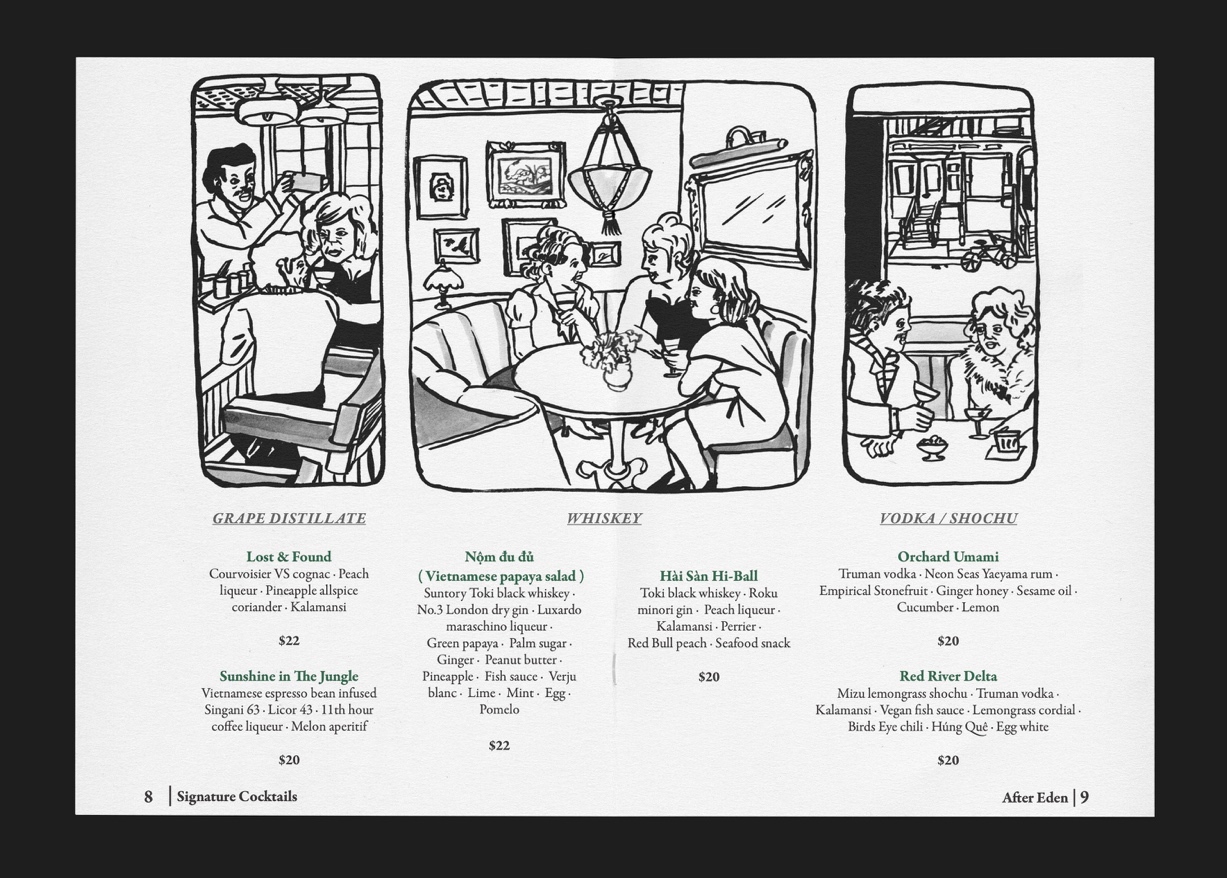
Printed materials occupy a distinctive place within restaurant and bar culture. Menus, wine labels, matchbooks, postcards, and other small objects are made for practical use, yet they often become things people keep. Over time, they can serve as reminders of a particular meal, evening, neighborhood, or period in a city. Morain’s AFTER EDEN project draws on this relationship between design and memory, using printed matter to record details associated with a specific place while remaining integrated into its everyday use.
Her attention to material objects also connects with her broader professional background. Morain previously worked as a Painter and Marquage Artisan at Goyard and as an illustrator at BODE, roles that brought drawing, craftsmanship, fashion, and object-making into her professional experience. These areas remain closely connected to the way she approaches illustration and visual communication today.
The visible presence of the hand is an important part of her imagery. Her lines retain a degree of irregularity, her figures often have an expressive simplicity, and her compositions are carefully organized without feeling mechanically polished. This balance gives the work a sense of directness that remains visible across editorial pages, printed matter, hospitality projects, and brand commissions.
Across these different contexts, illustration remains central to Morain’s practice, even as its role shifts according to the demands of each project. Editorial illustration asks an image to respond closely to written material, while hospitality, fashion, and brand projects place illustration in conversation with objects, environments, identity, and presentation. Morain’s work moves between these formats while maintaining a consistent emphasis on image-making and visual communication.
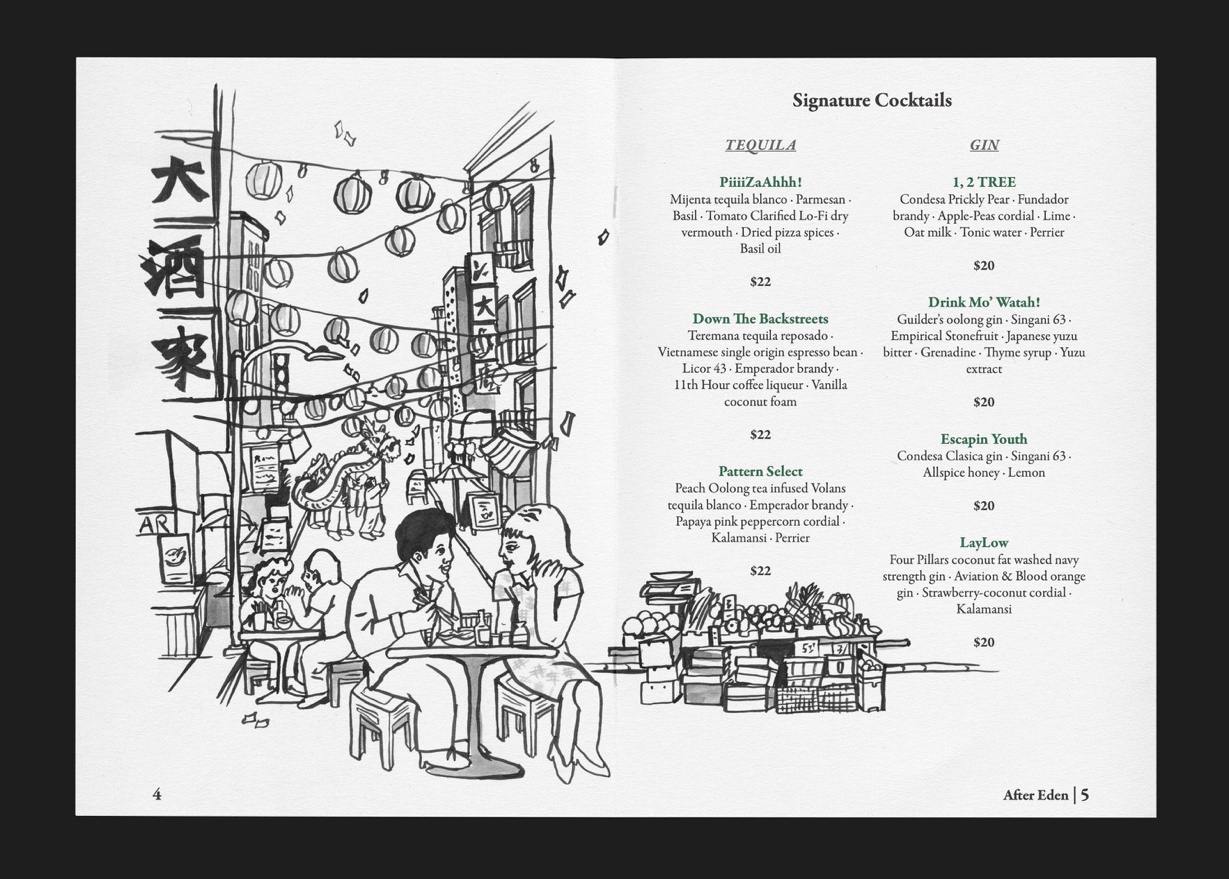
The AFTER EDEN project also reflects her interest in the relationship between a business and the neighborhood around it. The Lower East Side and Chinatown carry multiple histories and visual identities, and Morain approaches them through specific scenes and details instead of reducing them to a single representation. Her imagery draws from the streets, tables, food, drinks, and people around the space, allowing the project to register the character of downtown New York through observation and accumulation.
In AFTER EDEN, the 24-page zine, menus, and accompanying artworks bring illustration, typography, printed matter, and observation of place into the same visual framework. The project reflects Morain’s broader work across editorial, fashion, craftsmanship, hospitality, and brand commissions, where close attention to people, objects, and everyday environments remains central to the way she constructs images and interprets the character of a place.

