

If there has been an uptick in the amount of stories concerning death recently, it might have something to do with the global peril that is constantly snaking up at us through our phones. Climate catastrophe, gun violence, fascistic regimes, scapegoating of the most fragile in our society—it’s all a ridiculous, bloody march to the end. “We’re walking on a runway going straight to hell,” Charli xcx says on “SS26,” “No hope for any of it.”
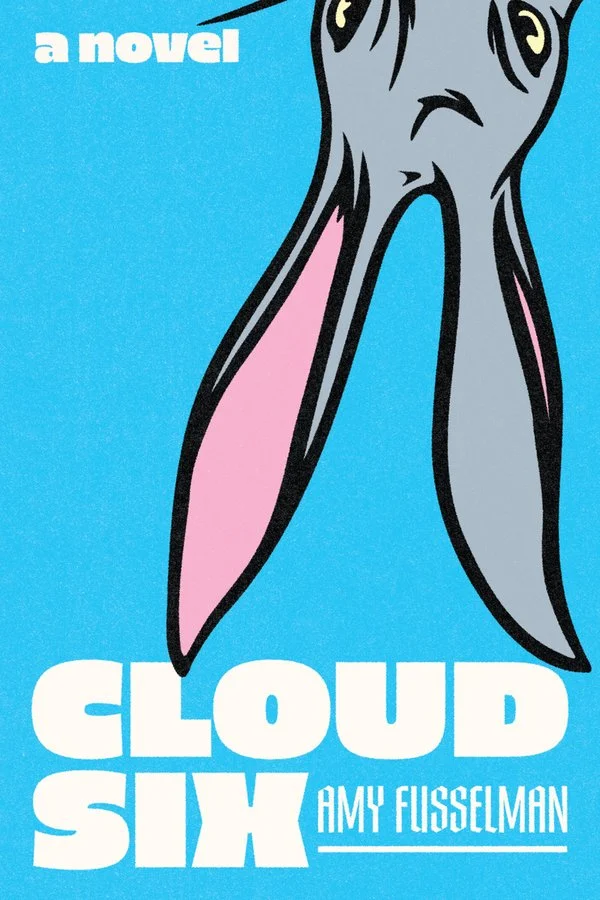
It makes sense why writers would just think beyond it all. Matthew Haigh’s The Midnight Library (2020) was a retrospective dissection of Sylvia Plath’s fig tree problem, with a woman being shown all the lives she could have left, and George Saunders’ Vigil, from this year gave its climate-corruping oil executive, K.J Boone, one last chance to admit his wrongdoing before Jill “Doll” Blaine ushers him into the afterlife. Joining this ring is Amy Fusselman’s Cloud Six, an affecting and earnest Kelly Link-ian romp where Mam and Bunko, fresh off a plane crash, arrive at the lowest rung of heaven. Frankly, it’s a little too close to hell for their comfort. “Heaven and hell are not vertically oriented,” Fusselman’s intern, Byron, interjects at one point. “They are positioned side by side, like two row houses. They share what’s known as a party wall and also a huge, beautiful backyard.”
After attending a book club that focused on a manual for moving homes rather than a friendly, simple novel, Mam and Bunko—a duo with both Kath & Kim and Lois and Peter Griffin energy—board a plane for a Connecticut vacation, and, supplied with gummy edibles, are passed out when the aircraft explodes, killing everyone on board. Mam’s daughter, Penny, a sixteen-year-old struggling through an essay on the Reign of Terror, is now under the care of Bill, her uncle who has just surpassed drinking age and is currently enrolled as a freshman at ASU. Mam and Bunko are whisked up to Cloud Six, where a demon in the form of Mam’s frenemy politely informs them that they have died, and they’re in heaven, but it’s not as nice as you’re expecting. Mam thought she’d reconnect with her childhood dog, but instead, in order to get a glimpse of her beloved Penny, she has to travel to a bodega with a bar in the back, avoiding gunmen while traveling on foot, trampling handkerchiefs swaying in the wind. It’s Dr. Seuss meets Minecraft Flatland mode, with more than a bit of absurd danger. “Why are we running?” Mam asks, dodging bullets. “Aren’t we already dead?” (Lincoln In the Bardo, Saunders’ 2017 novel, also dealt with post-life morality limbo.)
The book’s kicker is its queasy marriage of tender-hearted optimism and pragmatic pessimism. Fables are interrupted by gunshots, and Satan or Fusselman’s intern, Byron, interrupts to yank the story away, forbidding her from writing about specific topics, like hell. It is, sometimes, too eager to make a statement on gun violence, noting that the United States has had 435 school shootings since 1999. “By the time this manuscript is published, that number will be higher. Too bad we can’t do anything about that,” she writes, zinging with that oft-used The Onion headline (‘No Way To Prevent This,’ Says Only Nation Where This Regularly Happens.”) There’s a lot of softly written insights of our relationship with our natural surroundings, too—in the book’s driest moments, a nonbinary plant named Gloria wiggles with Bill and Penny, or an ancient tree named Ernestine misunderstands human motivation when Mam says she’s desperate to help her child. “Don’t people want to help other people whether they are in a parent-child relationship or not?” Mam says, yes, it sounds weird, but sometimes humans don’t help other humans. “People must be very confused,” Ernestine says, a tad too much Giving Tree meets Sesame Street.
But even so, Fusselman’s jokes build on top of themselves, and her writing zips with the energy and spirit of someone having a truly good time. She’ll mold a scene to fit the fictional bar at the center of the sitcom Cheers simply because she can, craft a robust catalog of plant literature, pull from a real Quora discussion forum asking how to write a gunshot in text, or introduce the Fusselman persona just to yank her away, much like a cane whisking away an emcee, leaving their hat to spin wildly in the air after they’ve gone. She directs all concerns and questions to Byron, who can be reached at officeofamyfusselman@gmail.com. (Despite his fictional quitting later in the novel, Byron responded to my message.) In other words, Cloud Six is deeply silly. With many other books culling their sentences to pare away any emotions, it’s nice to read a novel hell-bent on making its reader feel something.
Cloud Six is out now.

