

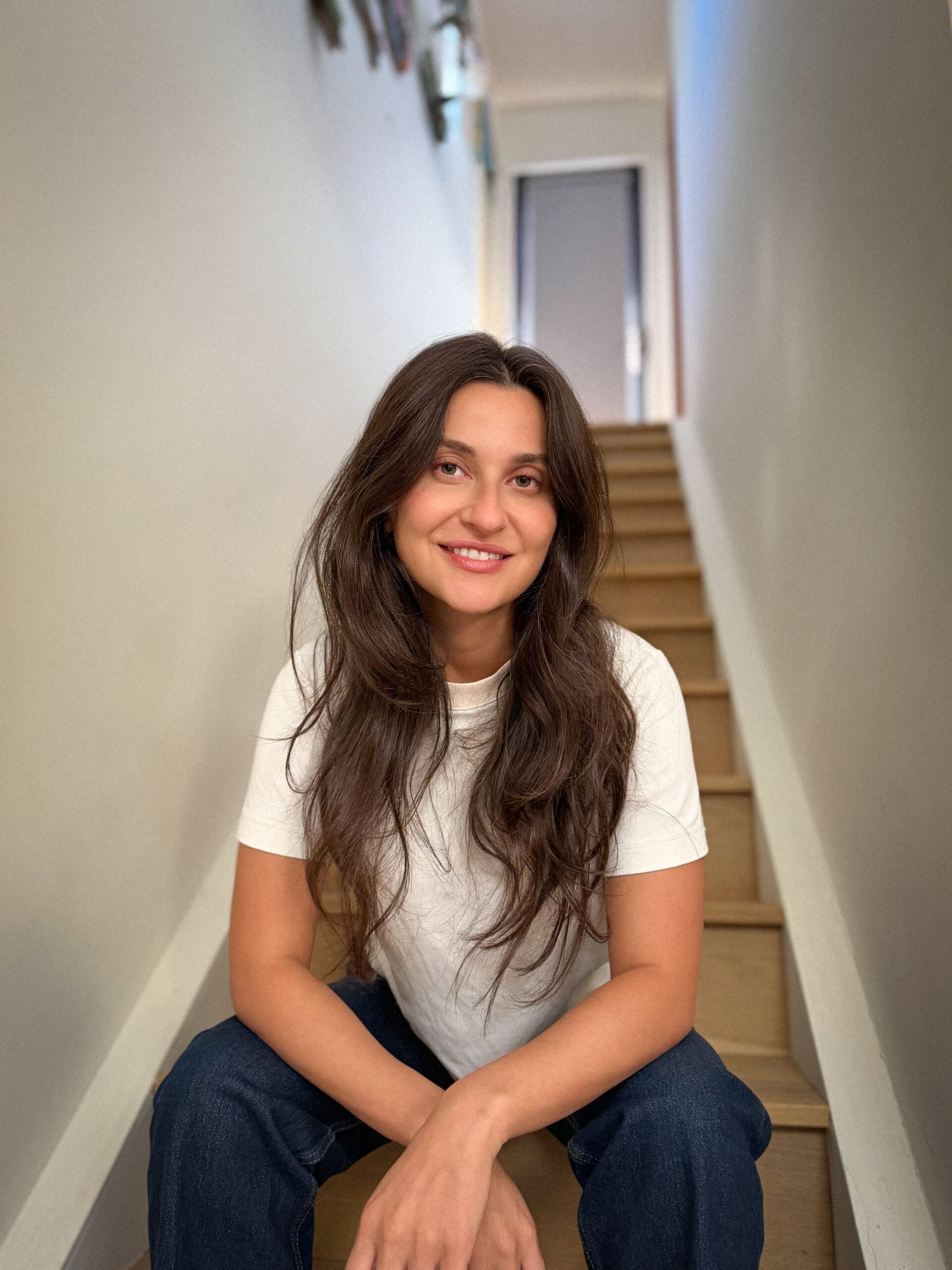
Ninety seconds. That is roughly how long Nazli Donmez has to make a stranger stop scrolling and pay attention to a film they have never heard of. As a theatrical advertising producer currently working at a Los Angeles entertainment marketing agency, she leads the creative process behind film and television trailers, teasers, and marketing campaigns. Over the past five years, that work has put her name behind campaigns for some of the most talked-about titles in film and television, from the fourteen-time Emmy-winning series Widow’s Bay to the Palme d’Or and Best Picture winner Anora, alongside blockbuster campaigns for titles including Marvel Studios’ Fantastic Four: First Steps and DC Studios’ Superman.
Building the first spark
Compression is the whole job. “My job is to lead the creative engine that turns a film, show, or campaign into an unmissable event,” Donmez says. She takes a two-hour movie, sometimes a full season, and pulls out a ninety-second arc that still has its own beginning, middle, and gut-punch of an end. The rhythm of a cut, the exact words in a tagline, where the music swells before a single line of dialogue is spoken: all of it gets decided here, long before an audience ever buys a ticket.
Take Apple TV’s Widow’s Bay, a horror-comedy about a small island town hiding a deadly secret. Donmez worked on all three official teasers, and the show went on to win fourteen Emmys. She has also touched campaigns for Anora, the Palme d’Or and Best Picture winner, and One Battle After Another, which swept six Academy Awards, plus All of a Sudden, where Virginie Efira and Tao Okamoto shared a Best Actress win at Cannes. She was a part of the group that picked up a Grand CLIO Award, advertising’s top honor, for the trailer behind A24’s Problemista, and a Golden Trailer Award for Focus Features’ Midwinter Break.
Adapting one message for many markets
Not everything travels. A joke built on wordplay rarely survives translation. Neither does a needle drop tied to a very specific American cultural moment, or a punchline that only lands if you already know the actor delivering it. Donmez spends real time on what she calls regional adaptation: adjusting pacing, voiceovers, sometimes the graphics themselves, market by market, while the core creative idea stays exactly the same wherever the trailer ends up airing. A single campaign can move through a dozen cuts before release, each one passing between editors, sound mixers, localized dubbing houses, and the legal teams clearing music rights territory by territory, all on a release calendar the studio sets and nobody moves.
She traces the instinct back to where she grew up. She studied in Istanbul first, then went to film school in Paris, then earned a business and communication degree at Chapman University in California, with minors in journalism and Italian, followed by an MBA. “Crossing Turkish, French, Italian, and American cultures built cross-cultural fluency,” is how she puts it, and that fluency turned out to matter more in a trailer bay than it ever did in a classroom. Early on, she had to make the case that coming at the industry sideways, as an outsider, was worth something. Now it is just how she works.
Building a career through disruption
She did not plan any of this. Donmez spent years in arts and events management before trailers, producing international art fairs and festivals, the kind of work that unfolds in a room full of actual people. Then the pandemic hit, and the live events she had built her career around largely stopped happening. Budgets tightened, and the ones that survived moved online or got pushed back indefinitely. Somewhere in that mess, she moved into creative project management for brands and studios, and from there into producing the teasers and trailers that now carry her name.
She still sits as a jury member for the Los Angeles Diversity Film Festival. For a while she wondered if festival work and studio marketing were pulling her in two directions at once. They were not. The instinct she uses running arts events and festivals like the Bombay Beach Biennale is the same one she brings to a trailer cut.
What comes next
“I want to continue building my career at the intersection of film and TV advertising, creating collaborative experiences that unite cross-disciplinary creatives and open doors for the next generation,” she says. She also wants to make her own films eventually, and finish the short story collection she has been chipping away at for years, mostly on planes and between jobs.
“What consistently inspires me on this path is the ability to bridge creative vision with strategic execution, shaping that first moment of interaction between a film or show and its audience, and creating a world for them to experience intrigue, desire and interest for what’s to come,” she says. That is how she treats a stalled campaign or a career pivot too: as a chance to evolve, explore, and find a new angle on the same problem.

