

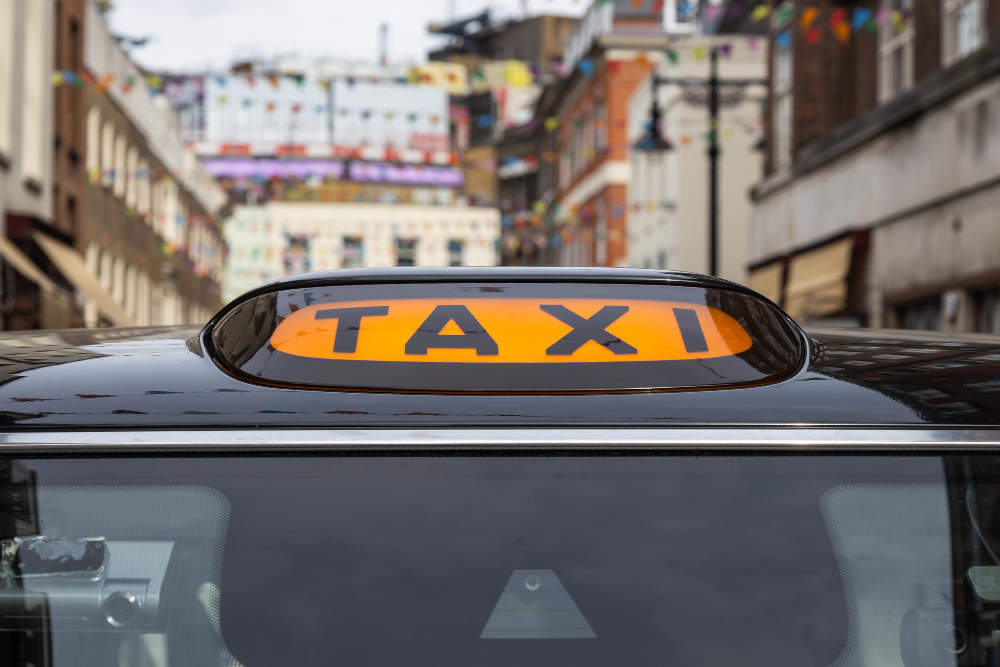
For women enjoying a night out in London, black cabs, licensed app-booked private-hire cars and the Night Tube can all provide legitimate ways home. The best choice depends on the time, location, cost and whether public transport is still convenient.
The most important rule is clearer than any comparison between Uber and the Underground: never get into an unbooked minicab.
Transport for London says private-hire vehicles must be booked through a licensed operator. Only licensed London taxis can legally be hailed in the street or taken directly from a taxi rank. A legitimate private-hire booking creates a record of the vehicle, driver and journey.
That distinction becomes particularly important late at night, when tired passengers may be tempted to accept an unsolicited ride outside a club, bar or event.
Black cab, Uber or Night Tube: how do they compare?
| Option | Cost | Availability | Useful safety features |
| Black cab | Metered. From 25 April 2026, TfL estimates a one-mile journey at £9.00–£13.00 during the 10pm–5am tariff. Minimum fare: £4.40. | Can be hailed when the taxi light is on, hired at a designated rank, or booked. | TfL-licensed driver and vehicle; no pre-booking required. |
| Uber/licensed private hire | Variable. A licensed operator must provide an accurate fare estimate before the journey unless a fixed price has been agreed. | Must be booked through a licensed operator; wait time and price depend on supply and demand. | Booking confirmation should include vehicle registration, driver’s first name, driver licence number and, where available, a photo. Check these before entering. |
| Night Tube | Normal off-peak TfL fares apply. | Friday and Saturday nights on the Central, Jubilee, Northern, Piccadilly and Victoria lines. | Five Tube lines run overnight; service patterns and planned closures should be checked before travel. |
| Night bus | Standard bus fare. | A mix of night-only and 24-hour routes; coverage varies by location. | Every London bus is fitted with CCTV. |
TfL’s 2026 taxi tariff sets a minimum black-cab fare of £4.40. Traffic and journey time can increase the final metered fare.
Uber says its London service includes GPS trip tracking, driver profiles, number-plate and vehicle information, trip sharing, emergency assistance and RideCheck, which can identify an unexpected long stop or possible collision.
When is a black cab useful?
A black cab has one significant practical advantage after a night out: you can legally hail one without arranging a booking first.
That can matter when a venue closes unexpectedly, a phone battery is low or an Underground route is disrupted.
TfL says black cabs can also be found at more than 600 taxi ranks around London, and all taxis accept card and contactless payment.
They are usually more expensive than public transport, especially after 10pm, but the metered tariff is regulated.
For someone who wants a direct journey without waiting on a street for an app-booked vehicle, that can be useful.
How safe is Uber in London?
Uber operates as private hire, so the journey must be booked before the passenger gets into the vehicle.
The app displays information that allows riders to check the number plate, car make and model and driver’s photograph. Uber also provides GPS tracking and allows trip details to be shared with trusted contacts.
TfL’s advice applies regardless of which private-hire app is used: the car and driver that arrive should match the booking confirmation. If they do not, do not get in.
That matters more than the brand name on the app.
A person approaching passengers outside a nightclub and offering a cheap ride is not providing a legitimate booked private-hire journey simply because the vehicle resembles a minicab.
Is the Night Tube safe for women travelling alone?
The Night Tube remains a practical option, particularly on Friday and Saturday nights.
It currently operates overnight on the Central, Jubilee, Northern, Piccadilly, Victoria and Windrush lines. TfL says Night Tube stations remain staffed while trains are operating, and Night Tube journeys are charged at off-peak fares.
TfL also says police and police community support officers patrol its network, while Transport Support and Enforcement Officers carry out night patrols. Extensive CCTV operates across stations and bus stations.
That does not mean women never experience harassment.
TfL published new research on violence against women and girls in July 2026. The underlying research involved more than 3,000 women, girls and parents and found that women and girls generally felt safe travelling most of the time, while concerns about unwanted sexual behaviour still influenced some journeys.
TfL reported that 40% of the women surveyed had at some point chosen not to make a public-transport journey because of safety concerns. That figure reflects the research sample and should not be interpreted as meaning 40% of journeys are unsafe.
What if the Tube has stopped running?
Night buses provide a useful fallback.
TfL says night buses operate 24-hour services and every bus is fitted with CCTV. Stations on Tube, Elizabeth line and London Overground services are staffed from the first to the last train.
The journey may take longer than a taxi, especially across London, but it can avoid paying late-night car fares.
Before going out, save the route rather than waiting until 2am to discover that the Underground line serving your accommodation does not operate overnight.
What about drink spiking?
Spiking is a genuine offence, although the Metropolitan Police says available evidence suggests that the chance of being spiked on a night out or at a festival is low.
Spiking means giving someone alcohol or drugs without their knowledge or consent. It can increase the risk of injury, theft or assault.
If someone begins feeling substantially more intoxicated or disoriented than expected, the Met recommends telling friends and venue staff, getting somewhere safe and avoiding going home alone with someone unknown. In an emergency, call 999.
Protecting a drink is sensible, but responsibility always lies with the person committing the offence.
What if a protest blocks the route home?
This is where London’s demonstrations become relevant to a night-out safety plan without making protests the central risk.
Large marches can temporarily affect roads, buses and taxi pickup locations around areas such as Westminster, Trafalgar Square and the West End.
The Metropolitan Police says most protests and processions take place peacefully, although officers may install barriers or restrict routes where necessary.
Current US travel advice for the UK recommends avoiding areas immediately around demonstrations and checking TfL and Metropolitan Police updates because large gatherings can affect tourist areas and transport.
If a planned taxi route is blocked, it is usually more sensible to move to a different pickup point or use an unaffected Underground station than to walk through a dense political gathering simply to reach the other side.
What is the safest way home after a London night out?
There is no single transport option that is always safest.
A staffed Night Tube station may be the simplest choice at midnight on a Friday. A black cab may be more practical at 3am when several people are travelling together. A booked Uber or other licensed private-hire car offers a direct journey with a digital record and vehicle information.
The common principles matter more than the mode: plan the route before drinking, use only licensed transport, verify private-hire vehicle details, keep your phone charged and avoid isolated shortcuts or unexpected crowds.
London remains a city where millions of people travel after dark. For women, sensible preparation can reduce avoidable risks without treating a normal night out as inherently dangerous.

