

We’re surrounded by colour every single day, but we rarely pause to wonder why a specific mix of shades, like mustard and navy, just feels right. You don’t need a design degree to notice it; it’s simply how we take in the world. When you start a hobby that plays with colour, it gently shifts your perspective. Suddenly, an ordinary walk down the street feels like a little, personal gallery of light and shadow.
The Tactile Joy of Paint by Numbers
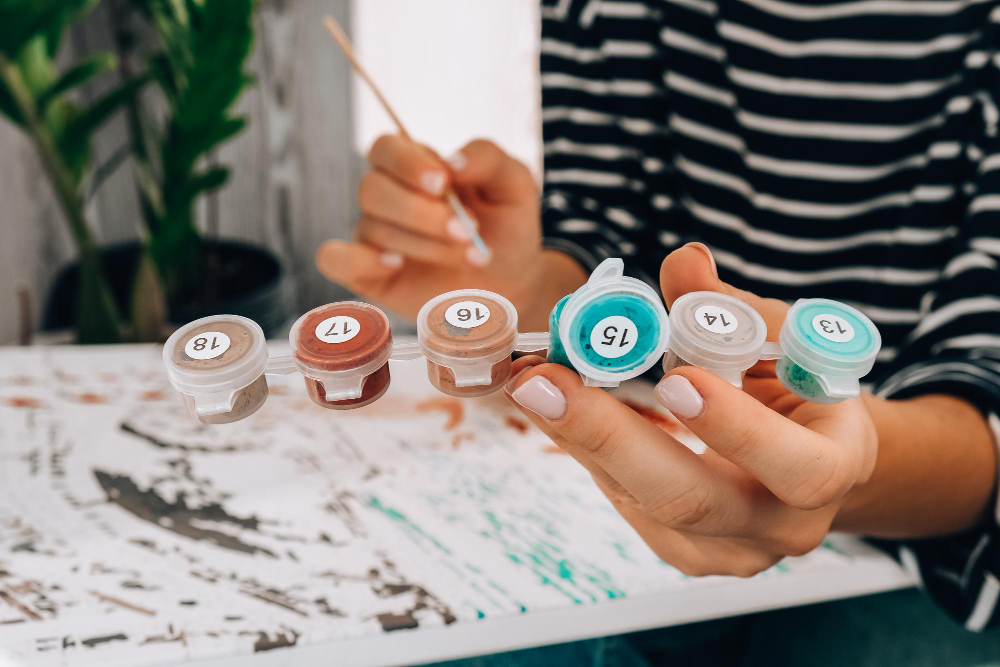
There is a reason the classic paint by the numbers set has seen a massive resurgence in recent years, both as a hobby and as home decor. It is not just about nostalgia. It is about removing the pressure of the blank canvas while still engaging with colour theory in a hands-on way.
When you follow a numbered guide, you start to notice how a specific shade of ochre interacts with a muted teal. You learn how shadows are built not with flat black, but with deep purples and cool blues. For those looking to make the experience even more meaningful, many artists now turn to personalized paint by number kits, transforming their own photographs or favourite memories into structured, colour-coded canvases. Once finished, the resulting artwork serves as a striking wall decoration that bridges the gap between personal sentiment and artistic technique, teaching the eye to appreciate how colours balance within a familiar image.
Foraging and Natural Dyeing
Stepping outside offers a direct lesson in organic colour palettes. Foraging for natural dye materials, like avocado pits, onion skins, or marigold flowers, connects you directly to the earth’s pigment library.
The process of extracting colour requires patience and close observation. You watch a pale yellow broth transform into a vivid gold when treated with a mordant. This hobby forces you to look at the environment differently. A walk in the park is no longer just a walk; it becomes a scavenger hunt for potential hues. You begin to notice the subtle gradations in autumn leaves or the unexpected grey undertones in winter bark.
Digital Photography and Colour Grading
You definitely don’t need a fancy darkroom to figure out how colours work together. I used to just slap a trendy filter on my phone photos and call it a day. But lately, I’ve been messing with the manual sliders in my editing app, and it completely changes how you see a picture. Try pulling up a landscape shot and dragging just the green slider toward teal. It’s wild how much that one tiny tweak shifts the entire mood. You stop seeing colours as permanent traits painted onto objects. They become more like dials you can turn. Before long, you catch yourself framing a walk down the street differently, already hunting for a cool contrasting colour before you even tap the shutter.
Floral Arrangement and Ikebana
Floral design is essentially three-dimensional colour theory. The Japanese practice of Ikebana, in particular, emphasizes the harmony between the container, the stems, and the blooms.
When building an arrangement, you are forced to consider negative space and how a single pop of crimson can anchor a composition dominated by soft whites and greens. Visiting a local flower market becomes an exercise in curating a palette. You learn that colours have weight and temperature. A heavy, dark burgundy rose grounds a bouquet, while bright yellow solidago adds upward visual movement. This spatial awareness of colour translates directly to how you might arrange objects in your home.
Stained Glass and Suncatcher Crafting
Working with translucent materials introduces the element of light into colour composition. Cutting and assembling stained glass or resin suncatchers requires you to think about how colours will behave when illuminated.
A piece of amber glass looks entirely different on a workbench than it does hanging in a south-facing window. This hobby teaches the difference between additive and subtractive colour mixing. You learn to place contrasting colours side by side to make them vibrate, or to use leading to give the eye a place to rest. The result is a functional decoration that actively changes throughout the day as the sun moves across the sky.
Slowing Down Your Perception
Developing an eye for colour composition does not require a formal art degree. It requires curiosity and a willingness to engage your hands.
Whether you are mixing natural dyes, adjusting digital sliders, or carefully filling in a numbered canvas, these practices slow down your perception. They train you to look closer. Soon, you will find yourself noticing the perfect complementary pairing in a stranger’s outfit or the subtle analogous shifts in a sunset. The world becomes a little more vivid, one intentional hobby at a time.

