As China’s digital economy continues to expand and its games industry accelerates its global reach, a growing number of Chinese technology and design professionals are contributing to international innovation teams, taking on increasingly important roles in global product design, digital services, and cross-industry collaboration.
In November 2025, leading global venture capital firm Lightspeed and GamesBeat, a prominent games-industry publication, jointly announced the Game Changers 2026 list. Neon, a U.S.-based commerce infrastructure company for games, was selected as one of 25 gaming and technology startups worldwide. Presented in partnership with Nasdaq, the honorees were subsequently featured on the Nasdaq MarketSite display in Times Square, New York. Neon earned industry recognition in significant part for the strength of its end-to-end product experience. Behind that system is Yi Chen, the company’s China-born Head of Design, whose work has brought them growing visibility across the global games industry.
With years of experience spanning cross-media and digital product design, Chen now serves as Head of Design at Neon, leading the company’s core product-experience strategy. From player-facing web shops, checkout, and payment flows to the administrative tools, analytics dashboards, and design systems used by game developers and publishers, Chen leads a multidisciplinary design practice that spans both consumer and enterprise experiences.
“Excellent product design goes far beyond the interface. What matters most is understanding how people actually behave and use products within different cultural contexts,” Chen said.
In Chen’s view, game-commerce infrastructure sits between two groups: developers seeking more direct relationships with their players, and a global audience whose languages, payment habits, and digital ecosystems vary widely. Design teams must create a coherent global experience while respecting and adapting to the needs of local markets.
Chen’s path into design did not begin with internet products. Before moving into digital product design, they worked across book design, cultural and creative products, brand identity, and multimedia.
Book design taught Chen how to structure information and shape a narrative. Brand design deepened their understanding of visual consistency and user trust. Cultural and creative work sharpened their sensitivity to context and expression, while multimedia design developed their command of interaction feedback, timing, and cross-media storytelling. These seemingly disparate experiences ultimately converged in digital product design, forming a distinctive and integrated design perspective.
“Whether the work is a book, a brand system, or a payment flow, design must ultimately return to the human experience,” Chen said.
The medium may have shifted from printed pages to digital interfaces, but the central challenge remains the same: how to communicate information efficiently, reduce cognitive load, and build lasting trust between people and products. As Chen moved into global products, this inquiry expanded to include differences in behavior and expectations across cultures.
Payments offer a revealing lens on those differences. In China, mobile payments are deeply embedded in daily life, and users expect digital transactions to be fluid, convenient, and integrated. In Europe and North America, privacy, payment security, risk management, and global compliance are equally important dimensions of the experience. These priorities are not mutually exclusive; in global products, they increasingly interact, converge, and evolve together.
The Neon products Chen helps design offer a vivid example of that convergence.
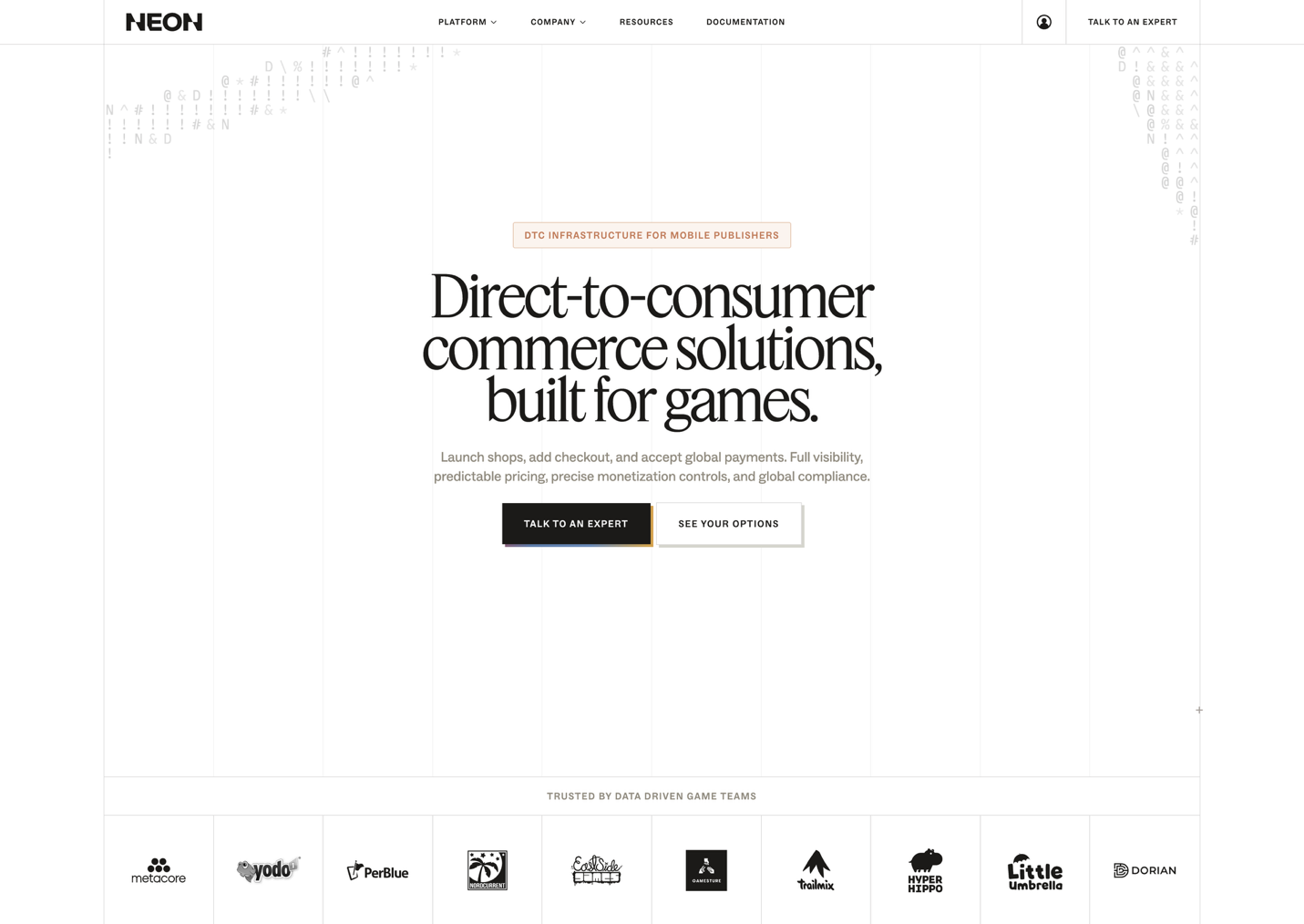
According to public information, Neon provides direct-to-consumer commerce infrastructure for the games industry, including official web shops, checkout, global payments, and merchant-of-record services. Its products must make browsing, purchasing, and payment clear, seamless, and trustworthy for players, while also enabling game developers and publishers to manage catalogs, configure live operations, analyze data, and navigate complex commercial requirements.
Among the partnerships highlighted on Neon’s website is Yodo1, a Chinese games company. The two companies have worked closely on the web shop for Transformers: Earth Wars, reflecting a broader trend of Chinese game companies using global commerce infrastructure to expand in overseas markets. Neon’s publicly presented global payment network also includes Alipay and WeChat Pay, payment methods familiar to Chinese users, helping global products connect distinct regional digital-commerce ecosystems.
In July 2026, Neon announced a $13 million Series A financing round, with leading South Korean games company KRAFTON participating as a strategic investor. GamesBeat reported that Neon and KRAFTON signed a partnership agreement in the summer of 2025 under which KRAFTON would leverage Neon’s payments and commerce infrastructure. For Chen, collaborations across regions do more than extend a product’s reach; they require design teams to continually deepen their understanding of the real needs of users and partners in different markets.
“We are rarely designing for a single audience. We are designing for people in different countries, shaped by different payment habits and digital ecosystems,” Chen said. Truly excellent global products, they added, do not simply transplant one model into a new market. They adapt and improve continuously, grounded in a deep understanding of local culture, user needs, and industry conditions.
In recent years, Chinese game companies have accelerated their expansion overseas, while collaboration across the global games value chain has grown more closely interconnected. At the same time, the experience China’s internet industry has accumulated in mobile payments, digital commerce, and user experience is increasingly being studied and incorporated by international product teams.
Chen sees this two-way exchange as a defining feature of global digital-economy integration. Chinese game companies are becoming more deeply embedded in global industry networks, while international technology companies are moving faster to understand Asian markets and China’s digital ecosystem. Chinese designers with cross-cultural experience are emerging as important links between different product philosophies, user habits, and ways of working.
From books, cultural products, brand identity, and multimedia to digital products and global game-commerce infrastructure, Chen has never regarded their career as a series of disconnected stages. To them, design is not merely a tool or medium, but an ongoing way of understanding the relationships between people and information, people and technology, and people and the wider world.
As a member of an international innovation team, Chen describes their role as a bridge: bringing an understanding of Chinese internet products and cultural context into global product practice, while learning from design approaches across markets and helping different digital ecosystems connect more smoothly and effectively.
As the digital economy continues to deepen, more Chinese technology and design professionals with international perspectives are working at the forefront of global innovation. They are contributing directly to international product development while witnessing China’s digital-economy experience become increasingly integrated into global value chains—building bridges for exchange, mutual learning, and shared progress across countries, cultures, and user communities.