

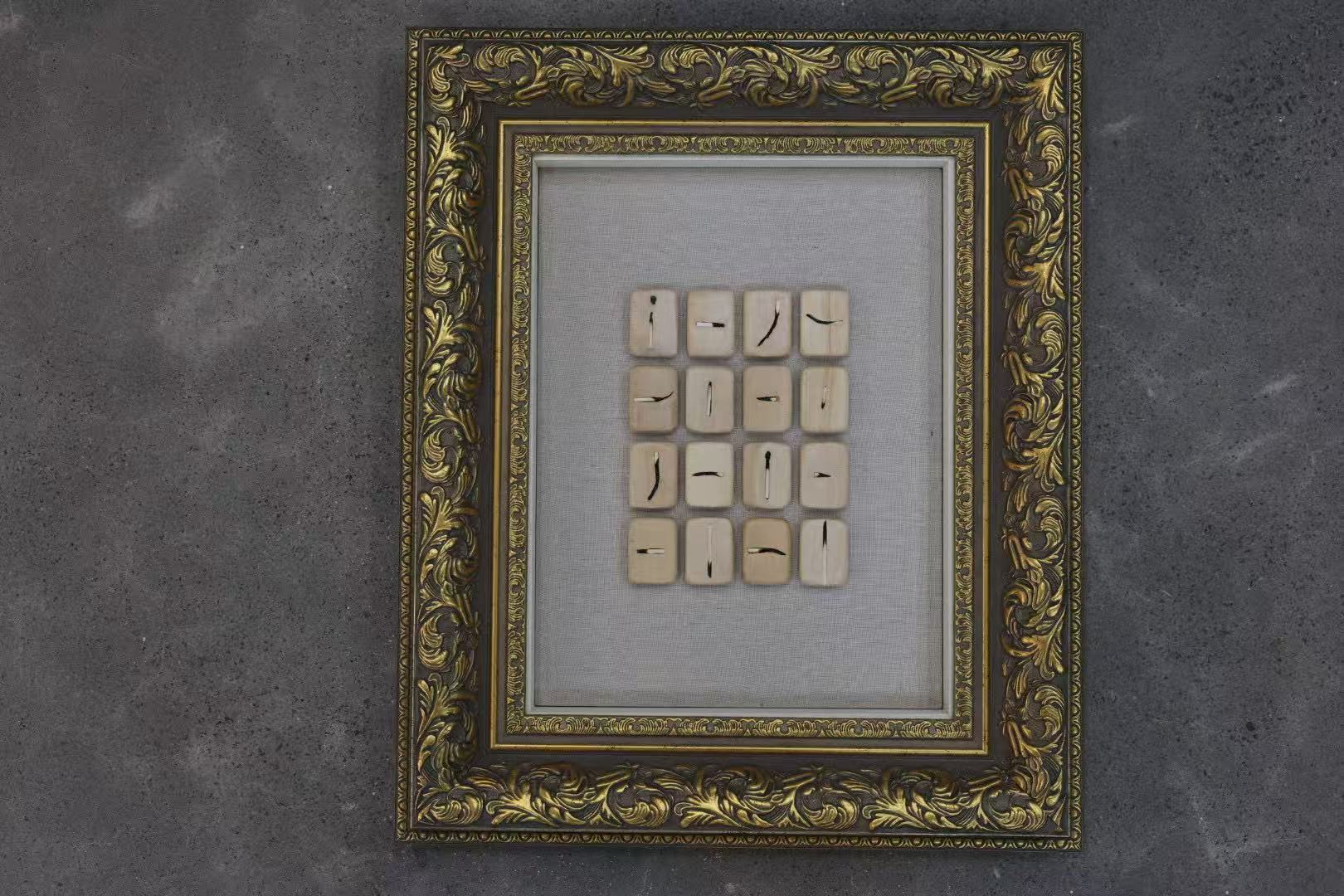
When you light a match and let it burn to its end, it crumbles into dust and returns to the earth. That same earth that created it as it grew into a tree, before it was cut down, and a small sliver of it was turned into a match. It’s the cycle of life that applies to every living thing on earth, including us. It’s this cycle of life, death and rebirth that we find throughout Chen Werui’s practice.
I first came across his works at the Asylum Chapel in Peckham, South London – an exhibition curated by Swanfall Art. The chapel setting reminded me of a particularly fitting biblical quote: “For dust you are, and to dust you shall return.” While the setting evokes Christianity, the cycle of death and renewal applies to all religions and spiritualities, including those found in China, Werui’s homeland. There is a Chinese proverb that translates as “falling leaves return to the roots,” which conveys a similar meaning.
His works feature embedded matches that have been lit and partially burned before being extinguished and incorporated into wooden blocks. The blocks also evoke Chinese references, such as woodblock printing and Mahjong tiles, while the layout of the matches is intentionally designed to resemble Chinese characters. The works comfortably straddle Eastern and Western traditions, art history and contemporary culture.
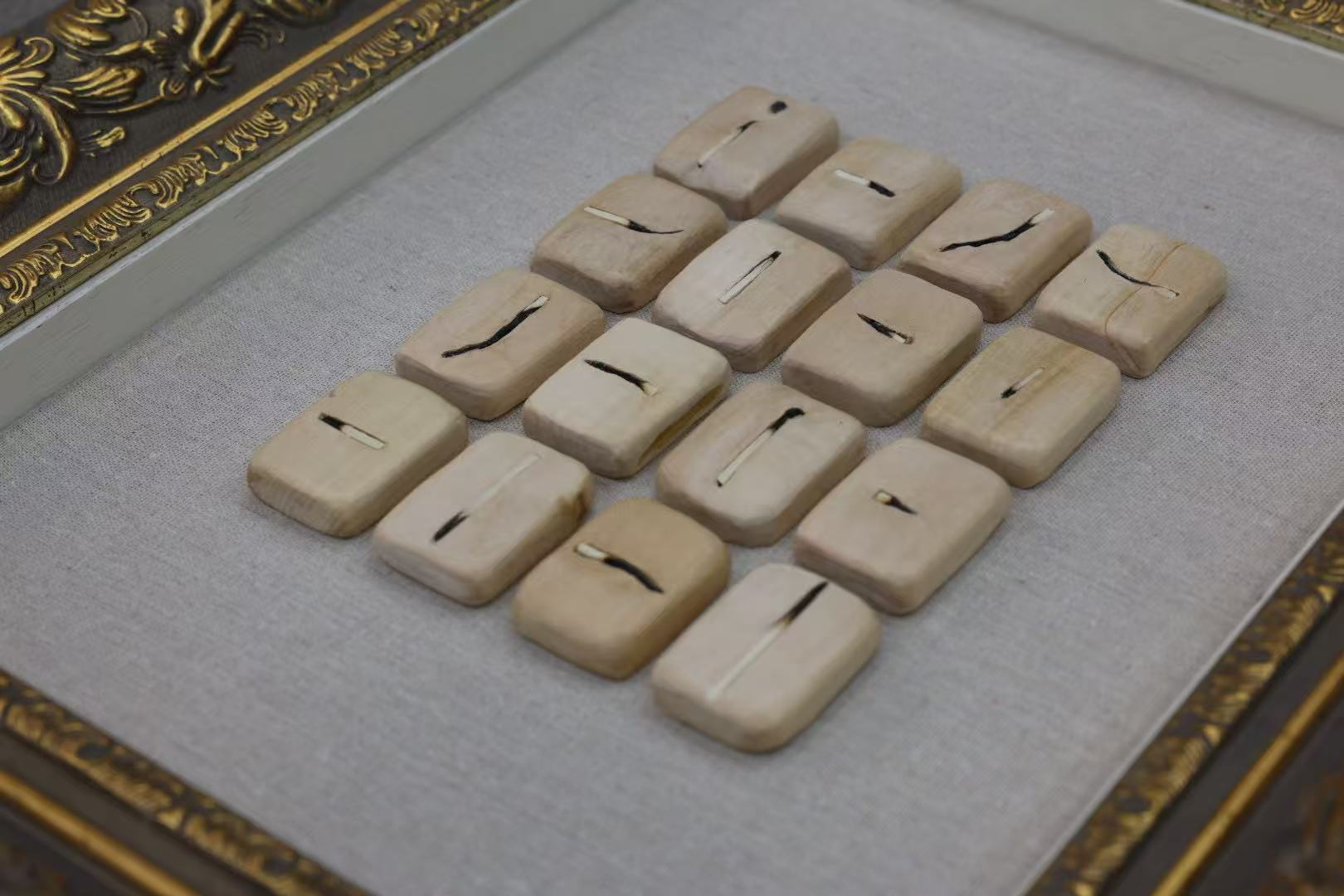
The matches lie in the frame as if they are carcasses, confronting us with our own mortality, as many of us will also be lying in wooden boxes when the flame that is our lives leaves our mortal bodies. It’s a contemplative work that uses simple means to highlight the transitory nature of life and our time on this earth.
It follows in a long-established tradition throughout art history. Vanitas and Memento Mori paintings employed symbolism to remind viewers that life is fleeting, often through skulls or rotting fruit. We also see contemporary artists adopt a more sensational approach, as Damien Hirst created vitrines in which flies are born, mate, and die in a grotesque summary of life. Unlike Hirst’s work, Werui is far more subtle in landing his point, allowing us to spend time with his delicate pieces before the full weight of their concept sinks in.
When placing these works in a chapel, considerable attention was also paid to their framing. Typically, the works would be displayed in contemporary frames. Yet, Werui chose to adopt more ornate frames to reflect on how art-historical pieces from the Renaissance or Baroque periods would have been displayed in chapels and churches centuries ago.
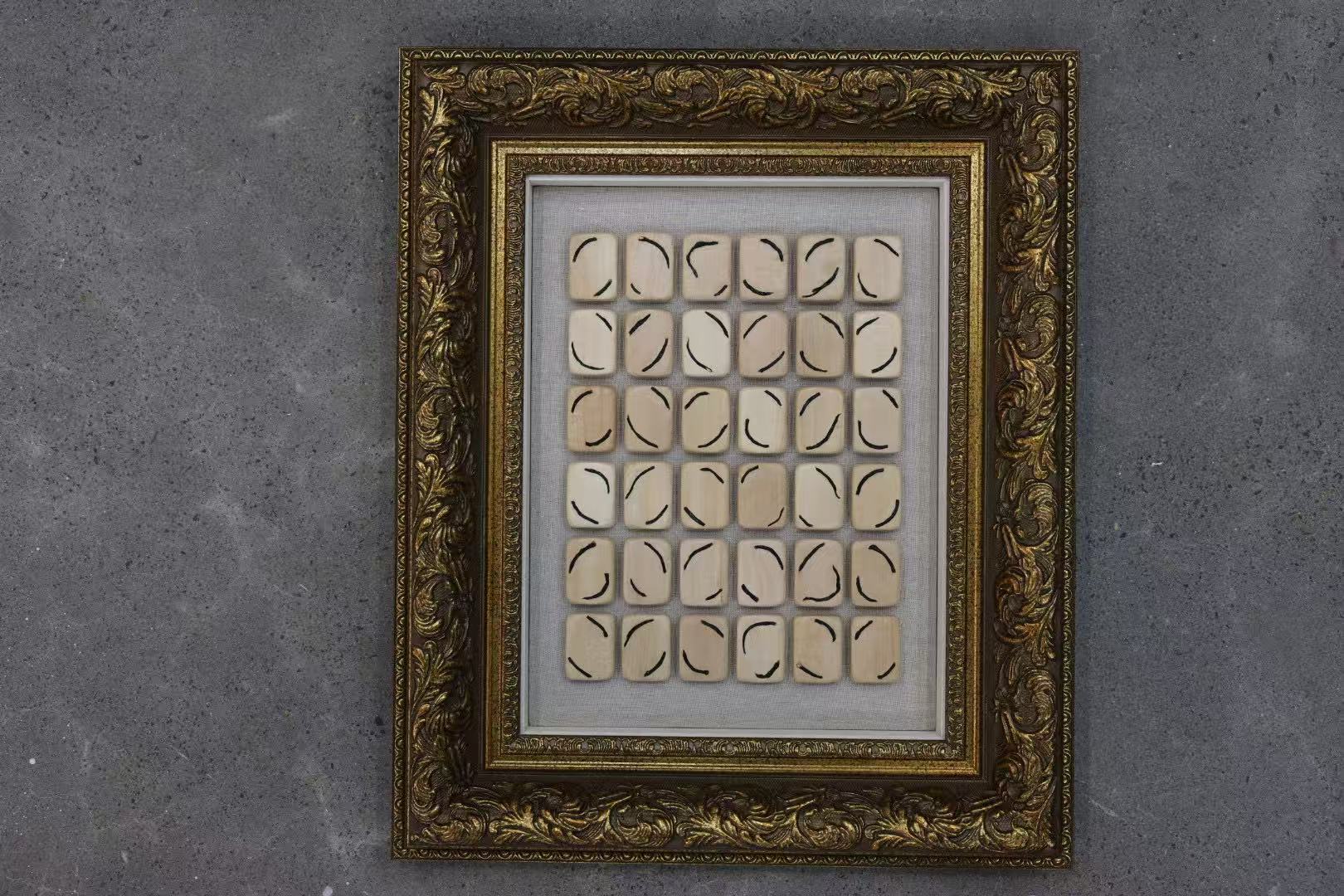
The matchsticks recur in his wider practice, with matches serving as roofing, instruments, walking sticks, and hats in figurative paintings. While these scenes have more complex narratives, the idea that life, death, and rebirth come to us all is embedded in each work.
Chen Werui’s works may be small in scale, but their impact on the viewer can be monumental. Like matches, we will also turn to dust and return to earth, and through Werui’s work, we can contemplate and confront our own mortality.
Werui Chen’s works were part of the ‘Ashes to ashes’ exhibition at the Asylum Chapel, which ran from 15-19 December.

