Home Blog Page 128

Small Decor Choices That Make a Big Impact in Home Styling

There’s something special about walking into a room that instantly feels right. Not because it’s packed with elaborate furniture or pricey statement pieces, but because small details come together in a way that feels warm and inviting. You don’t need a complete makeover to refresh your home. A few thoughtful updates can shift the entire atmosphere.

Why Small Home Decor Updates Can Transform Your Space

Big changes often get the most attention, but little accents are the pieces that shape the feeling of a room. A soft throw, a new cushion, a plant by the window—these touches bring comfort and personality without much effort. Simple updates often make the strongest impact because they influence the room’s tone.

How Textures and Layers Add Comfort to Your Home

Texture is an easy way to make any space feel welcoming. A woven rug, a cozy throw, or a plush cushion adds warmth and depth. This is where custom pillows work beautifully. They soften hard furniture lines and introduce color or pattern without overwhelming your decor.

Solid shades add calmness, soft patterns bring charm, and bold prints introduce energy. Layering these textures creates a comfortable setting that feels complete.

Personal Decor Pieces That Add Meaning to Your Rooms

Some decor goes beyond style—they hold memories and stories. Photo pillows and custom photo pillows do exactly that. A snapshot from a family trip, a picture of your pet, or a meaningful quote offers a sense of closeness that wall art can’t match.

These small touches help your home feel like it truly belongs to you. They blend comfort with emotion in a simple, beautiful way.

Small Accent Decor Ideas That Make a Room Feel Fresh

You don’t need a shelf full of ornaments to add charm. A few carefully chosen pieces can brighten your space instantly. A candle with a calming scent, a plant on a side table, or a framed picture near the window shifts the mood right away.

If a room feels plain, try adding:

  • A small art print
  • A decorative vase
  • A sculptural item on a shelf

These accents guide the eye and bring gentle character to your home.

Using Color to Refresh Your Space Without a Remodel

Color can change the entire mood of a room. You can introduce fresh shades through cushions, pillow covers, throws, or art pieces. This works perfectly if your room has neutral furniture.

A single custom pillow in a warm rust, olive green, or blush pink can instantly update your sofa. Pastels keep the space light and calm. Rich shades bring depth and a cozy feel.

You don’t need to repaint walls or replace big furniture—simple color additions make a noticeable difference.

Where to Place Decor for Maximum Impact

Placement plays a more important role than the number of items you own. A reading corner feels more inviting with a pillow and a soft lamp. A hallway bench becomes useful and stylish with two cushions.

Try these ideas:

  • Arrange custom pillows in odd numbers for a balanced look.
  • Place a photo pillow at the center of your bed as a highlight piece.
  • Style your coffee table with one plant, one book, and one personal item.

This keeps your space open and intentional, not crowded.

Affordable Home Decor Upgrades That Look Stylish

Refreshing your home doesn’t need a big budget. A few easy swaps can create a noticeable change. Plants, wall prints, stylish storage, and personalized items offer a polished feel without high costs.

This is where brands like CanvasChamp make it easier. You can add custom touches that feel premium without overspending, making your home standout with meaningful pieces.

Final Thoughts

Small decor choices often make the biggest difference in home styling. A few thoughtful additions can help your space feel warm, personal, and visually complete. Whether it’s a custom pillow, a photo pillow filled with memories, or a simple new accent, every detail adds its own charm.

What Exercises Can You Do On A Cable Machine?

Cable machines are widely used in commercial and home gyms because they offer consistent resistance and a wide range of motion. Many lifters rely on them to add variety and improve muscle control. Brands that supply equipment, such as Fitness Avenue cable machines, offer adjustable pulleys and multiple attachments that allow you to train nearly every muscle group. Understanding the exercises you can perform on a cable machine can help you build an effective and balanced workout routine.

What Upper-Body Exercises Can You Do on a Cable Machine?

Cable machines offer a wide range of upper-body movements for the chest, back, shoulders, and arms. Their adjustable pulleys allow you to target muscles from different angles, helping improve strength and stability.

Chest

  • Cable Chest Fly – Performed with handles set at shoulder height or slightly above. The movement emphasizes horizontal adduction of the chest muscles.
  • Low to High Fly – Starting with cables near the floor and pulling upward helps activate the upper chest.
  • High-to-Low Fly – Cables are set high, and the movement sweeps downward, engaging the lower chest.

Back

  • Lat Pulldown (using cable attachment) – Targets the lats and upper back by pulling the bar toward the chest.
  • Seated Row – Performed on a low pulley with either a V-bar or straight bar.
  • Straight-Arm Pulldown – Helps isolate the lats without involving the biceps.

Shoulders

  • Cable Lateral Raise – Provides constant tension on the middle deltoids.
  • Cable Front Raise – Targets the front deltoids through a controlled forward lift.
  • Cable Rear Delt Fly – Works the rear deltoids and upper back.

Arms

  • Cable Bicep Curl – Can be done with a straight bar, rope, or single handle.
  • Cable Tricep Pushdown – Rope or straight bar attachments help work the triceps.
  • Overhead Cable Tricep Extension – Stretches the long head of the triceps for deeper engagement.

What Lower-Body Exercises Can You Do on a Cable Machine?

Cable machines aren’t only for upper-body movements; they can also be used to strengthen the legs and glutes. Attach ankle straps or adjust the pulley height to perform controlled, targeted lower-body work.

Glutes

  • Cable Kickback – A classic glute exercise using an ankle strap to extend the leg backward.
  • Cable Hip Abduction – Targets the outer glutes and hips through side-leg lifts.
  • Cable Pull-Through – Works the glutes and hamstrings by pulling the cable through the legs while hinging at the hips.

Legs

  • Cable Squat – Holding the cable at chest height adds resistance to a traditional squat.
  • Cable Lunges – Forward or reverse lunges with cable resistance challenge hip stability and leg strength.
  • Cable Hamstring Curl – Can be done standing or kneeling with an ankle strap.

What Core Exercises Can You Do on a Cable Machine?

Cable machines offer adjustable resistance for core training, making it easier to target the abs and obliques without relying solely on body weight.

Abdominals

  • Cable Crunch – Performed kneeling with a rope attachment to engage the upper and lower abs.
  • Cable Reverse Crunch – Using ankle straps, you can pull upward to target the lower abdominal region.

Obliques

  • Cable Woodchopper (High to Low) – A diagonal pulling motion that engages the obliques and deep core muscles.
  • Cable Woodchopper (Low to High) – Similar movement pattern, but focuses on the opposite direction of rotation.
  • Cable Side Bend – Single-arm movement that isolates the side of the torso.

What Full-Body Exercises Can You Do on a Cable Machine?

Cable machines allow for multi-joint movements that recruit several muscle groups at once. These can help build strength, coordination, and stability.

Cable Squat to Row

Combines a squat with a pulling motion to target the legs, glutes, and back.

Cable Deadlift

Using a low pulley, this movement mimics a standard deadlift with constant cable tension.

Cable Woodchopper Variations

Although often considered a core exercise, the woodchopper engages the legs, hips, and shoulders, making it a full-body rotational movement.

Cable Lunge with Press

Combines lower-body strength with upper-body pressing for a coordinated, compound motion.

What Benefits Come From Using a Cable Machine?

Cable machines provide a unique training experience thanks to adjustable angles, continuous resistance, and increased control. These features help improve strength and stability while reducing joint strain.

1. Controlled Range of Motion

The resistance stays consistent throughout the entire movement, reducing abrupt shifts and helping users focus on technique.

2. Adjustable Resistance Levels

You can increase or decrease resistance quickly, making the machine useful for progressive overload or fast-paced training.

3. Versatility Across Muscle Groups

Because you can adjust pulley height and swap attachments, a single machine can replace several pieces of equipment.

4. Suitable for All Fitness Levels

Beginners can perform exercises safely with lighter loads, and experienced lifters can increase intensity as needed.

In Summary

A cable machine offers an extensive range of upper-, lower-, core-, and full-body exercises. Its adjustable design makes it suitable for beginners and experienced lifters alike. By understanding the many exercises available and how each one targets different muscle groups, you can create varied and effective workouts that support your overall fitness goals.

She Rises With the Sea: When Feminist Folklore Meets Ocean Conservation

Across the world, women make up nearly half of the fisheries workforce, yet are concentrated in lower-paid roles and when ocean ecosystems decline, they’re disproportionately affected. At the same time, women are leading ocean conservation efforts: marine biologists and oceanographers are breaking barriers in research, Indigenous women are maintaining traditional ocean stewardship practices and grassroots activists are driving efforts to reshape public perceptions of marine life. According to UNESCO, achieving gender equality in ocean governance isn’t only about representation — it’s the key to sustainable ocean management, with research demonstrating women leaders are more likely to prioritise environmental protection and long-term ecosystem health.

In Thanet, a new series of murals brings this intersection of feminism and marine conservation into public view. ‘She Rises With the Sea’ is a partnership between Power of Women Thanet and Rise Up Residency, featuring three large-scale works across Broadstairs, Westbrook, and Margate. Lead artist KMG, whose style blends folklore with conservation messaging, hopes the murals will inspire viewers “to learn about and appreciate the species we have within our waters and why their beauty is significant and important.” Louis Michel, Margate-based artist and co-founder of Rise Up Residency, supports the project in a mentoring role. He reflects on how living in coastal towns and spending time in wild environments has had “untold impacts on how [he] look[s] at the world. Without it, the world would be very linear and dull.” This perspective is evident in the project, which combines environmental awareness with community engagement. The first two murals were revealed on 11 October to mark International Day of the Girl, while the final piece is due to be unveiled in December.

In Broadstairs, The Ocean Wolf and the Selkie draws on imagery from Gaelic and wider Celtic folklore. One element of the mural is linked to the Madadh-cuain, an old term associated with orcas, which KMG interprets through the figure of a woman wearing the skin of an orca so she can swim with a pod — crossing between land and sea, acting as a protector and embodying the responsibility humans hold toward the species. This figure is woven into the selkie myth, in which a shapeshifting woman transitions between seal and human form by shedding and replacing her skin. “The selkie represents strength and resilience but also vulnerability. Having the power to shapeshift between the land and sea using the skin of a seal is symbolic of the harmony these women have between the land and the ocean,” KMG elucidates her understanding of the artwork. “There is also a significance in the stories of humans trying to control Selkies for their own advantage, much like the way many humans behave towards marine life. But in the end, the Selkies often take back the power and return to sea.”

Photo source: @kmgyeah


The Shark Whisperer, located in Westbrook, features a pink-haired free diver alongside the UK’s endangered Tope shark. The woman reaches toward the shark’s snout in a gesture reminiscent of conservationist Ocean Ramsey’s approach to calm, respectful interaction with large marine species, serving as a visual cue that frames sharks not as threats but as co-participants in the marine environment. The Tope itself is a gentle species, with no recorded unprovoked attacks on humans, and is known for its powerful long-distance swims. By placing a woman diver in quiet dialogue with a vulnerable native shark, the mural challenges entrenched, fear-driven narratives and instead centres curiosity and coexistence.

We live in a time where women make up 33% of all researchers globally, yet represent only around 12% of national science academy members, starkly illustrating the gap between participation and recognition. On this note, KMG speaks to a broader message behind the murals in Thanet: “In a time where we are witnessing attempts to erase women’s voices and contributions within the history of science, now it is more important than ever to champion women working within these fields and beyond.” Through this project, contributions that have long been overlooked are brought back into visibility.

What at first glance appear to be colourful celebrations of women and the sea are, in fact, layered with deeper meaning: they introduce passersby to endangered species, revive ancient myths and emphasise the crucial roles women play in ocean conservation. Projects like these — particularly large-scale murals that are impossible to ignore — prove how art can accomplish more than inspire creativity or offer aesthetic enjoyment; it can make viewers pause and reconsider the relationships between people, nature and culture at a critical moment in climate history.

Ethical Jewelry Brands That Are Good For The Soul

Jewelry can be a tough gift to get right.  Beauty is subjective, but even the most gorgeous piece can fall flat without the proper sentiment behind it.  For many people, a piece of jewelry can be sentimental–it may be a family heirloom, an engagement ring, or engraved with a deeply meaningful message.  Some jewelry brands go beyond the aesthetic to focus on the meaning behind the piece, with jewelry inspired by classic literature or symbols of nature and humanity.  This holiday season, consider finding jewelry that’s not just a treat to the eyes, but a treat for the soul.

Check out these ethical jewelry brands:

Alighieri

Alighieri is a jewelry brand whose pieces are equally as captivating as its name.  Inspired by Dante Alighieri’s Divine Comedy, Alighieri sells timeless heirlooms hand-carved and cast in the UK.  The Leone Medallion brings strength and courage, just as Dante sought in the dark forest, while The Poet’s Pencil Necklace celebrates the magic every reader finds when they get lost in a good book.  Every piece is made using 100% recycled bronze, silver, and gold, with ethically sourced gemstones and low-carbon practices.  With each piece rooted in story, Alighieri jewelry is a fitting gift for the literary-lover in one’s life.  Check it out at alighieri.com.

Kenda Kist

Kenda Kist Jewelry is led by NC-based artist Kenda Kistenmacher, who handcrafts and designs each piece with her husband and children.  Kenda Kist uses responsibly mined precious metals and local materials wherever possible to reduce its carbon footprint while supporting local businesses.  Pieces range from timeless Pearl Hoop Earrings to modern Sterling Silver Snake Stud Earrings, lending a dash of elegance to everyday style.  Woman-led, family-operated, and sustainably produced, this brand offers the gift of guilt-free jewelry for the holidays.  Browse the collection at kendakist.com.

Catori Life

Catori Life leans into the spiritual side of jewelry, with ethically-made pieces designed for a humanity that lives in balance with nature.  The Gold Ankh Necklace bears an ancient Egyptian hieroglyph that symbolizes life, protection, and rebirth, while the Wild Rose Necklace honors the wild mountain rose, which grows freely and untamed in the forests.  Each piece holds deep meaning, with beautiful designs that mirror the beauty of the earth and its people.  View the full collection at catorilife.com.

Hathorway

Hathorway is named for Hathor, the Egyptian goddess of love and beauty.  As the goddess was known for wearing a headdress made of cow horns, Hathor pieces are crafted from ethically sourced buffalo horns, giving testament to the beauty of these awesome creatures.  Because they’re made from organic materials, each piece is truly unique, with its own patterns and designs.  The Hanoi Triple Crescent Buffalo Horn Earrings are dark and angular, while the Tron Buffalo Horn Minimalist Bangle Bracelets add simple glamour to any look.  Find more at hathorway.com.

The Honest Jeweler

The Honest Jeweler takes a simple necklace, bracelet, or spinner ring, and turns it into an anchor, grounding the wearer in the present moment.  The brand’s signature spinning rings provide a soothing motion to relieve anxiety and offer encouragement through custom engravings.  From religious inscriptions of faith to positive affirmations, each piece of custom-engraved jewelry can serve as a reminder to stop, breathe, and remember the beauty of life.  Anyone who needs a little boost for the holidays will enjoy one of these thoughtful, uplifting pieces of jewelry.  Learn more at thehonestjewelershop.com.

Luna & Rose

Luna & Rose is an ethical jewelry brand that champions minimal environmental impact and a wholehearted embrace of conscious consumption.  Its necklaces feature religious icons like St Anne (Patron Saint of Mothers), ancient goddesses like Aphrodite, and even historical heroes like Joan of Arc.  The brand also designs simple yet elegant pieces like the gorgeous Polly Triple Pearl Ring, which relies on traditional wax carving techniques to turn 2D designs into timeless, high-quality jewelry.  Learn more at lunaandrose.com.

Japanese Rural Life Adventure: Everything We Know So Far

0

Japanese Rural Life Adventure is officially coming to Steam soon. Developed by G-MODE and Game Start LLC, the new title offers a pixel-art world where players can immerse themselves in village life. In particular, it is a cozy simulation game that brings players to the countryside of Japan.

At the same time, the upcoming game joins the growing genre of farming simulations. It also seems to be inspired by hit titles, such as Stardew Valley and Roots of Pacha. Specifically, the game focuses on culture rather than combat or fantasy elements. It promises over 100 hours of gameplay, where players need to finish missions.

Experience Rural Japanese Life

Based on the official Steam announcement, Japanese Rural Life Adventure follows the journey of a city newcomer. In detail, the protagonist will take over an old countryside home in need of care. The initial goals are to clear weeds, clean floors, and fix paper screens.

The game also highlights seasonal traditions. Players can enjoy cherry blossoms in spring. In the same way, they have the option to join summer festivals and try roasted sweet potatoes in the fall. The winter season lets players hear temple bells. Plus, they can go to the shrine during the New Year.

Farming, Crafting, and Activities

According to the developers, the key features include self-sufficiency and village life. Particularly, the game lets players grow crops, fish, and catch bugs. They can even prepare dishes and seasonings. Getting materials and producing goods is also possible to improve the heritage home. On top of that, players will need to help villagers with tasks and complete missions to unlock areas.

Japanese Rural Life Adventure: System Requirements

Thanks to its simple but engaging gameplay and graphics, the game has modest PC requirements. As of writing, the Steam page only lists the minimum specs needed.

  • Graphics: Graphics card with DX10 (shader model 4.0) capabilities
  • Memory: 1 GB RAM
  • OS: Windows 10 64-bit
  • Processor: 64-bit
  • Storage: 500 MB available space

These system requirements make the game accessible to players, even on lower-end PCs.

Release Date and Supported Platforms

Steam labels Japanese Rural Life Adventure as “Coming Soon.” There is still no date and time for when the new game will launch. Upon release, players can expect it to be available on PC via Steam and Nintendo Switch.

As fans of cozy life simulations await the official drop, the promised offerings make this a promising title. It is especially exciting for players who look to escape into a relaxing gaming experience.

Kirby Air Riders: All Playable Characters and How to Unlock Them

0

Kirby Air Riders comes with an impressive cast of new playable characters and to unlock every single character in the game, you’ll need to complete specific objectives on the Checklist Cards across all four modes. Characters in Kirby Air Riders are basically different playable riders you can unlock and use in races, each having its own set of useful stats, specials, and Copy abilities. So, if you’re looking to round out your character pool by unlocking new racers, here’s a list of all the characters in Kirby Air Riders and how to unlock them.

Kirby Air Riders: How to Unlock Every Character

Kirby Air Riders has 21 playable characters, four of whom are available right from the start, including Kirby, Waddle Dee, King Dedede, and Meta Knight. As mentioned, to unlock the remaining characters, you will need to complete various challenges throughout the game’s four major modes: Air Ride, Top Ride, City Trial, and Road Trip. However, each mode has its own set of rules and rewards, and not all characters can be unlocked in every mode.

Moreover, every Kirby Air Riders character comes in at least one alternate color variation, which you can get by completing the unlock challenges again and again. With all that covered, here’s how to unlock every other character in Kirby Air Riders:

How to Unlock Bandana Waddle Dee in Kirby Air Riders

Bandana Waddle Dee is one of the easiest characters to unlock in Kirby Air Riders. He can be unlocked by simply playing a match of City Trial and destroying two item boxes within the first 30 seconds of the match.

How to Unlock Cappy in Kirby Air Riders

To unlock Cappy, you’ll need to complete a full City Trial match without picking up any of the grey, stone-textured Power-Down items. As long as you avoid those debuffs, Cappy will unlock after the match ends.

How to Unlock Chef Kawasaki in Kirby Air Riders

You can unlock Chef Kawasaki in Road Trip’s Air Ride mode by finishing the Air Ride challenge three times. Alternatively, Chef Kawasaki can be unlocked in Top Ride: Mountain by topping the race by at least 5 seconds between you and second place.

How to Unlock Daroach in Kirby Air Riders

Daroach unlocks by lapping another rider and winning a Top Ride match. The easiest way is to use a fast machine, something like the Winged Starm, on a track with lots of jumps so you can create a big lead.

How to Unlock Gooey in Kirby Air Riders

To unlock Gooey, play Top Ride on the Air course and intentionally hit the tornado on every lap, then win the race. If you miss the tornado even once, it won’t count, so take your time lining up your approach.

How to Unlock Knuckle Joe in Kirby Air Riders

Knuckle Joe can be unlocked in Road Trip mode simply by powering up all of your stats to at least 1. Buff each stat once, finish the run, and he’ll join your roster.

How to Unlock Lololo & Lalala in Kirby Air Riders

To unlock Lololo & Lalala, you’ll need to finish Air Ride mode on the Crystalline Fissure course in 3 minutes and 30 seconds or less.

How to unlock Magolor in Kirby Air Riders

Magolor in Kirby Air Riders can be unlocked by hitting the same rider twice with the Drill Driver item in Top Ride mode.

How to Unlock Marx in Kirby Air Riders

To unlock Marx, all you need to do is simply spend 300,000 Miles in Road Trip mode.

How to Unlock Noir Dedede in Kirby Air Riders

Noir Dedede unlocks by defeating the True Boss and watching the true ending in Road Trip mode. This happens automatically once you complete every Road Trip requirement tied to the story path.

How to Unlock Rick in Kirby Air Riders

Rick can be unlocked in Road Trip mode once you have entered the shop three separate times. These visits don’t need to be in the same run and can be stacked across multiple attempts.

How to unlock Rocky in Kirby Air Riders

Rocky unlocks by using a total of 30 items in Top Ride mode or by opening a treasure chest during Road Trip mode. You don’t need to do this in one play session, since the game keeps track of your cumulative usage.

How to Unlock Scarfy in Kirby Air Riders

Scarfy unlocks in Air Ride mode on Waveflow Waters course by defeating an enemy Scarfy without triggering its angry transformation. Attack it carefully from behind because if it turns red, the attempt won’t count.

How to Unlock Starman in Kirby Air Riders

You can unlock Starman in Top Ride mode on the Crystal stage by finishing all four laps in first place. Just stay in the lead start-to-finish and Starman will unlock after the results screen.

How to Unlock Susie in Kirby Air Riders

To unlock Susie, play Air Ride mode and perform five perfect landings in a single race. If you’re struggling, raise the lap count, as this will give you more attempts.

How to Unlock Taranza in Kirby Air Riders

Taranza technically unlocks by winning a Short Race in City Trial mode, but Short Races don’t appear every time. The most reliable method is playing Beanstalk Park and travelling at least 5.469 yards. If you don’t have Beanstalk Park yet, you can unlock it first by completing Mount Amberfalls with a 60-second lead.

How to Unlock Waddle Doo in Kirby Air Riders

Waddle Doo unlocks in Air Ride mode on Floria Fields course by completing the track without crashing into a single enemy.

And that covers every character you can unlock in Kirby Air Riders. Now get out there and race away!

Yunzhi Li’s art is where physical memory meets digital creativity

0

What is home to us? And how does that change if we’ve moved around the world, always relocating and settling in new places? Plus, how do we convey that to others so that they can experience what we’ve been through? It’s hard to do this through a stationary medium such as painting or photography. For artist Melissa / Yunzhi Li, the solution lies in the digital realm, as she has created worlds for us to navigate that reflect her lived experiences. 

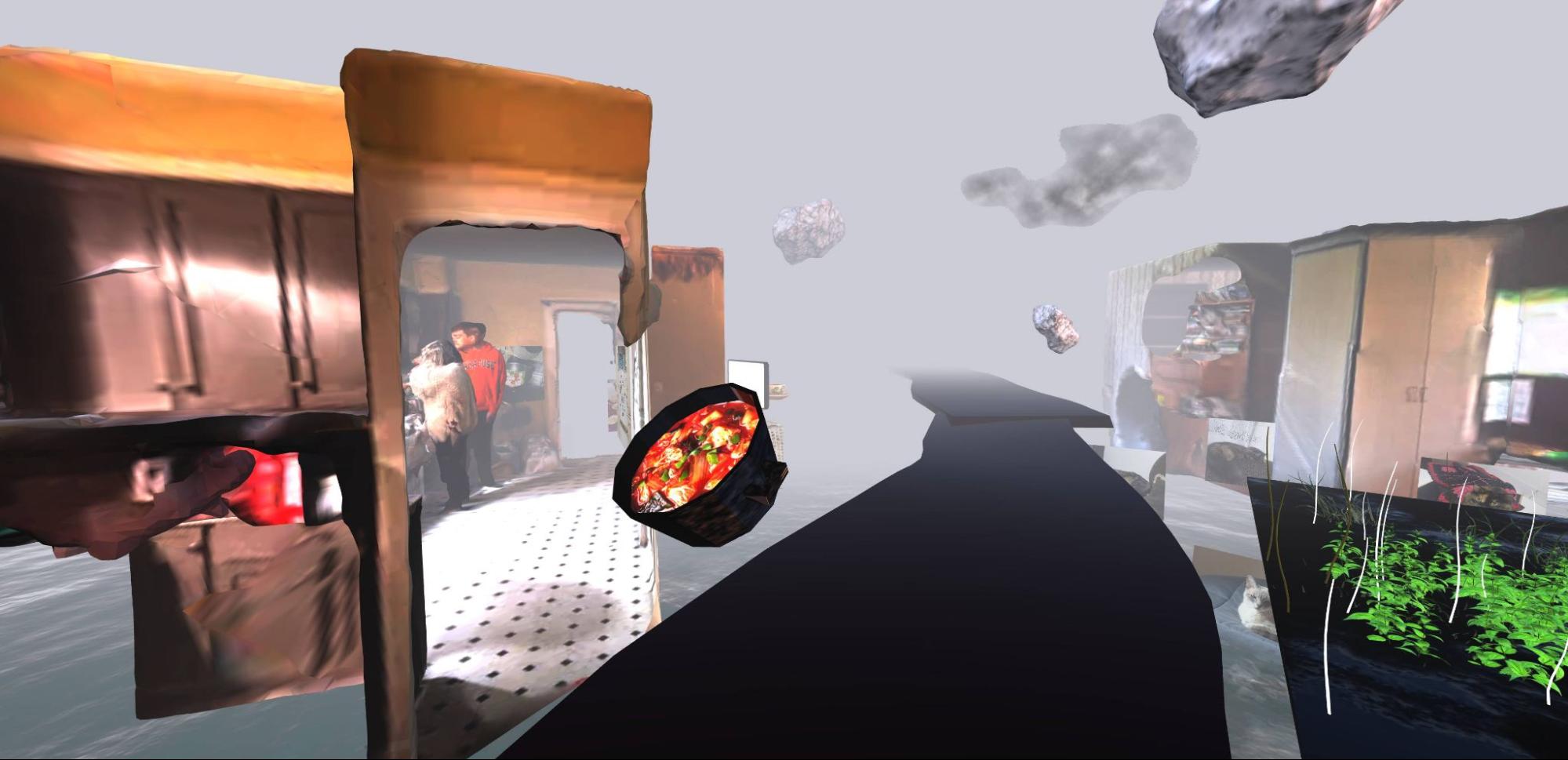
In her online work ‘Home is a Dwelling Path’, we can navigate between different buildings and images that all represent different memories of displacement. As we navigate the space, we hear personal recollections from various individuals about the meaning of home. Some reflect on having a safe space to decompress or be with family, while others reflect on how reconnecting with childhood friends always feels like no time has passed since you last saw each other. Each one is a personal memory, but they share a universality that evokes feelings that resonate with most of us. 

The work reminds me of Do Ho Suh, who recreates memories of different architectures in fabric and splices them together so we can walk through them in a gallery. Li’s work feels like a digital version of a similar concept, though instead of keeping it personal, she has opened it to many more people, reflecting on how displacement can feel personal. Still, it impacts millions of people – all in slightly different ways. 

A screenshot of Home is a dwelling path. Photo: Yunzhi Li.

Flickring Home is another browser-based artwork by Li that reflects on what home means through a room that evolves with publicly sourced images on Flickr tagged with home, so this space becomes everybody’s home. There’s a strong community element to this work that’s vital to ensuring contemporary art remains open to everyone. 

The digital realm also offers endless opportunities to create artworks. Contemporary art has been slow to adopt the digital, given that people have been creating worlds on platforms like Minecraft for many years. However, art must reach audiences through these platforms, given how much of our time we spend on screens. This message has been heard by institutions such as Tate and Serpentine, which now have extensive digital programmes.

Historically, artists have always been quick to adopt new technologies. In the 1970s, the Fluxus movement, particularly the work of Nam June Paik, was among the earliest uses of film as a medium for video art, and art is always looking to push new boundaries. With contemporary discussions around how the future may be in the metaverse, it feels like Li’s work is capturing the zeitgeist of our time, and in some ways, it may be ahead of it. 

Visitors interacting with her work at Peckham Digital, Copeland Gallery, 2025. Photo: Yunzhi Li.

As technology evolves and becomes more accessible, I would be interested to see how Li’s work takes on other media, such as augmented and virtual reality, to create more immersive iterations of her works. 

I spoke to Li, and the questions below provide further insight into her artworks and wider practice:

You have personal experience of displacement. How does that manifest in your work?

I was born in Chengdu, China, then moved to Tbilisi, Georgia, and now live in London, United Kingdom, so I have definitely experienced changes between rooms, languages, and cultures. In a broad sense, my art practice sits between computation and installation: I build participatory systems in which images, code, and audience input shape the work in real time. I’m interested in how personal and public travel, and how technology changes what they mean. Displacement enters less as autobiography in my work and more as a working principle: fragmentation, translation, and co-authorship. In Home is a Dwelling Path that shows up as stitched, collaged-like spaces from stories not from me, but from people around me: 3D-scanned objects, reconstructed buildings, textures from personal photos and public archives. 

What does home mean to you, and how is that reflected in your work?

In a way, the piece is my quest to find my own home, which I found difficult to define. To me, now, home is less a destination than a route: a path you keep walking, carrying things that matter. I borrow from Ursula K. Le Guin’s Carrier Bag Theory of Fiction, Georges Perec’s Species of Spaces, and Rebecca Solnit’s The Faraway Nearby: the domestic as a container for stories, not a fixed blueprint. In the work, “home” is assembled from narrated memories: a bowl, a smell, hanging out with friends. Things drift and overlap, objects float in the air and are submerged in water. The digital space aims to be ever-expanding, new stories will be told, new sceneries will be added, so the piece is never finished; it keeps migrating as people do. That mix of remembering and forgetting, of care and choice, is how I understand home: provisional, relational, and always under edit.

Why build a navigable experience online rather than use more traditional media?

Because the idea itself is navigational and collective, a single image or wall text can’t capture how memory branches, contradicts, and recombines. A web-based world lets people move non-linearly, follow their own threads, and, crucially, participate, adding stories and seeing them remap the space. Additionally, having it online aligns with my intention for the piece, as it can be updated and expanded whenever possible. It’s also about access: browser access means someone across the city or across the globe can still wander the world. The web is the everyday archive we all use; letting online images literally skin the rooms makes the medium part of the message.

More information about Melissa / Yunzhi Li’s work can be found on her website and on Instagram.

The Rise of Smart Betting: What Melbet’s Popularity Says About Modern Gamers

0

While still a niche by 2025, esports had grown into a worldwide spectator sport; millions viewed each tournament. Today, instead of wanting to “just” watch tournaments, fans want in on the action. Fans participate by demonstrating their understanding of team strategy, individual player ability, and ultimately, what will happen at the end of each match. This has created an appetite for predictive participation (now referred to as “intelligent betting”). Intelligent betting allows knowledgeable participants to make better predictions. And in places that are passionate about esports (like Mongolia), intelligent betting is creating a new generation of competitive gamers.

The Rise of Pick’ Em Contests

Pick’ em contests originated from Valve’s work with Counter-Strike: Global Offensive Majors, where fans predicted the outcomes of entire brackets for rewards within the game. The model generalized across esports, making a consistent form of tournament engagement. MelBet specializes in esports pick ’em contests and has created a dedicated space for tournament predictions in major esports betting. In contrast to traditional betting, Pick ’em is risk-free betting, as players earn prizes for correct predictions within a tournament’s bracket.

It is one of the reasons why many people have been drawn to this type of gaming, because of its strategic elements. It gained even more popularity, with the launch of large-scale events, and included two official pick’em contests: the PUBG Global Championship and the Valorant Game Changers Championship, in 2023. Today’s gamer uses statistics and analysis to play games, so the focus on information gathering and decision making fits well with this growing trend.

Some key events in the development of pick ’em contests include:

  • Introduction by Valve in 2013 for The International Dota 2 tournament, which allowed users to draft fantasy teams.
  • Introduction of the League of Legends World Championship in 2015 with bracket predictions for rewards.
  • The 2019 PUBG Mobile Global Championship, which incorporated mobile esports.
  • Official ESL adoption in 2021 for Intel Extreme Masters events, which tailored international participation.

These events mark the transition of the format from game-specific use to general industry-wide adoption.

Why Pick’em resonates with the modern gamer

Participation in a Pick’em rotates the role of onlooker to analyst. By performing match research, studying form, and comparing historical contests to recent matchups, people transform passive viewership into participatory, critical exercises. As a result, Pick’em appeals to people within the demographic who grew up watching complex mechanics and value-based data measurement.

The format showcases the following traits:

  • Improved critical thinking ability through research in participant stats and meta changes
  • Community building through shared prediction discourse and position leaderboards
  • Lack of monetization and deposit requirements makes entry free and easy, with only the knowledge needed
  • Predictive accuracy earns monetary value prizes and decreases risk through staked money

The modern gamer, as evidenced by the format and trend, prizes experiences that reflect the complex strategic layers in their games.

Essential Characteristics of Top Pick’em Sites   

Pick’em MelBet’s services focus on prominent events, especially the Counter-Strike 2 and Dota 2 finals. Customers speculate on teams’ finishing places in the tournament and earn points based on their predictions. The service is linked to the customers’ accounts, and they can access other esports services. The company was founded in 2012, holds a Curaçao license, and serves clients in dozens of countries.   


Top 2025 tournaments displayed on these platforms include:

Tournament Discipline Peak Global Viewers Notable Outcome
IEM Cologne 2025 CS2 Over 1 million Record Mongolian stream viewership of 99,424
BLAST Premier Bounty S2 2025 CS2 800 New Mongolian record
Esports World Cup 2025 Multiple Over 3 million The MongolZ victory
MongolZ vs Aurora CS2 180,000 (Mongolian) National viewership peak

These events demonstrate how pick’em integrates with live competitions, heightening involvement during playoffs.

The Role of Regional Enthusiasm in Mongolia

Here, particularly, the surprise of Mongolia became a key driver of specific game prediction formats. Attention peaked, particularly because of the Mongols’ success during the World Cup of Esports (2025). 180k Mongolians were shipped in and watched, and with 5% of the country’s population participating, a vibrant crowd emerged. The transfer of this vibrant support, making a game prediction, became a practical patron of the incredible talent possessed by the local players.

Across the region, cell phone registrations are the norm. The area showing a positive contribution to game prediction events as an expression of national pride, while self-restraint in the gaming culture becomes a positive contribution.

Implications for Gamer Behavior and Industry Evolution

The interest in game prediction, particularly MelBet, reflects the modern gamer rewards culture, the use of data to inform decisions, and the desire to compete within a community. Gamers see events as problems to be solved and of analytical interest, rather than spectacles to watch. This interest reflects a broader trend toward a more inclusive model of games, where the more a user plays, the more skill is rewarded.

As eSports develop, pick’em contests demonstrate a sustainable approach for fan engagement. They merge casual watching with active participation, fostering loyalty without the traditional engagement requirements. This progression shows future gaming audiences will want an experience centered around their knowledge of the game and the triumphs they can share. This will reshape the way competitive games interact with their audiences.

How Technology Makes Sports Accessible To Everyone

0

A Cairo rooftop serves as a training ground for teenagers honing their goal kick techniques, while in the Tokyo suburbs, a Paralympics sprint hopeful perfects their form down an apartment corridor. In rural Colombia, a VR program enables a retired boxer to teach children defensive styles. The Boston Marathon and other sporting events are no longer confined to spectators, as technology has removed borders and redefined rules for who can participate in sports. What was once reserved for wealth, gadgets, and status is far more accessible now. 

Virtual Training Breaks Location Barriers

Technology has made doing so possible for aspiring athletes from Europe to Argentina, who once dreamed of accessing training programs customized for national athletes. Both spectators and contestants alike, you no longer need a stadium or a flight. Just a secure connection to the internet and a comparable device. Technology does not care where your origins lie. Tech-enthusiasts can track progress and unlock entertainment on one platform through online sports betting. With apps like HomeCourt, CoachNow, and Freeletics, trainers no longer need to be present as these programs offer personalized training for each individual. AI-driven devices help break down movements into core elements, while AI monitors skills, provides objectives, and improves the accuracy to the speed of a whistle.

Even elite institutions are catching on. Scouting college players has become easier with their digital portfolios, and some NCAA coaches no longer travel to local tournaments. Virtual training gives a kid from a village with basketball courts the same tools as a teen from Los Angeles. Geography no longer determines who improves; it’s commitment. The great equalizer, technology, is rapidly closing the gap for those who were once sidelined.  

Smart Gear Levels the Playing Field

Innovative equipment is a game-changer for people who can’t afford private lessons or exclusive athletes’ gyms. Today’s tech-enabled gear doesn’t merely narrow the gulf between amateurs and elites—it obliterates it. Here’s how it’s changing the game:

  • Smart Insoles Device Nimble: Measures real-time balance, pressure, and foot alignment and is used in boxing, tennis, and soccer.  
  • Sensor-Embedded Balls: Wilson X and Adidas miCoach track spin, velocity, and trajectory to give players instantaneous feedback.  
  • Connected Wearables: GPS vests and heart rate monitors enable self-coaching as athletes track performance metrics.  
  • Virtual Reality Headsets: Players can step into the shoes of their favorite athletes and practice penalty shots or quarterback reads.

The technology industry does not care where you went for training or the cost of your shoes. It only cares that there is a consistent output that is very well done.

Tech Supports Inclusivity in Sports Participation

Not everyone can practice with a professional coach or have their name called under stadium lights. Yet, an increasing number of people are getting involved in sports. The reason for this is technology. Technology does not care about income, age, or physical attributes. It presents a door instead of a gate. Even social platforms such as MelBet Instagram are putting themselves in the mix by connecting, highlighting, and sharing stories of fans and sports lovers who previously felt excluded. From social eSports communities to adaptive gear that revolutionizes movement, technology is altering the traditional notions of who gets to participate in sports.  

Adaptive Devices for Athletes with Disabilities

While in Lisbon, one can find a local gym with a teenage swimmer with one leg strapped into a high-tech prosthetic fin. In Seoul, an able-bodied female Paralympic archer is carefully aiming her joystick-controlled bow like a surgeon calibrating her instruments. These are current events, not futuristic concepts, made possible by advanced assistive devices crafted for real athletes with genuine obstacles.

And it’s not just strife on the elite level. Voice-activated fitness apps, pressure-mapped gloves for para-boxers, and 3D-printed wheelchairs for specialized court positions augment individual control. What was once a compromise is now a competitive advantage. The tech is refined yet brutally honest—commitment required.

Streaming and eSports Open New Doors

Running a hundred meters flat out in digital sports isn’t required; split-second reflexes, strategic thinking, and a reliable internet connection are. A battlefield with no boundaries is where access isn’t simply an encouragement but a fundamental principle. Whether scaling escalated League of Legends ranks while in a hospital bed or cheering for your favorite football team’s VR experience with commentators who speak your dialect, technology is shifting the rules around who has access to the arena. Changes enabled by digital field access:

  • Live streams on YouTube or Twitch provide access to premium eSports and matches that can be viewed from the comfort of home.
  • VR broadcasting allows fans who can’t navigate the stadium’s confined spaces to view their sports actively.
  • Inclusive eSports League offers professional competitive spaces for gamers who are neurodiverse or physically disabled.
  • Accessible UI Design game developers now incorporate one-handed controls, colorblind features, and voice commands into games as standard options. 

AI Refereeing Reduces Human Bias

In high-stakes matches, one decision can change everything from titles to careers to bets made by fans halfway across the world. That’s where AI takes over. Not to do the job, but to enhance it. Algorithms don’t sweat, blink, or favor the home crowd. Here is a summary of how it’s reshaping fairness on the field.

AI Feature What It Does Where It’s Used
Semi-Automated Offside Tracks 29 body points to detect offside instantly FIFA World Cup, UEFA Champions League
Hawk-Eye Goal-Line Tech Confirms ball crossing with millimeter accuracy Premier League, Serie A
AI Foul Detection Analyzes limb angles and contact pressure NBA, EuroLeague
Smart VAR Review Flag suspicious plays before the referees request it La Liga, Bundesliga

While not impeccable, it is speedy, clear-cut, and impartial.

Translation Tools Bridge Language Gaps

Consider a 16-year-old sprinter from a rural Moroccan village who wants to enroll in a youth championship. Tell her the instructions are in English. This is where the machine translation tools come in, not as a perk but as a need. Technology such as Google Lens, AI-powered voice assistants, and localized subtitles is transforming access stealthily. 

Explaining tactics by a Brazilian coach to Ukrainian goalkeepers? Easy. Language used to cut players into clans, but now, by using the right technology, it becomes a setting that can be switched on and off. Empowerment isn’t confined to the level of equipment provided or the game itself. It’s about listening and talking to, not just sight and touch.

Crowdfunding Empowers Young Talent

When no one is looking, young athletes from neglected towns and programs turn to crowdfunding platforms, not as a last resort but as their primary choice. And it works. Instead of pitching stats, they tell compelling stories that garner funds. They use the funds for travel, gear, and, in some cases, even surgery. Many of these backers may never witness the final cut, but they bridge the gap with hope, and sometimes that’s all the player needs.  

For many, these crowdfunding campaigns often go viral thanks to friends, strangers, and even teammates who care. It takes just a short video or a heartwarming post to unlock thousands. Unfortunately, many aspiring young athletes do not have access to resources and only wish to pursue a dream. With the resources they do have and exercising finance, aspiring athletes are discovering that challenging the status quo of funding an athlete’s dream is possible with the right approach.  

A Game Open to All

Technology not only levels the playing field; it’s demolishing barriers. From AI referees to prosthetic limbs, virtual reality matches, and translated playbooks, the next great untapped athlete may not have a sponsor or coach. Still, with no restrictions on information, he has access to unrivaled resources.

Nintendo’s Super Mario Galaxy Movie: Release Date, Cast, Plot, Trailer and More

0

Nintendo’s upcoming Super Mario Galaxy Movie is bringing Mario (and the gang) back for a wild space odyssey that’s bigger and way more “galactic” than ever. The sequel to 2023’s The Super Mario Bros. Movie sees Nintendo and Illumination teaming up once again, picking up the story right where the first movie left off and moving the action beyond the Mushroom Kingdom into the Galaxy era of the franchise. And honestly, we’re all up for it. Despite its enormous success, the first film had its fair share of hiccups, but Super Mario Galaxy seems to expand on what worked with a more ambitious, galaxy-spanning story, new worlds and characters. So what’s the release date for Nintendo’s new interstellar Mario romp and which cast members are returning? Here’s everything we know so far about Nintendo’s upcoming Super Mario Galaxy Movie.

Nintendo’s Super Mario Galaxy Movie: Release Date

You won’t have to wait too long to see Mario blast into his next adventure as Nintendo’s Super Mario Galaxy Movie is set to hit theatres in the US on April 3, 2026.

Nintendo’s Super Mario Galaxy Movie: Cast

The Super Mario Galaxy Movie is reuniting the entire cast from the first movie while also introducing several familiar faces from the Galaxy games. Chris Pratt, Charlie Day, Anya Taylor-Joy, Jack Black and Keegan-Michael Key will reprise their roles as Mario, Luigi, Princess Peach, Bowser, and Toad, respectively and they’ll be joined by a whole host of new characters. Leading the charge will be Rosalina, voiced by Brie Larson, who’s finally making her way from the 2007 Super Mario Galaxy game on the Wii to the big screen, as well as Benny Safdie’s Bowser Jr., who seems to be the big bad of the movie.

Here are all the confirmed Super Mario Galaxy Movie cast members we know so far:

  • Chris Pratt as Mario
  • Charlie Day as Luigi
  • Anya Taylor-Joy as Peach
  • Jack Black as Bowser
  • Keegan-Michael Key as Toad
  • Brie Larson as Rosalina
  • Benny Safdie as Bowser Jr
  • Kevin Michael Richardson as Kamek

What Will Nintendo’s Super Mario Galaxy Movie Be About

Nintendo hasn’t shared an official synopsis or logline for Super Mario Galaxy Movie as of writing, however; the recent teaser does give us a general idea about where things could be headed for our galaxy-hopping Italian plumber. The upcoming sequel will once again be a joint production between Nintendo and Illumination, with Universal Pictures and Nintendo co-financing the project. Moreover, it also sees the original creative team returning, with Aaron Horvath and Michael Jelenic back in the director’s chairs, Matthew Fogel handling the screenplay and Brian Tyler reprising his role as composer.

Based on everything we’ve seen so far, the broader story of the Super Mario Galaxy Movie will take place after the events of the first film and will most likely draw on a lot of elements from the Super Mario Galaxy games. The sequel will follow Mario, Luigi, Princess Peach and Toad as they set off on a galaxy-spanning adventure that’ll take them across multiple star systems. This time, our plumber will be pitted against Bowser Jr., Bowser’s son, who is on a mission to rescue and restore his father after he was imprisoned and shrunk in the first film’s final act. It’s not clear what Bowser Jr.’s end goal is, but the most logical explanation is that both Bowser and his son want to get their hands on more Power Stars and use them to threaten complete annihilation.

This brings us to Rosalina, who we briefly see at the tail end of the trailer. Debuting in 2007’s Super Mario Galaxy, Rosalina is the protector of the Luma, star-like beings that can morph into Power Stars and is often seen as one of the central characters and a close parallel to Princess Peach. In the upcoming movie, Rosalina will probably play a huge role in stopping Bowser Jr., eventually joining Mario and the gang to put an end to his nefarious plans. However, take all of this with a pinch of salt, as these remain mere assumptions for the time being and we’ll have to wait for Nintendo’s official word surrounding the film’s plot.


Is there a Trailer for Nintendo’s Super Mario Galaxy Movie?

Yes, there is a trailer for The Super Mario Galaxy Movie and even though it isn’t very long, it serves up an exciting first look at the returning cast and the new characters joining the fray.  The trailer picks up where the original film left off, with Bowser shrunken down and living in a miniature dollhouse castle, passing his time painting portraits, gardening, and begrudgingly entertaining Mario and Luigi. The trailer then kicks into high gear with a montage that includes Peach and Mario staring up at the sky as streaks of light tear across the horizon, Launch Stars sending Peach and Toad through deep space, spherical planets and new galaxies on display, a quick blink-and-you-miss-it shot of the Sand Kingdom, and Mario and Luigi speeding across terrain on motorcycles.

All of this culminates in Wonder Jr.’s (better known as Bowser Jr.) explosive entrance. Carrying a magical, shape-shifting paintbrush (a clear nod to Super Mario Sunshine), he’s out for revenge after what happened to his father. Voiced by filmmaker Benny Safdie, we hear him announce, “I’m Bowser Jr., and I’m gonna be taking my father now.” The trailer ends with a striking reveal of Rosalina as a towering Megaleg boss tries to pull her from her castle, but Rosalina summons her wand and smashes the Megaleg into the ground.

Are There Other Movies Like Super Mario Galaxy?

While you count the days until The Super Mario Galaxy Movie hits theaters, you can keep yourself entertained in the meantime by starting with the first film, The Super Mario Bros. Movie, to find out how Mario, Peach, and Bowser’s story lead up to the galaxy-level adventure. If you’ve already watched the first movie, you can check out other animated hits like 2023’s Teenage Mutant Ninja Turtles: Mutant Mayhem, 2014’s The LEGO Movie, or Pixar’s Onward.