Home Blog Page 32

Where Canadians are Actually Buying their Glasses Online in 2026

Walk into an optician in Canada and you’re likely to leave with a decent pair of frames and a bill that feels hard to justify.

It’s not that the glasses are bad. It’s that the price reflects a retail model built around physical locations, limited inventory, and margins that have nowhere obvious to go except up.

A growing number of Canadians have noticed. And they’ve moved on.

The shift to online eyewear

Online prescription glasses aren’t new, but the mainstream adoption has accelerated. What was once treated as a niche option for younger buyers comfortable with e-commerce is now a standard purchasing decision across age groups, prescription types, and income brackets.

The reasons are consistent: better prices, broader selection, and a returns process that removes the main practical barrier to ordering something you can’t try on in person.

What to look for in an online eyewear retailer

Not every online option is equally worth your time. The criteria that actually matter:

Prescription handling: the retailer needs to handle the full range of prescription types accurately — single vision, bifocal, progressive, and specialty lenses. Entering your prescription correctly and having a clear verification process matters more than anything else.

Frame selection: a catalogue deep enough to include the brands and styles you’re actually looking for, not just generic options.

Return policy: fit is the legitimate concern with online glasses, and a generous return window is the practical solution. Look for at least 30 days; 100 days is better.

Customer support: particularly for first-time orders or complex prescriptions, being able to speak to someone who can walk you through the process is worth more than most people expect until they need it.

Shipping to Canada: not all online retailers ship internationally, or do so without substantial additional cost.

Where Canadians are shopping

SmartBuyGlasses has emerged as one of the most consistently used platforms among Canadian online eyewear buyers. The Canadian site — smartbuyglasses.ca — carries over 80,000 products from more than 180 designer brands, with pricing in CAD and shipping options configured for Canadian customers.

The range includes prescription eyeglasses, sunglasses, and prescription sunglasses across every major brand category: Ray-Ban, Oakley, Gucci, Prada, Tom Ford, Versace, and hundreds of others. Lens options cover single vision, progressive, blue light blocking, photochromic, and polarised, with coatings available at add-on pricing that consistently undercuts what Canadian opticians charge for the same upgrade.

The 100-day return policy addresses the fit concern directly. You order, receive, and wear the glasses in real conditions. If something isn’t right within that window, you return them. It’s a longer window than most physical retailers offer.

The price difference in practice

Here’s what the comparison looks like for a straightforward purchase.

A mid-range designer frame — Ray-Ban, for instance — with standard single-vision prescription lenses at a Canadian optician typically runs CAD $280 to $400 depending on the city and the clinic. The same frame with the same lens specification through SmartBuyGlasses comes in at a materially lower number.

For progressive lenses, where optician pricing in Canada regularly exceeds CAD $500 to $700 for a complete pair, the savings are more pronounced.

For Canadians who replace their glasses every two years, or who want a backup pair, or who are outfitting a household with multiple prescriptions, the cumulative difference is significant.

The question of quality

The concern that online prescription glasses are somehow less accurate or lower quality than what you’d receive from a physical optician is worth addressing directly, because it’s the most common reason people hesitate.

The lens is ground to your prescription specification regardless of where the order originates. The optical accuracy of a lens is determined by the prescription data and the lab cutting it, not by the retail channel it’s sold through. SmartBuyGlasses works with certified lens labs and has been doing so for over 20 years across more than 30 countries.

What you’re not getting when you buy online is the consultation and the storefront. For buyers who already know their prescription and have worn glasses long enough to know what they want, neither of those things is a meaningful loss.

The practical summary

Canadians buying glasses online in 2026 are making a straightforward calculation: same brands, same prescription accuracy, a broader selection, and prices that reflect the absence of physical retail overhead.

SmartBuyGlasses is where a significant portion of that purchasing is happening.

If you have your prescription and know roughly what you’re looking for, the process takes about ten minutes. The savings take care of themselves.

Rose Gray Returns With New Single ‘Club to Your Arms’

Rose Gray is back with a new single, ‘Club to Your Arms’. The ebullient, summer-charged track arives with a video shot on the streets of London. Check it out below.

“I feel like I’ve been waiting most of my career to write this song,” Gray said in a statement. “I’m so ready for new music. I remember coming home after a show in London. I’d been out way too late, the birds were kinda singing and I’d lost my keys. I’ve lived nights like this over and over again, anticipating getting home into someone’s arms. I’m so ready for summer.”

Last year, Rose released A Little Louder, Please, the deluxe edition of her debut album. Revisit our Artist Spotlight interview with Rose Gray.

Sorcha Richardson Announces New Album ‘Draw the Outline’, Shares New Song

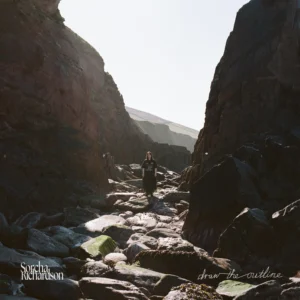
Dublin-born singer-songwriter Sorcha Richardson has announced a new album, Draw the Outline. The follow-up to 2022’s Smiling Like an Idiot arrives September 11 via Faction Records. Today’s announcement comes with the release of the quietly anthemic ‘Illinois Again’, which is accompanied by a self-directed video. Check it out below.

“’Illinois Again’ is a bittersweet song about connection and loneliness,” Richardson explained in a statement. “It’s doing the thing you’ve always dreamed of doing, surrounded by friends, and yet still feeling an undercurrent of isolation and not fully understanding why.”

She continued: “It began as an attempt to capture the dreamy vignette of a headline tour across North America, but in writing about that euphoria I kept finding a quiet sense of disconnection. It’s wanting to share a moment but feeling like you’ll never be able to explain it to someone else, or even hold on to it properly for yourself. This song is an attempt to hold those feelings side by side; the joy and loneliness.”

Reflecting on the album as a whole, Richardson said: “A lot of my previous stuff is me observing other people’s conversations, or me observing my conversations with other people. A lot of this album is me observing my conversations within my own head,. There’s a surreal, dream-like quality to it. It moves between me here in the room with you now and then, all of the things that my brain is throwing up to me; fears, memories, imagined outcomes.”

Draw the Outline Tracklist:

SorchaRichardson_DrawTheOutline_AW_Front

Draw the Outline Tracklist:

1. Sea Pink Moon
2. Grenadine
3. Fake Venice
4. Illinois Again
5. Ellen Forever
6. Dog’s Best Man
7. Adam (Pacing in the Park)
8. The Orchard
9. Sunshine Season
10. The Video

It’s Open Toe Season and We’ve Got Options

0

The temperature slowly rises again to the point where your AC technician becomes a recurring character in your life, coffee runs start losing ground to homemade lemonade, and your bikinis migrate four drawers higher than where they started. Heeled sandals reclaim the top of the shoe rack, slides, as always, insist on being heard at all times, and every possible variation of barely-there footwear suddenly becomes acceptable in broad daylight. We, of course, have our favorites.

Nothing says summer quite like Havaianas flip-flops. They’ve always been a warm-weather staple, but this season the fashion crowd seems particularly fond of them, Isabel Marant included. There are plenty of options out there, but the slim square style is our pick. Square toes rarely disappoint. The same applies to flat slides. Mine come with a structured, grid-style woven upper that I like to think makes them feel slightly more considered than the average throw-on sandal. Point is, experiment with design. Of course, not every day calls for a flat. Platform Crocs clogs, and platform Crocs only, are having a moment. Then there are the days when the thought of wearing a heel feels deeply offensive, but looking like you’re wearing one doesn’t. That’s where flat backless pumps come in. Paired even with jeans, they create the illusion of effort, height, and commitment, without much of either.

Sitting comfortably in the middle are kitten heels. We like them best as thong sandals, jelly styles, or soft suede mules with wrapped uppers, the kind that can’t quite decide whether they’re sandals or proper shoes. Hybrids have always had a soft spot in our hearts, and that very much includes sneaker heels. Wedges and transparency (never in a PVC way) stay strong this season, with thong boots, a knee-high boot with flip-flop tendencies, not far behind. For a similar effect, a gladiator sandal can deliver all the drama of a boot, even when completely flat. And for the lace-up girls, snake-like and wrap-around heels remain one of summer’s most persuasive arguments.

5 Albums Out Today to Listen To: Olivia Rodrigo, Kelsey Lu, Wiki, and More

In this segment, we showcase the most notable albums out each week. Here are the albums out on June 12, 2026:


Olivia Rodrigo, you seem pretty sad for a girl so in love

you seem pretty sad for a girl so in loveOlivia Rodrigo is back with a new album. Preceded by the excellent singles ‘drop dead’ and ‘the cure’, you seem pretty sad for a girl so in love arrives today along with a music video for the focus track ‘stupid song’. Rodrigo worked on the record with longtime collaborators Daniel Nigro and Amy Allen, enlisting The Cure’s Robert Smith for ‘what’s wrong with me’ (which they debuted at Primavera Sound) and Conan Gray for backing vocals on ‘honeybee’. Jim-E Stack and Mike Wise also appear in the credits, though Weyes Blood’s Natalie Merring, who backed Rodrigo during the Saturday Night Live debut of ‘begged’, isn’t on the album version.


Kelsey Lu, So Help Me God

SHMG Album ArtworkKelsey Lu has returned with their first album in seven years. The songwriter, singer, and composer worked on So Help Me God with producers Jack Antonoff and Yves Rothman, reveling in abstraction while homing in on their musicality. The LP boasts contributions from Kim Gordon, Sampha, Kamasi Washington, and Lady Jess. “So Help Me God was built slowly and intentionally across seven years of transformation,” Lu said in a press release. “Sonically and emotionally it holds so many different worlds at once – devotion and desire, collapse and becoming – trying to make sense of what it means to break, to believe, to long for something without seeing it clearly, and to be reborn again and again and again.”


Wiki, Ancient History

wiki Ancient History coverWiki’s new album, Ancient History, is also his first solo effort in seven years. Following a run of collaborative records as well as a cameo in Marty Supreme last year, the rapper’s latest features guest spots from Your Old Droog, duendita, and Salimata, as well as gorgeous production from the Alchemist, Navy Blue, Nick Hakim, Dom Maker of Mount Kimble, and more. The album’s cover artwork was painted by contemporary artist Esteban Jefferson.
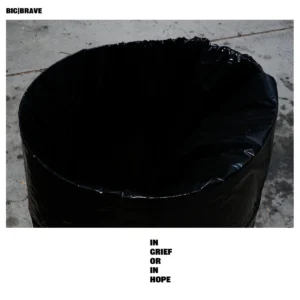

BIG|BRAVE, in grief or in hope

in grief or in hope coverBIG|BRAVE meld together drone, electronic, and heavy music with a distinct pop sensibility on their latest album, in grief or in hope. Longtime touring bassist Liam Andrews (MY DISCO, Aicher) joined guitarist/vocalist Robin Wattie and guitarist Mathieu Ball in the studio for the first time, amplifying the group’s intricate maximalism. “I wanted to explore catchy, melodic phrasing weaved throughout the intensity of the instrumentation and drony chord changes,” Wattie explained. “All that I could reflect on was grief and hope; death and life; cause and effect; shared experiences of being a human person.”
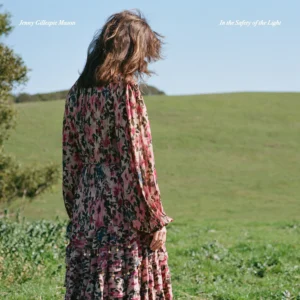

Jenny Gillespie Mason, In the Safety of the Light

N-THE-SAFETY-OF-THE-LIGHT-ALBUM-COVERJenny Gillespie Mason, the singer-songwriter behind projects including Sis and the Lower Wisdom, has a new album out called In the Safety of the Light. Produced by Noah Georgeson (Joanna Newsom, Devendra Banhart, Bert Jansch, Vashti Bunyan), the record finds Mason returning to the kind of acoustic folk music she first began writing as a teenager. “In the Safety of the Light is a project that was building in me for quite a few years, but it took meeting Noah Georgeson for it to reach its fulfillment,” Mason shared. “Working with someone so kind, calm and creative was what was needed for these songs to become fully formed in their true essence. I hadn’t written strictly on an acoustic guitar for many years, and I felt a return to my original inspiration that led me to becoming a musician as a young teenager – just me and a guitar.”


Other albums out today:

CFCF, L.U.V.; Sublime, Until the Sun Explodes; Goose, BIG MODERN!; Yes, Aurora; Kalia Vandever, Mana; Debit, Potpourri; Horse Lords, Demand to Be Taken to Heaven Alive!; Berndt / Schmidt, Cloud Machines; Jessie Reyez, A Little Vengeance; Jesse Welles, Masks Off; Bebe Rexha, DIRTY BLONDE; Tim Barry, Clear Blocks Ahead; Pussy Riot, CYKA; Lucie Antunes, Silence; Bob Wagner, I’ve Been Down; Robert Aiki Aubrey Lowe, Manifestations in the Shadow of an Unknown Land.

Leather Jacket Buying Guide for Men

There are a few wardrobe essentials for men that just work. No matter what and when. A great quality leather jacket is one of them. It exudes a rugged vibe and adds weight and structure to a simple outfit. What makes it more special is how it stays in the fashion game for many years. You can keep it for decades, say thirty years, and it will still look relevant. The cuts stay classic, so you won’t look out of style, and the material (leather) only gets better with time.

So what’s the hardest part? Well, it’s not whether to get it or not; it’s knowing which one. There are so many colors, cuts, and details available that it’s easy to end up with something that doesn’t quite fit your life. 

You don’t want that, do you? To help you out, this mini but powerful guide breaks it all down so you know exactly what you’re looking for before you buy.

The Styles Worth Knowing

Generally, you’ll find countless options for leather outerwear, but to avoid confusing you with hundreds of styles, let’s stick to the classic, most popular styles you’ll actually reach for every day. Starting off with:

The Biker Jacket

This is where the concept started. The biker jacket was originally designed for motorcycle riders; hence the name. It features an asymmetric zip to keep the wind out, the wide lapels fold neatly at the collar, and the structure was built to last. 

It’s the most recognized leather outerwear on the planet today. Pair it simply with a tee and jeans, and you’re done. 

Next, The Bomber Jacket

One of the most popular jackets for a relaxed look is the bomber jacket. They came with a bang in 2026 with sleek lines, high-quality leather, and work with almost everything.

It’s the type of outerwear you want to layer on days when you want to look put together without making any effort.

The Varsity Jacket

The leather varsity brings back the retro times. It stands out with its athleisure, throwback aesthetic. Make it work with a plain tee, straight jeans, and clean sneakers. 

It’s casual but adds just the right amount of personality.

The Leather Blazer

This style often surprises people before they try it. The leather blazers come with clean lines and modern designs. 

Combining a black blazer with a white shirt and wide-leg trousers gives an authoritative aura that works from work to an evening out later. 

The Suede Jacket

Suede is also leather, but unlike traditional leather, it’s softer, lighter, and has a matte finish that looks more relaxed. It offers the same warmth and comfort as your regular leather but with a more subtle and unique finish. 

It’s best when you want leather without the shine.

The Fringe Jacket

If you love the idea of unique, real character, get yourself a fringe jacket. It’s bold, different, and has a western edge that works surprisingly well with simple dark outfits. 

One piece is enough to stand out with zero effort and lots of attention.

The Leather Vest

One of the most underrated leather pieces, yet it delivers. But not anymore, leather vests are making their mark as a versatile layering piece that works across casual and smart-casual outfits.

It’s great for transitional weather when the full sleeve jacket feels too much, or throw it over a hoodie for some structure without being bulky.

What to Look for Before You Buy a Leather Jacket

There are a few key factors you need to know before getting the right jacket. They are:

Fit

The shoulder seam should sit exactly at your shoulder joint. If the shoulders are off, nothing else matters.

Leather quality

Go for full-grain leather as it’s the strongest and develops more character over time. The second option is the top grain leather, which is also of good quality and more refined.

Hardware

High-quality hardware like zippers and snaps should be smooth and solid. Cheap ones will disappoint you and ruin the overall look.

Choosing Color For Yourself

When you’re buying a jacket, other than knowing what’s trending, check for what suits your entire wardrobe.

  • Black jackets offer maximum versatility and work for casual and formal events
  • Brown feels rich and timeless and develops a clear and prominent patina with time
  • Red jacket is bold and will let you make a statement
  • White leather gives off cleanliness, purity, and a minimal modern aesthetic
  • A blue leather jacket adds personality to your ensemble without being too flashy
  • Metallic shades like gold/silver add a strong personality and are best for people who love expressive styles.

It’s a Wrap!

Shoppers now prefer long-term investment pieces. That’s full-grain leather. It improves with time, stays strong for a long time without losing its shape. This also keeps you from replacing it anytime soon. That’s the right call.

Remember that a well-selected leather jacket becomes a part of your lifestyle. So find the style that fits how you actually live, take care of it, and it’ll stay with you for years.

How Producer Jingyi Li Is Helping Shape Digital Entertainment

0

In Los Angeles, one of the most urgent conversations in entertainment is no longer only about what audiences watch, but how quickly they decide to keep watching.

Film producer Jingyi Li would know. While legacy Hollywood continues to grapple with long development cycles and traditional distribution models, Li has built a career at the intersection of vertical drama, creative producing, and next-generation digital media, working within a 9:16 mobile-first format that has reshaped how serialized stories are produced and consumed.

Li’s career moves across independent narrative filmmaking, mobile-first serialized entertainment, and performance-driven commercial video production. Across producer and director roles, her credits include several narrative short films, roughly a dozen vertical drama series for platforms such as DramaBox, ShortMax and GoodShort, and hundreds of short-form commercial video productions for mobile games and digital products including Vita Mahjong and Tile Explorer. Across these formats, Li’s producing work centers on translating creative and commercial objectives into executable production plans, coordinating talent and crew, supervising production and post-production, and delivering platform-ready content for audiences, clients, and digital distribution channels.

She is also part of a rapidly evolving industry that has, in many ways, taken over the phones — if not yet the studios — of American audiences. While vertical dramas first gained momentum in China in the early 2020s as “duanju” — condensed serialized dramas designed for mobile viewing — the format has since evolved into a professionalized production ecosystem for vertical mini-series. Over the past six years, it has grown into a multi-billion dollar industry. Shot for 9:16 smartphones, these 1 to 3 minute episodes rely on cliffhangers to keep audiences hooked. They are posted to subscription-based apps, like ReelShort, DramaBox and GoodShort, and vertical dramas have become mainstream, globally.

The innovation is not only that audiences can watch these stories on a phone from almost anywhere; it is that the format breaks down both the spatial and temporal barriers of serialized storytelling. Viewers can follow characters, conflicts, reversals, and emotional payoffs in a structure closer to television drama, but with the accessibility and time commitment of a feature film. As the format has grown into a multi-billion-dollar global industry, vertical dramas have also created a new production ecosystem for U.S.-based actors, producers, directors, and crew members at a time when traditional studio production has faced cutbacks.

“Producing, for me, is never limited to only being on set,” Li said. Her perspective carries the grounded weight of someone who has mastered the entire lifecycle of a project. “A large part of the work happens before filming begins and continues through post-production and final delivery.”

The growing world of mobile-first vertical dramas moves at a velocity that requires a producer to pivot between a macro-level creative vision and micro-level logistics. During her tenure with Tap Story at GoodShort, Li became the critical bridge between creative development, production execution and platform delivery.

When evaluating whether a script was ready to move forward in the production pipeline, Li explains that the calculus relied heavily on a deep understanding of human psychology.

“One of the most important things is emotional engagement,” said Li. “Vertical dramas rely heavily on pacing, cliffhangers, character dynamics, and audience retention, so we constantly had to think about how quickly a story could emotionally hook audiences and make them invested in a character’s fate. The goal is to make viewers curious, emotionally attached, and eager to keep watching.”

Yet Li’s strength does not come only from understanding what makes a script compelling. It comes from knowing how to turn that understanding into production reality, aligning story, casting, location, schedule, crew, and post-production so the emotional promise of a script can survive the speed of production.

Li’s directing background also shapes how she approaches producing. Having worked across narrative shorts and vertical drama productions, she brings a director’s sensitivity to performance, visual tone, casting, and emotional pacing into her work as a producer.

Since these productions move extremely quickly, producers often have to make creative and operational decisions at the same time, while constantly thinking from the audience’s perspective,” Li says. “Since I also come from a directing background, I pay a lot of attention to performance, emotional pacing, visual tone, and casting.”

In a medium where characters are framed in a tight 9:16 aspect ratio on a handheld screen, there is nowhere for a performance to hide. “Casting instinct is especially important because audiences form emotional attachments to characters very quickly,” she notes. “Producers need to constantly evaluate how emotionally readable a character or scene feels on screen.”

Traditional filmmaking allows for slow-burn exposition and expansive, cinematic world-building. Vertical serialization, by contrast, demands instant hooks and high-frequency emotional cliffhangers. The visual framing drops environmental context in favor of intense, portrait-mode close-ups that drive character investment. Because the delivery cycles are so tightly compressed, producers must manage highly agile pipelines that respond to viewer behavior in near-real time.

That producing fluency extends beyond vertical drama. Li has worked on independent narrative shorts including Green Card and Happy Birthday, while also managing short-form commercial video productions for mobile games and digital products including Tile Explorer and Vita Mahjong. Moving between narrative and commercial work has made her especially fluent in shifting between the storyteller’s perspective and the audience’s point of view, a skill that allows her to protect a project’s creative intention while keeping its emotional impact, production demands, and market-facing delivery in focus.

That perspective also shaped her mentoring work during graduate school, when she mentored undergraduate film students at the Savannah College of Art and Design. In that role, Li helped emerging filmmakers understand the delicate balance between artistic vision, production realities, and commercial expectations in screen production.

Li’s fascination with audience psychology naturally led her to conquer another frontier of modern media: live broadcasting. As a Live Streaming Director for CHC Fashion Group, she treated the medium not merely as a marketing tool, but as a living, breathing iteration of real-time fashion sales. The company specializes in live fashion sales on TikTok, featuring over 40 brands, 60 in-house hosts and has generated over $50 million in revenue in 2024 alone.

For Li, working in that environment meant learning how creative choices are tested instantly against viewer behavior and commercial response. It became another way to study pacing, attention, performance, and emotional engagement in real time.

“I think livestreaming is powerful not only because it is interactive and immediate, but because it is fundamentally a form of real-time storytelling and emotional engagement,” said Li. “Unlike traditional film or television, there is no editing process to reshape the experience afterward. Live production teams have to constantly adjust pacing, emotional energy, and presentation in real time based on audience reactions and engagement.”

Her time directing live broadcasts served as an elite training ground for her current narrative work. “It trained me to think very carefully about when audiences become emotionally invested, when attention begins to drop, and how storytelling pacing can influence real-time engagement,” she said.

Grumpy Unveils New Song ‘Twenty Five’

Grumpy has returned with a new single, ‘Twenty Five’. It marks the Heaven Schmitt-led project’s first release of 2026, and you can listen to it below.

“It’s about loving her so much and having this really selfish thought of like, ‘Oh God, what if you could do that and we never meet?’” Schmitt shared in a statement. “The song is me telling her, ‘If you ever get that opportunity, please leave a clue so that you can get back to me in the present.’”

“Ellie and I were at home and we were talking about being trans and time travel, and she said she wished she could go back in time and transition at a younger age,” they added. “I then had such a sefilsh thought; I worried that, if she went back in time and changed something, what if it altered the future such that we never met? So I told her, if she ever gets the opportunity to travel back in time, make sure she can get back to me and meet me in 2025. The lyrics in the beginning sum it up ‘when you travel back, leave a clue so that you can still find me when you get to 2025.'”

Since signing to Bayonet Records in 2024, Grumpy have released two EPs for the label, Wolfed and Piebald. Revisit our Artist Spotlight interview with Grumpy.

Hovvdy Share Video for New Song ‘Blast’

Hovvdy have shared a new single, ‘Blast’, from their forthcoming album Big World. For a track called ‘Blast’, it’s quite bleary, which fits into Hovvdy’s overall aesthetic. Still, the hook worms itself into your brain. Check out director Michael Rees’ video for it below.

Big World, which was led by the single ‘Try Try Try’, is set for release on August 14 via Arts & Crafts. Revisit our Artist Spotlight interview with Hovvdy.

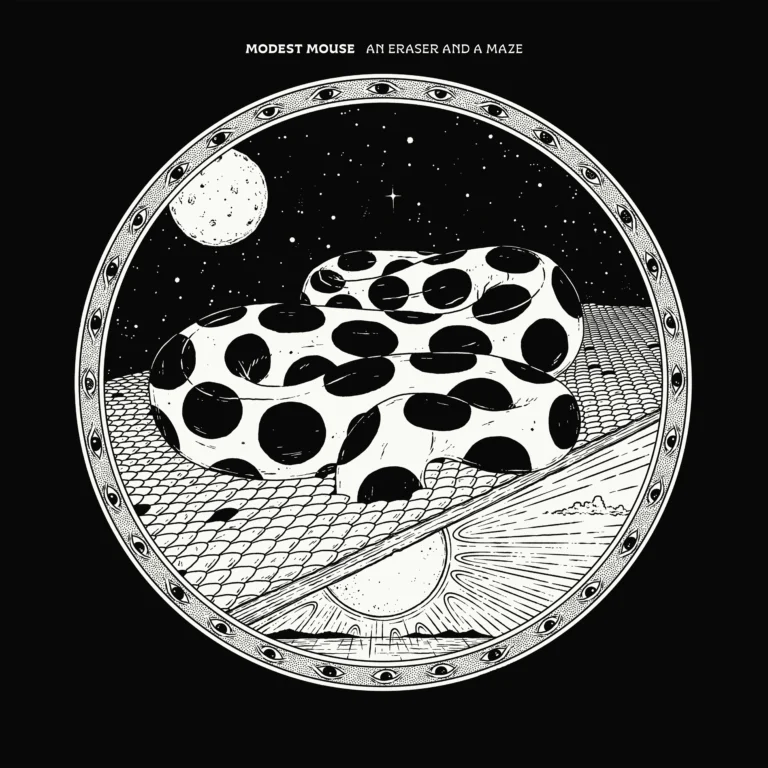
Album Review: Modest Mouse, ‘An Eraser and a Maze’

As loosely defined as the genre remains, there’s something culturally vivifying about a legendary indie rock band going back to an independent label. An Eraser and a Maze marks Modest Mouse’s first indie release since 1997’s seminal The Lonesome Crowded West, as well as their first since the death of founding drummer Jeremiah Green, who passed away shortly after 2021’s The Golden Casket. Perhaps more significant than the fact that the new album was released on Isaac Brock’s Glacial Pace Recordings, though, at least from a creative standpoint, is how it was originally destined for the frontman’s solo project, Ugly Casanova. Even with the band’s distinct flourishes and vibrant, sometimes shaky co-production from Jacknife Lee, Suzy Shinn, and Justin Raisen, its unsurprisingly labyrinthine nature often feels like following the whims of their only constant member. With or without major label backing, Brock’s Modest Mouse can sound big and subtle, puzzling and gratifying in equal measure.


1. Picking Dragons’ Pockets

An Erazer and a Maze comes out swinging with its most surefire hit, juxtaposing off-kilter percussion with undeniable hooks: “Well they’ll go crazy if you don’t go crazy somehow/ And I’m not crazy ‘bout what they’re so crazy ‘bout now” is an indelible chorus cut from the same cloth as 2004’s Good News For People Who Love Bad News. For anyone who got into Modest Mouse through that record, it’s a definite way in.

2. Remember Yourself

An acoustic ditty with a big heart, ‘Remember Yourself’ makes space for a mellow guitar part from Simon O’Connor, who’s relatively new to the band.

3. Life’s a Dream

You don’t really need to take a look at the credits to venture that someone who’s worked with U2 had a hand in ‘Life’s a Dream’. That would be Jacknife Lee, who co-produced the track with Suzy Shinn (Weezer), sending it into the stratosphere with crashing cymbals and layered guitars. There’s just not enough weight behind the song’s central hook to justify the overbearing production. 

4. The Third Side of the Moon

The opposite is true of ‘The Third Side of the Moon’, which feels like an immediate course correction. Isaac Brock’s mournful, increasingly fervent, and definitely weighty lyrics reckon with the realization that the features of a loved one who’s passed are fading into the ether, and his performance seems to be clenching the fist of memory. Whether or not you’re familiar with the faces he’s referring to, it’s easily the most gut-wrenching song on the album.

5. Dogbed in Heaven / Give It a Skeleton

Sequenced after ‘The Third Side of the Moon’, the first part of the song’s ramshackle charm turns eerily morbid: “I can go to heaven as I fall asleep/ Hope that people miss me and they weep and weep.” But the last songs on side A are also connected via their likeliness to hold the interest of old fans, even if the rubbery ‘Give It a Skeleton’ drags itself a little too long. 

6. Interlude

A synth-led interlude that segues into the second part of the record, but also makes ‘I Can’t Talk Right Now’ feel less out of place.

7. I Can’t Talk Right Now 

Even with that interlude, it’s hard to make sense of ‘I Can’t Talk Right Now’, which tries to squeeze some amount of meaning out of the difference between different modes of communication. Of course, its hollow breeziness becomes commentary, and a few of Brock’s lines hit: “Gonna keep things cool, maintain an open door/ To a windowless room with no furniture.”

8. Speak ‘N Spell (Not)

Brock’s clumsy sincerity and shaky communication turns anthemic on ‘Speak ‘N Spell’, a reminder that Modest Mouse are perfectly equipped to spin a great, if not nostalgic, song out of “a trifling disaster.” 

9. Rotten Fruit [feat. pkpkpkpk]

Over buzzing synth bass and a whistled hook, Modest Mouse team with Charli XCX/Kim Gordon/Grace Ives collaborator Justin Raiser, whose eerie pop flourishes could have coloured more of the record.

10. Knocked Down by Waves

Neither an interlude nor a fully-fledged track, this short acoustic lament is sandwiched between two punchier tunes, though Brock’s desperation still cuts through. 

11. Absolutely Necessary Never

Those flourishes certainly do animate ‘Absolutely Necessary Never’, which coasts on a lovely groove that’s never overburdened by the production details: shuffling, swooning, creaking. It feels like the whole record has been inching towards this kind of sonic balance. 

12. Song About Nothing

How much can one really say about ‘Song About Nothing’? It serves a functional purpose – you can sing along to it – but adds little to the record, except perhaps cultivating an unhinged energy. 

13. Stoner Party 

With shouts of “You fuck with us, we’ll fuck with you,” the unruliness starts to feel self-indulgent and haphazard. There’s no “us” or “you” to get riled up about. 

14. Look How Far…

A leaner version of An Eraser and a Maze would have existed simply by, well, erasing the previous two songs, if only because ‘Absolutely Necessary Never’ and ‘Look How Far…’ would have made for a solid one-two punch. Aided by Janet Weiss on drums, ‘Look How Far…’ is so aware of its dynamism it doesn’t even cross the two-minute mark, which is pretty bold for a lead single. “I can’t believe how long I’ve wanted to be living in the past,” Brock memorably laments.

15. Impossible Somedays

There’s a funny disconnect between the penultimate song’s freneticism and the pure, soaring nature of ‘Impossible Somedays’. Sleeplessness is a thread throughout the record, which doesn’t end without relaxing into a dream: one where “the rocks become liquid, the liquid it turns into a gas/ And eventually the skies, they turn to glass.” As guitars blaze through them all the same, it’s clear the basic chemistry of this band remains intact.