Home Blog Page 614

Jiahan Fan: Weaving Threads of Tradition and Modernity in Art

Today, we’re excited to present a highly acclaimed and award-winning artist hailing from China, Jiahan Fan, who presently lives in California. From a young age, Jiahan Fan’s world has been painted with the strokes of art history, beginning with a pivotal moment at 15 when she received “The Story of Art.” This book was not merely a collection of pages to her; it was a gateway to understanding the profound impact of art throughout history. Jiahan’s journey in art is deeply rooted in a blend of cultural heritage and modern influences, making her narrative a testament to the power of cross-cultural artistic exploration.

Born into a Chinese family, Jiahan’s earliest memories are tinted with the vibrant hues of traditional Chinese culture. Her fascination with color was evident from childhood, initially misleading her parents into thinking her interests lay in music, thanks to a colorful toy piano. However, it was her spontaneous wall doodles that truly revealed her passion for art. These early expressions were a precursor to a life dedicated to exploring the vast landscape of artistic creativity, nurtured by the inclusive and forward-thinking environment of her upbringing. As a member of the “post-90s” generation, Jiahan was introduced to the digital age early on, growing alongside the burgeoning internet and social media platforms, which later played a significant role in shaping her artistic perspectives.

Jiahan’s artistic philosophy underwent a significant transformation during her university years. Majoring in oil painting, she initially faced the traditional constraints of artistic expression. However, she quickly realized that true creativity knows no bounds. Her work began to challenge conventional norms, exploring themes beyond the typical still lifes and portraits, sometimes even forgoing the brush altogether. Her style became a celebration of freehand brushwork, emphasizing composition and the effective use of blank space to bring her vivid imagery to life. This approach reflects a deeper understanding that art transcends form, embodying the artist’s innermost thoughts and ideas.

The decision to further her studies at the Academy of Art University in San Francisco marked a turning point in Jiahan’s career. Immersing herself in the city’s dynamic art scene, she was particularly drawn to the allure of pop art, a genre that resonated with her nonconformist spirit. Her coursework in editorial illustration and conceptual construction allowed her to delve into the local culture, challenging her to adapt her creative expression to encompass cultural nuances. Through these experiences, Jiahan discovered the richness that comes from the fusion of different cultural elements, believing that the intersection of storytelling and aesthetics is where truly engaging art is born.

Jiahan’s acclaimed piece, “My Daily Life,” incorporates the traditional Chinese symbol of good fortune, the crane, as a central element)

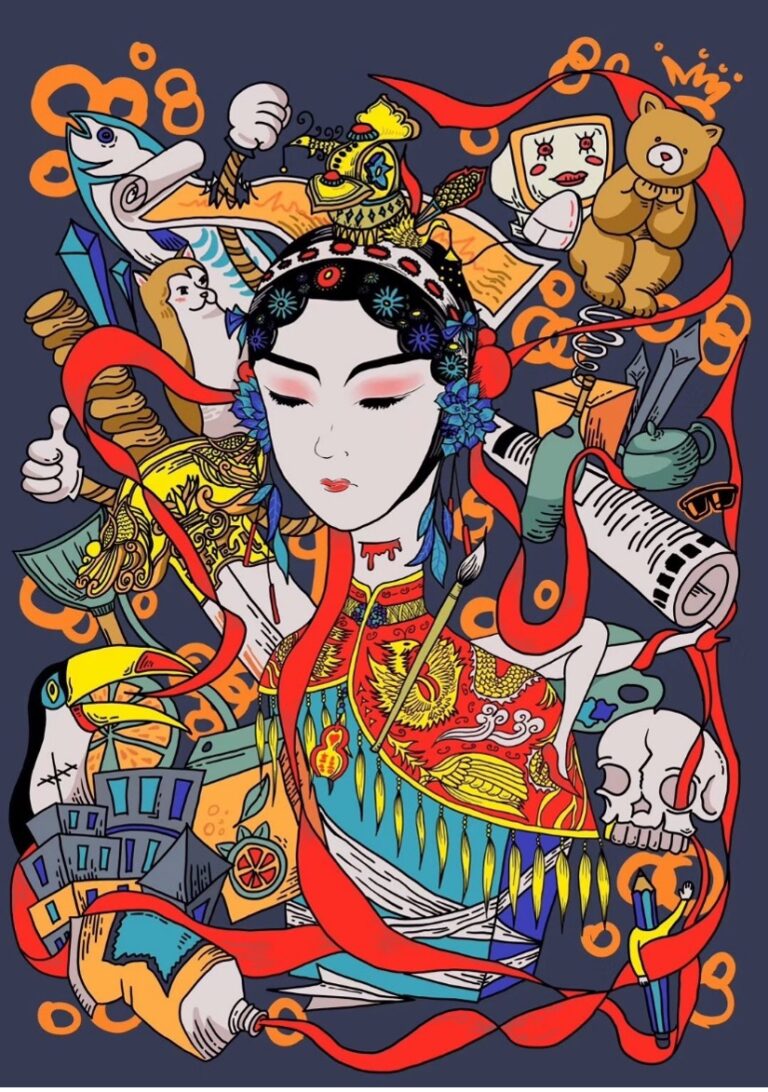
In 2021, Jiahan became an artist with Ehelp Company. She actively participates in exploring and innovating in the field of digital art, using vivid lines and the clever use of illustration techniques, combined with Chinese traditional culture, to create distinctive contemporary artworks. In 2022, Jiahan collaborated with YouTuber FatDuckPoker to design a personal logo brand. Undoubtedly, Jiahan has achieved many honors along the way. “Party Animals” was selected for publication in magazines such as “VoyageLA” in 2022, “Fantasy Peking Opera” won the gold award at the 2023 MUSE Creative Awards, “My Daily Life” received the 2023 C2A and 2023 Woman In Art honorary awards, and “The Last One” won the silver award at the VEGA Creative Awards. These achievements reflect her exploration and innovation in the field of digital art gaining international recognition. Jiahan expresses that her original intention was just to create a good painting or tell a good story. Receiving honors is a pleasant surprise for her, but she is also very happy that her works are loved. “This is recognition for this stage of my journey,” she says. “I hope in the next stage I will have new breakthroughs.”

(FatDuckPoker personal logo brand)

Jiahan’s art is a dialogue between the past and the present, a journey through time and culture. As she continues to explore and innovate, her work serves as a bridge between Chinese traditions and Western modernity, offering audiences a glimpse into a world where art transcends boundaries. Jiahan Fan’s story is one of cultural synthesis, an artist who not only interprets contemporary society and culture but also envisions the future of art. In the coming year, the art world eagerly awaits the new horizons Jiahan will explore, promising more groundbreaking works that reflect her unique perspective as a cultural ambassador through art.

Album Review: Tierra Whack, ‘World Wide Whack’

Shaking away the metaphysics of Tierra Whack’s fictional pseudo-documentary Cypher is no easy feat, nor does sophomore record World Wide Whack allow it. The 2023 film — during which the US artist is initiated into an Illuminati-inspired group that “consolidates power through star-making” — posits Whack as a puppet of industry to control the public. Amid cloning and mind-control conspiracies, Whack loses control of her artistry and fears replaceability in the churning pop culture machine. In “tapping into the collective anxieties of the culture,” as one review put it, Cypher’s dark jest frames World Wide Whack too. Described as her new debut — one that reintroduces Whack as a sad clown — World Wide Whack is just as focused on the conspiracy of fame as its predecessor, yet, on the contrary, its concern lies not with audiences but with Whack’s darkening state of mind under sizzling spotlight.

Largely, this re-upped debut recommits to the scaffolding of actual debut, the critically acclaimed Whack World, which features minute-long vignettes to traverse Whack’s humorously dark imagination and caricaturist vocality. Inspired by a seventeenth-century Italian black-and-white sad clown named Pierrot — a stock character perpetually stricken by romantic frustration — Whack immerses in performance, but behind the curtain, deep cracks in face-paint emerge near-immediately and abundantly, and fourth wall experimentalism undoes the artist at her seams.

Expectedly from Whack’s lyricism, World Wide Whack features dark double entendres at every turn. The disco-inspired ‘Moovies’ sees Whack saddened by a lover’s lacking efforts; Frankenstein soul across ‘Burning Brains’ addresses the dissatisfaction of a partner; and ‘X’ has Whack considering a replacement. Here, it’s fun, stylish, bold, genre-evasive and enthralling. But in switching to Pierrot’s point-of-view these relationships appear solely parasocial, traversing instead the matrix of fame. Isolated by stardom, Pierrot-Whack is “balling on [her] lonely”, begins to treat “fans like homies,” and becomes disillusioned by adoration. On ‘Imaginary Friends’, she sings: “When nobody cared, you cared for me/They say you’re a conspiracy.”

Struggling with mental health, suicidal ideation fast becomes World Wide Whack’s red thread, an aching at the heart of the performance to both contrast and uphold sad clown whimsy. “When I grow up I want to hang from a ceiling,” she sings on ‘Imaginary Friends’. Plentiful onstage cries further darken the record: she reaches the “final stage of being numb” on ‘Numb’, and in nearing her end, spews manic depressive, near-conspiratorial sentiment on ‘Two Night’: “It’s not my fault that this is the end […] prepare for when I go missing […] death is real, life is fake.” Familiar comedic clownery and wit remains, and no track is ever anything less than entertaining, as if she’s prioritizing the show: “Before I go, I want to let you know/ I didn’t pay the light bill this month.” To close the curtain, ‘27 Club’ confesses the hardship of accolade: amid such renown she’s lost joy in the performance and holds her life and artistry at ransom — “I can show you how it feels when you lose what you love […] Looking for something to commit to/ Suicide,” she sings, dancing in clown attire and smiling maniacally — leaving audience suspended in awe, unease and applause. Separated by eerie piano interludes, the fifteen tracks of World Wide Whack showcase a darkly layered and emotional narrative on chronic depression — contrasted only by its near-constantly innovative off-piste R&B — and such depressive realism and intellectual commentary lends itself to Whack’s cartoonish fourth wall experimentalism. Ultimately, World Wide Whack becomes the sort of record that cements artistic vision and legacy.

The irony lies in the applause itself, of course, which fuels the parasocial transactionality between clown and patron, a sentiment shared by Bo Burnham’s Inside. Doubly, perhaps — particularly under the lens of scripted docufilm Cypher, with all its fictionalised music industry horrors — Whack posits World Wide Whack as a red-pilling of the unsettling reality of artistry. But there’s reluctance to interpret too much, and in Cypher she observes: “People find what they want when they’re looking for something. When they want something to be real, then all they see are connections.” Yet World Wide Whack  an effective parable and cleverly constructed record that, sensitively, makes a clownery of depression — undeniably stares into the abyss of fame, and as Whack returns to her vibrant visual fantasy, there’s a sense that, between all the heartache and horror, she seeks agency and connection, even as a clown-for-hire in an all-consuming, disorienting industry. “I had this strange feeling my story wasn’t mine anymore,” she concludes amid snowballing fame in Cypher, “like I had lost my hold on it.”

This Week’s Best New Songs: Vampire Weekend, Myriam Gendron, Waxahatchee, and More

Throughout the week, we update our Best New Songs playlist with the new releases that caught our attention the most, be it a single leading up to the release of an album or a newly unveiled deep cut. And each Monday, we round up the best new songs released over the past week (the eligibility period begins on Monday and ends Sunday night) in this best new music segment.

On this week’s list, we have Vampire Weekend’s Classical’, which combines the familiar whimsy of the band’s best work with bleak commentary and a great hook; Myriam Gendron’s strikingly emotional and honest ‘Long Way Home’, which the singer-songwriter calls, in a way, her “first pop song”; ‘365’, another poignant preview of Waxahatchee’s new album; Drahla’s ‘Grief in Phantasia’, the knotty and captivating closer of the band’s new album; ‘Imaginary Friends’, a darkly honest and beautiful highlight off Tierra Whack’s new album; Ride’s driving new song ‘Monaco’; and ‘Enough for You’, the entrancing first single from shoegaze artist Wisp’s debut EP Pandora.

Best New Songs: March 18, 2024

Vampire Weekend, ‘Classical’

Song of the Week: Myriam Gendron, ‘Long Way Home’

Waxahatchee, ‘365’

Drahla, ‘Grief in Phantasia’

Tierra Whack, ‘Imaginary Friends’

Ride, ‘Monaco’

Wisp, ‘Enough for You’

Author Spotlight: Jessica Zhan Mei Yu

At a fellowship where Australian-born Malaysian Girl, a scholar on Sylvia Plath, is ferried to Scotland to write a postcolonial novel and a dissertation, she has trouble doing either. Followed by memories of her parents growing up and their tough love, Girl feels like examining Plath’s work isn’t true to her, and starts a novel based on her family history. Things blow up later when Girl shares her work to the group, and differences between her and her white counterparts become too loud to ignore. She enjoys herself, briefly, at a postcolonial conference where she starts to reckon with the fact of pursuing academia, but after a family emergency, her desires are tied and she becomes unsure of what to do. Honest, tender, and very funny, Jessica Zhan Mei Yu’s debut novel is a must-read for academics or anyone looking at life differently.

We sat down with Yu to chat about academia, autofiction, and writer’s guilt.

Congratulations on your debut novel! It’s already out in the UK and Australia, how are you feeling going into its US publication?

Excited! It’s an honor to be published in multiple territories — I’ve already had some really amazing reader feedback and it’s been great.

But the Girl is a semi-autofictional tale about a writer in Scotland abroad to work on a dissertation and a novel; how much of it was taken from your life and how much was fiction, and how did you balance the two?

I always say to people that writers write from life, that’s a given, but I’d give it a 30/70 — 30% taken from life and my own experiences and observations, 70% fictionalized and made into the coherent structure of a novel, which is really hard to do.

Girl always feels ‘on’ when she interacts with any of the fellowship staff, and it’s interesting to hear the thoughts passing through her mind, like, ‘Now I must smile to show gratitude, because I am receiving this huge opportunity.’ Where do you think this hesitancy and disconnect comes from?

One thing that really influenced this novel was at the time I was working on a dissertation on the representation of the Asian diaspora in Western media and screen texts. Have you listened to the new Olivia Rodrigo album?

Yes!

That song [“all-american bitch”] that says, “I’m grateful all the time, I’m sexy and I’m kind,” I was, like, ‘Oh, that’s a great musical interpretation of fetishizing and feminizing the Asian diaspora way of presenting in the world,’ feeling, not safe, I guess. The way I keep myself safe is I project these qualities that are seen as a positive version of me, with that model minority stuff. That’s mixed in with the sense of being a female Asian body in the world, how that presents, what that means to people and how they code and understand it. Thinking of how racialized bodies are either a threat or subjugating, so it’s about subjugating yourself in order to avoid becoming a threat or threatened.

I totally empathize with Girl’s worries of productivity — she feels guilty when she works on her PhD, because her fellowship is for her novel, and she feels guilty when she works on her novel, because she feels her PhD is much more of a distinguished accomplishment. Why do you think she can’t get out of her head and go wherever the writing and creativity takes her?

I think the weirdest thing about writing is that it does live there, in your head. I know you literally have to type or write something down, and that’s a physical act, but I feel like it’s one of the least physical art forms. One of my best friends is a painter, a visual artist, and I feel like that must be such an interesting experience, for your art form to be cerebral and physical, a form of labor. I feel like writing is a form of labor but you’re sitting there, putting things from inside your brain onto a computer or a piece of paper. I think that’s what trips a lot of writers up — you’re already so inside of your head doing your practice, it’s easy to get more inside your head about your anxieties and fears and worries about [it].

I’m obsessed with the fact that Girl chooses to do a thesis regarding the postcolonial because, she says, it sounds ‘theoretical’ and ‘impressive.’ I had a good time with how she noticed the absurdity of academia, analyzing just to do it — was this something you wanted to incorporate in the book?

I’m an academic, and I work at a university now, and even as a PhD student, it’s almost like you’re getting indoctrinated into the ways of academia. I’ve had to think a lot about that and read a lot about that in order to understand what was happening to me at the time. Which I’ve made sound really grim in the novel! There’s obviously some really beautiful things about academia as well. But there are really absurd and funny and tragic and sad things about it. I wanted to write about that because I think part of the novel is Girl is embodying the dream of the immigrant family. Her dad believes academia to be this really utopic place, where she can just write her silly little books and make a living wage, and have that privileged life. But there are so many difficult things about that privileged life, and I wanted to talk about that tension. I dunno, there’s always a tension there between immigrant parents and their kids. The question: ‘is your life more hard than mine or is my life more hard than yours?’ is always being asked. Girl’s had this really privileged life as a second-generation immigrant, and the book is about finding ways to hold space for both the difficulties of her parents and herself. Which is something that Girl really struggles with. 

Did you write the novel while you were doing your PhD?

In Australia, it’s quite common to have creative writing programs where you can do PhDs with split dissertations — half of it is a critical, traditional academic thesis, and the other half is a novel, or short story collection or play. I was trying to write my novel as part of my dissertation but the form that it took — the way you see it now is so different. I was so self-conscious about being in academia and not wanting it to be this academic, PhD novel that I tried to write this dishonest novel that felt really guileless. But then in the redrafting phase, I was like, ‘But I’m learning all this stuff now, and maybe I know too much, but I want the book to be overfilling with the sense of knowing too much and inhibiting you.’ It sort of became the academic novel I was afraid of writing as a PhD student and leant event harder into that. I felt it was more honest in some ways, because that was my experience and I wanted the book to know as much as I did, not be this “unknowing” piece of work. 

Girl is connected to another student in the fellowship, Clementine, a painter who somewhat selfishly has Girl sit for a portrait, which keeps her from her own work. They have tiffs about the nature of art and how to be a person — what did you want to explore with this relationship?

I did an artist residency when I was a PhD student and I felt such a charged energy — it was supposed to be communal where we had all these common goals and we were at this beautiful place, but it was so charged with the anxiety of being an artist and the feeling that you’re fighting for scraps. What is even the prize at the end of this? Probably nothing! And yet, you have so much competitive desire. It was a way of exploring the mimetic desire artists feel inside this one relationship.

Girl and Clementine don’t really see each other, even though Clementine is drawing Girl, and Girl is thinking about Clementine. They’re both misunderstanding each other and using each other in different ways, and that’s something that happens in the Plath novel, and something I wanted to explore — that sense of misseeing someone when you’re so consumed with anxiety. There’s competition, envy, and also racism. I wanted to explore how that works. It was also a manifestation of the way Girl sees Plath, and how she objectifies her, seeing her as an object she can project all these things onto. It’s this triangle, in some way, between these three figures — Plath, Clementine, and Girl.

There’s a book within the book, Pillar of Salt, a family history that Girl writes instead of her postcolonial novel or Plath dissertation. When she showcases parts of the book to the group, all they can comment on is how diverse voices are needed, not anything actually regarding the book. Girl, rightly so, points this out, after she’s suffered microaggressions and odd comments during her whole stay. Is this instance in particular painful to her because it pertains to her writing?

I think it’s painful because I feel like a lot of girls in the Asian diaspora — I don’t want to generalize — but for me, you have all this pent-up anger you can’t really express because it’s not safe to do so in public. Sometimes it just wells up and explodes. Girl has been on the brink of expressing these things for the entire novel and the climax is when she finally does. I also think artists are pretty protective about their work. It’s like, “insult me and hate me all you want, but insult my work…” They can be quite sensitive about it. For Girl, it feels like such a violation of her work to see it as this thing and commodity, even though when you publish a book it does, of course, become a commodity. The book is still in its nascent state at the time of the residency and she’s making something that’s really important to her. For people to only be able to see it as a “thing”… it just feels so awful to her. 

Girl is born in Australia the day her parents immigrate to the country, granting her automatic citizenship. Her upbringing with her family is tough but loving, and throughout the novel, she constantly has flashbacks. Do you think these expectations her parents place on her, that she’s abroad, getting money to work, have an effect on her? 

I think her parents’ expectation is that she’s successful in a broader sense — I don’t think they’re into the finer details of her practice or what her work means to her. They don’t really understand that part of her, but what they understand is that they want her to be happy and well, and to be able to achieve the things she wants to achieve. For Girl, there’s a sense that it’s really hard to guarantee that will happen, as an artist or writer, it’s such a scary thing putting the instability of that chosen path together with that very immigrant desire for stability which causes this very anxious mess inside of her.

Finally, you’re working on an upcoming essay collection, All the Stain is Tender — what are some of the topics you’re exploring there?

The way I think of it, you can’t really talk about what it means to inhabit a racialized, feminized body in the world like you’re pinning a butterfly to a piece of card. It’s more elusive than that in some ways, and there are feelings you have without any sort of evidence to back them up, or any proof — they just well up inside you in weird ways. What I’m trying to do with that essay collection is to find an “uncontainer” or non-constraining form in order to somewhat collect those feelings and put them on the page. That’s sort of the overarching theme of the book.

One of the essays I just wrote was a craft essay, about writing so-called ‘immigrant fiction.’ There’s so many tropes and clichés you can commodify and feel really gross. For example, the way food is exoticized and made a centerpiece in immigrant fiction, but, like, what if food is really important for you, or that is a genuine part of your culture? I guess it’s an essay about wrestling with what happens when things you genuinely love or connect you to yourself become commodified — how do you write about them or express them in ways that feel right?

I’ve also been working, for ages, about this essay on Taylor [Swift]. The idea that she’s, like, this image of perfected young womanhood. She’s everything, she’s it. 


But the Girl is out now.

Review: Love Lies Bleeding

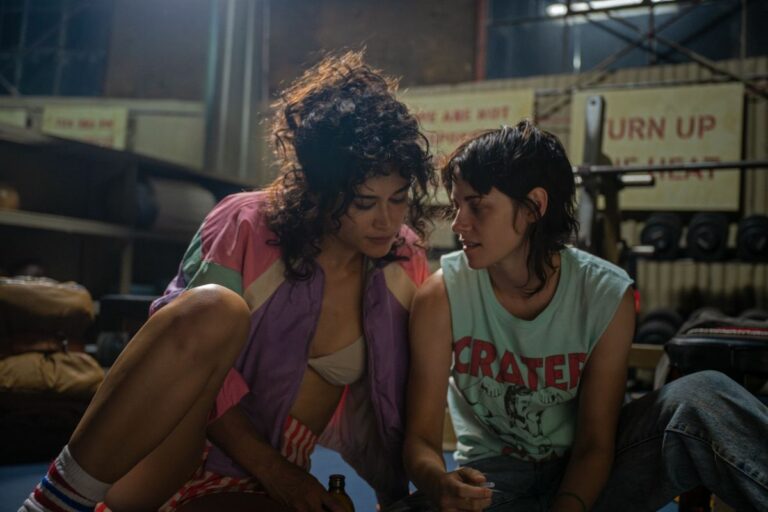
Writer-director Rose Glass is proving herself to be one of the most exciting and vibrant voices in genre filmmaking. After flipping the conventions of horror in Saint Maud, she sets her sights on the erotic crime thrillers of the 1980s with Love Lies Bleeding. With her sophomore effort she brings forth a spirited and guttural examination of the ugliest, rawest, and most beautiful parts of feminine desire. Its devilishly campy take on a lesbian romance is destined for cult status, delivering a mesmerizing cast, killer synth soundtrack by Chris Mansell, and some of the goriest kills this side of David Cronenberg.

Set in an almost mythic 1989, amidst the neon-drenched deserts of New Mexico, Love Lies Bleeding opens on Lou (Kristen Stewart), a gym manager who’s always stuck cleaning someone else’s mess. Lou feels trapped in her humdrum town, where her life revolves around protecting her sister Beth (Jenna Malone) from her abusive husband JJ (Dave Franco), and avoiding a lovelorn fling with Daisy (Anna Baryshnikov). To make matters worse, she’s finds herself a key piece in an FBI Investigation targeting her estranged king-pin father (Ed Harris). He’s part of a past life she claims to have distanced herself from.

The arrival of Jackie (Katy O’Brian), a drifting bodybuilder vying to make it big at a Las Vegas competition, signals the start of a new chapter in Lou’s life. After a night of sex and steroids, the two become inextricably linked to each other. Their scintillating, almost intoxicating romance is arguably the film’s greatest element, often placing us on a knife’s edge between pleasure and pain. In many ways they’re emblematic of Hollywood’s greatest (and most dangerous) couples, exuding raw passion with each gaze, embrace, and spirited argument. Through its sheer carnality, their romance becomes a progressive treatise on female desire itself, finding power in the grime and scuzz.

Yet, their dreamlike affair turns bitter when Jackie commits a brutal crime of passion, trapping the two in a downward spiral of violence and substance abuse they struggle to escape. The more they try to wriggle out of their bind, the more they are forced to confront their dark pasts.

Love Lies Bleeding. Credit: VVS FILMS

O’Brian cements herself as a star in the making, relishing a performance of rare physicality and vulnerability. Her buffed-out figure is home to a vein-popping, blood-churning transformation, capturing a character so unhinged it becomes impossible to look away—even in the most uncomfortable and disturbing of moments. Yet, despite how deranged her character becomes, O’Brian never forgets to imbue her with a human edge.

A never-better Stewart embodies both the femme and the fatale of Love Lies Bleeding, breathing life into a character who is as strong as she is flawed. Her take on Lou manifests as a stirring critique of “strong female characters”, where her shortcomings and missteps become her most admirable and triumphant qualities. In embracing her imperfections, Stewart lays bare a new, daring approach to femininity. Ed Harris also shines in a wild, imposing turn as the film’s chief antagonist, chewing the scenery—and a bug at one point— as a man desperately clinging to his rotting criminal empire.

Glass shoots Love Lies Bleeding with a distinctive eye, armed with a visual dexterity that mirrors the heart and brutality of its surreal world. Coupled with its abrasive editing, often drenching certain sequences in a nightmarish neon red, the film begins to emulate the very high of its protagonists’ lurid headspace. Love Lies Bleeding injects itself into us like the very steroids Lou and Jackie use, coursing through our veins and compelling us to hallucinate along with them. An effect that can become a bit too dizzying as it glides towards its cataclysmic conclusion.

Love Lies Bleeding takes wild swings that don’t always land, but when they do, Glass’ second outing fires on all cylinders—like a roaring transgressive machine. An especially bizarre climax may jump the shark for some viewers, it never betrays its sincere and campy heart. This commitment to such carnal oddity is key to its ravishing power, giving us the type of doomed romance that is rarely, if ever, matched.

The cultural shift from smoking to tobacco-free alternatives

Over the past few decades, society’s perspective on smoking has undergone a significant transformation. Once a symbol of sophistication and a staple of the cultural elite, smoking has increasingly been viewed through a critical lens, primarily due to growing awareness of its health risks. This shift in perception has paved the way for the development and acceptance of other alternatives. Among these, tobacco-free snus, such as Helwit, stands out as a noteworthy option, particularly appealing to those seeking to maintain the ritualistic aspect of smoking without its harmful effects.

The rise of white tobacco-free snus in cultural circles

As the cultural tide turns against smoking, white tobacco-free snus has emerged as a sophisticated and discreet alternative, gaining traction among the cultural elite. This shift is not just a matter of health or environmental concern but also a reflection of changing social norms and the desire for a more refined lifestyle choice.

The adoption of white tobacco-free snus by artists, writers, and thinkers signals a departure from traditional tobacco products, aligning with a contemporary ethos that values both wellness and aesthetic sensibility. Its popularity in these circles is emblematic of a broader movement towards embracing alternatives that offer the tactile and communal pleasures of smoking without its deleterious effects.

Moreover, the discreet nature of white snus, free from tobacco’s conspicuousness and stigma, allows for a seamless integration into both social and professional settings, further cementing its status as a preferred choice among those at the forefront of cultural trends. This evolution reflects a nuanced understanding of consumption as a statement of identity and values, positioning white tobacco-free snus as a symbol of modern cultural sophistication.

The allure of Helwit: A blend of tradition and innovation

Helwit stands out among tobacco-free snus varieties as a hallmark of innovation, blending the rich traditions of Swedish snus manufacture with modern, eco-friendly practices. This brand distinguishes itself by meticulously crafting a range of flavours that cater to a broad spectrum of preferences, all while adhering to principles of sustainability.

Helwit’s approach to production is deeply rooted in environmental stewardship, utilising a self-sustaining water power system in their factory and packaging their products in materials derived from tall oil, a renewable resource. This commitment to sustainability extends beyond production to include comprehensive climate compensation efforts, ensuring a minimal environmental footprint.

The flavour profiles offered by Helwit are developed in collaboration with world-renowned taste experts, striking a fine balance between taste and nicotine delivery. This thoughtful approach to product development reflects a blend of tradition, where the cultural heritage of snus is preserved, and innovation, through the exploration of unique flavours like rose, violet, coffee, and orange.

Helwit’s dedication to combining tradition with innovation not only caters to the evolving tastes of consumers but also aligns with a growing societal emphasis on environmental consciousness, setting a new standard in the industry.

Embracing Helwit’s white tobacco-free snus represents not just a choice of a lifestyle without smoking, but also an adoption of a product that carries cultural flair and sophistication, blending seamlessly with the values and aesthetics of contemporary life.

Iglooghost Announces New Album ‘Tidal Memory Exo’, Shares New Single

Irish producer Seamus Malliagh, aka Iglooghost, has announced a new album, Tidal Memory Exo, his debut for LUCKYME®. It’s set to arrive on May 10, and the first single ‘Coral Mimic’ is out today. Check it out and find the album cover and tracklist below.

“‘Coral Mimic’ is my go at a new local subgenre people are calling Post-Coil,” Iglooghost commented in a statement. “I made it on a horrible corrosive drum sequencer that can only be touched with gloves on. Every 4 minutes the LCD display gets obscured by an internal fuel leakage, so I had to keep stopping so I could siphon the excess diesel out in time. The tune turned out alright but you can tell I’m clearly really pissed off cos of the technical issues distracting me.”

Opening up about the new record, Ighlooghost said: “Tidal Memory Exo is an album I made while living in a rust-ridden flooded squat in a weird UK seaside town. The area has been in an endless storm, causing strange otherworldly primordial garbage to be washed to shore. It’s basically only populated by rogue junk-hoarding scrap weirdos right now. I’ve been trying to get involved in the music scene that’s bubbling up locally. There’s lots of weird new mutated genres and illegal radio stations popping up – completely isolated from the rest of the country because of this massive storm. They don’t really like me, but I sort of wormed my way in and finally got this album together. Tunes about oceanic scum, illegal teletext transmissions, & the prehistoric trilobite angels lurking in the sewers.”

Tidal Memory Exo Cover Artwork:

Tidal Memory Exo Tracklist:

1. Blue Hum
2. New Species
3. Alloy Flea
4. Coral Mimic
5. Spawn01 [feat. Cyst]
6. flux•Cocoon
7. Pulse Angel
8. Echo Lace
9. Nemat0de
10. Chlorine•FM
11. Germ Chrism
12. Dew Signal
13. Geo Sprite Exo

Karaoke Inventor Shigeichi Negishi Dead at 100

Shigeichi Negishi, the Japanese engineer who invented the karaoke machine in 1967, has died aged 100, The Wall Street Journal reports. Negishi’s daughter Atsumi Takano told WSJ journalist Matt Alt that Negishi passed away last month, on January 26, of natural causes after suffering from a fall.

Alt, who had previously interviewed the inventor for his book Pure Invention: How Japan Made the Modern World, wrote on X: “Farewell to another legend: Shigeichi Negishi, inventor of karaoke, has died age 100. By automating the sing-along, he earned the enmity of performers who saw his machine as a threat to their jobs. It’s an eerie precursor of the debate surrounding AI’s impact on artists today.”

Negishi created the first commercially available karaoke machine, which he called the Sparko Box, in 1967. He came up with the idea after a colleague joked that he had a bad voice, and he thought it would sound better with a backing track. Negishi, who ran a consumer electronics business, asked the head engineer of his company to create a prototype that could play instrumental recordings with a microphone amp and a mixing circuit. It ended up as a cube-shaped machine that played 8-bit tapes connected to a microphone, and lyrics were provided in the form of a booklet. The first song Negishi tried singing along to was a version of ‘Mujō No Yume’ by Yoshio Kodama.

Negishi never patented his creation, and the Sparko Box was a commercial failure. The popularity of the karaoke machine grew exponentially in Japan in the 1970s before becoming global the next decade. Just one Sparko Box remains, which is kept by Negishi’s family.

How Technology is Changing the Sports Betting Game

Technology is changing the game in many industries including the sports betting industry. Placing a bet on your favorite sports; nfl betting lines or even the if you plan on wagering on the Olympics in Paris this year, sports betting has never been so easy and accessible. From the introduction of live streaming to rise of platforms and mobile apps, technology is completely changing all aspects of sports betting.

Online Platforms and Apps

The rise of online platforms and apps has meant that bettors no longer have to visit an actual bookies to place a bet. It’s simple, all they have to do is visit and online platform or download an app to their smartphone or tablet. These platforms offer an easy way to place a bet while also offering valuable information and tips for placing bets. Most betting apps will allow you to bet on a variety of different sports from soccer, to less known options such as esports. There are even platforms and apps that specialize in specific sports if you happen to have a particular interest. Bettors are able to place a bet at anytime from anywhere in the world, meaning there’s no longer any restrictions when it comes to events in other countries too. Additionally, most apps and platforms will have bonuses and promotions on offer for new and existing customers. There are usually many promotions centred around big events such as the Super Bowl and World Cup for example. This is a great way for beginners to try out sports betting with promotional funds.

Live Streaming Technology

The introduction of live streaming technology has had a huge impact on the sports betting industry. It has meant that sports broadcasters are no longer controlling which sports are being broadcasted. This has led to more options when it comes to choosing a sport and also the rise of more uncommon sport categories, amateur leagues and even women’s leagues. Live streaming also means that bettors can place live bets when a match is taking place. This means you can play along and bet in reaction to the action unfolding on the screen. This has made the experience more immersive for bettors.

Data Analytics

With technology, accessing data analytics has never been so easy. With the use of advanced data collection methods, analytical tools and wearable technology, athletes and sports teams are able to record and gather insightful data about player movements and game statistics. This can help coaches and managers to improve training sessions. This information is also shared with sports publications and betting platforms. Most online platforms will also provide bettors with this information. This allows bettors to make better and more informed and strategic decisions when placing a bet.

Social Media

The introduction of social media has brought the world together and allowed many industries to grow. Social media is a huge online community, allowing like-minded individuals to connect and share. Through social media, bettors can connect through different platforms such as X (Twitter), Facebook and Instagram to discuss betting strategies, share their predictions and tips, as well as connecting through a passion for sports. Online forums are another online platform where bettors connect too. This has led to experts being able to build a platform for themselves and essentially become an influencer to sports bettors. These influencer also often work with betting platforms to inform their audience and share bonuses and promotions too, especially during big sporting events.

Payment Methods

The rise of different payment methods has offered one of the things consumers love the most; choice. With a wide range of payment methods, bettors are able to choose one that they are comfortable with. With traditional methods such as debit/credit card to digital wallets, which allow bettors to play with just a few taps on their phone screen, it’s this accessibility that makes the experience much more accessible. Technology has also helped to provide more secure transactions with the use of SSL transactions and blockchain technology. With more secure systems, bettors feel more comfortable sharing their personal information and financial details, which has brought more bettors to the exciting world of sports betting.

Cryptocurrency as a payment method is now becoming more widely accepted on betting platforms and apps too. This has even introduced a whole new audience to sports betting. Cryptocurrency is particularly attractive as it can come with many benefits. From anonymous transactions to instant payments, many individuals prefer to use this payment method. This variety of payment methods has meant sports betting is more flexible and accessible to bettors. Especially countries like Japan, its high anonymity and security attract users these days, and there are more and more Japanese bookmakers that accept bitcoin.

In summary, it’s clear to see that technology is completely changing sports betting for the better. From improving accessibility and make bettors feel safer to the wider choice that live streaming offers, it’s exciting to see where this movement is going. Especially with talks of virtual and augmented reality already being incorporated into sports betting.

Iconic Landmarks and Local Delights: A Journey Across Continents

Are you ready for the adventure of a lifetime? Join us on a journey across continents as we explore the iconic landmarks and local delights that make each destination truly special. From the charm of Europe, the mysteries of Asia, the heart of Africa, to the richness of the Americas, there is something for everyone to discover. So pack your bags, grab your passport, and let’s embark on an unforgettable adventure together!

Exploring the Charm of Europe’s Iconic Landmarks

Europe is a treasure trove of architectural wonders that have stood the test of time. From the majestic Colosseum in Rome to the grandeur of the Eiffel Tower in Paris, each landmark tells a unique story of history and culture.

In Italy, the birthplace of the Renaissance, you can marvel at the architectural wonders of Florence, with its magnificent cathedral and iconic dome. For those seeking a deeper exploration of this cultural hub, guided tours in Florence offer immersive experiences into its rich history and artistic heritage. Meanwhile, the canals of Venice will take you on a journey back in time, where gondolas glide gracefully under ancient bridges, revealing the enchanting allure of this iconic city.

In the United Kingdom, the historic majesty of castles and palaces awaits. Explore the Tower of London, where monarchs and prisoners alike have left their mark. Take a stroll through the beautiful gardens of Buckingham Palace and witness the Changing of the Guard ceremony.

France, the land of romance, is home to the globally recognized symbol of love—the Eiffel Tower. Ascend to its dizzying heights for breathtaking views of the City of Lights. And don’t forget to indulge in the delightful delicacies of French cuisine, from croissants to escargots.

Venturing into the Middle East, Israel stands as a cradle of civilizations, offering a mosaic of history and culture. Embark on a journey to the heart of Israel and experience the timeless allure of Jerusalem. A trip to Jerusalem promises an unforgettable adventure. Nestled within its ancient streets lies a tapestry of tradition and modernity, where centuries-old customs intertwine with contemporary life. Traverse the sacred pathways leading to the Western Wall, a testament to faith and perseverance. Then, immerse yourself in the vibrant energy of Tel Aviv’s bustling markets, where the scents of exotic spices beckon. And don’t miss the chance to venture beyond, exploring the tranquil shores of the Dead Sea and indulging in the dynamic nightlife of Haifa.

Heading east, the enchanting city of Prague in the Czech Republic beckons with its fairytale-like architecture. Explore the historic Prague Castle, perched atop a hill overlooking the Vltava River, and wander through the charming cobblestone streets of the Old Town. Be sure to visit the astronomical clock in the Old Town Square, a marvel of medieval engineering.

Continuing on to Spain, the vibrant streets of Barcelona offer a mix of modernist and Gothic architecture. Marvel at the intricate details of Antoni Gaudí’s Sagrada Família, a basilica that has been under construction for over a century. Stroll down La Rambla, a bustling promenade filled with street performers, flower stalls, and cafes, and immerse yourself in the lively atmosphere of this coastal city.

Unveiling the Mysteries of Asia’s Hidden Gems

Asia is a continent of ancient cultures and vibrant traditions. In China, the Great Wall winds its way through stunning landscapes, offering a glimpse into the country’s rich history. The Terracotta Army in Xi’an is a testament to the grandeur of ancient emperors.

India, with its vibrant colors and diverse culture, is a sensory overload. Visit the Taj Mahal, an architectural masterpiece and a symbol of eternal love. Immerse yourself in the bustling streets of Mumbai and savor the flavors of authentic Indian street food.

Thailand’s exotic appeal will capture your heart. Explore the ancient temples of Bangkok, where the serene atmosphere invites reflection. Experience the vibrant nightlife of Phuket and indulge in a traditional Thai massage to rejuvenate your senses.

Japan, known for its blend of tradition and modernity, offers a unique cultural experience. Witness the stunning cherry blossoms in full bloom during springtime, a sight that symbolizes the fleeting nature of life. Dive into the world of anime and manga in Akihabara, Tokyo’s electric district, where pop culture thrives. Go on a Tokyo tour to immerse yourself in the city’s vibrant energy and discover its hidden gems, from historic temples to bustling street markets.

South Korea, a land of contrasts, boasts ancient palaces alongside futuristic skyscrapers. Discover the serene beauty of Gyeongbokgung Palace in Seoul, a symbol of Korea’s rich heritage. Indulge in delicious Korean barbecue in bustling markets and witness the artistry of traditional hanbok clothing.

Delving into the Heart of Africa’s Local Delights

Africa is a continent of untamed beauty and colorful traditions. Kenya offers an unforgettable experience with its breathtaking wildlife safaris. Witness the Great Migration in the Maasai Mara and feel the pulse of nature.

In South Africa, diverse landscapes and rich history converge. Explore the vibrant city of Cape Town, where Table Mountain looms majestically over the skyline. Immerse yourself in the colorful traditions of the Zulu people and discover the vibrant music and dance that defines their culture.

Tanzania, home to the legendary Serengeti and Mount Kilimanjaro, is a paradise for adventurers. Embark on a safari to witness the circle of life unfold before your eyes as animals roam freely in their natural habitat.

Along the way, you can also enjoy a Luxury Tanzania Safari, complete with delightful picnics in the heart of nature. Stay in luxurious tents, offering comfort amidst the wild, and savor traditional Tanzanian dishes while soaking in the beauty of the landscapes, making for a truly unforgettable experience.

As you journey through Africa, don’t miss out on the culinary delights that each region has to offer. In Kenya, indulge in Nyama Choma, a traditional dish of grilled meat that is a favorite among locals and visitors alike. The smoky aroma of the meat cooking over an open flame will tantalize your taste buds and leave you craving for more.

South Africa boasts a rich culinary heritage influenced by a mix of cultures. Be sure to try Bobotie, a savory dish with a sweet and spicy flavor profile that reflects the country’s diverse culinary influences. This traditional Cape Malay dish is a must-try for food enthusiasts looking to explore the unique flavors of South Africa.

Discovering the Richness of the Americas

The Americas offer a diverse tapestry of landscapes and cultures. In the United States, marvel at the awe-inspiring beauty of the Grand Canyon, an ancient wonder carved by the forces of nature. Discover the bustling metropolis of New York City and immerse yourself in its vibrant energy.

Brazil, with its tropical rainforests and pristine beaches, is a paradise waiting to be explored. Discover the stunning Iguazu Falls, a natural wonder that will leave you in awe. Immerse yourself in the vibrant music and dance of samba in the streets of Rio de Janeiro.

In Peru, the ancient civilizations of the Incas will transport you back in time. Explore the mystical ruins of Machu Picchu and marvel at the ingenuity of a civilization that thrived in the midst of the Andean mountains.

Whether you prefer the architectural wonders of Europe, the mystique of Asia, the untamed beauty of Africa, or the richness of the Americas, a journey across continents promises to be an adventure like no other. So go ahead, explore these iconic landmarks and indulge in the local delights that make each destination truly unforgettable.