

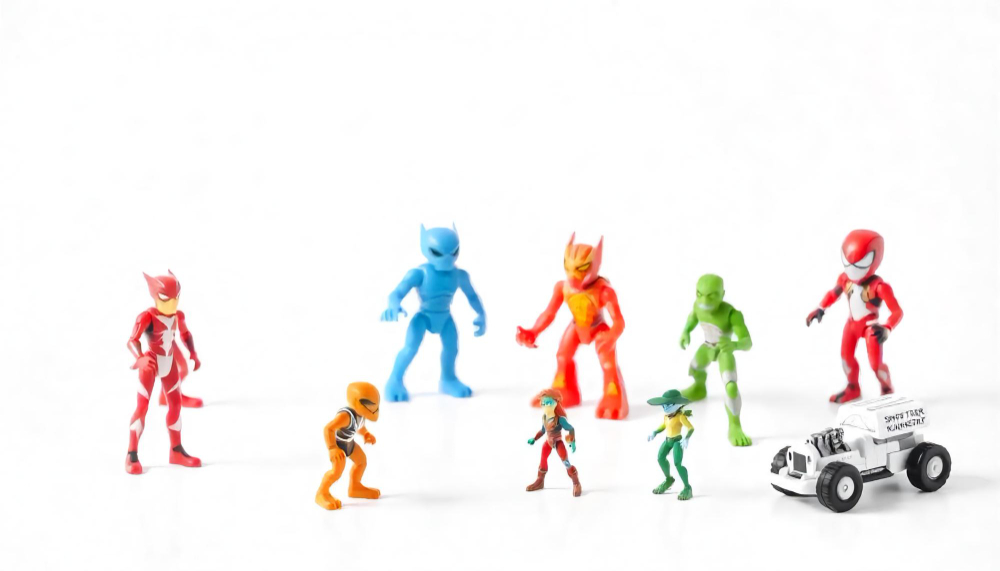
Invincible figures attract attention because their designs capture motion, conflict, and personality in a compact form. The strongest pieces do more than reproduce a character’s costume. They show how a character stands, fights, reacts, or carries the damage of a major battle. That visual information gives collectors more to examine after the initial purchase. Several details separate a memorable display piece from a basic character model, beginning with pose and action.
A figure’s pose establishes its role within a collection. Invincible figures show this clearly through battle-focused designs, character pairings, plush formats, and smaller accessories. Collectors can compare a tense confrontation with a relaxed character presentation, then build a display that follows the series’ changing relationships. The collection includes Invincible, Omni-Man, Atom Eve, Battle Beast, and Conquest-related designs, giving each shelf a different visual balance.
Action Gives A Figure Its Character
Static figures still need movement in their posture. A lowered shoulder, raised fist, bent knee, or turned head suggests what happened before the scene was frozen. These details guide the eye and prevent a display from looking flat.
The Invincible collection includes several designs built around direct conflict. Invincible VS and Invincible Vs. Conquest present opposing characters as the center of attention. Final Battle Invincible Vs. Conquest pushes that idea further by linking the characters to a named event rather than showing either figure alone.
Pairing also changes how a collection reads. Omni-Man and Invincible create a relationship-focused display, while separate Battletorn Invincible and Battletorn Omni-Man pieces allow collectors to show each character’s condition individually. The choice depends on whether the display should focus on confrontation, family tension, or character identity.
Damage Adds Narrative Detail
Battle damage adds information beyond a figure’s outline. Torn clothing, exposed marks, altered colors, and strained poses suggest that the character has already endured a major event. Those details give the display a sense of sequence without requiring a large scene.
Battletorn Invincible and Battletorn Omni-Man rely on this visual language. Their names immediately signal a damaged state, which changes how collectors read the characters. The figures’ suits are built around conflict because their appearance carries evidence of what happened before the viewer arrived.
Final Battle Invincible Vs. Conquest uses the same idea on a larger scale. A named final battle supplies context, while the opposing characters create a natural focal point. Collectors can place the piece at the center of a shelf, then use less intense designs around it for contrast.
Facial Details Control The Mood
A character’s face often determines whether a figure feels serious, aggressive, tired, or playful. Eyes, brows, mouth shape, and head angle work together to establish that mood. Minor changes have a noticeable effect when a figure sits close to the viewer.
The Invincible collection balances serious figures with softer formats. Invincible, Omni-Man, and Atom Eve appear as 9-inch plush designs, alongside Vorg, Jambo x Invincible, and Omni-Man x Rammie. Plush pieces change a display’s visual tone because their fabric construction and rounded shapes make the characters look less severe.
That difference helps collectors build sections with distinct moods. A battle-focused figure can anchor one area, while a plush character adds a softer point nearby. The display gains variation without losing its connection to the same series.
Scale And Format Shape The Shelf
Size affects placement, spacing, and visual priority. A 9-inch plush needs more room than a small pin, while a detailed figure needs enough distance for its pose and surface work to remain visible. Collectors should measure shelf depth before arranging several pieces together.
The collection includes figures, plush products, a brickset, and a spinning pin. Chicago Stage Brickset introduces a scene-based format, while Invincible Spinning Pin provides a compact accent. These items let collectors vary height and footprint instead of filling every space with similarly sized figures.
A mixed display works best when larger pieces sit behind or beside smaller accessories. The main character remains easy to see, and the pin or brickset adds context without blocking important details.
Display Choices Protect The Details
Thoughtful placement preserves the features that make a figure worth viewing. Direct sunlight can fade printed colors, while crowded shelves hide silhouettes and facial expressions. A clean, stable surface gives each piece enough space for its pose to remain readable.
Collectors should keep plush items away from damp areas and store smaller accessories where they cannot fall behind furniture. Sold-out status also makes condition important, since replacement options depend on future availability. Regular dusting with a soft, dry cloth keeps surfaces clear without adding moisture.
Conclusion
A memorable Invincible display depends on decisions that viewers can see immediately. Action gives each pose direction, damage adds a sense of past conflict, and facial details establish mood. Scale then determines how the pieces work together on a shelf. Collectors should begin with one focal figure, leave space around its silhouette, and add a contrasting format such as a plush, brickset, or pin. That approach creates a display with readable structure instead of visual clutter.

