

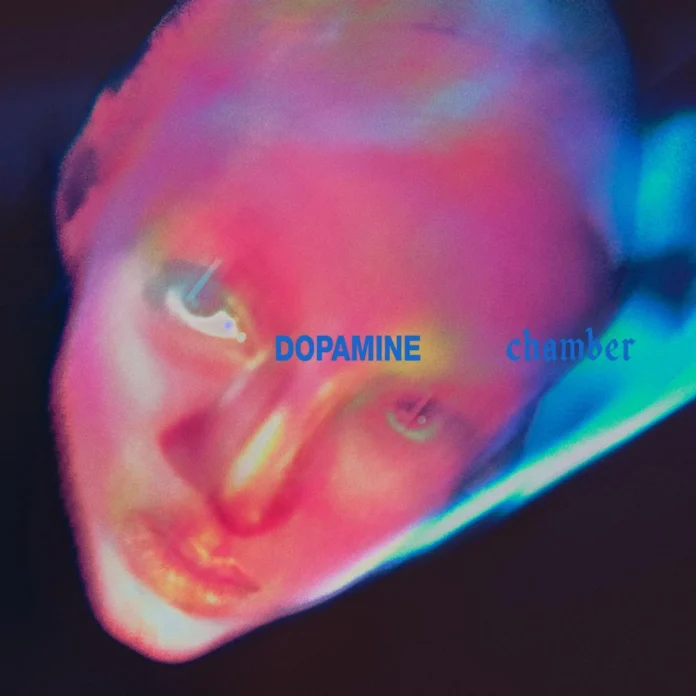
On the surface, Fontaines D.C.’s new album seems but a slight evolution from the heady, arena-sized ambition of 2024’s Romance. After all, if enlisting James Ford after three albums with Dan Carey suggested a readiness to reinvent themselves, how much could their approach have changed on their second LP with the producer? Beyond inviting a headline-grabbing guest vocalist for the first time, Dopamine Chamber is similarly luminous, uncanny, and elegantly produced. But further polishing the band’s sound hardly offsets its darkly alluring tendencies; dressing up reality in the throes of the apocalypse, it embraces a widescreen, corrupted intimacy that’s mostly served as a metaphor for frontman Grian Chatten in the past. “There’s no ending to the deco-dance/ The type of step that takes you far away from true romance,” he sings on the final track. Listen closely and you’ll hear the band diverging from their former ideas of Romance, and with that album firmly in the rearview, Fontaines D.C. keep venturing deeper.
1. Six Shot Morning
Lustrous and melancholy, the Prophet synthesizer signals “the sky’s gone crying,” as Chatten soon intones in his low speaking voice. Squelchy bass maintains an eerie undercurrent, but the song takes almost two minutes to settle into its rhythm, which, rather than connoting the inevitable march of mortality in typical post-punk fashion, conveys the cold promise of eternal life. When Chatten finally sings the word “always” and the sky explodes in technicolor, it feels like the outro could stretch the song out to way more than five digestible minutes, like fireworks bursting off on a timer, without a single soul to marvel.
2. Marianne
Locking into a nervy groove from the start, the lead single packages Dopamine Chamber’s dreamy exasperation with a catchy hook, equivalent in many ways to Romance’s ‘Starburster’ but nowhere near as striking. The chorus bears the promise of disappearing with a “cinematic feeling,” which sounds like a nebulous descriptor for the album itself. The abstract image on film is described on the previous track – “melancholy hearts in emotion” – and Fontaines are tasked with both distilling and deconstructing it.
3. Mimesis
In press materials, Conor Curley said he “wanted fewer guitar sounds where you immediately think, ‘That sounds like The Cure,’ or something from the past,” a goal that’s generally achieved throughout the record. ‘Mimesis’ is the starkest exception, sounding undeniably like the Cure or New Order, which I suppose is fitting given the track’s title. “Tired of living in a photograph,” Chatten sings while reproducing images from the opening track about the sun leaving the sky, only slightly more depressive.
4. Happy for You
Singing over swampy, reverberant guitar, Chatten’s voice becomes more expressive as he turns his attention to a fraught romance. After a series of sprawling, dispirited incantations, the shift in focus is disarming, mirroring the narrator’s dogged desire to be known by the other person. More than a jarring surge of energy on a particularly synthy portion of the record, the torrent of distorted guitars highlights the caustic nature of the titular refrain – as if happiness was ever on the table.
5. Demolition
Infectious enough to have been a single, ‘Demolition’ stands out as the strongest track on the record, a tight yet beguiling take on grungegaze that suggests Fontaines D.C. might be the next rock band to link up with A.G. Cook. (A.G.D.C.?) Lyrically, it abstracts the straightforward conflict of the previous track, offering the perfect tagline for the album: “Cosy up to my/ Horror show for the/ Callous-hearted/ The pre-departed.”
6. Tongue
The album’s intoxicatingly experimental middle stretch continues with ‘Tongue’, which coils around a grainy, sinister rhythm section, with bassist Conor Deegan deploying a tape-speed technique inspired by Prince. Guitarist Carlos O’Connell slathers Chatten’s vocals in effects that make him sound briefly unrecognizable, but mostly seem to contort the dimensions of the space around him. Everything burrows inward as he sings, “Deep inside your pain/ I feel the same.” But in its unsettling flow and studio trickery lies a different sort of magic.
7. One Man
Encircled by strings that point to his doubled-edged solitude, the singer hardly repeats the refrain the same way twice – one “only” sounds pensive, the next agitated. As acoustic guitars enter like a breeze, the song takes on a sobering quality: “You can’t escape the feeling/ Once you’ve given it a name,” Chatten sings, perhaps ironically, having just given the album its name. “On this record, the question became: where do you escape to?” Deegan has said, but there’s clearly no eluding the feeling.
8. Where Is Gone? [feat. Rosalía]
Hand any band the opportunity to collaborate with Rosalía, and they might come up with a pretty traditional duet like ‘Where Is Gone?’. On first listen, I’ll admit the song’s conventional structure and morose atmosphere left me feeling cold, but it grew on me the more I absorbed the album’s romantic malaise. It’s also hard to deny the execution, not only meticulous but mature; Chatten and the Spanish pop star trade verses not like they’re vying for attention, but aching to give this tireless love story a sense of finality. Chatten once again leans back in a comfortable low-end, allowing the striking subtleties of Rosalía’s performance to shine through. When she sings about how a certain man who “will come along and tell you that you’re not alone,” she might as well be talking about that ‘One Man’. But you can’t fight solitude with solitude, and only by dimming the fire in their voices are both singers heard loud and clear.
9. You Miss Me
Following a trio of surprising left turns, the anxious propulsion of ‘You Miss Me’ is familiar territory for the band; at least until it breaks open in an unexpectedly optimistic chorus, complete with swooning strings that gesture towards the sky. Here’s that certain man with his presumptuous look: “I could tell you were lonely/ By the way you looked at them.” It’s a reminder you can never take Dopamine Chamber’s sincerity at face value.
10. Japan
Except perhaps for ‘Japan’, a genuinely beautiful ballad that might be the band’s best. The disembodied nature of Chatten’s storytelling is present elsewhere on the album, but there’s a warmth to it here that’s oddly endearing. The Phoebe Bridgers-esque backing vocals in the final chorus – seemingly coming from Deegan – bring the female character’s perspective to the surface as she asks, “Why’d you go and make it real?” On a record that thrives on the outskirts of reality, it’s a damning accusation.
11. Intimate
Coming full circle with vibrant, otherworldly electronics, the closer is shot through with a breathless, prickly performance from Chatten that exposes its surface: “Before you: the ruins of the human dream/ Colourful ending – so pretty in the final scene.” Gorgeous and intimate all through the night, but far from deathless. It’s not a hopeful ending, but it sounds a lot better than a doomed forever.

