

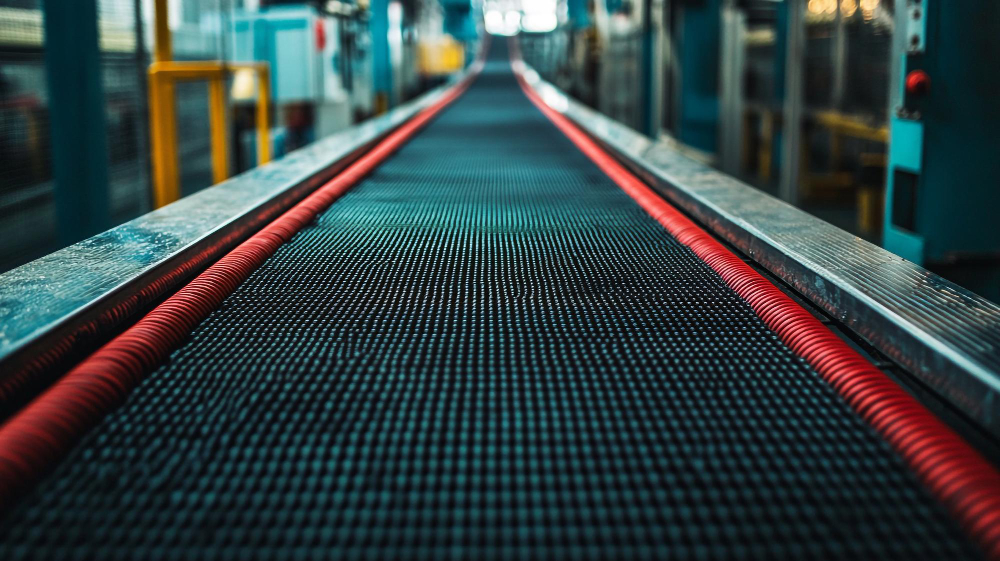
If raw materials do not get to the next stage of production on time, delays spread throughout an operation. Miners wait for the materials to move, factory workers may run behind schedule, and warehouse workers may have trouble shipping orders during busy periods.
Duties resulting from manual handling often lead to delays, particularly when the goods must travel between workstations or long distances. A properly designed belt conveyor helps to move materials faster, using less force than manual lifting.
However, the right system depends on the type of material being transported, the required speed, and the working environment. Mining operations, for instance, require equipment that handles heavy loads; manufacturers, on the other hand, need precise positioning, and warehouses depend on reliable package movement.
Knowing these differences helps companies find a conveyor that matches their workflow, available space, and production needs. Here are the common belt conveyor applications in mining, manufacturing, and logistics.
-
Mining Operations and Bulk Material Handling
Mining sites move materials from the extraction area to crushers, screening machines, processing plants, and storage areas. Conveyor belts route coal, crushed stone, sand, and ore along a route prescribed for each transfer point, avoiding the need for trucks or loaders at each transfer point. This helps maintain a steady supply of material to processing equipment.
The belt conveyor must suit both the material and the route. Heavy or abrasive loads require durable belts, sturdy supports, adequate drive capacity, and impact protection where materials land on the belt. Long routes also require correct tension and alignment to minimize slippage and uneven wear. Dust, moisture, and temperature can affect component selection.
Maintenance teams should inspect belt surfaces, rollers, and pulleys on a regular basis. Small alignment issues can cause spillage or damage if ignored. Designing the whole transfer route is necessary to ensure reliable mining transport, not just selecting a belt with sufficient capacity.
-
Manufacturing and Automated Production Lines
Manufacturers use conveyors to move parts between assembly, testing, finishing, and packaging stations. This stream of parts maintains production flow and reduces worker time spent carrying parts. Conveyor systems are also used to link machinery and automated handling equipment involved in electronics, automotive, plastics, and medical device production.
The configuration of drive belts depends on the products being handled. Single-belt drives are suitable for small items, and dual-belt drives allow for access for inspection or work beneath the products. Tandem drive belts can support larger, more rigid pieces via parallel belts. For each setup, the frame, belt width, and motor must be specified to meet the loads and available space.
Modular framing also makes production lines easier to adjust when products or processes change. For example, the guide rails and conveyor sections can be positioned around the work stream, while variable-speed drives help movement occur. Still, it’s always advisable to plan your layout for the slowest stage of production to avoid bottlenecks.
-
Logistics, Warehousing, and Distribution
Warehouses and distribution centers move cartons, totes, parcels, and other goods from the receiving, sorting, packing, and shipping areas. Belt conveyors provide a consistent route for transport and reduce the need for repeated lifting and carrying.
Flat belt conveyors provide a continuous surface for package weights that need to be supported. The belt can carry all of the biggest items in the normal workload, and its speed can match that of scanning equipment, sorters, or packing stations.
Layout is just as important as speed. Systems need maintenance access, safe working areas, and smooth transfers between sections. Where the floor space is limited, modular conveyor systems can connect multiple stages without needing to be completely redesigned. Regular checks of belt tracking, rollers, drives, and safety controls help maintain reliable operation throughout each shift.
Selecting a Belt Conveyor and Estimating Its Cost
Start by recording product dimensions, weight, travel distance, incline, operating environment, and available floor space. These details help determine the belt material, width, frame, and accessories. Speed and control requirements must also match the connected machinery.
How do you choose the right belt for a conveyor or elevator system?
Consider the material and operating conditions. Abrasive loads require wear resistance, delicate products may need a gentler surface, while inclined routes may require extra grip to prevent slipping. Temperature, chemical exposure, load capacity, and cleaning requirements also matter.
How much does a belt conveyor cost?
Pricing depends on dimensions, load rating, motor, controls, accessories, installation, and any special requirements. For instance, a workstation belt conveyor system will have different costs from a heavy-duty bulk handling system.
Compare belt conveyor systems based on their configuration and intended use. Ask suppliers about maintenance intervals, installation requirements, replacement parts, and compatibility with existing controls before making a decision.
Final Thoughts
Belt conveyors help mining, manufacturing, food packaging, and logistics operations move materials with less manual handling and more consistent flow. These systems ensure mining systems handle heavy loads as required, production lines are accurately positioned, and warehouses benefit from reliable package movement.
However, before choosing any belt conveyor system, assess the load, route, throughput, operating environment, and connections to existing machinery. You should also plan for maintenance access and future changes, and check if replacement parts are readily available. These considerations can help limit downtime, support safer material handling, and keep the conveyor useful as production requirements evolve.

