

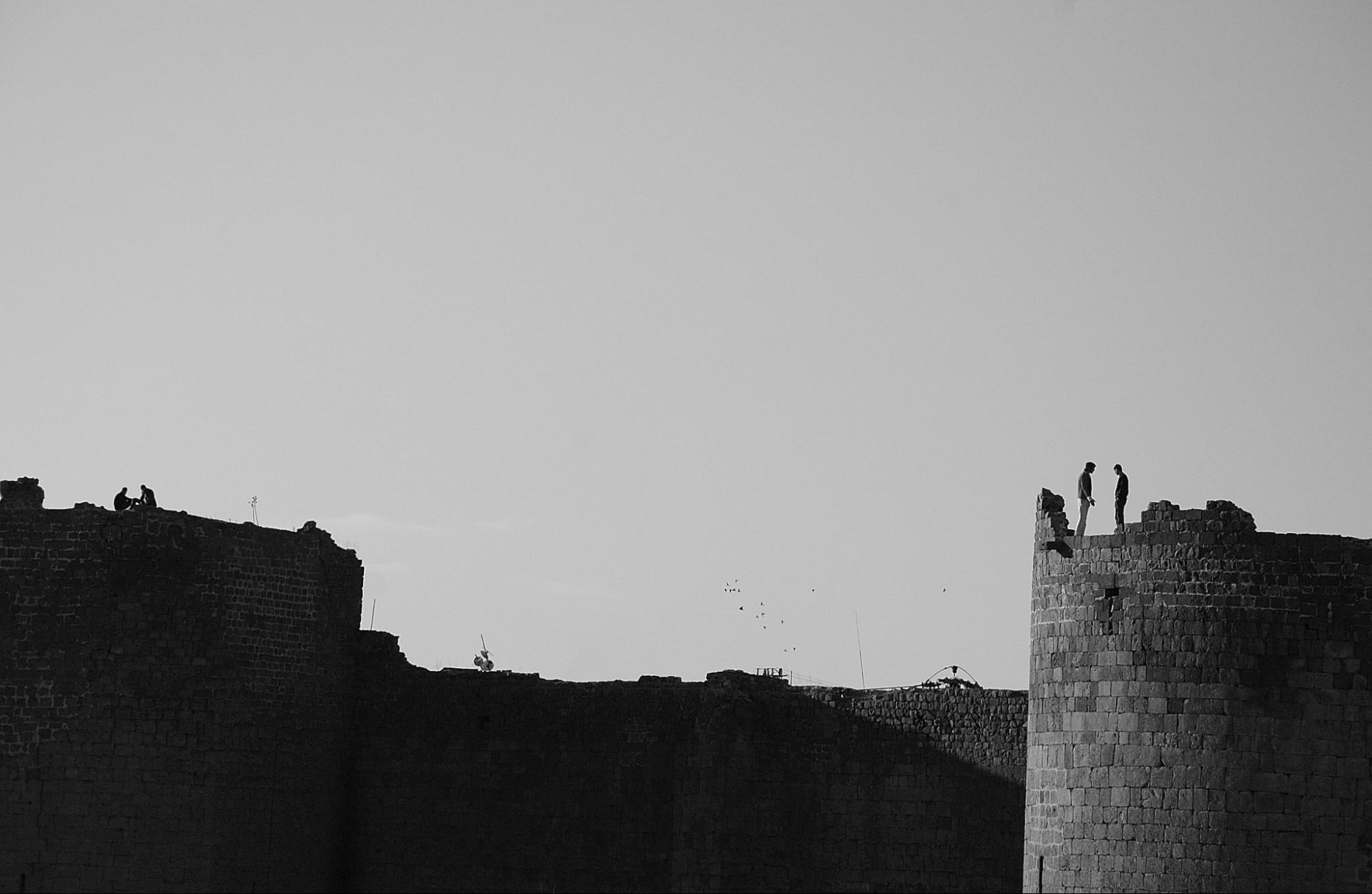
Two men stand on what appears to be a ruined tower; one speaks while the other turns slightly away as if he’s only half-listening. Is it a scolding, a deep and meaningful conversation or something far more mundane? It’s a black-and-white photograph by Gunes Kaplan, in her solo exhibition at Marquess Gallery in London. Even if we were standing where she was when she took the photograph, we wouldn’t be able to make out the words, and it’s this uncertainty that makes her works so appealing.
We’re also unsure where it’s set, further adding to the scene’s ambiguity, and we’re left to wonder how old these ruins are and how many other conversations they have witnessed. They bear the scars of time, and every step or movement upon them has left scuffs that date back centuries.
Within this series titled ‘Fragments of Memory’, we also see two people walking past the base of a tower that dwarfs them, two adults and a child walking past a skyline dominated by a minaret, and a lone child running across an empty square. All of these photographs were taken in Turkiye, but we never know their narratives. Is that child just playing and a watchful parent is just out of shot?
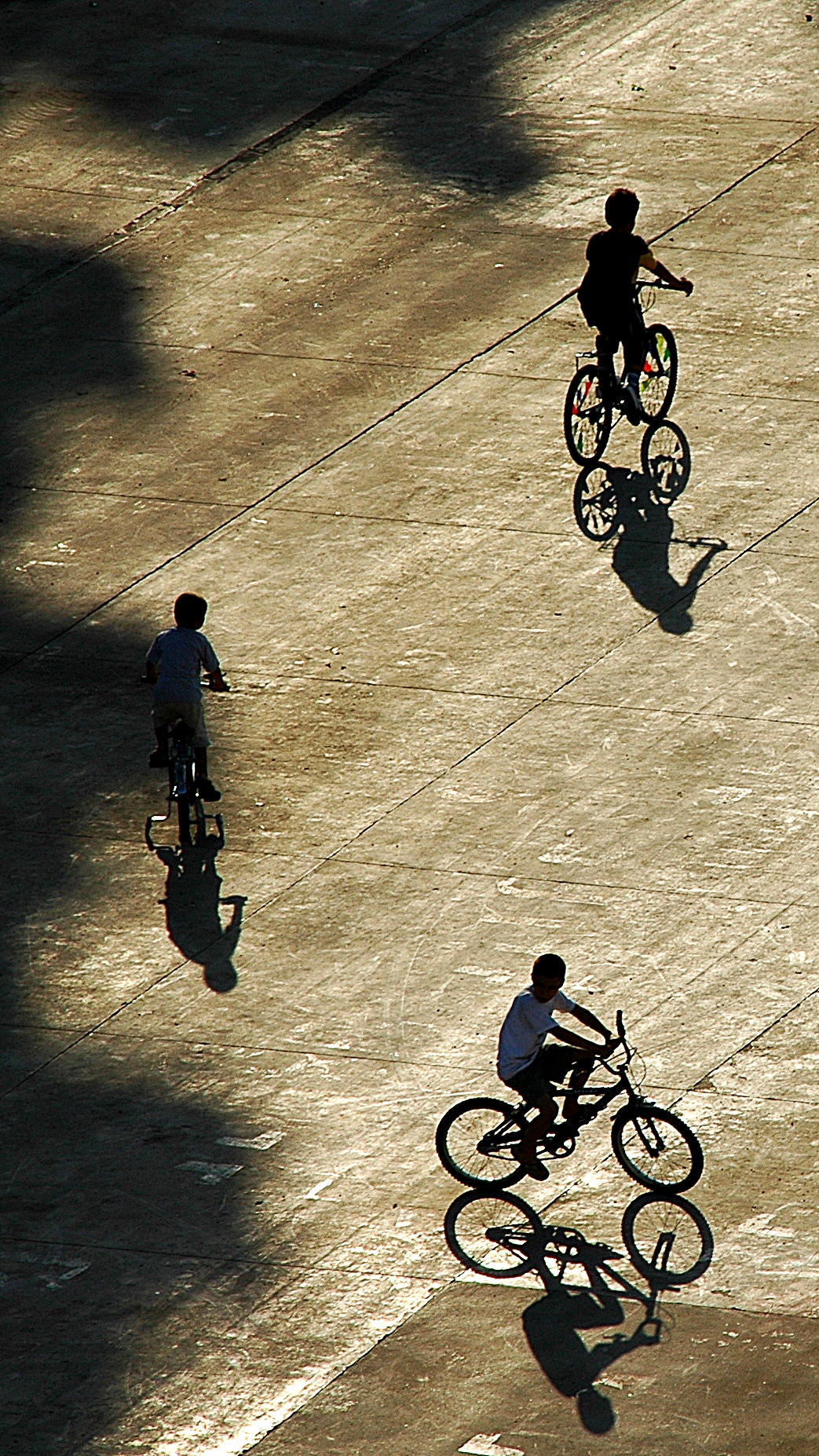
One of the works that draws my eye is of three children, with one standing still and the other two cycling away in opposite directions. Have they had a disagreement, are they heading home after a day spent together, or is their placement coincidental and they don’t know each other, they’ve just been captured in the same image at this particular time?
Kaplan’s use of black-and-white in her photography adds drama to each scene, and shadows often conceal elements from our view. Are they inconsequential, or are they hiding something that would help us understand the scene’s narrative?
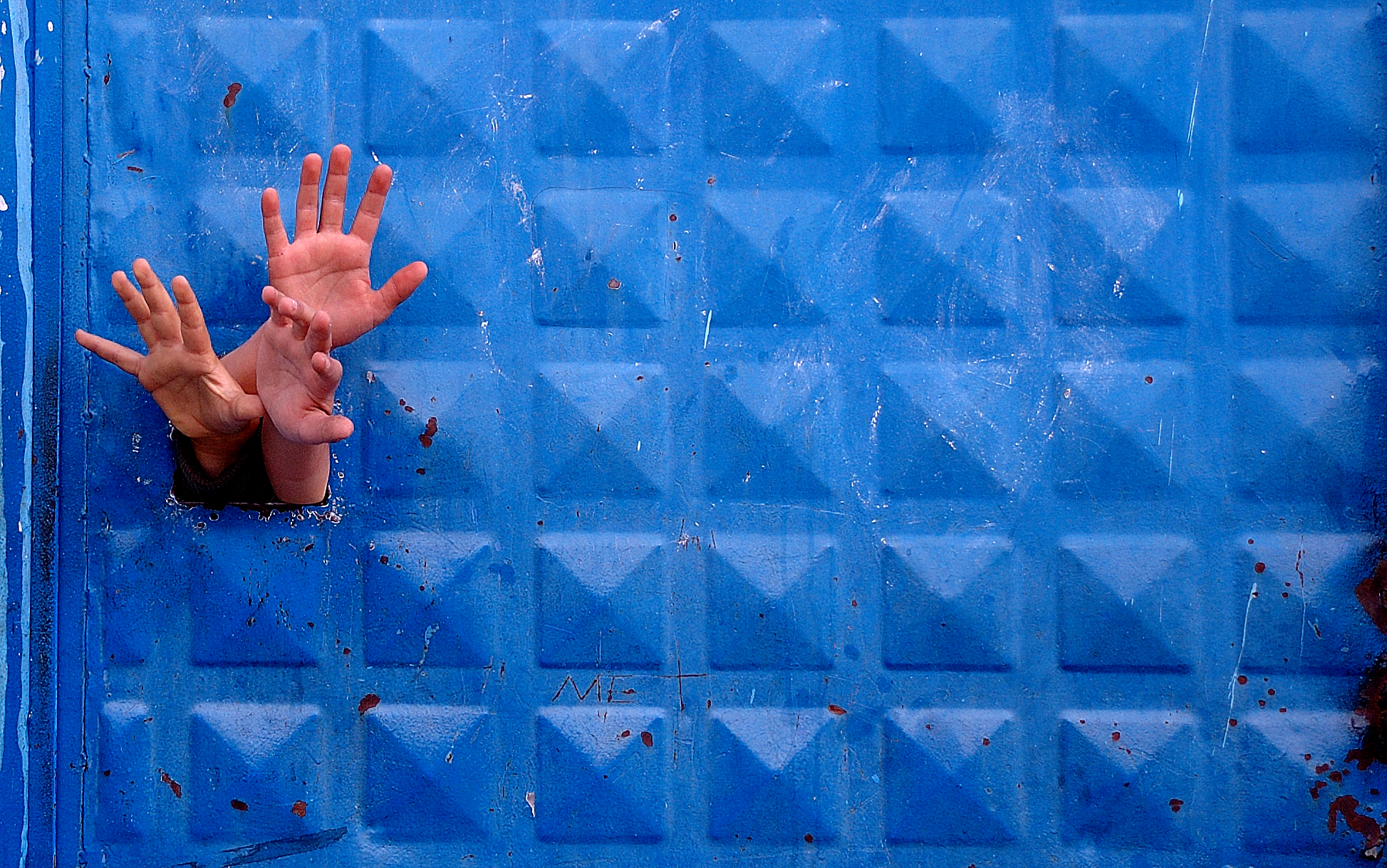
When colour is used by the artist, it’s often sparingly, where it can have the most impact. Children push their arms through a hole in a blue door; are they trapped or simply waving at us, the viewer? With the blue dominating the scene, it’s a great use of colour, and it pops next to the other black-and-white images.
Another excellent use of colour is in a work from her ‘Unfinished childhoods’ series, where a girl looks up to a window, where we assume her mother, or another female relative, looks down upon her. The little girl’s red outfit is in stark contrast to the white and grey wall, drawing our attention to the bottom left of the image.
When considering any female photographer, I’m always likely to draw comparisons to Lee Miller, but with Kaplan, it would be to Miller’s more ambiguous images, such as the torn fly-screen looking out at the landscape, asking viewers to sit with the beauty and the composition. Kaplan’s use of shadows also reminds me of Miller’s photo from the top of the pyramid, where we can see only the structure’s shadow.
It’s arguably more apt to compare Kaplan’s work to that of Vivian Maier, who captured the beauty in the mundane moments of everyday life. Neither photographer, Maier nor Kaplan, is trying to take a political or ideological stance, but is asking us to spend time in the moment that both photographers captured.
The sparing use of colour reminded me of the work of William Eggleston, one of the early pioneers of colour photography, who realised it was best used when compositions could take advantage of colours that really pop in a scene, whether in cars, clothing or control panels.
There is no resolution in Kaplan’s work; the ambiguity asks us to place our own narrative upon each work and the series to which they belong. Add in the use of shadows and the occasional flash of colour, and we’re treated to the beauty we can find in the everyday world around us.
Gunes Kaplan: What Memory Leaves Behind was shown at Gallery Marquess, London, from 25 September to 1 October 2026.

