

Historical architecture may be functional, housing people, worshippers and audiences, but it also holds its own history. Think of the people who have been there, experienced it, lived in it, written about it, and it has outlived most of them. It has seen generations pass by and still stands strong.
This is what I was thinking when exploring the exhibition Floating Architectural Spaces at Boston Manor House in West London, conceived and created by the collaborative duo Alec Boreham and Francesco Vitali, who go by Alec and Franz.
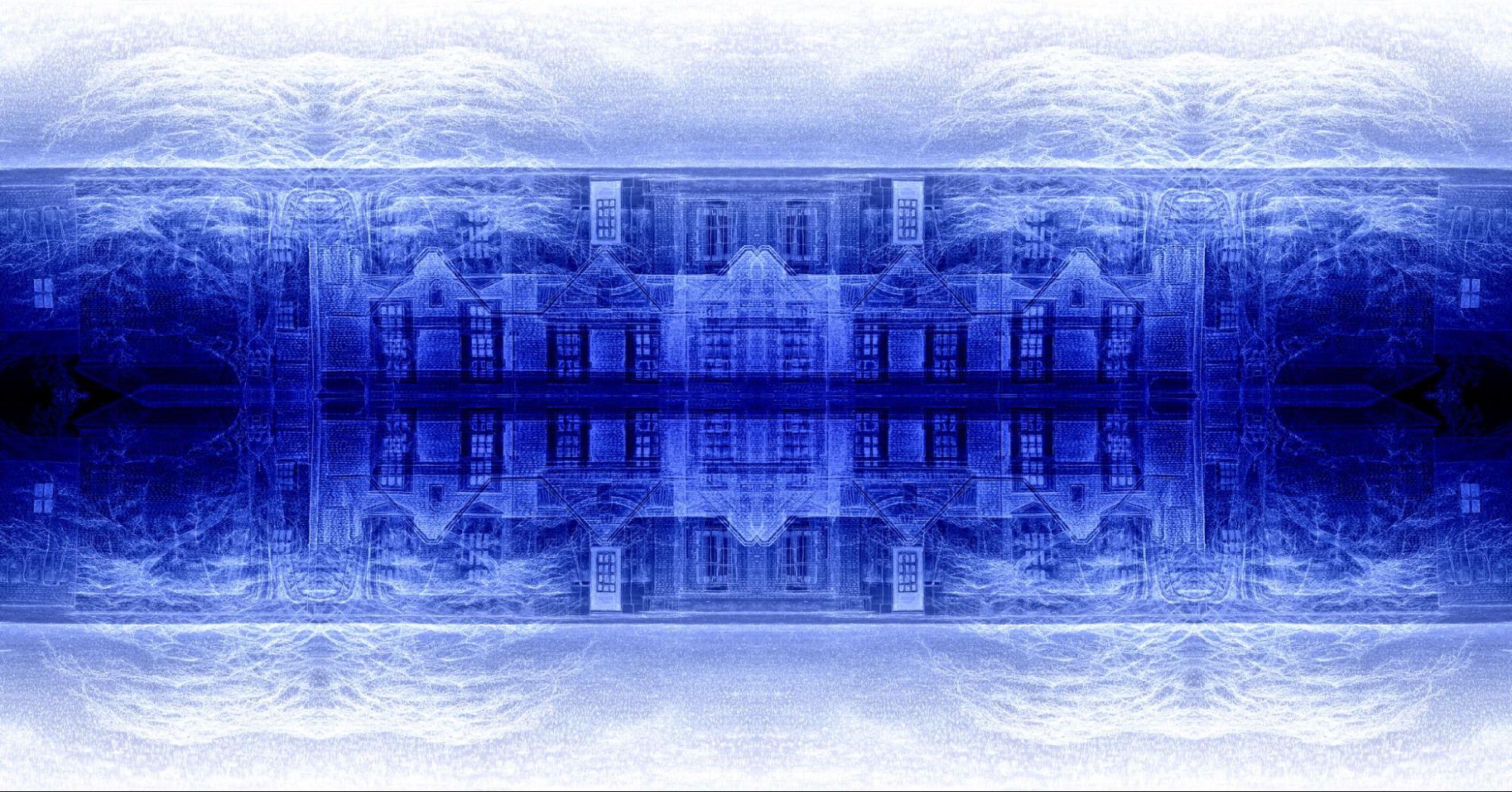
The project started with drawings of famous buildings that you may recognise, including St. Paul’s Cathedral, the Hagia Sophia in Istanbul and the Sheikh Zayed Mosque in Abu Dhabi. These drawings are then flipped, multiplied and placed at different angles to create different perspectives and, at their most extreme, kaleidoscopic works that feel like optical illusions.
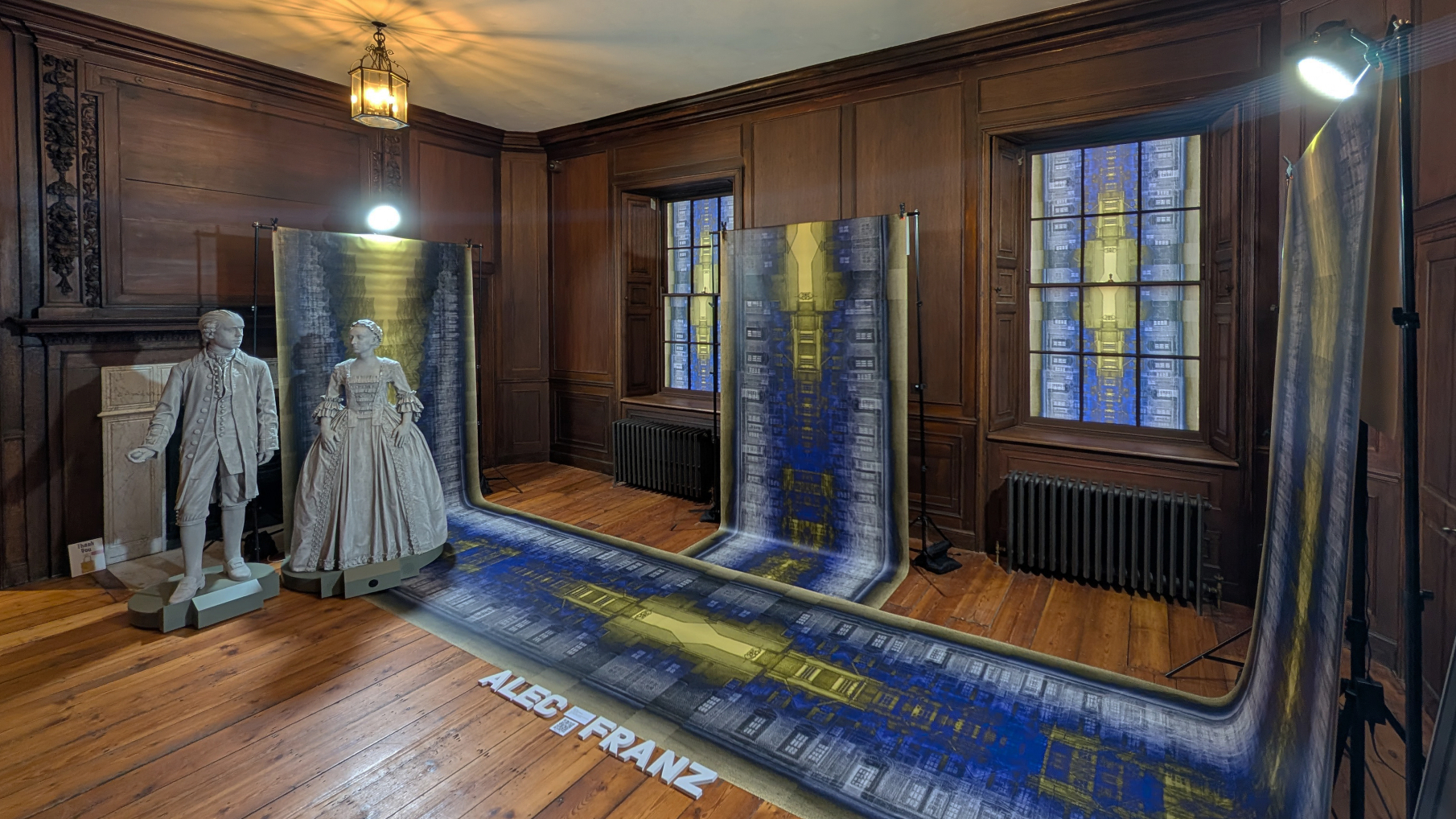
It makes us step back from our memories of these places and tackle them from a different perspective; we now look at the details we may have missed if the structures were presented in their usual fashion; the drawings themselves are also done from angles you won’t find on postcards to challenge us to re-appraise the architecture that we know.
The exhibition also incorporates the architecture of Boston Manor House itself, a house with its own history as the home of Lady Mary Reade, who had to downsize from the nearby Osterley House after she was widowed, within a work entitled ‘Winter Cyanotype’. The manor house recently reopened after a major refurbishment, meaning the public can access it once again, and it’s fitting that it should host an exhibition that engages with the Jacobean manor’s architecture.
Some of the drawings have been transformed into lenticulars to offer another way to approach these buildings from a different perspective, in works titled ‘Smile for the X-Ray, Venice’ and ‘Inward vision’, while others hang across windows to create an effect that reminds me of stained-glass windows.
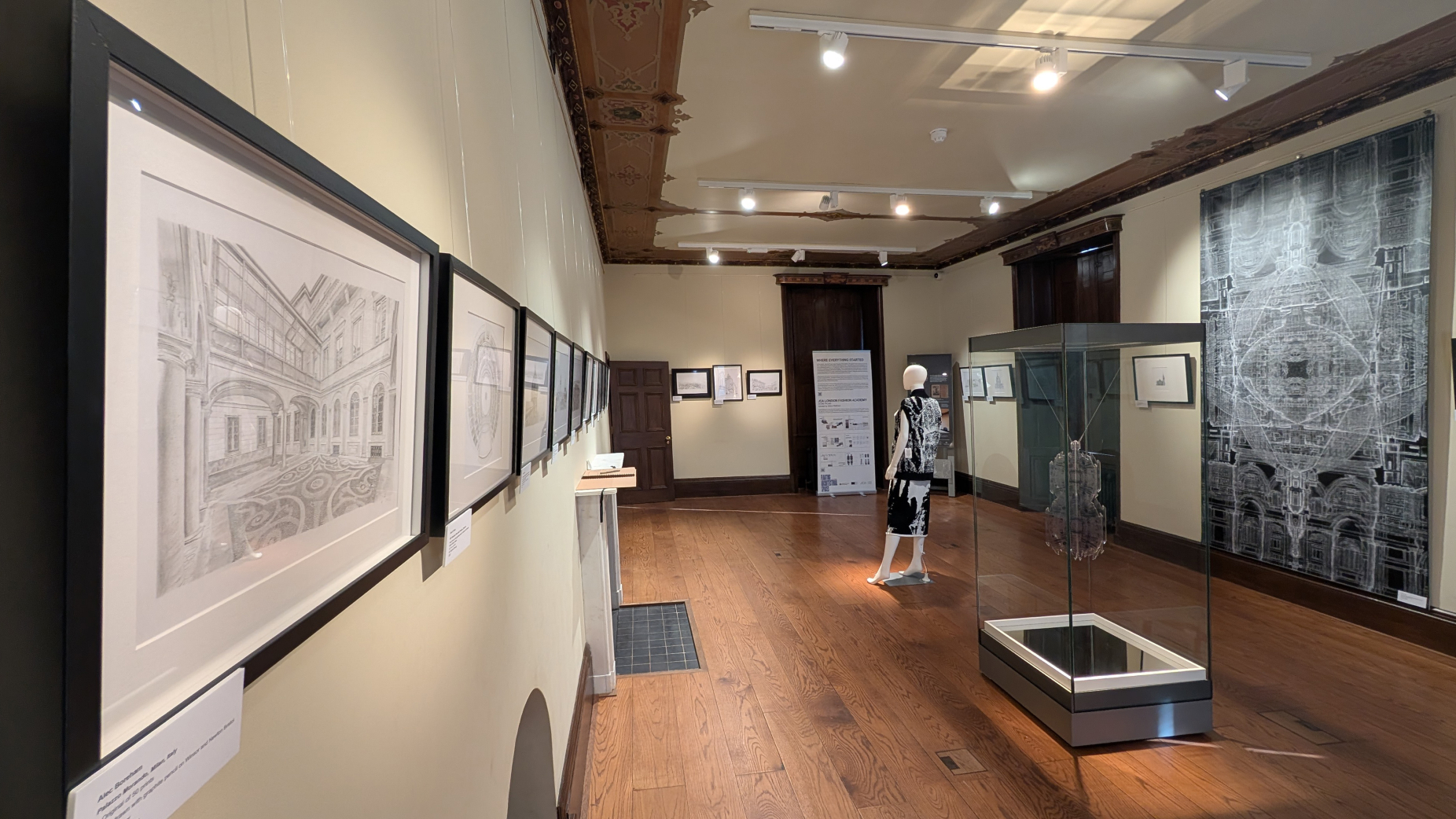
Music also factors into their practice, and the drawing of the Cremona Opera House has been fashioned into a violin-shaped sculpture, titled ‘The Beauty of Sound Through Fractals’, as a nod to Cremona being the birthplace of the creator of the famous Stradivarius violins. A video in the adjacent room also screens clips from an opera the duo produced titled ‘La Musica e la Ragioni dell’Anima (Music and the Senses of the Soul)’, performed in Cremona.
They have also invited fashion students to respond to their exhibition, which highlights a generosity and a recognition that all the arts benefit from cross-pollinating and that bringing art, music and fashion together can bring the architecture to life.
We build architecture to shelter and house us, and then we develop a symbiotic relationship with it, maintaining it and infusing it with memories. The longer we spend with certain buildings, the more we start to take them for granted. Floating architecture asks us to stop for a moment, reassess these relationships, look deeply at the history and architecture around us, and appreciate its beauty, history, and longevity.
Alec & Franz: Floating Architectural Spaces is on at Boston Manor House until 25th October.
All images are copyrighted and courtesy of Alec & Franz.

