

The cliché is that a picture is worth a thousand words, and that’s what great photographers do: they tell stories with an image snapped in a fraction of a second. Whether that’s Lee Miller’s images from around the world, Julia Margaret Cameron’s Victorian portraits or Sophy Rickett’s urinating women.
Each one has a story to tell, and we can see that in the photographs of Oluwadamilola Oladapo as well. In a black-and-white self-portrait, we see her face fractured into pieces, reassembled to make her whole again. It captures how we all feel at certain times, when we’re falling apart but trying to hold it together and keeping a brave face. It’s a face that can feel calm or anxious, resting or alert, depending on which angle you view it from.
The torn edges in the work further suggest fragments of the same self that don’t always align, and how we transition through different personalities over a lifetime. It reminds me of the work of Lorna Simpson, who has collaged two faces of different black women into one, examining the treatment of black women. While Oladapo’s work focuses on a single face, the examination of identity suggests close parallels.
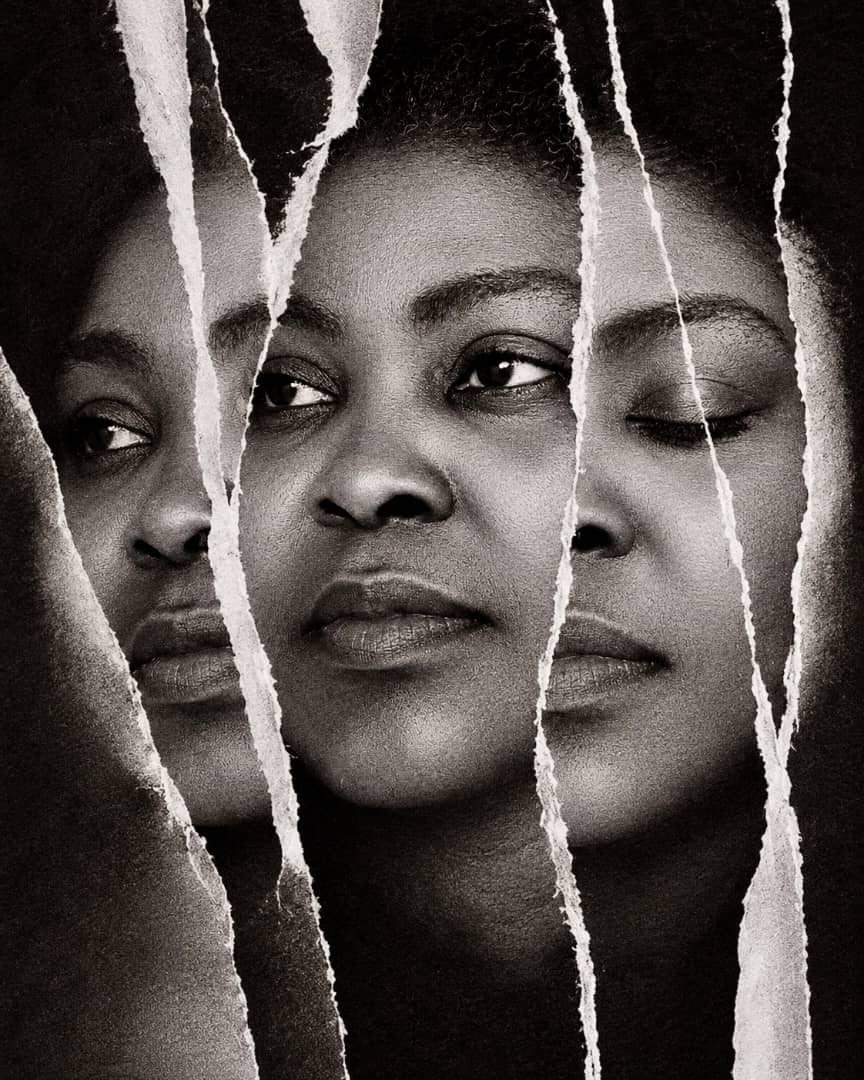
It also draws from Claude Cahun’s series, in which multiple exposures reveal two heads on one body, and from Francesca Woodman’s use of mirrors to suggest multiple selves. In a second self-portrait, Odalapo shows herself ensconced in a white hood, suggesting both innocence and concealment within the clothing. It’s a display of confidence but also a more muted piece compared to her fractured portrait, made all the more striking when shown in black-and-white, with the white clothing in high contrast to her black skin.
This work feels more aligned with the activist portraits of Zanele Muholi or the fashionable photography of Samuel Fosso. Both sought to establish black identity, with Muholi focusing on gender in monochrome and Fosso celebrating West African style.
Stepping away from portraiture, we see a pot holding a rose plant in a suitcase, hinting at the artist’s sense of transience and movement between countries. Roses, like all flowers, only bloom at certain times of year, and while travel can feel beautiful and fun, it can also be draining and temporary.
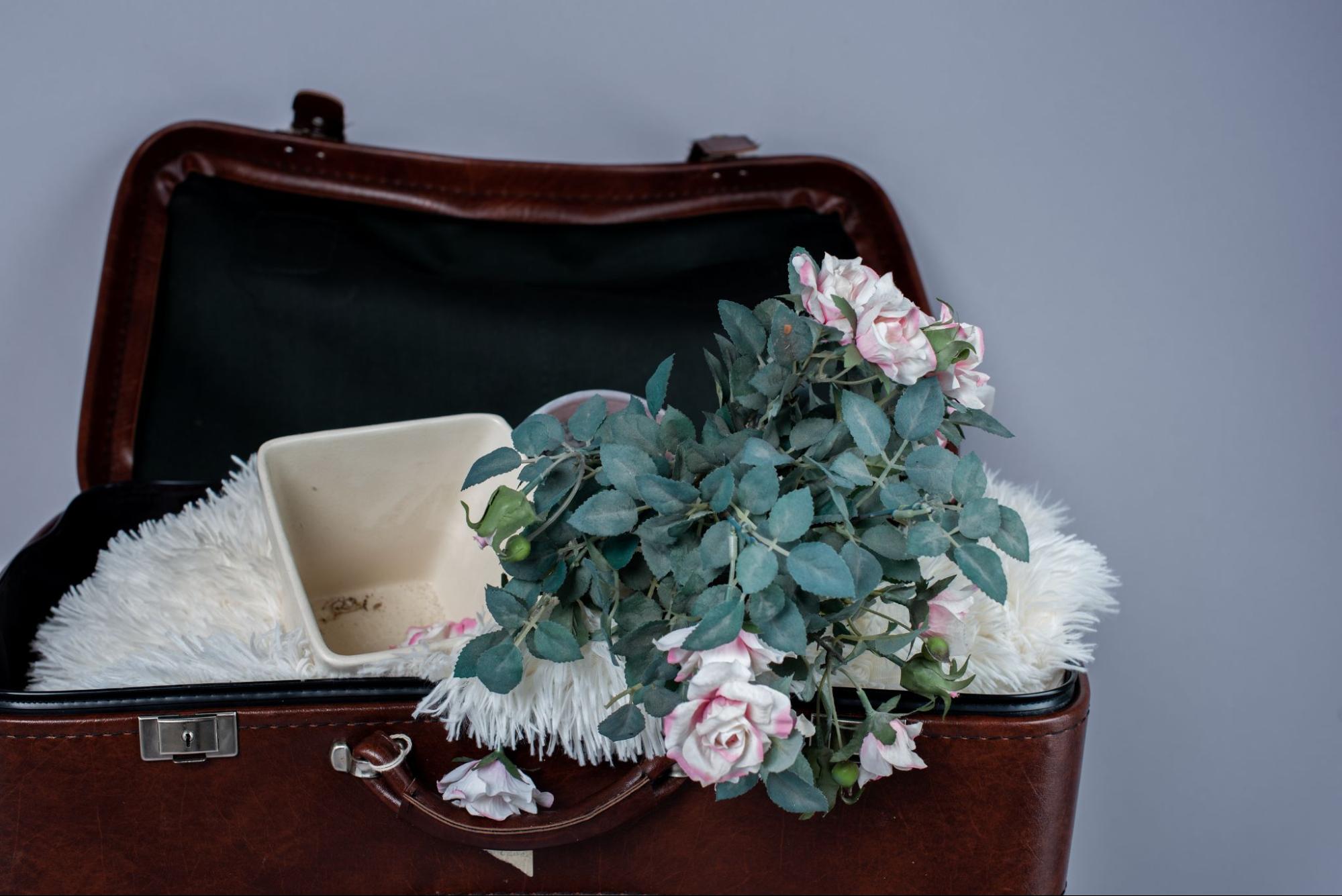
It harks back to the Dutch still-life, and flower painters such as Rachel Ruysch, who used flowers to remind us of our own mortality, in that we too will at some point no longer bloom. The pot lying horizontally, not ideal for any plant, suggests this moment of beauty, grace and femininity, symbolised by the rose, may be even more temporary than what we first assumed.
The suitcase has been used as a symbol of migration and transition throughout art history, and we can see it in the Windrush Monument by Basil Watson at Waterloo station, where the suitcase at the family’s feet suggests their journey will continue, even after arriving in the UK. It also brings to mind Sophie Calle’s series of photographs of scattered items from her time as a hotel maid, with each item representing a separate story we have to figure out for ourselves.
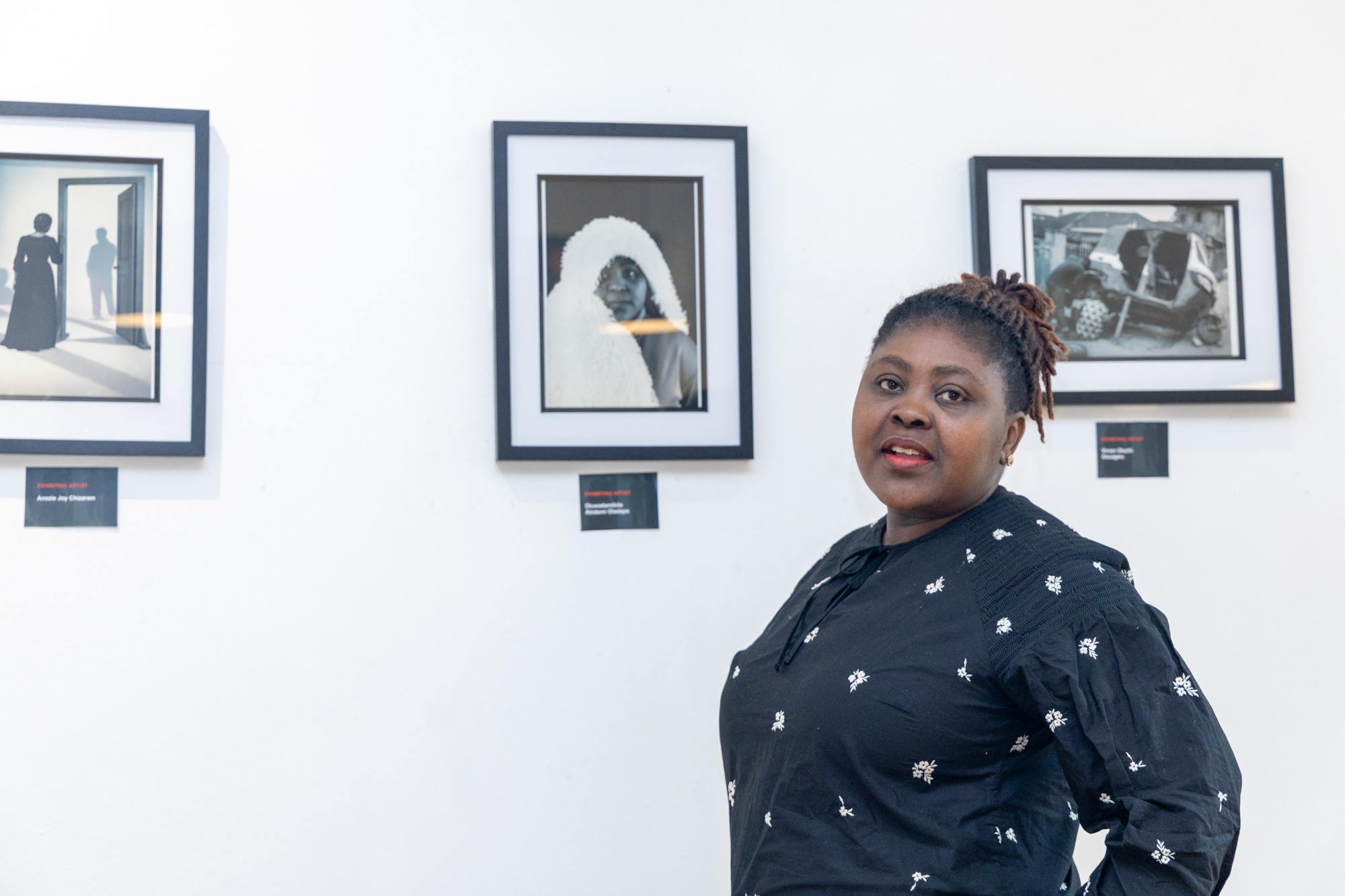
Oluwadamilola Oladapo’s work does not offer us a particular take on her journey but asks the viewer to decide what they want to take away from each piece. Is the suitcase an incident of a happy or troubling journey, or are the portraits about holding on or finding ourselves? We are joining her on her artistic journey, accepting that we must feel our way alongside her, and that we may never know the answers to the questions her works raise. She joins a long lineage of female photographers who explore identity through photography.
More information on Oluwadamilola Oladapo’s photography may be found on her website.

