

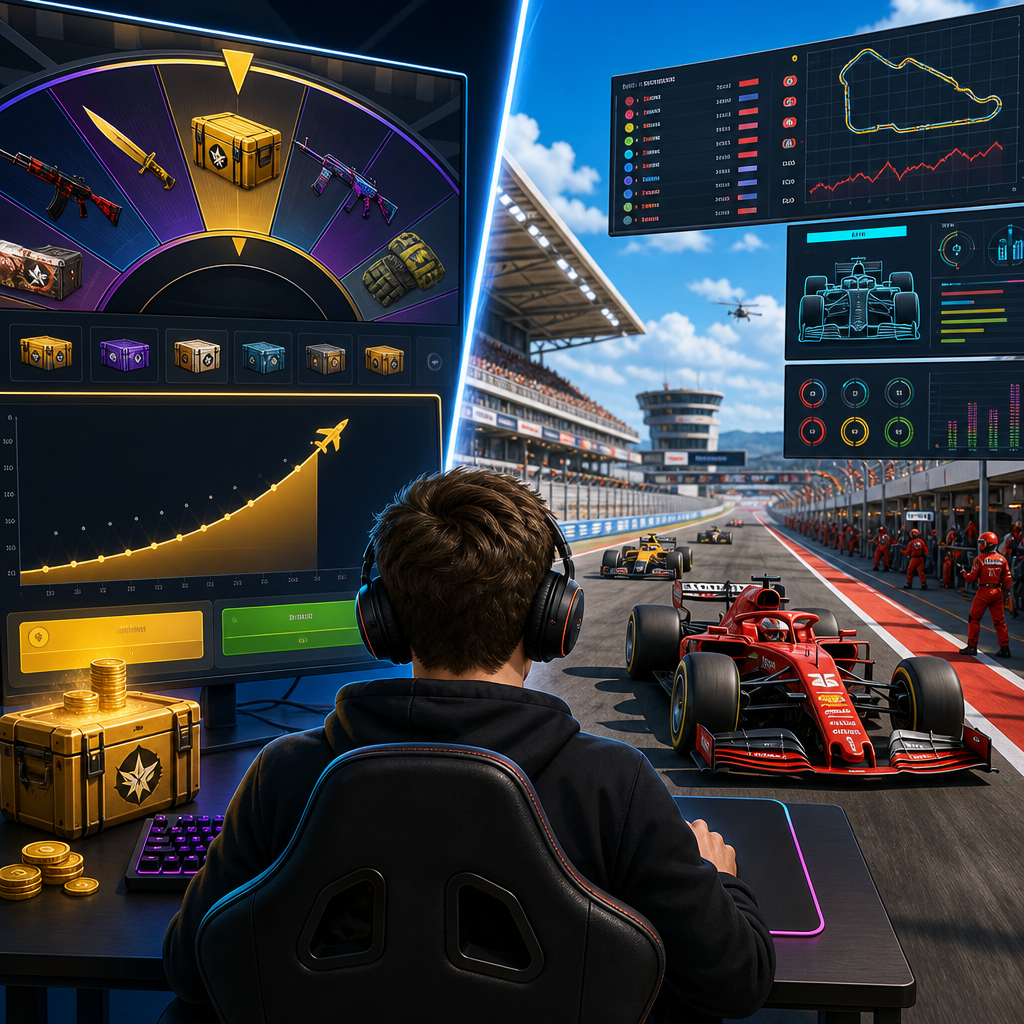
The growth of Counter Strike based gambling has created an unexpected crossover with motorsport culture. Younger fans who spend their weekends jumping between esports streams, race broadcasts and skin markets now move comfortably inside the world of CSGO casinos. Understanding how case openings, crash games and skins work helps explain a wider shift in how modern racing followers experience competition and entertainment.
How case openings captured fans
To understand the appeal of any csgo casino, it helps to start with weapon cases. In Counter Strike, cosmetic skins for guns and knives quickly became a kind of collector’s market. Opening a case is a simple concept. A player uses an in game item or balance, the case spins through a carousel of possible skins, and lands on one that drops into the inventory.
That brief moment, when the cursor edges past rare items and finally stops, is what many fans describe as the hook. It mirrors the anticipation motorsport fans feel when a driver commits to a last run in qualifying. The outcome is out of their hands, yet the emotional investment is real.
Commercial sites took that familiar mechanic and built full case opening platforms around it. These use animated wheels, themed collections and trading features that feel closer to a full scale entertainment hub than a simple menu inside a game. Services such as CSGO Casino show how these experiences can evolve into standalone ecosystems that still orbit the original shooter.
For motorsport followers already comfortable with timing screens, fantasy leagues and esports broadcasts, the step into watching or discussing case openings is not particularly large. The same interest in optimization, value and rare outcomes is present, just wrapped in weapon skins rather than race strategy.
Crash games and the pursuit of timing
Crash games introduced a different type of tension. Instead of a wheel landing on a skin, a multiplier climbs from 1.00x upward on a graph. Participants decide when to cash out. Wait longer and the potential return grows, but the round can end at any moment, with the line frozen and the opportunity gone.
From a motorsport point of view, this looks oddly familiar. It echoes a strategic call on slicks as a track starts to dry, or a team choosing when to pit during a safety car period. In both cases the key question is timing. Act early and gains are modest but secure. Stretch the decision and the reward, if everything holds, is significantly larger.
Experienced esports bettors and racing fans often talk about the satisfaction of reading these patterns. They watch how the multipliers behave over long sessions, compare short rounds to longer ones and look for streaks, even though each crash event is designed to stand on its own. It is similar to how seasoned viewers read long run pace, tire life and fuel windows across a Grand Prix weekend, searching for clues that a casual observer might miss.
Crucially, the presentation of crash games is built for the always online viewer. Streams show commentator style hosts reacting in real time. Chats scroll rapidly. Players can switch between a crash window, a Counter Strike stream and a race broadcast or live timing screen in seconds. For series such as Formula 1, IndyCar and top level endurance racing, this is the competition for attention away from the actual circuit.
CSGO casinos and motorsport audiences
Within motorsport, teams and series now follow gaming culture far more closely than a decade ago. Official esports championships, high end simulator rigs in paddocks and collaborations with streamers make that clear. What is sometimes overlooked is how wide the gaming universe has become. It is not only racing titles and official competitions. Communities also grow around skin trading, case sites and crash formats that sit next to traditional wagering.
In practice, that means a sizeable slice of the under 35 audience experiences competition, suspense and value through a dual lens. A fan might watch Formula 1 qualifying, then spend the lull before the race in a lobby discussing knives, AK skins or last night’s crash multipliers. The skills they bring from one arena to the other are familiar. Bankroll awareness, an eye for numbers and the ability to stay focused through long sequences of events are all shared traits.
The United Kingdom offers a useful snapshot of how this sits within regulation. There, any real money csgo casino style service that targets players is expected to fit under national licensing structures, just as a racing bookmaker would. That approach treats skin anchored sites as part of a broader wagering environment rather than something entirely separate.
For motorsport series, this crossover raises interesting commercial and cultural questions. Sponsors linked to gaming, skins or case platforms look at the same demographics that series promoters want. When a brand appears on a car, an esports team and a Counter Strike broadcast overlay, it reaches a fan base that moves fluidly between all three. That integration mirrors how younger followers consume a race weekend, rarely focusing on a single screen.
There is also a design influence working in the other direction. Some game developers have admitted that they study how viewers interact with Formula 1 or IndyCar broadcasts. Split screens, live odds panels, map overlays and timing graphics inform how crash games, case openings and lobbies are presented. Motorsport, in turn, adopts overlay styles and pacing learned from fast moving game streams, creating a feedback loop between the paddock and the gaming arena.
For a specialist motorsport audience, the rise of csgo casino formats is more than a curiosity. It is a window into how the next generation defines competition, suspense and value. Case openings echo the anticipation of a final qualifying run. Crash games capture the instinctive feel for timing that makes or breaks a pit strategy. Together they help explain why many of tomorrow’s race fans will not see a hard line between the roar of an engine and the click of a mouse. Instead, both will feel like different lanes on the same high speed highway of entertainment.

