

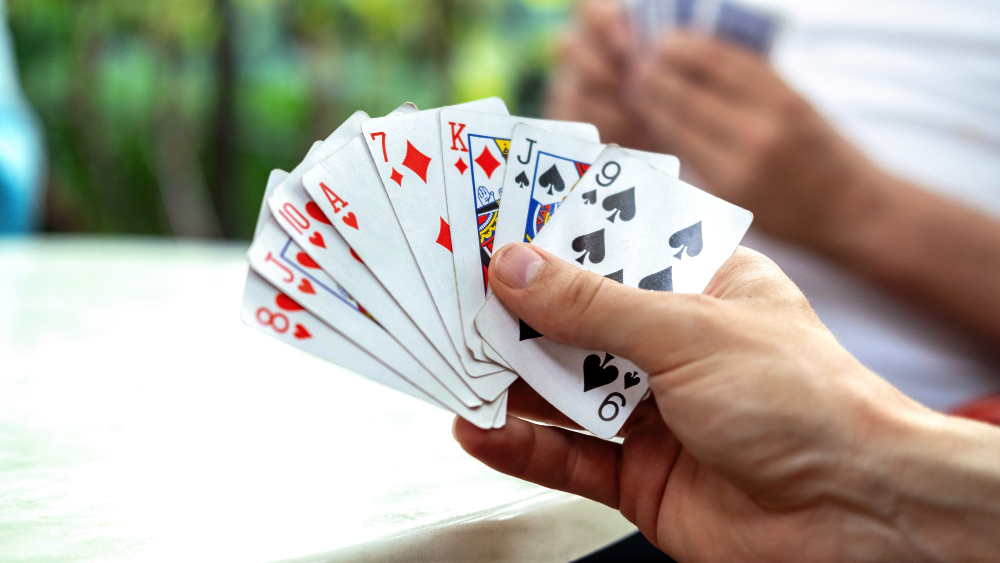
A king, a queen, a handful of numbered cards. They might seem like unlikely subjects for great works of art, yet playing cards have appeared in European paintings for hundreds of years. Sometimes they lie scattered across a table beside expensive wine and jewellery. Elsewhere, they are held close to the chest by someone trying to conceal a winning hand.
For artists, playing cards offered a simple way to tell stories about money, ambition, deception and the unpredictable nature of life. Their meaning has changed over time, reflecting the attitudes and interests of different generations.
When a Deck of Cards Was a Luxury
Playing cards reached Europe in the late fourteenth century, probably through trade routes connecting the continent with the Islamic world. Early European decks sometimes featured hand-painted illustrations, elaborate patterns and expensive materials.
One famous example is the Visconti-Sforza tarot cards, created in fifteenth-century Italy for members of Milan’s ruling families. Their richly decorated figures and gilded backgrounds reveal just how valuable a set of cards could be.
Owning such objects was a way of displaying wealth and taste. Like expensive furniture or commissioned portraits, beautifully crafted playing cards could reflect the social position of their owners.
As printing techniques developed, cheaper cards became more widely available. Card games gradually spread beyond aristocratic households, becoming a popular pastime across different social classes.
This wider popularity also gave artists something new to work with. Card games brought people together around a table, creating opportunities to observe personalities, relationships and social differences.
What Did Playing Cards Represent in Renaissance and Baroque Art?
Imagine looking at a seventeenth-century Dutch still-life painting. On the table are a half-empty wine glass, a pocket watch, a few coins and several playing cards.
To a modern viewer, it might look like someone has abandoned an evening’s entertainment. However, paintings of this kind often contained messages that audiences of the period would have recognised.
Many belonged to a tradition known as vanitas, which explored the temporary nature of material possessions and human life. Artists used everyday objects to suggest that money, beauty and social status could never last forever.
A watch might represent passing time, while expensive jewellery suggested wealth. Playing cards could introduce another idea: the role of chance in determining someone’s fortunes.
For painters interested in human ambition, the card table offered a particularly useful setting. It allowed them to explore how quickly circumstances could change, sometimes through skill and sometimes through unexpected events.
Caravaggio Turned a Card Game Into a Story About Power
One of the best-known examples of playing cards in Western art is The Cardsharps, painted by Caravaggio around 1594.
At first glance, the scene appears ordinary. Three young men are gathered around a table playing cards. One is concentrating on his hand, seemingly unaware of what is happening around him.
Look closer, however, and the situation becomes much more interesting.
The young man is being deceived. His opponent has hidden extra cards behind his back, while an accomplice looks over the unsuspecting player’s shoulder and signals information about his hand.
What makes the painting memorable is the contrast between the characters. The wealthy young player appears confident, while the other two rely on observation, coordination, and deception.
Other European artists explored similar themes. Georges de La Tour, for example, depicted card-playing scenes filled with suspicious glances and subtle gestures. His paintings invite viewers to work out who knows what and who might be deceived.
In these works, the card table becomes a miniature version of society, where intelligence and experience can sometimes matter more than social status.
How Cézanne Changed the Meaning of Card Games
By the nineteenth century, artists were approaching the subject differently.
French painter Paul Cézanne created a series of paintings titled The Card Players during the 1890s. Unlike Caravaggio’s dramatic scenes, Cézanne’s works show men quietly concentrating on their cards.
There are no obvious tricks or hidden signals. The players sit facing one another, studying their hands with remarkable seriousness.
The paintings are also unusual because their subjects are ordinary working men rather than wealthy aristocrats.
A pastime once associated with luxurious courts had become part of everyday life. Instead of representing deception or changing fortunes, the cards became a way to explore patience, concentration and the quiet tension between two people.
Why Playing Cards Remain Popular Symbols Today
The familiar hearts, diamonds, clubs and spades have become recognisable far beyond the gaming table. They appear in fashion, graphic design, advertising and contemporary artwork.
Their simplicity is part of their appeal. Even without showing an entire game, an artist can use a single ace or a pair of kings to suggest competition, confidence, luck or wealth.
The same fascination continues in modern entertainment. Traditional card games such as poker still centre on the relationship between the cards a player holds, their decisions and the information available about their opponents.
Other forms of competitive entertainment, including sports betting and platforms offering spordiennustused, also reflect an interest in anticipating uncertain outcomes. Although the activities differ, they share familiar themes of competition, probability, and unexpected results.
From Renaissance courts to modern gaming platforms, playing cards have maintained their place in Western culture. Their designs may be simple, but the stories behind them are anything but. A single hand of cards can represent wealth, rivalry, opportunity, or a sudden change in fortune, making these familiar objects surprisingly powerful artistic symbols.

