Events today aren’t just about rounding up the lads and lasses, they’re about making it a night people won’t stop chatting about. In the age of Instagram and TikTok reels, the humble photo booth has bounced back in style. Once a nostalgic feature in your local Tesco, arcades or at train stations, photo booths have grown into mainstays at weddings, launch parties, runway shows, and parties.
From Nostalgia to Necessity
Photo booths used to be charming, retro novelties, the kind of quirky add-on people stumbled into at their friend’s 30th birthday party. Now, they’re central to event planning. Couples book them as wedding party entertainment, while fashion brands and tech companies rock up with sleek, branded mirror booths like those offered by Supreme Photo Booths to spark social buzz. Why they’re an absolute must is ’cause they can mash the old-school with instant online action: guests leave with a physical printout and a shareable clip for their gram.
The Insta + TikTok Effect
Social media has flipped the script on how we measure event success. A packed dance floor to Mr. Brightside is mint, but an Instagram slideshow or viral TikTok can keep the buzz going indefinitely. Photo booth hire comes with custom overlays for printouts, GIFs, and boomerang-style clips—tools designed to make every guest their own content creator. In this way, photo booths no longer just snap memories; they manufacture moments designed to trend.
Style Meets Tech
Pause readers know that style is as important as experience. Modern photo booths aren’t clunky boxes shoved in a corner — they’re sleek installations with LED lighting, touchscreen interfaces, and minimalist or fully themed backdrops. Some setups even merge with virtual reality, allowing virtual props or all-in digital playgrounds. The result: a blend of fashion, technology, and culture that feels at home at any social club birthday party or high-profile event.
Why They Matter Now
As event culture shifts further toward sharing, photo booth hire has carved out its role as a hybrid entertainment and marketing instrument. For hosts, they’re more than fun — they’re a brand statement. For attendees, they’re a chance to grab their best look, make a cool story or reel on the spot, and take home a tangible piece of the night.
In the 1965 documentary Ladies and Gentlemen… Mr. Leonard Cohen, which follows the singer-songwriter around the age of 30, a TV interviewer asks what Cohen means when he says he tries to wake up in a state of grace. He describes it as “that kind of balance with which you ride the chaos that you find around you,” adding, “It’s not a matter of resolving the chaos, because there’s something arrogant and warlike about putting the world in order.” I kept thinking about his use of the word warlike as I spun Geese’s revelatory new album, Getting Killed, which wastes no time pointing to the carnage all around while spending most of it in a fervid, ludicrous freefall that fills the gaps between the bizarre chaos of 2023’s 3D Country and Cameron Winter’s solo album Heavy Metal. It rides a car with a bomb, becomes the car, becomes the road going nowhere. Until seeing that Leonard Cohen clip, I had trouble figuring out why its lawlessness felt so graceful: there’s something Godlike about it.
1. Trinidad
Geese may be positioned as young luminaries salvaging rock ‘n’ roll for the new generation, but they make one thing clear: their music is hardly effortless. Not just because they’ve proved themselves more than a group of prodigious post-punks, as Projector gave some the impression, but because they’re so quick to squander the genre’s easy tricks. In place of any kind of swaggering riff, ‘Trinidad’ staggers about, as actual geese might, portending chaos. Before repeatedly shouting the JPEGMAFIA-assisted refrain, “There’s a bomb in my car!” Cameron Winter begins by singing the words “I tried,” adding in a “so hard” as a haunted double echoes the exhaustion. The threat is a jolt of adrenaline, sharpening his pen as well as his emphatic intonation. The apocalypse is well underway: “Nothing’s been said for four and a half days/ When that light turns red I’m driving away.” Here the double swirls over Winter’s lead, panned to mirror the voices in his head, as the rest of the band gestures toward what might only be called self-implosion.
2. Cobra
If you heard ‘Taxes’ before the album’s release, its most quotable line, “There is only dance music in times of war,” will spring to mind when ‘Cobra’ comes on. Having fervently established these are times of war, Winter sings, over a woozy jangle, “Baby, let me dance away forever.” Far from joyously rebelling, though, he’s entranced with no semblance of control, stuck in eternal obedience before defiantly despairing, “You can make the cobras dance/ But not me.” The double meaning of the opening line dawns on you: “Let me dance away forever.” Dispel the curse.
3. Husbands
The album’s first substantial groove, but compare that to IDLES’ ‘Gift Horse’, another equestrian-themed track from another Kenny Beats-produced album, Tangk: This is not about how fast and muscular his horse is, about “Look at him.” It’s not about making people move, either. The punishing bass and jumbled percussion, instead, evoke just how arduous it is to get ahead, tracing the weight on the singer’s body: “There’s a horse on my back/ And I may be stomped flat/ But my loneliness is gone.” Maybe not, he concedes – maybe no amount of pressure can numb the gnawing feeling out of existence. “And if my loneliness should stay/ Well, some are holiest that way.” You’ve probably heard that rationalization from a disaffected, hard-working man in your life; unless, of course, it’s buried in your head.
4. Getting Killed
A Ukrainian choir sample stands in for everybody in the world – a cacophony over which Winter can’t hear himself talk, so he must belt out one of his most impassioned performances, treading the line between operatic and just frantic. Yet underlying it is a professed emotional bankruptcy – “I can’t even taste my own tears/ They fall into an even sadder bastard’s eyes” – that could push any lover away. The loneliness allows him to indulge in escapist tendencies that illuminate and lend credence to the album’s title: “I’m getting killed by a pretty good life.” There’s a blink-and-you’ll-miss-it cut in the middle of the track that sounds like losing your mind for a small second, then falling inconspicuously back into the rhythm of that same life that almost snapped you out.
5. Islands of Men
Guitarist Emily Green and bassist Dominic DiGesu stab at their instruments as if trying to force the truth down our throats: “You can’t keep/ Running away/ From what is real/ And what is fake,” Winter sings, accusatory but unable to extricate his own narrator from the delusion. As if literally responding to Winter’s call, the band literally stops, again, halfway through, then picks up the slow-burn, letting Winter’s poetic improvisations take the back seat while occasionally aligning in holy harmony. Instead of Winter’s voice, it’s for once the high piano notes and touches of brass that serve as harbingers of ecstasy. Not even he can outrun them.
6. 100 Horses
Unlike ‘Gift Horse’, the stomp of ‘100 Horses’ is not sleek – it’s skronked-out, trashy, borderline violent. Still, the song – even as Winter hilariously clarifies that it’s “maybe 124” – is nothing short of bombastic, getting fired up on the sarcasm and dance, two things he still has the absolute freedom to practice in times of war. “He said that I would never smile again, but not to worry,” he sings, referring to one General Smith, and you can practically see the nervous grin on his face. “For all people must stop smiling once they get what they’ve been begging for.” Some people have been begging for an album like Getting Killed, that captures the current feeling of a burning circus without sounding, for a lack of better word, cringe – Geese deliver because they’re good at cringing at the world around them while sounding absolutely serious. “We have danced for far too long and now I must change completely” is not the best marketing pitch, but it’s one hell of a closer. Grooveless Geese could still kill it.
7. Half Real
The change comes in the form of the album’s first (sort of) ballad, one that sways with the force of Winter’s idiosyncratic and humorous spirituality, contending, “You may say that our love was only half real/ But that’s only half true.” He tries to find some grace in the beatific arrangement, but a lobotomy sounds more worth it for the price. When another voice joins him in pleading to “get rid of the good times too,” you cannot doubt the heart of this record. You won’t be able to get it off your mind, either.
8. Au Pays du Cocaine
The song hews closest to the ragged lullabies of Heavy Metal, but nothing on that album was quite so emotionally or musically direct, if only to highlight its own obliviousness. When Winter’s voice shrinks to declare that he’s alright (way less convincing than the preceding “It’s alright”), you can’t help but feel the defeat, never more pronounced than when he sings, “You can change and still choose me.” The guitar line sounds like sunshine sparkling on waves, the rhythm almost like a breeze. Fake, obviously – he’s standing on a sinking boat – and the reality of his desperation is just as unassailable. He realizes he can’t run away from either, so he must believe.
9. Bow Down
The narrator must transform again: “I was a sailor and now I’m a boat/ I was a car and now I’m the road.” (On the title track, he was “a TV on the road.”) This is the band’s ragtime depiction of hell, reaching the point of mania where even the singer’s close circle sounds bemused by his self-talk, each musician going off on their own unhinged tangent.
10. Taxes
When ‘Taxes’ dropped in July, it felt like a first taste of Getting Killed’s unique lunacy. As the penultimate track on the album, it almost sounds like a comedown, a moral reckoning. Compare the way Winter sings “Now I’m in hell” on the previous song to the utter resignation with which he sentences himself there. At this point, there’s no telling what the difference is between defiance and despair, not even when he intones, “Doctor, doctor! Heal yourself!” What’s clear is that any sort of faith beyond the self has been crushed; he’s not clinging to love. “I will break my own heart from now on,” he belts, barely piecing himself together.
11. Long Island City Here I Come
Equal parts percussive workout and spiritual catharsis, ‘Long Island City Here I Come’ reveals the album’s origins as a series of jams, and you can easily imagine Geese stretching this one back out to 10 or even 20 minutes (as if they need more convergence with the world’s biggest jam band). But it’s also the sound of a band (or a frontman urging his band) pummeling towards uncertainty, through total annihilation. In a spectral vision, Winter is told “a masterpiece belongs to the dead.” Which means it belongs to the scared and nervous, who may well find home in Getting Killed.
Francis of Delirium have returned with an explosive new single, ‘Little Black Dress’. It marks the Luxembourg band’s first new music since last year’s Lighthouse. Check it out below.
“Coming home fresh off a tour opening for bôa, playing to all these kids excited about guitar music, and heading into the Blondshell dates, I wanted to put out a song that captures the energy and messiness of playing live and being on stage,” Jana Bahrich said in a statement. “It’s a song about the anticipation of going out, the hope, the desperation, and the ultimate disappointment.”
The digital showdown in Australia’s gambling scene is heating up, and the best online casino in Australia operators are flexing their SEO muscles like never before. As punters shift from footy streams to reels and tables online, search engines have become the new battleground. Meanwhile, gaming platforms targeting similar audiences are keen to steal a slice of traffic, making the fight for visibility fierce. With players expecting fast, trustworthy experiences, being discoverable is just the start — staying at the top of search results is the real challenge.
Understanding Aussie Search Behaviour
Australian players aren’t just typing generic phrases into Google. They look for trusted sites, smooth interfaces, and games that pay out reliably. Popular searches include terms like “online casino Australia,” “real money pokies,” and “fast withdrawal online casino Australia.”
Mobile’s the big boss these days — about 65% of traffic’s rolling in from phones and tablets, so if your SEO’s not mobile-ready, you’re already on the back foot. Local flavour matters too: plenty of punters chuck in searches like “Sydney pokies online” or “Melbourne casino online,” which makes geo-targeting an absolute must.
SEO Tactics That Separate Winners from Losers
Top performers are those who combine technical skill with creative content. For instance, Betfair Australia leverages detailed blog posts reviewing pokies and table games, complete with payout rates and bonus guides, to lead organic searches.
Keyword optimisation for pokies and table games
Localised landing pages for Australian cities
Schema markup for rich snippets
Fast-loading mobile interfaces
A recent case study showed that after six months of implementing these strategies, Betfair Australia saw a 42% jump in organic traffic, proving the power of content paired with tech tweaks.
Paid vs Organic — Who Wins the Traffic Battle
Sure, paid ads can snag you quick wins, but it’s organic SEO that really locks in long-term clout. CrownBet loves to splash the cash on PPC for an instant traffic hit, while PlayAmo played the long game — pumping out blogs, slot guides, and even cheeky interactive calculators to nail down best online casino Australia real money searches. The results? PlayAmo increased leads by 25% without additional ad spend, illustrating that sustained organic visibility can outweigh short-term paid tactics.
Platform
Paid Traffic
Organic Traffic
CTR (%)
Conversion Rate (%)
CrownBet
12,500
8,300
3.1
4.5
PlayAmo
4,200
10,500
4.2
5.1
The table highlights that a strong organic presence can outperform a heavily paid strategy, particularly when players trust content and site usability.
Content is King, But Engagement is Queen
Creating content isn’t enough; it has to engage. Interactive guides, slot reviews, and tutorial videos are vital, especially for online casino Australia real money players.
Step-by-step guides for new punters
Interactive slot reviews and bonus comparisons
Video tutorials highlighting gameplay mechanics
Player testimonials and social proof
Data from PlayAmo’s blog section showed that adding video content increased average time on page by three minutes, keeping players more involved and improving search rankings. The result? Higher dwell time signals to Google that the site provides value, boosting SEO performance.
Technical SEO and Legal Compliance
Australian players and search engines both expect transparency. Correctly implementing online casino Australia legal standards not only protects players but also enhances search performance. HTTPS protocols, structured URLs, fast loading times, and mobile optimisation are table stakes. Casino online Australia providers show that technical compliance can reduce bounce rates by 18%, keeping players engaged and search engines happy.
Monitoring, Analytics, and Continuous Adaptation
SEO’s not a set-and-forget gig — you’ve gotta keep an eye on the numbers and tweak things whenever the algos throw a curveball. Gear like Google Search Console, Ahrefs, and SEMrush gives operators the lowdown on rankings, site health, and what the rivals are up to. Speed’s the kicker here: if you can pivot within a couple of weeks of an update, you’ll dodge the slide in visibility and keep your spot in the mix.
What Other Industries Can Teach Aussie Casinos
The scrap for eyeballs isn’t just a gambling thing — big e-commerce mobs, streamers, and travel giants are in the same boat. Amazon’s forever mucking around with layouts to squeeze out extra conversions, while Netflix keeps binge-watchers glued with pages tailored to their tastes. Over in travel, Booking.com nails it by pushing localised search terms to cut through a brutally competitive market.
Aussie casinos can pinch a few of these tricks too — tweak the UX, sharpen the personalisation, and roll out geo-targeted landing pages to stay a step ahead in the Australia online casino game.
Key takeaways for operators:
Track both organic and paid performance
Test interactive content to boost engagement
Ensure full mobile optimisation and fast load times
Comply with legal requirements for player trust
Apply cross-industry lessons to innovate SEO strategy
This play puts the best casino online brands miles ahead — not just as spots to have a flutter, but as digital hangouts punters can actually trust. With sharp content, slick tech, and a knack for rolling with the punches, Aussie casinos and gaming platforms aren’t just hanging on in a crowded market — they’re setting themselves up to thrive.
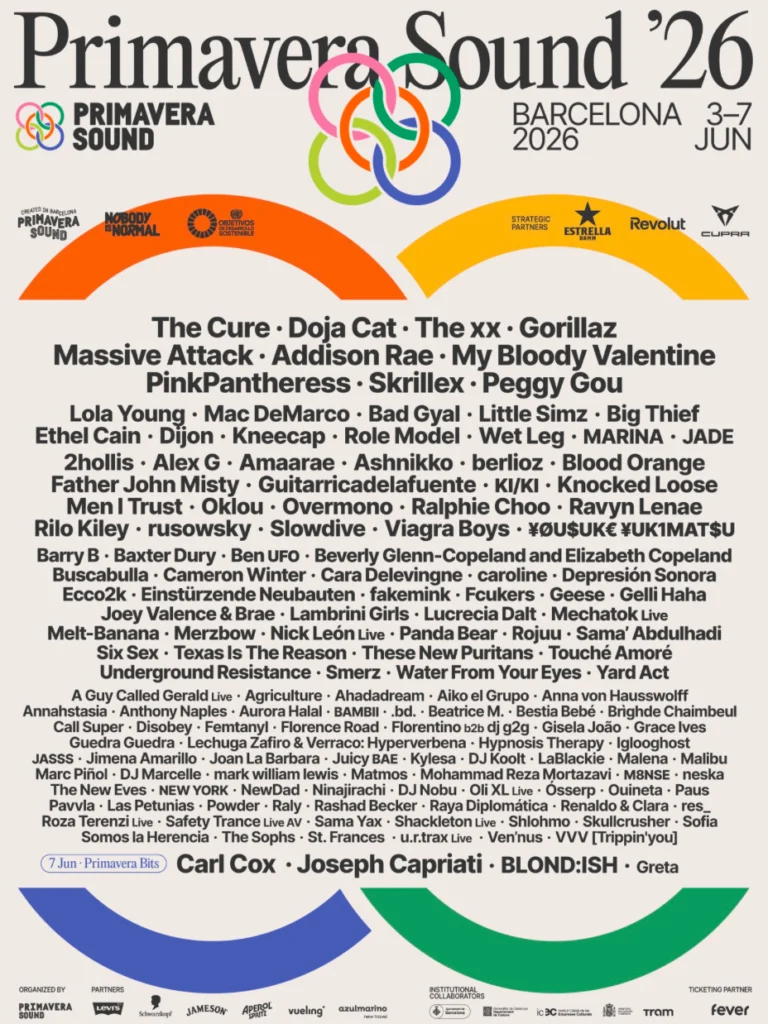
Festival lineup announcements seem to be coming early this year. Following last week’s news that Sabrina Carpenter, Karol J, and Justin Bieber would be headlining Coachella 2026, today Primavera Sound is revealing the lineup for next year’s Barcelona edition. Topping the bill are The Cure, The xx, Doja Cat, and Massive Attack, while My Bloody Valentine (!), Alex G, Slowdive, Addison Rae, Geese, Blood Orange, PinkPantheress, Kneecap, Mac DeMarco, Big Thief, Ethel Cain, Father John Misty, and Water From Your Eyes are also set to perform.
Other acts on the bill include Amaarae, Cameron Winter, Smerz, Lola Young, caroline, Marina, Little Simz, JADE, Yard Act, Knocked Loose, Skrillex, Lambrini Girls, These New Puritans, Skullcrusher, Touché Amoré, Rilo Kiley, Texas is the Reason, Panda Bear, Agriculture, Lucrecia Dalt, and Merzbow.
Ahead of a general sale starting on Tuesday (September 30), a fan sale for tickets will take place on Monday at 10am BST/11am CEST. You can register here.
Last year, Charli XCX, Chappell Roan, and Sabrina Carpenter headlined Primavera Sound. Check out our dailyrecapsfrom the festival.
Microsoft Flight Simulator 2024 will officially come out on PlayStation 5 later this year. The announcement was made at the PlayStation State of Play live show.
Extending the Flight Simulator Universe
Asobo Studio initially launched the aviation game on November 19, 2024. It continues the rich 43-year history of the franchise in the gaming world. It started in 1982. But this will be the first time that a title in the series is coming to PlayStation. The release also shows Microsoft’s growing trend of bringing exclusive titles to the console.
With its arrival on Sony’s PS5, the supported platforms of Microsoft Flight Simulator 2024 expand. Before the announcement, the title was only available on PC and Xbox. This move brings the game to a wider group of players.
Breathtaking Gameplay
According to Asobo Studio, the game gives players a look at having an aviation career. It pulls them in the flight experience. At the same time, it blends realistic flying mechanics with many fun activities. In particular, Pilots can go on different types of missions. Players get the chance to try aerial firefighting, medevac operations, remote cargo runs, search and rescue tasks, and more. Likewise, the main objective is to become an Airline Passenger Transport Pilot.
Aside from the main missions, there are competitive modes. Players can join in the Challenge League. There are rally races, precision landings, and low-altitude challenges. It has the biggest test for pilots.
For a more calm experience, Microsoft Flight Simulator 2024 has a creative mode. Players are not limited to fighting while flying. They can also become a World Photographer. This mode offers fun challenges. It invites players to take photos of natural views and famous spots.
VR Support and Other Details
As per a GameRant article, the PS5 version will support PlayStation VR2. It lets players fully experience the skies with virtual reality.
Microsoft Flight Simulator 2024 includes more than 150 aircraft models. The choices include light planes, jumbo jets, helicopters, and military fighters. In the trailer, the game features several planes. But the developers have not yet said how many will be available on PS5 at launch. But what is clear is the very real flight experiences in a lively world.
Early Access and Official Release Date
The developers are launching Early Access starting on December 3 for Deluxe, Premium Deluxe, and Aviator Editions.
Microsoft Flight Simulator 2024 will take off on Sony’s console on December 8. Players can pre-order now for PS5 and PS5 Pro. Every pre-order will include the Northrop T-38A Talon aircraft.
There’s so much music coming out all the time that it’s hard to keep track. On those days when the influx of new tracks is particularly overwhelming, we sift through the noise to bring you a curated list of the most interesting new releases (the best of which will be added to our Best New Songs playlist). Below, check out our track roundup for Wednesday, September 24, 2025.
Florence + the Machine – ‘One of the Greats’
Florence + the Machine have released a new song, ‘One of the Greats’, which sprawls over seven minutes in ragged, eerie, caustically humorous fashion. It’s the second single from Everybody Scream. In a statement, Florence Welch said:
I don’t really know how to explain myself with this one, it was sort of a long poem about the cost of greatness. Who gets to decide what that is? Why do I even want it? Why am I never satisfied? I feel like I die a little bit every time I make a record, and kind of literally nearly died on the last tour. Yet I always dig myself up to try again, always trying to please that one person who doesn’t like it, or finally feel like I made something perfect and I can rest.
Early in my career, I was consistently ridiculed and derided for the bigness of my expression. I was thrust into the spotlight but also told again and again I didn’t deserve it, or that because it wasn’t to their taste it wasn’t good. So maybe this is a 15-year outpouring of frustration. But also, a lot of the lines I just left in because I thought they were funny.
Me and Bowen from IDLES wrote it in one take. He played the guitar and I just sang it straight from the page. We meant to re-record it but the first take just had this amazing energy.
Then Aaron Dessner helped us take it to a truly transcendent place. I wanted it to feel like you were disintegrating into nothing at the end. Which is sometimes what the creative process feels to me. Death and resurrection over and over.
Courting have recruited Rochester rapper RXK Newphew for a frenetic, noisy track called ‘rollback freestyle’, from the deluxe edition of Courting’s latest album Lust for Life, Or: ‘How To Thread The Needle And Come Out The Other Side To Tell The Story.’ “Hardly just a deluxe, but an inversion – this release is an attempt to add new layers to the dual thematics of ‘Lust for Life(…)’, by twisting original songs into new beasts entirely, through either doubling up the processing, or stripping it back altogether,” Sean Murphy O’Neil explained. “Songs written in bedrooms are now opened up and collaborative, whereas songs written on stages are re-interpreted from outside perspectives. Some songs are re-performed live, in the same studio, but with a year of touring forcing them to shift and evolve.”
Chat Pile and Hayden Pedigo – ‘Demon Time’
Chat Pile and Hayden Pedigo have released ‘Demon Time’, another beguiling single from their upcoming collaborative LP In the Earth Again. “Speaking to Yeats’ widening gyre, things are falling apart,” Chat Pile’s Raygun Busch said in a press release. “Bad to worse or painful move towards something better is anyone’s guess, but we are living through a difficult time. The cycle continues forever, though. This is one of the first songs we recorded for the new record and is the wellspring from which the rest of the lyrical ideas flow.” Hayden Pedigo added: “This track feels like the gateway to the rest of the album. The calm before the storm. It might be my favorite track on the record just because it sets the tone so well. It’s eerie calm, and you know something might be coming around the corner.”
Eliza McLamb – ‘Suffering’
Eliza McLamb has dropped a poignantly self-aware track, ‘Suffering’, from her forthcoming album Good Story. “I get off on suffering/ It’s my favorite thing,” goes the chorus, “Find without it I can’t figure out the point of anything.” “I came to see suffering as a creative act — something I often wanted to feel and thus created situations where it was possible,” McLamb shared in a statement. “I realized my own role in manufacturing pain, and I wanted to play with the idea of suffering as something I sometimes chose as a willing experience.”
Bartees Strange – ‘DCWDTTY’
Bartees Strange’s ‘DCWDTTY’ is the fifth single from All Things Go: 10 Years, whose proceeds go to Jack Antonoff’s charity the Ally Coalition, and features production by Antonoff. “One of my favorite songs from people in this part of the world is ‘DC Will Do That To You’ by Smart Went Crazy,” Strange said. “Content wise this song doesn’t have much to do with theirs, other than I feel like a big part of who I am is because of DC and what I feel like it did to and for me. This song is just me, wandering through the DMV – things seen and heard in a uniquely lovely and upside down place.” It might be one of the most raucous-sounding things Antonoff has been involved in.
Sharp Pins – ‘I Don’t Have the Heart’
Kai Slater’s Sharp Pins have served up another single from their forthcoming LP Balloon Balloon Balloon. Following up ‘I Wanna Be Your Girl’ is the lonesome yet bouncy ‘I Don’t Have the Heart’.
Elias Rønnenfelt – ‘Love How It Feels’
Elias Rønnenfelt has shared a groovy, enticing track, ‘Love How It Feels’, alongside a video directed by Thinh T. Petrus Nguyen. It’s the second single from his upcoming LP Speak Daggers, following ‘USA Baby’.
Prewn – ‘My Side’
Prewn has released a haunting, numbed-out single, ‘My Side’, from the forthcoming LP System. In a statement, Izzy Hagerup is quick to explain how the track’s emotional core is rooted in the aforementioned system, calling it “a song about living in a country where the systems in place are bloated with abundance, yet we’re more isolated from community and connection to environment and each other than ever. Through this epidemic of over-consumption we lose our peace along with our compassion.”
Indigo De Souza and Mothé – ‘Serious’
Indigo De Souza is gearing up for a fall tour with Mothé, and today the two artists have teamed up for an upbeat single called ‘Serious’. “Serious is a reflection on overthinking— and trying not to!” De Souza reflected. “Reminders to myself, and from people I love, to loosen the tight grip I’m often holding internally. Life is a heavy experience, so it’s important to make time for letting loose! This song is about that moment when you decide you don’t care who’s watching, you’re just going to dance with your whole heart. It’s about trusting joy. I absolutely loved singing this song with my friend Mothé. They have such a beautiful voice and they are so fun to write with. I am grateful to have made this song with them, and really excited to hopefully sing it a few times on the tour we have coming up!”
Hannah Jadagu – ‘Gimme Time’
Hannah Jadagu has unveiled ‘Gimme Time,’ a delicate ballad off her forthcoming record Describe. The accompanying video, co-directed and edited by Jadagu and collaborator Sam Wilbert, was filmed in and around the mountains around Estes Park, Colorado.
Joyer – ‘Glare of the Beer Can’
Joyer, the East Coast indie rock duo of brothers Nick and Shane Sullivan, have shared the latest preview of their new album On The Other End of the Line…, the contemplative ‘Glare of the Beer Can’. “This song is about being reminded of someone everywhere you go,” Nick Sullivan said “It’s about seeing that person in both the good and bad things in life. It adds meaning to the mundane and enhances the beautiful things.”
Alexa Rose – ‘Anywhere, OH’
Alexa Rose wrote ‘Anywhere, OH’ – the gently swaying new single from her forthcoming album Atmosphere – about a town she stopped in for coffee while on tour, making it sound full of possibility. “I was only there for half an hour passing through, but I felt homesick when I left,” the singer-songwriter recalled. “I remember the way the colors of houses and old oaks poked out from the fog, a line of kids dressed up for Halloween, waiting to go into some church party. There’s a bittersweetness in making small talk with the person behind the coffee counter, who assumes you know about whatever local news is going on—and you just nod along, knowing you’ll likely never stop there again.”
Art School Girlfriend – ‘L.Y.A.T.T.’
Art School Girlfriend has released an affecting new song, ‘L.Y.A.T.T.’, her first new music of 2025. “L.Y.A.T.T. is about the resilience of love through times of physical or mental distance and hardship,” Polly Mackey revealed. “An unfaltering and unwavering declaration for the times when life may be taking its toll. This new music was written, recorded and produced by me in my own studio, allowing for a deeper, more reflective process and to dig into the emotional and sonic places I hadn’t yet explored.”
fanclubwallet – ‘Know You Anymore’
‘Know You Anymore’, the third single from fanclubwallet’s forthcoming sophomore album Living While Dying, was inspired by Anamanaguchi, emo guitar riffs, and Hannah Judge’s own intrusive thoughts. “Everybody dies,” she said. “How do you want to die? How do you think you’ll end up left behind by your loved ones? I don’t like thinking about this all the time, but why don’t you think about this stuff too?”
Pem – ‘m4 windy’
Pem has released a tender, airy new song, ‘m4 windy’, which is named after the motorway between London and The West Country. “I was driving on the M4 one day during that bout of gale force winds we had in early 2025,” she explained. “I was singing something to myself about a tornado and recorded a voice note of my tornado mumbles. My phone saved it as ‘m4’. I started writing when I got home and m4 windy was finished an hour later.” She added of the music video: “I reconnected with French filmmakers Camille and Juliette — aka Las Favoritas — who I first met when I was living in Paris seven years ago. Together we built an all femme-led crew. Nine of us piled into a van and drove to the countryside south of Paris to a surreal, sandy, rock park known for bouldering. We filmed through the night to create something earthy yet ephemeral, tempestuous but distant. It was so fun and the team were phenomenal.”
Online casinos have grown into more than just a digital pastime—they’ve become a cultural marker of how entertainment evolves. What once felt niche is now woven into everyday digital life, blending trust, design, and social interaction. This shift shows how iGaming reflects modern values of convenience, style, and connection.
Online casinos moving into the cultural mainstream
Online casinos have gone from a silent, niche activity to one that players now comfortably associate with conversations on digital entertainment. Just as people discuss new apps or streaming platforms, players are increasingly viewing iGaming as a culture rather than something on the fringes.
The contributors to this trend are indeed sizable, with streamers playing a main role. The practice of showing potential players streaming sessions creates an opportunity to watch the excitement, learn the strategies, and feel involved. It eradicates the level of secrecy that once shrouded online casinos and replaces it with transparent, community-driven activity much easier to relate to.
Expert guidance has become part of the experience. Resources like Card Player’s expert guide to top online casinos offer reliable insights, saving players from trial-and-error. These reviews shape trust and reassure newcomers that they’re making the right choice. That sense of confidence cements the role of online casinos in today’s broader digital culture.
Fairness and legitimacy also stand out as cultural turning points. Certifications, clear rules, and visible oversight make players more comfortable. When people believe they’re playing on platforms that treat them fairly, it changes the entire narrative from suspicion to trust, which is critical for mainstream acceptance.
The social side of iGaming
Perception changes – Players now don’t perceive this to be isolated, but have understood the interactivity and sharing of the same. For instance, a live dealer game would give players the feel of being at a real table, and hence, this human touch is much craved for by the participants.
The addition of chat features and communication further enriches interaction, as it allows players to converse with one another or directly with the dealer, so it is not just about playing alone but more of a community thing. Such involvement is one way online casinos participate in the modern digital culture, where people expect everything to be connected.
Streamers have been a significant force in redefining the way people view iGaming. Being able to watch someone spin reels, play cards, or discuss strategies makes the activity much more relatable and entertaining. Humor, personality, and excitement are what streamers bring to the table and show an online casino in a light that’s all about fun and community, not secrecy and isolation.
The players feel as if they belong to a common cultural space. Nowadays, online casinos are not only places to play, but also to communicate, gain experience, make friends, and in some instances, even learn. Such a transformation has made the sense of simply playing alone in front of the screen seem far away, with actuality more about participating in a larger digital community.
Aesthetic appeal and immersive design
Another reason for this has been the change in perception regarding the emphasis on design. Modern online casinos not only provide the games but also create a stylish environment that rivals the quality of video games or streaming platforms. It provides classy, polished user interfaces that greet users in the best possible way as soon as they log in and start exploring.
Most of this appeal is from outside the world of the casino. It’s popular video games, movies, and pop culture that provide the look and sound of the games as borrowed elements. Such creatives help blur the line between iGaming and other forms of entertainment, making it easier to cater to and attract a wider audience.
The trend of gamification has also led to this change. Achievements, progress bars, and interactive reward systems make the experience very engaging and dynamic. Users aren’t just clicking through menus but are really pitting their wits in an immersive environment that mirrors the sort of excitement they already get from other digital experiences.
Design isn’t just about beauty. It’s about good design that tends to build trust when a website looks user-friendly and professional. Players have a natural inclination to believe that it must be trustworthy and safe. The design versus perception angle is why online casinos are not only about game judgment but the experience in total, from visuals to usability.
Convenience as cultural currency
The factor of convenience often influences perception in today’s culture. Therefore, online casinos are thriving because they are convenient enough to use in the middle of busy schedules. You can log in through your phone, tablet, or laptop without having to plan a trip; the whole experience is so ‘on-demand’ and easy.
Mobile-first habits are at the heart of this. Most of the players prefer fast access through apps or optimized websites. The possibility of playing a quick game during a journey or when one is chilling at home provides iGaming an appeal similar to streaming or social media — immediate, portable, and always within reach.
Payment integration has played a crucial role in making things more convenient. POSs into credit cards, digital wallets, or even cryptocurrencies, and more deposits and withdrawals are at your fingertips. This varied approach indeed allows players the kind of control and flexibility that further supports the idea that online casinos are a natural extension of the broader digital transaction culture.
Convenience goes further than mere access and payment-it’s a balancing of lifestyle. Online casinos allow short bursts of entertainment, which do not require large amounts of time. Such an offering would obviously strike a chord in a society that values effectiveness; it shows that iGaming can be fun and easily fit into daily routines.
Conclusion
The perception of online casinos has undergone a dramatic transformation, aligning them with mainstream entertainment. From sleek design to social engagement and trusted guidance, they now mirror the way people consume culture online. iGaming isn’t just play—it’s part of modern digital living.
Chat Pile and Hayden Pedigo have released ‘Demon Time’, the second single from their upcoming collaborative LP In the Earth Again. It follows ‘Radioactive Dreams’, one of the best songs of August, and it’s just as beguiling. Check it out below.
“Speaking to Yeats’ widening gyre, things are falling apart,” Raygun Busch said in a press release. “Bad to worse or painful move towards something better is anyone’s guess, but we are living through a difficult time. The cycle continues forever, though. This is one of the first songs we recorded for the new record and is the wellspring from which the rest of the lyrical ideas flow.”
Hayden Pedigo added: “This track feels like the gateway to the rest of the album. The calm before the storm. It might be my favorite track on the record just because it sets the tone so well. It’s eerie calm, and you know something might be coming around the corner.”
In the Earth Again is set for release on October 31 via Computer Students.
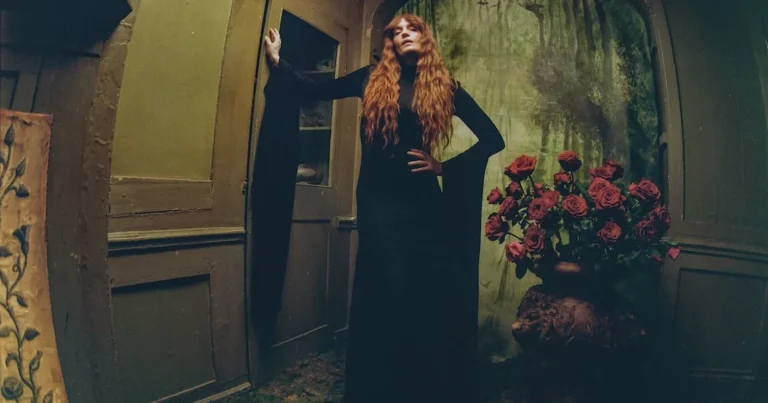
Florence + the Machine have released ‘One of the Greats’, a ragged, caustically sprawling new single from their upcoming album Everybody Scream. Check out a video for it below.
Speaking about the track, Florence Welch said:
I don’t really know how to explain myself with this one, it was sort of a long poem about the cost of greatness. Who gets to decide what that is? Why do I even want it? Why am I never satisfied? I feel like I die a little bit every time I make a record, and kind of literally nearly died on the last tour. Yet I always dig myself up to try again, always trying to please that one person who doesn’t like it, or finally feel like I made something perfect and I can rest.
Early in my career, I was consistently ridiculed and derided for the bigness of my expression. I was thrust into the spotlight but also told again and again I didn’t deserve it, or that because it wasn’t to their taste it wasn’t good. So maybe this is a 15-year outpouring of frustration. But also, a lot of the lines I just left in because I thought they were funny.
Me and Bowen from IDLES wrote it in one take. He played the guitar and I just sang it straight from the page. We meant to re-record it but the first take just had this amazing energy.
Then Aaron Dessner helped us take it to a truly transcendent place. I wanted it to feel like you were disintegrating into nothing at the end. Which is sometimes what the creative process feels to me. Death and resurrection over and over.
Everybody Scream arrives October 31 on Polydor/Republic. It was led by the title track.