For all its mythology, Paris Fashion Week can feel like a rotating billboard for the same luxury powerhouses. Dior here, Louis Vuitton there, the occasional viral runway moment in between. And yet the week still leaves room for contemporary brands operating on a different scale entirely. This season, that means Kimhēkim and Kiko Kostadinov.
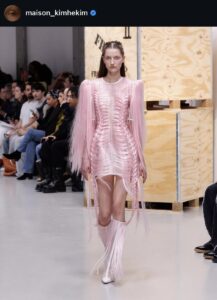
Anniversaries in fashion tend to trigger the same reflex, open the archives and start digging. At Paris Fashion Week, that instinct is practically institutional at this point. Ten years in, Kimhēkim had plenty to look back on. The other current fixation seems to be texture, preferably the hairy kind. The collection, titled Enter the Spectrum, had plenty of both. Braided, in a very particular shade of pink unicorns would probably approve of, clipped everywhere, or hanging loosely from sleeves and boots. Whatever wasn’t hairy came tailored, ruffled, or decorated with alarmingly large pearls and bows. Labels too, one of the final looks was almost entirely covered in them. Not a bad way to mark a decade.
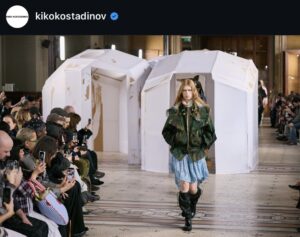
Where there isn’t a special event marking a show, inspiration can come from anywhere, even London’s Wood Green wildlife. The Fanning sisters made a quick stop there months ago, watching the birdwatchers. “We were maybe thinking about the watchers and the watched,” the duo told Vogue. But the whole bird situation was probably given away by the huge nestbox the models walked out of, thanks to the artist Oscar Tuazon. What followed looked like a forest exploded in a lab. Feathered textures met drawstring pockets and hybrid sneakers, and it felt right. In case you ever get bored of humans, the Asics tabi collaboration will handle the feathered ones.
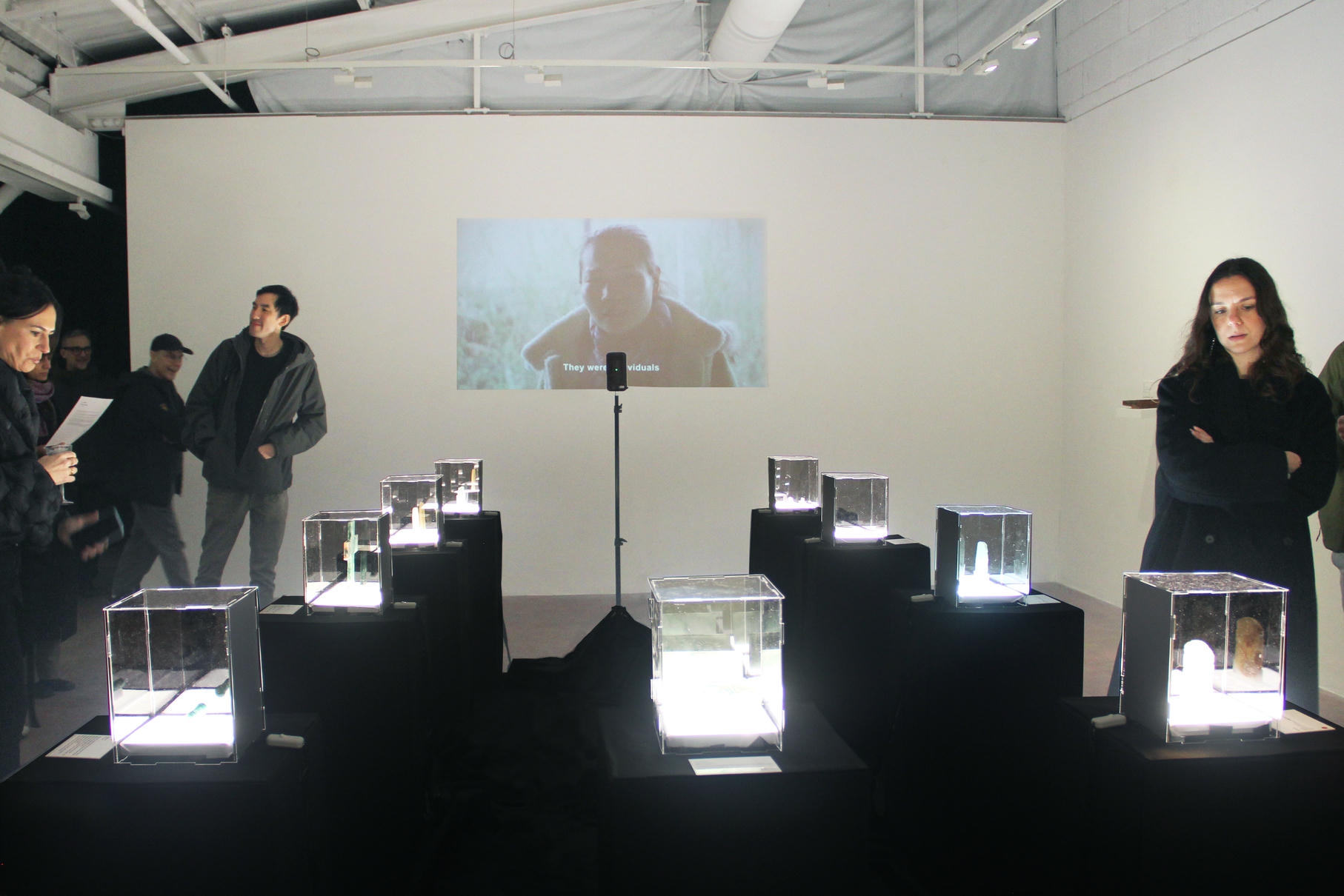
Han Chai was born in Jixi, a remote industrial city on China’s northern border, a region shaped by extreme climate, heavy industry, and layered histories of migration. Growing up in an environment marked by economic volatility and working-class labour, she developed an early awareness of how quickly stability and social visibility can shift. As a teenager she identified with the Shamate youth subculture, a community of young migrant workers who used self-styling, online identities, and shared visual codes to assert presence within systems that largely overlooked them. This proximity to lives lived at the margins continues to inform the emotional and political ground of her work.
She later moved to the United Kingdom to study, where her interests gradually extended toward structure, material behaviour, and narrative form. What began as garment-based thinking gradually adopted a sculptural logic, prompting a transition into fine art. This shift allowed her to connect personal experience with broader questions of labour, class, and cultural value, establishing the conceptual framework that continues to guide her practice.
An early consolidation of this direction emerged with Soft Monuments (2023) at aolab Experimental Gallery in Shanghai and Unusual Norm (2024) in Hangzhou. In this body of work, Chai compelled cloth and pliable textiles into upright, gravity-resisting structures, treating soft matter as a spatial and mnemonic agent rather than passive fabric. Through layering, internal tension, and controlled staging, the sculptures positioned softness as capable of carrying weight and duration while retaining a sense of physical presence. The exhibition also marked the clear articulation of what she describes as “reversed craftsmanship,” where care, time, and material sensitivity operate as critical decisions rather than decorative effects.
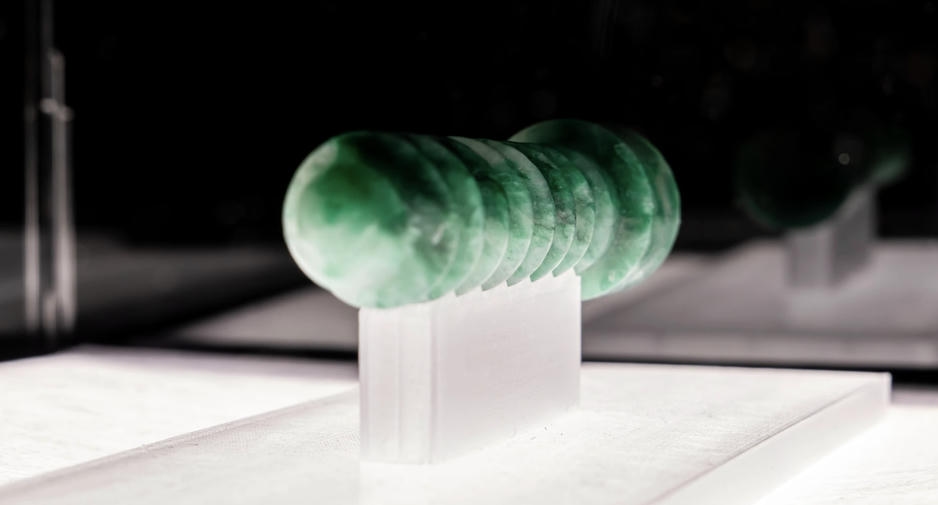
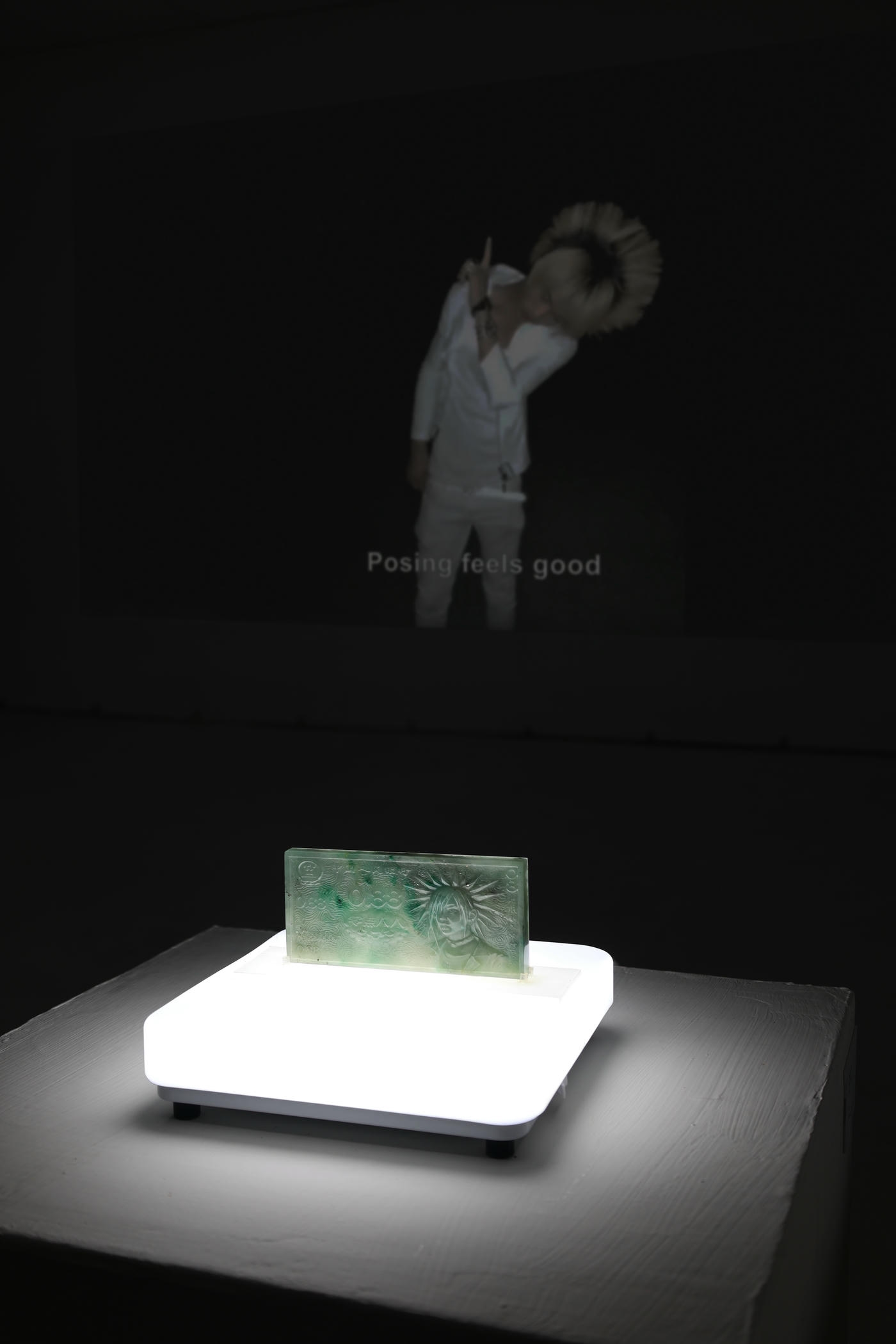
From 2025 onward, this material investigation expanded through the development of Royal Screw, translating earlier concerns into a more historically and materially charged sculptural language. Working increasingly with jade, bone, and bamboo, Chai redirected materials traditionally associated with authority and permanence toward the visual culture of Shamate youth. The solo presentation at the Casoria Contemporary Art Museum in Naples in October 2025 marked an important institutional moment, where works including Jade ID, 0.88 Yuan, The Cheap Thing, and Phone Grave positioned marginal digital identities within the visual logic of the museum.
Exhibitions across London and Italy between late 2025 and early 2026 have extended the reach of this body of work while maintaining the measured, materially disciplined approach that defines Chai’s practice. Across these presentations, her sculptures continue to operate as quiet acts of revaluation, using historically charged materials to hold the presence of lives and subcultures often positioned at the margins of official record. Rather than treating these works as static memorials, Chai approaches sculpture as an ongoing process of cultural marking, one that traces how identity, labour, and memory are carried forward through material form. She currently lives and works in London, where her practice continues to develop.
If you’re struggling to find something to play in 2026, the good news is that there’s a lot to go at. This year’s gaming landscape is shaped by a variety of game formats and titles, so you’re sure to find something to suit. There are video games, casino titles, and the rise of something completely new called crash games. We’ve picked out some of the games we think are worth your time playing below.
Baldur’s Gate 3 Sets The Standard
Few games feel as essential as Baldur’s Gate 3. It may have been around for several years, but it’s a game that allows players to shape the adventure they embark on. The game’s appeal lies in its freedom, with every fight, dialogue sequence, and character build capable of sensing a save in a different direction. When a game stands the test of time and remains popular several years after its release, it’s worth taking note of.
Split Fiction Brings Co-Op To Life
For players looking for a game with a more social feel, Split Fiction is a smart pick. When it comes to co-op on PC, it’s arguable that Split Fiction is unrivalled, with its inventive level design and premise built around two writers trapped in a machine harvesting their ideas. The fact that this is a game that also supports the Friends Pass system is another big plus, as it makes it easier for players to jump into the action together.
Hades 2 Keeps Roguelikes Thriving
Roguelikes remain incredibly popular, and Hades 2 is one of the reasons why this is the case. Reviews suggest Hades 2 is a masterclass in sequel design, highlighting its storytelling, art direction and refined combat systems. Even when the game was in its early access stage, it was being tipped to be one of the most complete gaming experiences in a long time. With quick-fire runs on demand and a world that keeps pulling players back in, it’s a must-play in 2026.
Slot Games Remain The Casino Favourites
Casino gaming in any year starts and ends with slots. Big Pirate Casino and other reputable gaming platforms go all out when it comes to slots, because they’re the games that most players want to play. In 2026, titles such as Digging for Wilds, Bonzo’s Bananza and Cod of Thunder Dream Drop are all slots to cast your eye over, with studios continuing to regularly release fresh content. The variety provided by slot catalogues at online gaming platforms means everyone will find games they want to spin the reels of.
Crash Games Are One Of The Newer Trends
One of the most obvious trends as we move through 2026 is the continued rise in popularity of crash games. Crash games essentially involve a multiplier, with the prize rising as time goes on. However, when the crash occurs, the prize is lost, so players must cash out ahead of the inevitable crash. Titles such as Aviator, Lucky Jet and Cash or Crash are the place to start for anyone new to crash games.
Conclusion
You’re spoilt for choice as a gamer in 2026. There are classics that are always worth playing, newer and more modern games with in-built social components, casino games like slots that have so much variety, and fresh takes on gaming, such as crash titles. If you’re into your games, this year will be electric.
Beloved Netflix show Virgin River continues to draw in an impressive number of fans.
Season 7, which premiered recently, gathered 7 million views during its first week on the platform. The romantic drama made the top 10 in 58 countries and became the fourth most-watch show, globally.
Given those viewership numbers, it’s safe to assume that the series isn’t going anywhere, right? Here’s what we know so far.
Virgin River Season 8 Release Date
Virgin River enthusiasts have reason to celebrate: Netflix already confirmed that the show is coming back for more. That said, you’ll likely have to wait a bit for additional episodes, given that the current installment debuted earlier in March.
Based on the show’s previous release schedule, we expect Virgin River season 8 to arrive sometime in early 2027.
Fun fact: the renewal makes Virgin River one of Netflix’s longest-running series.
Virgin River Cast
Alexandra Breckenridge as Melinda “Mel” Monroe Sheridan
Martin Henderson as Jack Sheridan
Colin Lawrence as John “Preacher” Middleton
Jenny Cooper as Joey Barnes
Lauren Hammersley as Charmaine Roberts
Annette O’Toole as Hope McCrea
Tim Matheson as Vernon “Doc” Mullins
Ben Hollingsworth as Dan Brady
What Could Happen in Virgin River Season 8?
Based on the novels by Robyn Carr, Virgin River revolves around Melinda “Mel” Monroe, a nurse practitioner. She moves from Los Angeles to a remote Northern California town called Virgin River, hoping for a fresh start.
However, what she expects to be a quiet reset turns into something more complicated. She not only forms deep connections with locals, but develops a slow-burn relationship with bar owner Jack Sheridan. The show blends romance with small-town drama and the occasional twist. It’s equal parts cosy and absorbing.
The most recent installment picks up after Mel and Jack’s wedding. They decide to adopt a baby, but their happiness is shaken when the newborn is diagnosed with a serious heart condition. The season ends without revealing whether the baby survives, leaving their storyline on a major cliffhanger.
Other characters are also put through the wringer. The episodes feature births, break-ups, even a kidnapping. Virgin River season 8 will likely continue on the same note, with a new focus on Mel and Jack’s journey into parenthood.
When asked about what’s in store for the follow-up, showrunner Patrick Sean Smith revealed it will zoom in on “the challenges that raising a child with special physical needs puts on their marriage and how challenging it is to be new parents, much less new parents in such a high-stakes situation.”
One thing’s for sure: their story is far from over. With 19 novels to draw inspiration from, it could go on for a long time.
The Afghan Whigs have returned with a new single, ‘House of I’. Produced and mixed by Greg Dulli and Christopher Thorn, it marks their first original song in four years, arriving ahead of their 40th anniversary tour. Check it out below.
“Laid this one down in New Orleans last summer,” Dulli said in a statement. “Was looking for an up tempo banger and feel like we found one here.”
Per a press release, the Afghan Whigs will follow 2022’s How Do You Burn? with a new album this year. They recently shared a pair of covers.
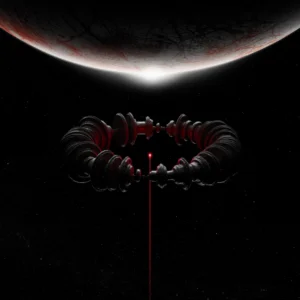
Muse are back with a new album. The Will of the People follow-up is called THE WOW! SIGNAL (no, really), and it comes out June 26 via Warner Records. It’s led by the grandiose new single ‘To Be With You’, which you can hear below.
Naturally, there’s some backstory to the album title – the transition from WOP to WOW, if you (a people) will. “THE WOW! SIGNAL takes its name from one of the most compelling interstellar mysteries of the last century: a powerful 72-second radio burst detected in 1977 originating from the constellation Sagittarius with a bandwidth and intensity that suggested a possible extraterrestrial source,” a press release explains. “The astronomer who discovered the anomaly famously circled the now-iconic sequence ‘6EQUJ5’ and wrote ‘WOW!’ on the printout beside it — giving the signal its name and cementing its place in scientific and pop-culture lore.”
For Muse, of course, none of this astronomical context is just conceptual. To promote the new single, they premiered the video by sending a specially-designed video tablet 33km up into the atmosphere.
THE WOW! SIGNAL Cover Artwork:
THE WOW! SIGNAL Tracklist:
1. The Dark Forest
2. Nightshift Superstar
3. Shimmering Scars
4. Cryogen
5. Be With You
6. Hexagons
7. The Sickness In You & I
8. Unravelling
9. Hush
10. Space Debris
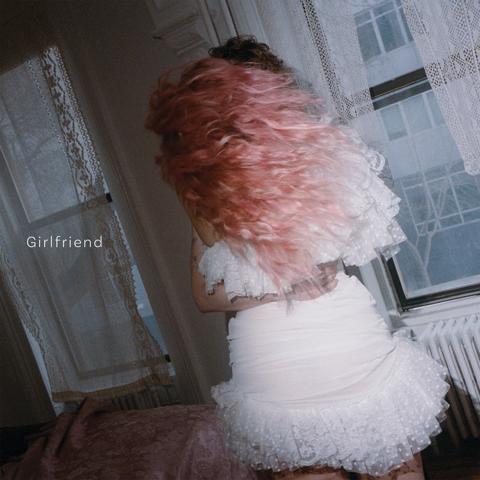
At some point when you learn how to drive, if you’re lucky enough, you’ll cross a threshold where your confidence allows the world to expand beyond the limits of your self-consciousness. Your eyes will lock on the horizon and for a moment the vastness will stun you like it never would if you weren’t behind the wheel. The schmaltzy, the obvious becomes beautiful, like the message that appears before Grace Ives on the outro to the penultimate song of her incandescent new album, Girlfriend: “I’m no stranger to that sage advice/ If you love her, let her find her life.” Headed for the freeway, she’s “off with my little mind,” and if you’ve loved Ives’ past work, you know “little” is the kindest compliment. Charting her journey to sobriety, she and co-producers Ariel Rechtshaid and John DeBold dig through the wreckage to uncover an artist more big-hearted, bold, and buzzed with life than the introvert who’d shrink at the scale of it. You can catch Ives on the road on many of these songs (and playing them); you can also hear her marveling.
1. Now I’m
The opening track finds Ives in an aqueous, rejuvenated state of mind: before her voice announces that she’s out in California, the relaxed drums and finely textured synths already point to its riches. Though the production retains its crystalline simplicity, it’s clear her vision stretches out beyond this brief glimpse of the good life, where the “lovely messes” of Janky Star could take the shape of pure, all-consuming love – the gap between feeling you’re “in the water” and “on the ocean.” You can return to the same place and discover it’s flooded with a whole new range of possibilities.
2. Avalanche
In reckoning with her chaotic behaviour, Ives identifies her reckless tendencies and the ensuing numbness as two sides of the same coin. She’s blunt – “Feeling sorry not sorry for the mess that I make” – but stops herself from romanticizing it in hindsight. And while early singles like ‘Avalanche’ showcased the DIY artist’s penchant for big-tent pop, notice the unusual way she lets the weight accumulate in the post-chorus instead of the moment the main hook kicks in: the encroaching synths, the aching “mmms.” Another producer might have punched up the beat a little more on the second verse, but it heaves like panic here as Ives and her collaborators lock into a cerebral haze.
3. Fire 2
As portraits of burnout go, ‘Fire 2’ could hardly be more literal: “I’m blue as a match, I’m unkempt, unattached,” Ives sings, “I’m the shadow of a girl who’s just doing her best.” Even as her voice turns cavernous and weary, her words are still as vivid as the production, which at one point feeds them back to her in a blurry, nightmarish loop. The song is almost ridiculously kinetic and lush, the closest the album comes to resembling Rechtshaid’s work with HAIM, but even at its sparkliest, the music stays unruly. A match fit for dancing.
4. Drink Up
The sharpest, most subversive thing about ‘Drink Up’ is that it’s the first song on the album without a chorus. How do you make that euphoric leap, musically, when you’re armed with the awareness of how catastrophic a “little hit” can turn out to be? So when you expect it to lurch skyward, it instead slushes from one verse to the next, tellingly subtitled (Bridge? Slow Part?) and (Post-slow?) in the lyric sheet I’m looking at. The song’s quizzical nature doesn’t make it feel any less complete; if anything, the slip-up forces experimentation before anyone in the studio gets too comfortable. Mid-binge, she’s thinking up a “cheeky little epitaph,” but ‘Drink Up’ was always going to be around the middle of the tracklist.
5. My Mans
Any pop star could belt out the lines “The more that I want/ Well, the less that I know,” but only a poet totally unburdened by vulnerability could let them a blossom into a chorus like this: “And they all just melt away my meaning/ I’ll be your candle but I’ll weep my wax/ If they all flattened out beneath me/ I’d see forever down a clear cut path.” Objects of desire sometimes stand as roadblocks on the path to incandescent longing, which in the world of Girlfriend is synonymous with commitment. What does weeping one’s wax sound like, you might wonder? Atop piano chords that simply do not let up, an ocean’s worth of sighs, burbling synths, and humming as if to say: The choice is yours, but now you know what I really want.
6. Dance With Me
Leave it to Grace Ives to open the first openly joyful song on Girlfriend by quoting The Hours: “Always the love and the years between us.” If the opener skirts the difference between being “in the water” and “on the ocean,” ‘Dance With Me’ embodies the feeling in the decision to stop watching the film alone in bed and go out into the world, even if only to find a copy of the book in your local library. For a song about feeling the weight of the world nudging you to experience it, it’s resoundingly light, a vibrant array of piano, mellotron, and strings bringing Ives closer to her aspiration of being “like the air.” When she sings about her feet leaving the ground, a vocal effect briefly makes her sound like a child again. Of course “the world is bigger than we thought it be,” she acknowledges, remedying herself by finding beauty in the expanse.
7. Neither You Nor I
When did we go from “cheeky little epitaph” to “chubby little blade”? ‘Neither You Nor I’, delirious and prickly, has an air of “if you know, you know” about the intersection of pleasure and pain. It prompts one of the most primal rhythm sections on Girlfriend, which is a treat.
8. Trouble
Rather than poetic or introspective, ‘Trouble’ is conversational, addressing the toll her drinking has had on a long-term relationship with the exhaustiveness of a heart-to-heart that’s bound to go all night. Ives is quick to admit fault and even hungry for the worst accusations, the catchy melody belying the knot in her throat like a smile. The straightforward pop structure, coloured with a few welcome flourishes, only makes the confession more uncomfortable. But it also prescribes a runtime, which means you can move on.
9. What If
By the time we get to ‘What If’, the frustration and self-loathing at the song’s core is familiar. But in contrast to the “up to you” of ‘My Mans’, ‘What If’ is all about taking accountability as your shitty behaviour keeps playing in your head like a movie, the kind that can make your stomach churn only to elicit a remark like, “That was quite the scene.” It comes off as both understated and wholehearted, trading the mechanic pulse of ‘Trouble’ for a real thrum. And when the “worn ass tires” turn out to be Chekhov’s gun? Man, that’s quite the hand that she played.
10. Garden
Isn’t it funny, ‘Garden’ suggests, how lifting your feet off the ground can feel as liberatingly childish as having them firmly planted there? How groundedness can feel so heavenly? “Lucky to be lonely and hold myself tight and I/ Light all my supply in a fire,” she sings, later adding, “Lucky to lay down and call it a life.” Rather than a rectifying record of a meltdown, Girlfriend is awash with wonder at the warmth it’s produced, the scent filling the air, the sheer clarity of it all. Musically, ‘Garden’ is the slow part, sans question mark. It’s well-deserved.
11. Stupid Bitches
I recently waxed poetic about ‘Stupid Bitches’, which might as well go down as the best pop song of 2026. ‘Avalanche’, ‘Dance With Me’, ‘My Mans’ – all great 2025 singles you could, blissfully ignorant of the then-unannounced full-length, group together as a fantastic EP. But of course Ives had to leave the best for last, both in a promotional and album-sequencing sense: What better way to affirm that it’s never over when you think it is than by ending with a song that seems to kickstart the engine all over again? ‘Stupid Bitches’ is a treasure trove of piercing metaphors and spine-tingling electronics, none of which overshadow Ives’ tenacious performance. In the lead-up to Girlfriend, you wanted to take her impenetrability at face value. At this point, you can’t help but believe her.
The latest dating show to make waves on Netflix, Age of Attraction, has the kind of wild premise you balk at, while simultaneously being intrigued by.
Framed as another social experiment, it explores whether people who fall in love before knowing whether they’re decades apart can make the relationship last once the numbers are revealed. In other words, is love truly ageless, or will the years come between them?
The concept seems to be a hit. Age of Attraction is currently the sixth most-watched show on the platform, globally. With 3.8 million views over the last week, it also made the top 10 in 19 countries. Does that mean a renewal is around the corner?
Age of Attraction Season 2 Release Date
At the time of writing, Netflix hasn’t announced plans for a potential Age of Attraction season 2. That said, episode 8 is yet to arrive on March 25, and the platform may wait a bit to assess overall viewership before making an announcement either way.
As long as people keep tuning in, a second outing could follow in late 2026 or early 2027.
Age of Attraction Cast
Age of Attraction is hosted by Nick Viall and Natalie Joy. You can check out the season 1 contestants here. If the show returns, more information about season 2 participants will be revealed closer to the future premiere date.
What Is Age of Attraction About?
Netflix has already asked whether love is blind. Now, another dilemma arises: it is truly ageless?
Age of Attraction tackles that question head-on. The series brings together singles ranging from their early 20s to around 60 in a secluded retreat. Once there, they are encouraged to form romantic connections. The catch is that they cannot reveal or discuss their age.
Otherwise put, participants can talk about anything, from life to values to intimacy, with age the only off-limit topic. Even viewers are initially kept in the dark, which makes watching more interesting.
Through a mix of speed dating and group activities, unexpected pairs form. They enter a private space, where they finally reveal their real ages to each other. They also have to decide whether they want to continue the relationship. If the answer is yes, they put their often age-gap romance to the test in the real world.
Can chemistry survive real-world differences? You’ll have to tune in to find out. The series is messy and escapist, which should make it appealing to reality fans. As long as it happens, Age of Attraction season 2 will probably continue with the same format.
Sculpture is a visual art of uniquely many considerations: those who have mastered it have conquered not just surface and material, but a whole way of thinking in three dimensions. Next time you walk amid sculptures in your favourite museum or tackle your next sculptural project, here are some thoughts to carry with you.
1. “I assert that the art of sculpture, among all the arts connected with design, is at least seven times greater than any other, for the following reason: why, sir, a statue of true sculpture ought to have seven points of view, which ought all to boast equal excellence.” Benvenuto Cellini
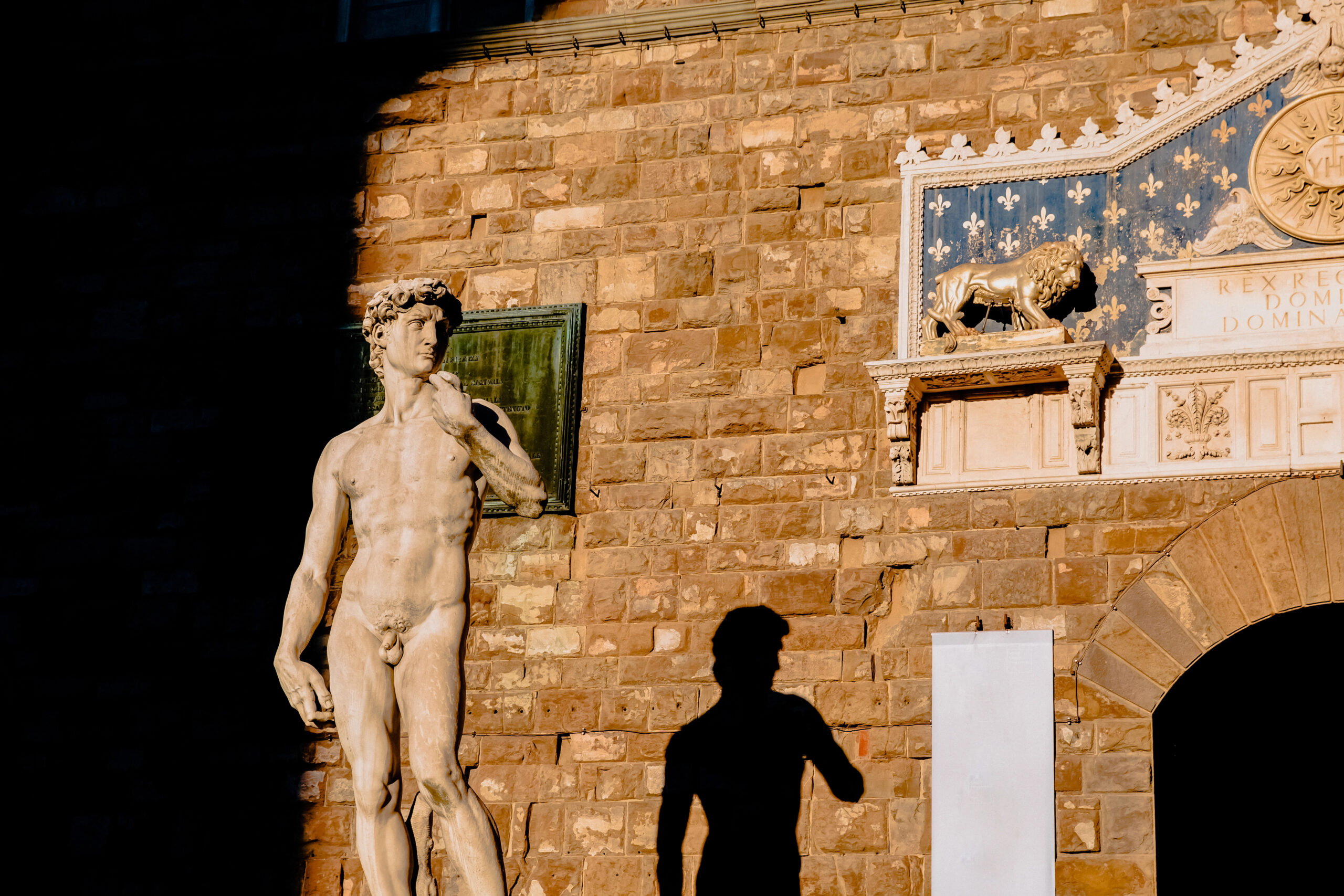
2. “I saw the angel in the marble and carved until I set him free.” Michelangelo
Michelangelo’s sculpture of David in Piazza della Signoria, Florence, Italy. Photo credit: Deposit Photos
3. “The sculptor carves because he must. He needs the concrete form of stone and wood for the expression of his idea and experience, and when the idea forms the material is found at once.” Barbara Hepworth
4. “Sculpture is the art of the intelligence.” Pablo Picasso
5. “Where did I learn to understand sculpture? In the woods by looking at the trees, along roads by observing the formation of clouds, in the studio by studying the model, everywhere except in the schools.” Auguste Rodin
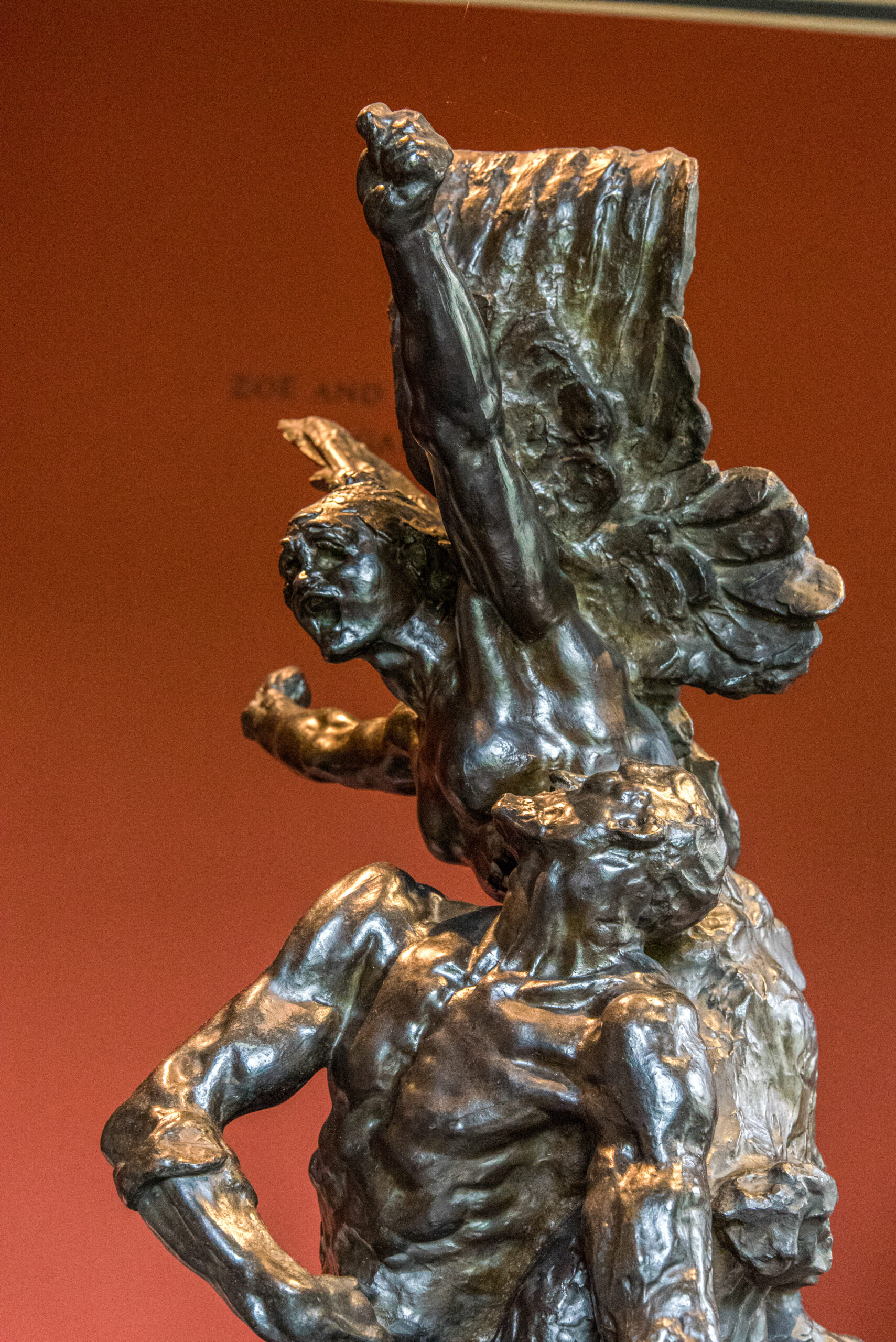
A Rodin sculpture showing an angel and a man, made from bronze. Photo credit: Deposit Photos
6. “When you slow down enough to sculpt, you discover all kinds of things you never noticed before.” Karen Jobe