Over the past few years, natural clay masks have become a huge part of the beauty world. From magazine covers to your favorite social media stars, everyone seems to be talking about the benefits of clay for both hair and skin. But what exactly makes these products so special? And do they work as a component of a customized beauty routine? Let’s find out! Here are seven ways clay masks are changing the beauty industry, and how you can add them to your skincare and haircare!
Gentle Skin Detox at Home
Clay masks are famous for their power to pull out dirt and oil from your skin. They can do this because natural clays, such as bentonite clay, are made up of tiny, fine particles with a negative electrical charge. When you spread a clay mask over your skin, these particles act like magnets, attracting and holding onto positively charged particles on your skin such as extra oil, dirt, and even some toxins. As the mask dries, it tightens slightly, helping to draw out anything that may be lingering deep in your pores. That’s why, after you rinse off the dried clay, your skin feels extra clean, soft, and refreshed—almost like you’ve just had a deep professional facial.
Another major reason they’re trending is that anyone can use them at home—even if you’re busy or new to skincare. You simply smooth on a layer, wait for it to dry, and rinse. Your face will feel clean and soft without going to a spa!
Natural Solution for Oily Skin
If you often struggle with oily or shiny skin, clay masks are a must-try. Clays like kaolin and bentonite soak up extra oil without making your face feel dry or tight. This leaves you with a balanced, fresh look that lasts all day, no matter the season or your lifestyle. Plus, because the mask only takes a few minutes, it fits easily into any routine—even before school or work!
Clay Masks for Your Hair
Clay masks aren’t just for your face. Recently, more people are using them to clean and care for their hair and scalp. Natural clays like rhassoul and bentonite can help remove product build-up and oils, leaving your hair light, soft, and clean.
Of course, when choosing natural products for your haircare routine, it is critical to find a brand you can trust! For instance, quality brands like St.Meto focus on clay-based, natural hair treatments that combine years of experience, classic ways to care for your hair, and modern technologies. Ultimately, if you have been looking for a more natural way to better care for your hair without harmful chemicals, adding a clay mask to your hair day can be an option to try!
Eco-Friendly and Safe for the Planet
People are becoming all the more aware of how their choices impact the environment. Products that are heavily packaged in plastic or contain certain chemicals can negatively impact both your health and the planet.
Here’s where clay masks score big points because they’re usually made from simple, natural ingredients found in the earth. There are fewer harsh chemicals, and many brands use packaging that’s easy to recycle. This helps you look great and feel good about your daily skincare habits!
Mixing and Matching for Custom Results
One amazing aspect of natural clay is that you can find different types for different needs. After all, each person’s skin and hair care needs are different, and so should be your beauty routine.
Clays can play a major role in helping you design a personalized care and beauty plan. Some clays are great for calming red, sensitive skin. Others work better on oily zones or as spot treatments for pimples. This lets you target several skin or hair problems at once with one easy routine.
Natural Beauty for Everyone
Natural clay masks aren’t just another beauty fad—they’re part of a bigger move toward cleaner, more eco-friendly routines for both hair and skin. By choosing the right mask and supporting eco-friendly, small-batch brands like St.Meto, you can keep up with today’s trends while keeping your routine kind to your body and the planet. Try adding a clay mask to your week and see how fresh, calm, and confident you feel—no filter needed!
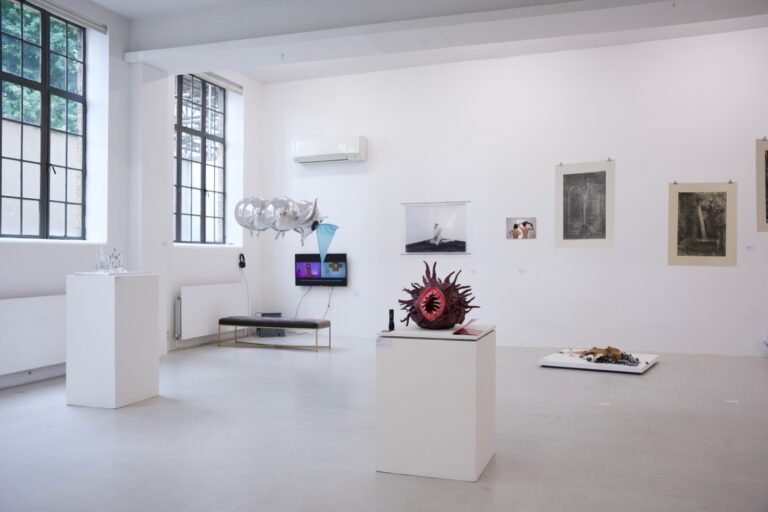
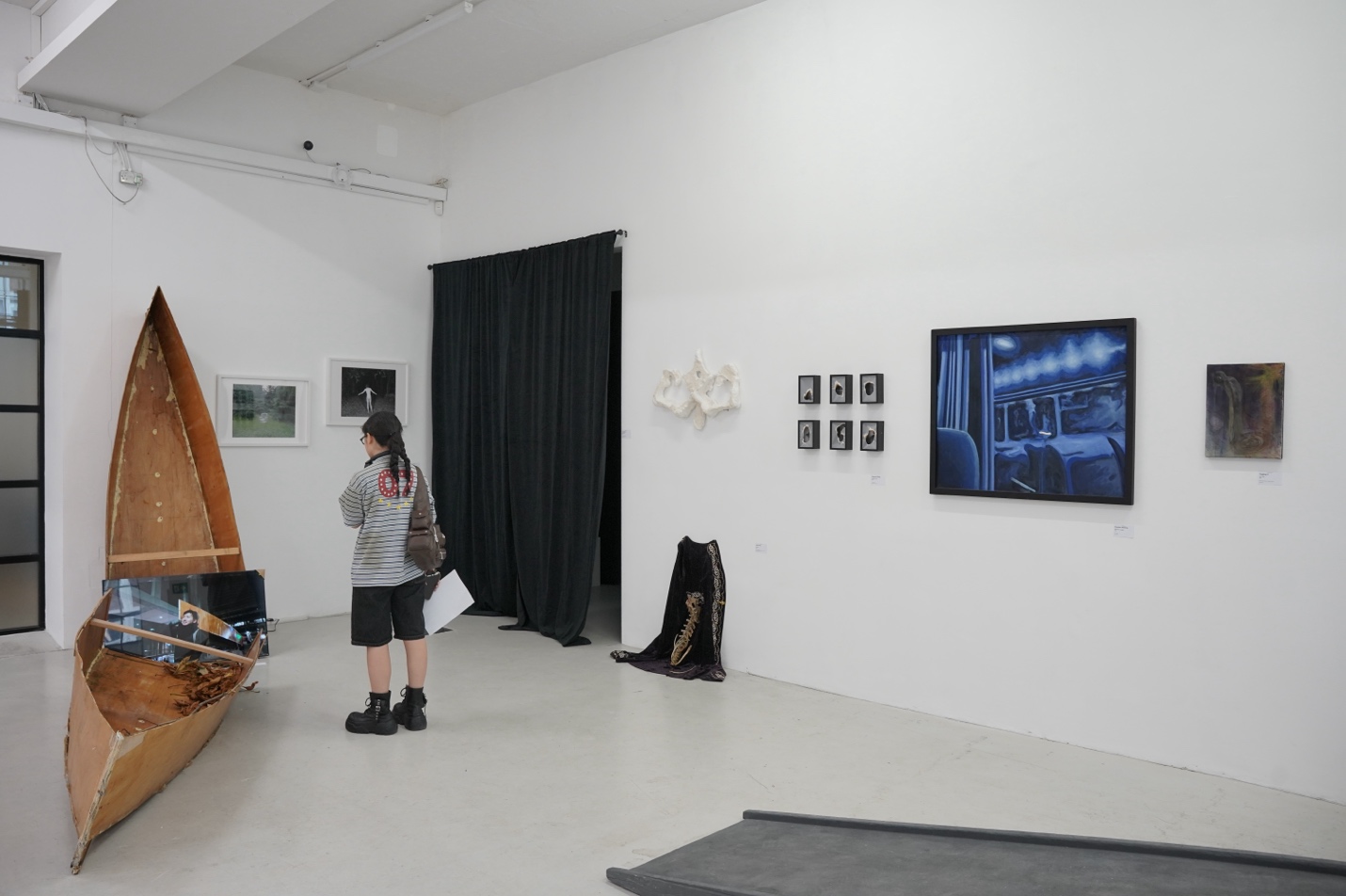
Windows Granted, curated by Zhiwu Zhu and Yurui Shi, explores the dynamics of seeing and being seen. The exhibition positions each artwork as a “window,” inviting viewers to confront their own visibility within a shared system of perception. It asks a central question: when we look, are we truly observing, or are we also being observed?
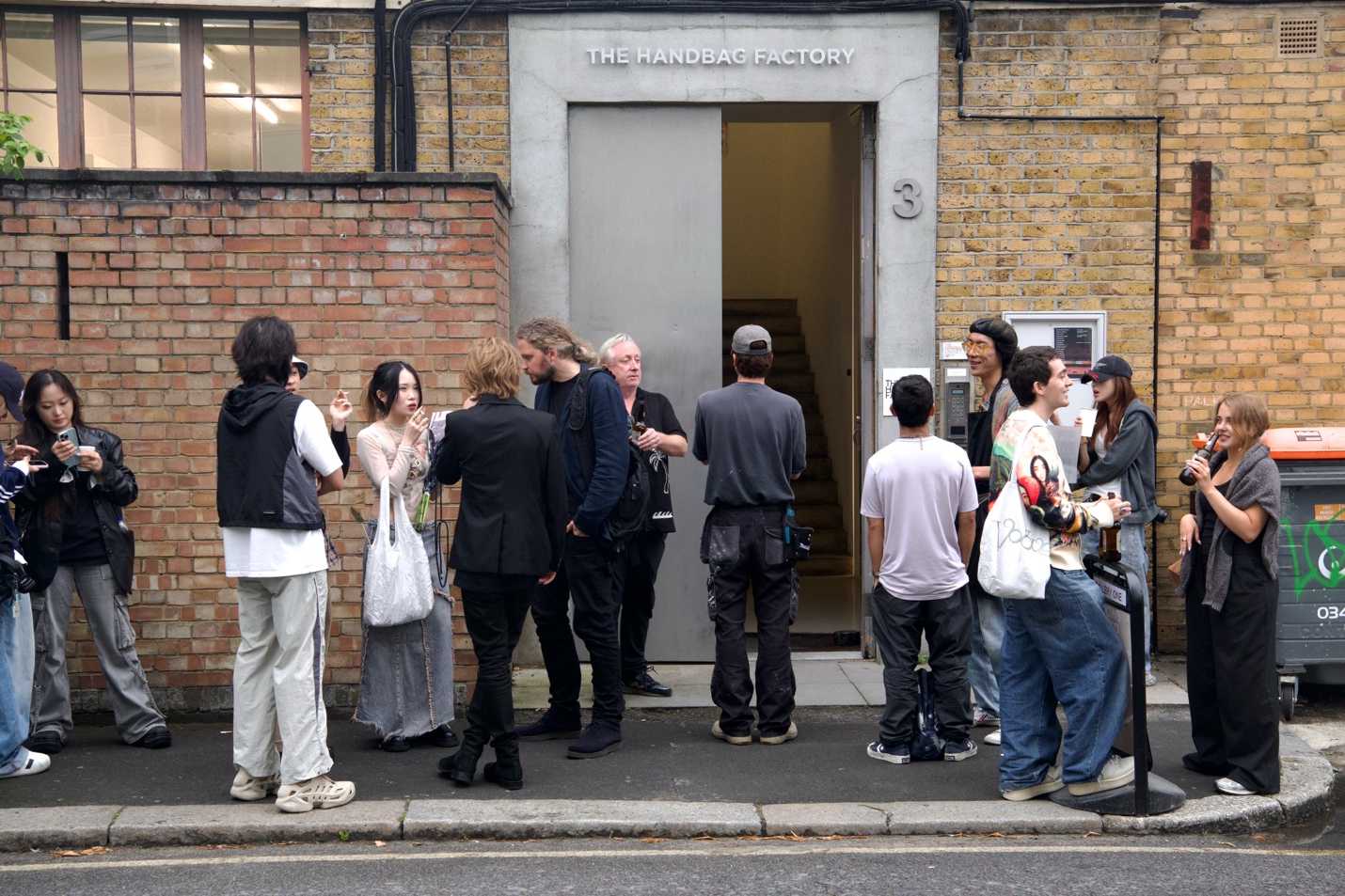
Hosted at The Handbag Factory from June 24 to 28, 2025, the exhibition transforms the former factory at 3 Loughborough Street into a spatial experiment in visual awareness. The site itself—its high windows, exposed brick walls, and polished concrete floors—retains the memory of industrial labor. Rather than filling this architecture with static displays, the curators embraced its raw character, designing a fluid spatial journey where artworks interact without rigid separation. Daylight through the skylights shifts across the floor, and with it, the works themselves seem to change, creating a living choreography of space, light, and presence.
Courtesy of The Handbag Factory. Photography: Zhaotong Du
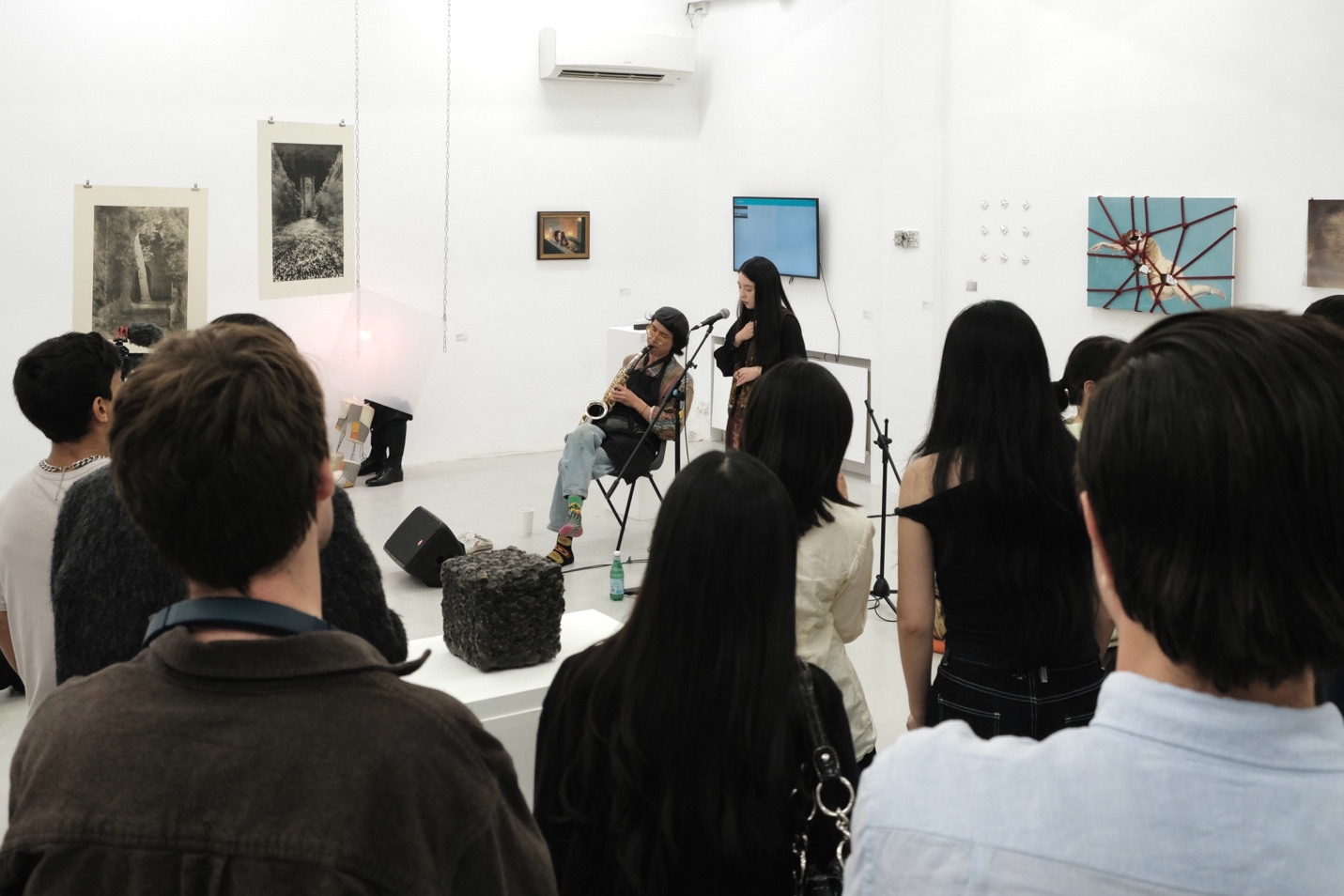
The exhibition brought together 27 artists from six cultural backgrounds, presenting paintings, sculptures, installations, video, and performance. Delicate ink works and textured oil paintings unfold as fragments of memory or dream, while glass and wood structures expose fragile interdependencies, catching light and casting fleeting shadows. Digital interventions—mirrored surfaces, 3D-rendered forms, and symbolic fragments—blur the line between human and virtual, inviting slow, attentive movement. Video works spill across walls and floors, reframing the architecture as an immersive lens. On the opening night, subtle performances threaded through the space, turning the audience into active participants within the exhibition’s system of visibility.
Courtesy of the artists and The Handbag Factory. Photography: Monica Jiang
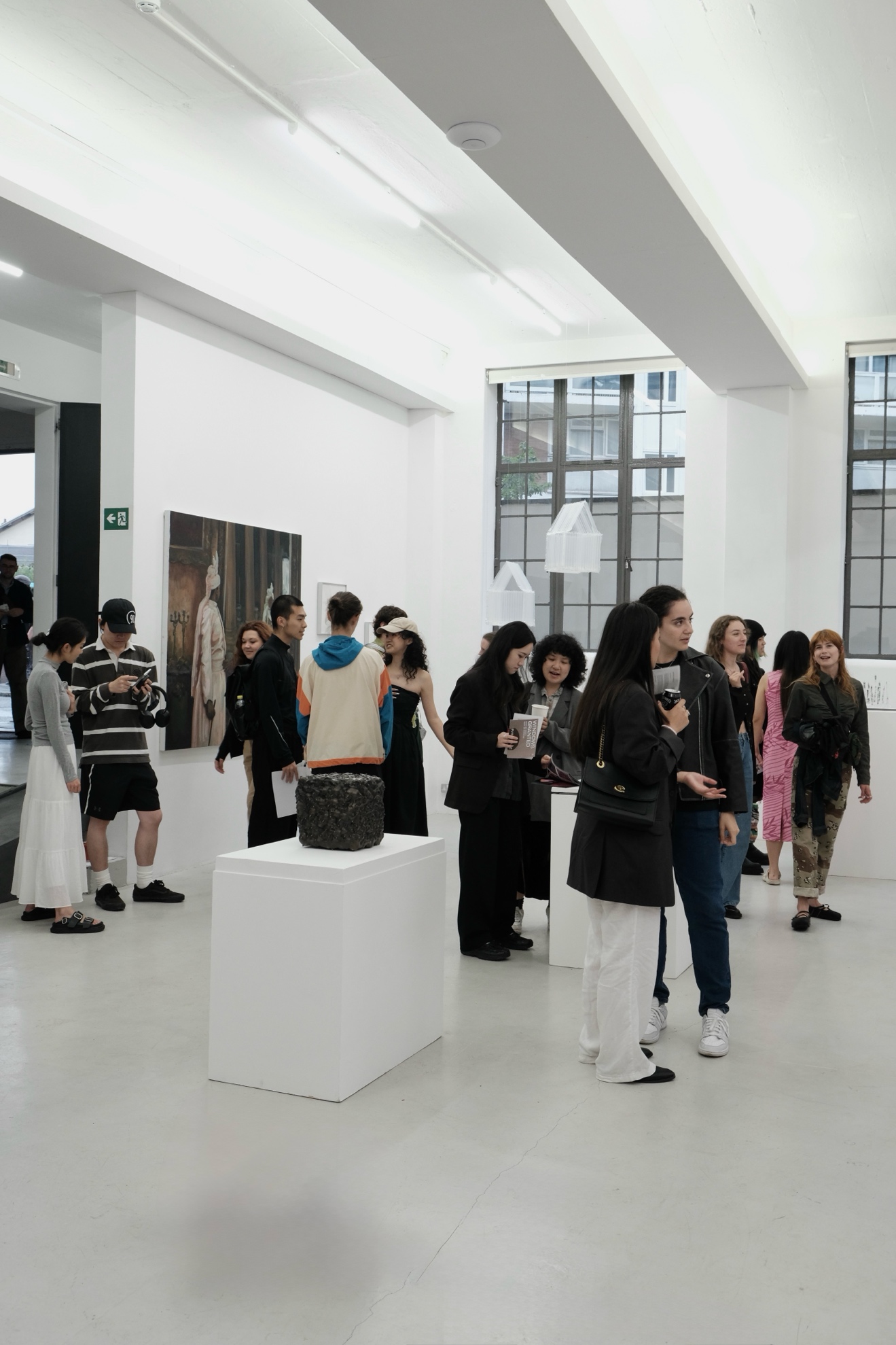
Rather than telling viewers what to see, Windows Granted immerses them in the mechanics of perception. Visitors realize that every step, pause, and glance is part of the work. In turn, they are subtly observed—through reflective surfaces, shadow play, and the awareness of others moving in the same space. Here, presence itself becomes material.
Courtesy of the artists and The Handbag Factory. Photography: Monica Jiang
This approach lightly touches on Michel Foucault’s reflections on visibility and the panopticon, without overwhelming the experience with theory. Observation and self-observation are in constant negotiation, allowing viewers to sense how perception is shaped by both personal attention and external frameworks.
Courtesy of the artists and The Handbag Factory, Photography: Zhiwu Zhu
By the end of the journey, Windows Granted offers no singular conclusion. Instead, it leaves a resonant awareness: art is not a static object, but a living system of relations between people, materials, and space. The exhibition opens a psychological window, where the act of looking becomes an act of reflection.
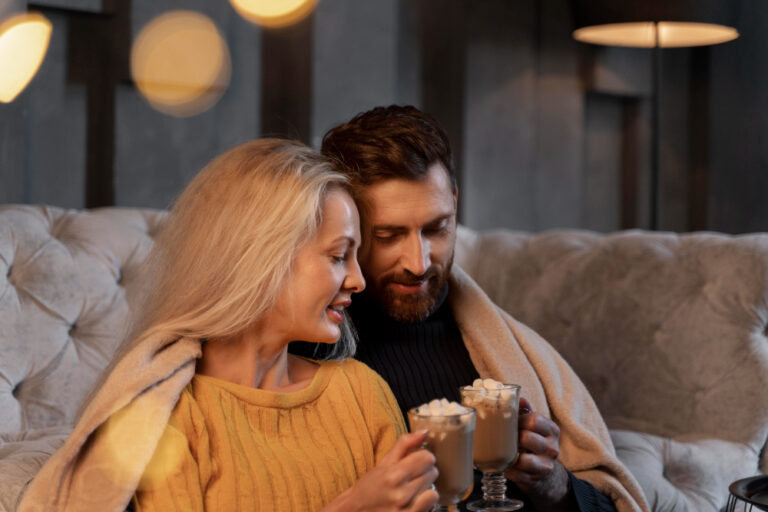
A couple sits in a quiet kitchen, morning light spilling across the table. There’s no need for words. The way one hand finds another, the way a glance lingers, these are the silent blueprints of intimacy. It isn’t always about grand gestures or declarations. Sometimes, it’s the comfort of shared silence, the ease of moving through a room together, the sense that, even after a day spent in the world, where you might chat with strangers, brush past unfamiliar faces, get lost in the noise — you return to a space that feels unmistakably yours. That gentle return, after everything outside, is where intimacy quietly grows
Layers and Shifts: How Intimacy Evolves
Intimacy in long-term partnerships is never static. It bends, stretches, sometimes frays, then knits itself together in new patterns. Early days might be marked by urgency, by the thrill of discovery. Later, the texture changes, less about novelty, more about depth. There are evenings when laughter fills the air, and others when silence settles in, heavy and honest.
A list of what intimacy can look like, day to day:
A hand on the back as you pass in the hallway
The shared ritual of morning coffee
The unspoken agreement to let a difficult topic rest
A text message sent just to say “thinking of you”
The willingness to listen, even when tired
The courage to reveal a fear, a hope, a regret
The comfort of a familiar scent on a pillow
The trust to be vulnerable, again and again
Obstacles and Openings: When Intimacy Falters
No partnership is immune to distance. Sometimes, routine dulls the edges. Sometimes, life’s demands — work, children, illness pull partners apart. The absence of touch, the lack of eye contact, the feeling of being alone together: these are warning signs, not verdicts.
In these moments, reaching for connection can feel awkward, even risky. Yet, it’s often the smallest gesture — a question asked, a hand extended that begins to bridge the gap. For some, exploring new ways to communicate, like trans video chat, becomes a gentle experiment in rediscovering each other. The medium matters less than the intention: to see, to hear, to be present.
Rituals and Small Acts: The Daily Weaving of Closeness
Intimacy is built in the ordinary. The way two people create rituals — morning coffee, evening walks, a shared playlist for long drives becomes a private language. These small acts, repeated and adapted over years, form a thread that holds partners together when words fall short. Even a simple gesture, like leaving a note on the fridge or remembering a favorite song, can become a quiet anchor. In these moments, the everyday transforms into something quietly sacred, reminding both partners that closeness is not a given, but a living, breathing practice.
Final Thoughts
Intimacy is not a destination. It’s a practice, a series of choices made every day. Sometimes it’s easy, sometimes it’s work. It asks for attention, for patience, for the willingness to be seen and to see.
Long-term partnerships thrive not on perfection, but on the ongoing effort to stay close, to return to each other, to build trust in small, daily ways. In the end, intimacy is less about what is said or done, and more about the feeling of being truly known and choosing, again and again, to know and be known.
BetWhale Sportsbook has revolutionized online esports wagering, especially for fans of Counter-Strike. Whether you’re new or seasoned, the platform offers smooth navigation, competitive odds, and a range of betting options tailored to CS events.
Why Counter-Strike Betting Matters on BetWhale
Counter-Strike remains one of the most popular esports titles worldwide. BetWhale Sportsbook recognizes this and provides a specialized environment for fans who love the thrill of tactical team play and intense firefights.
The action is nonstop. Events like Majors, ESL, and BLAST Premier are covered with real-time odds, live updates, and fast payouts. You can bet pre-match or during live matches. Each click on BetWhale Sportsbook brings new opportunities.
Available Betting Markets for CS Events
Betting on CS:GO or CS2 isn’t just about picking a winner. BetWhale Sportsbook offers a diverse range of markets to explore.
Match Winner – Choose the team you think will win.
Map Betting – Predict the outcome of individual maps.
Over/Under Rounds – Bet on total rounds played.
Correct Score – Predict exact map scores.
Handicap Betting – Great for matches with a clear favorite.
How to Start Betting on BetWhale Sportsbook
Sign up on the official BetWhale Sportsbook site.
Verify your account for secure access.
Deposit using your preferred payment method.
Navigate to the esports Counter-Strike section.
Choose your match, pick a market, and place your bet.
Live Betting Features on CS Matches
Live betting adds intensity to every round. BetWhale Sportsbook provides real-time odds that shift with every bomb plant, defuse, or clutch play.
Follow the momentum of your favorite team and make smart wagers during the match. The in-play console is intuitive, fast, and mobile-friendly.
Security and Fair Play for Esports Fans
Your safety is a top priority. BetWhale Sportsbook uses encrypted transactions, secure logins, and identity verification. Bets are fair, payouts are accurate, and support is available 24/7.
For esports, this means consistent access to verified matches and protected odds. Whether it’s a Tier 1 tournament or an up-and-coming qualifier, you’re betting in a secure zone.
Odds Comparison for Counter-Strike Matches
Here’s a text-based example of how odds stack up across matches. All odds listed are decimal format.
Match | BetWhale | Average Market
———————–|————-|—————-
FaZe vs Vitality | 1.90 / 1.95 | 1.85 / 1.90
G2 vs Natus Vincere | 2.00 / 1.80 | 1.95 / 1.75
Cloud9 vs Astralis | 1.70 / 2.10 | 1.65 / 2.05
As seen, BetWhale Sportsbook often gives slightly better odds than market averages, especially for underdog outcomes.
Tips for Better CS Betting Outcomes
To get the most from esports Counter-Strike betting, use a strategic approach.
Research team form and lineup changes.
Track past performances on specific maps.
Watch games live before placing in-play bets.
Set a bankroll and stick to it.
Smart betting starts with insight and discipline. BetWhale Sportsbook offers tools, stats, and analysis to support your decisions.
Mobile Betting and Ease of Access
With BetWhale Sportsbook, you can enjoy CS betting on any device. The mobile platform works seamlessly on phones and tablets, giving you access to live odds and results wherever you are.
No lag, no clutter—just direct access to esports Counter-Strike events and markets anytime you want.
Why Choose BetWhale for Counter-Strike Betting
Here’s a summary of what makes BetWhale Sportsbook stand out in the esports betting scene:
Consistently strong odds across CS events.
Wide market coverage for each tournament.
Fast, secure payouts and deposits.
User-friendly interface for live and pre-match betting.
24/7 support with knowledgeable staff.
Final Thoughts
BetWhale Sportsbook delivers a complete esports Counter-Strike betting experience. It’s safe, smart, and full of opportunities. Whether you bet occasionally or follow every CS match, this platform meets your needs with precision and speed.
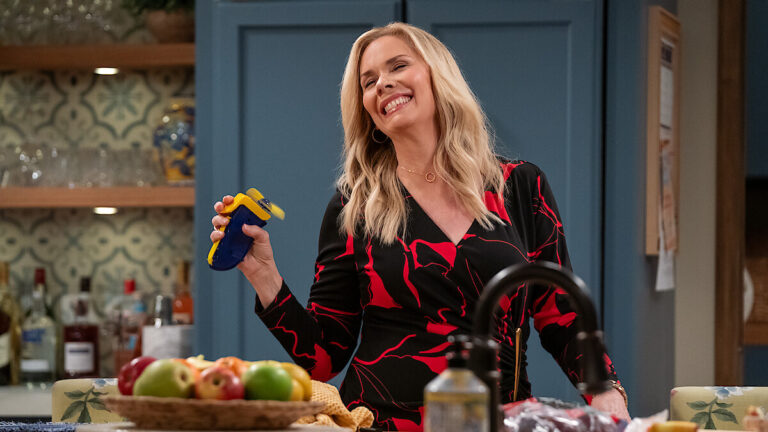
We need more heartwarming sitcoms to inhale in these trying times. Judging by the popularity of the new Netflix series Leanne, that seems to be the consensus.
The sweet comedy, which premiered on July 31, is currently at number 7 on the streamer’s global Top 10, with 2.7 million views this week. At 16 episodes, it makes for a pleasant and satisfying watch. Whether fans are getting more, however, it remains to be seen.
Leanne Season 2 Release Date
At the time of writing, Netflix hasn’t renewed Leanne for a second season. That said, there’s still time. Audiences are connecting with the sitcom, and good viewership numbers could mean a renewal is coming somewhere down the line.
As long as that happens, we can expect Leanne season 2 in 2026.
Leanne Cast
Leanne Morgan as Leanne
Kristen Johnston as Carol
Celia Weston as Mama Margaret
Blake Clark as Daddy John
Ryan Stiles as Bill
Graham Rogers as Tyler
Hannah Pilkes as Josie
What Could Happen in Leanne Season 2?
As the title suggests, the show revolves around the titular character, Leanne. A woman in her late 50s, she finds her life turned upside down when her long-time husband Bill leaves her for another woman.
Forced to navigate single life for the first time in decades, Leanne relies on her family for support. The first season follows her as she attempts to rebuild her sense of self with humour, heart, and Southern charm to spare.
The multi-camera sitcom doesn’t reinvent the wheel, but benefits from strong performances. It’s also the type of show that is hard to stop watching, pleasant enough to keep you company after a long day.
The finale sees Leanne embrace her new life and achieve emotional closure with Bill. While that makes for a nice ending, we certainly wouldn’t mind reuniting with the characters in the future. A potential Leanne season 2 could follow the protagonist as she navigates her new romantic relationship and keeps caring for her extended family.
“Yes, I hope it goes a second season,” star Leanne Morgan told TV Insider. Fingers crossed she gets her wish.
Are There Other Shows Like Leanne?
If you love Leanne, you probably enjoy a good old-fashioned sitcom. We recommend checking out Tires, Running Point, A Man on the Inside, The Four Seasons, Grace & Frankie, One Day at a Time, and The Ranch.
The show was co-created by Chuck Lorre, so you might be into his other series as well. The list includes Two and a Half Men, Mom, The Big Bang Theory, Dharma & Greg, and The Kominsky Method.
Sophie Payten keeps an endless note on her phone where she jots down lines or words as they come to her. During the eighteen months that she couldn’t bear to write songs, while working as doctor through the pandemic (having just quit to focus on music), those ideas were reasonably scattered. But when she sat in Phoenix Central Park in an early attempt to start piecing together Like Plasticine, it was clear she had absorbed enough accumulating emotion – grief felt and observed, love gained and lost – to mould it into shape. Like both her writing and recording process, the songs on the album aren’t as linear as 2020’s Our Two Skin, but they are revelatory in its softness and malleability, asserting that we are as open to transformation in life as we are in death. “All the grit to which you cannot cling/ What if everything feels suddenly like nothing?” Gordi sings on ‘Broke Scene’. There’s always something, she ultimately suggests, just never quite the same.
We caught up with Gordi to talk about Broken Social Scene, Play-Doh, Eternal Sunshine of the Spotless Mind, and other inspirations behind Like Plasticine, which is out today.
You Forgot It In People by Broken Social Scene
The obvious connection here is to ‘Broke Scene’, which is named so because you were listening to Broken Social Scene the morning you wrote it. How do you remember that day? And were you inspired by the record as a whole, too?
I was really inspired by the record, but I remember that morning. I was staying in my sister’s house in Sydney, and it was probably like a half-hour walk to the little space I was working in every day, so I kinda treated it like school. I’d get up early and pack my lunch and get my backpack, and I’d walk to the studio, and I’d pick something very specific to listen to each morning to sort of try to influence me that day. I’ve listened to that record many times, but something about it kind of jumped out at me. I think there were elements of that record’s rawness – parts of it felt really unvarnished, but then parts of it felt really intentionally played with and reprocessed. The contrast of those things – that’s where I get most excited about music.
I went into the studio that day and wrote ‘Broke Scene’, but that record itself, I listened to it ad nauseam for a couple of years, and I was listening to it a lot when I went into the studio with Brad Cook where I recorded a large bulk of the record. There’s something bombastic about it and you can hear the band in the room thrashing around in some of those songs. ‘Anthems for a Seventeen Year-Old Girl’ was a real touchstone for the song ‘Diluted’. Though it’s not clear in every song on the record, for what felt like the heart and soul of Like Plasticine, that is the record that I kept coming back to.
Eternal Sunshine of the Spotless Mind
I actually only saw it more recently – it came out in the early 2000s, but I had never seen it. This spooky thing happened with it where I had somehow discovered this theme from the movie, ‘Phone Call’ by Jon Brion – I’d never seen it, but I knew it was from that film. I just loved the way that thing sounded, and I had it on the playlist that I was listening to for this record with all the Broken Social Scene stuff. I got into the studio with Brad Cook, and he showed me this digital plug-in instrument, and it had all these old samples on it. I’d never seen it before, and he was like, he was like, “See if you can guess what this is from.” He started playing one of the samples, and I was like, “Oh my God, it’s the Eternal Sunshine thing”. He was like, “No one has ever gotten that no matter how many times I’ve shown them.” And I was like, “Well, that is on the reference playlist for the record that I am in here making.”
It was this really serendipitous moment, so that was the origin of it, but then I had gone and watched the film. The concept of wanting to erase painful memories is such a fascinating concept to have made this film about. For me, that was a real reference point for this record. A lot of it is about embracing those painful moments in your life because they fundamentally change you, whether you want them to or not. And the title of this record, Like Plasticine, is about all the things that transform us in our life. That’s broken hearts, and that’s experiencing death, and it’s experiencing loss whatever that might mean to you. The film obviously comes to that conclusion too, that we can’t ignore the painful parts of our life for ourselves because then we wouldn’t be our whole selves, and there is beauty in some of that agony. This film became a real touchstone for me.
Do you usually find yourself writing to remember, to kind of transform memories, or even to forget? Is that a tension that exists when you’re writing?
Yeah. That’s a very sad and beautiful way to put it – writing to forget. When I started writing music, I often felt like writing a song about whatever had happened was the final chapter, and then I could kind of let it go. Which was interesting before I was a recording and touring artist because those songs would just exist for me, but now I almost become desensitized to my own music. These songs that were about such a painful memory that I was writing about to try to process, the more I perform them, the more it feels like I’m kind of holding it in a snow globe and looking at it as if it belonged to someone else. In that instance, it’s not so much forgetting that it existed, but your body is kind of forgetting the feeling of the pain and you just being able to admire it.
Are you finding new ways to embrace the feeling of the songs the more you play them?
There are a few songs in my catalog that when I play them live, I do feel those original feelings sometimes. But most often, I’m connecting to the emotion of the song rather than the details of the story. It’s kind of like looking at old photographs of yourself. If you looked at a photograph of yourself as a teenager on a really shitty day that you had, you probably would feel all the things you felt that day as acutely, and that’s what performing old songs feels like to me.
A Fazioli grand piano
I know that piano in Berlin where you wrote ‘Radiator’ and ‘Volcanic’ was an important part of Our Two Skins. Was it a similar case with this piano?
Yeah. I basically wrote a lot of the record in two weeks, but the weeks were six months apart. The first week I did at this place called Phoenix Central Park in Sydney, which is a big, beautiful wood-paneled performance space, and then the second week was in this old restored church. But the two spaces are owned by the same woman in Sydney, and in both spaces, she has a Fazioli grand piano, these beautiful, expensive Italian grand pianos. I’m not sure if you’re a fan of Nick Cave, but he has these letters called The Red Had Files, and he has this whole series of letters where he’s writing to the Fazioli family asking if they would give him a piano, and they’re writing back to him saying, “We have never heard of you, sir. Please stop bothering us.” I came across the name from that, and then I saw them in those spaces.
It’s hard to describe just how beautiful they sound in the room. I wrote a lot of the songs on those pianos, and I recorded them sort of simultaneously, so most of the piano that you hear on the record is that piano. It was funny because I would try processing the piano normally with EQ and compression and all those things, and I just felt like everything I was doing to it was ruining it. It’s the kind of thing that just wants to be as untouched as possible. So I would get into those spaces each morning and, almost like a ritual, set my bag down and then wash my hands before I touch the piano and open the lid and just play for an hour. The piano is where my relationship with music began when I was three years old, so it was nice to have that as the center of the process.
Is there still something uniquely inspiring to you about the intimacy of sitting down at a piano?
Maybe by virtue of me not being good at the guitar, the piano feels to me more endless. The possibilities feel more endless because all the notes are out in front of you. But at the same time,there’s nowhere to hide because it’s just you and this thing. There’s nothing for the lyrics or the melody to lean on, so just creating a song with bare bones on the piano means it’s got to really stand up on its own two feet.
The Samplr app
It’s interesting that you juxtapose the piano and this app, because they’re obviously very different creative tools. What role did Samplr play in your process?
It was Ethan Gruska, who I produced ‘Broke Scene’ with, that showed me the app. It’s an amazing piece of software that exists on an iPad, and you can just record any sample, chop it up, reverse it, pitch it up and down, slow it down, speed it up, all those things. It exists over a number of songs on the record. I think sampling is an amazing tool because it’s so singular and idiosyncratic, especially if you’re recording your own voice or something in the room that doesn’t exist outside that space. It has a certain harshness, which I loved in juxtaposition to some beautiful piano. I would often do an entire pass on a song using the Samplr app and spend hours on it, and then I would take two-second snippets of that and insert it in the song. Using it sparingly was the way to go, but I think it really kind of adds a whole interesting kind of texture – often I was looking for something for a song, and the answer was inevitably the Samplr app.
Do you feel like there was also a beginner’s mindset aspect to it?
For sure. I’m a big believer in the beginner’s mindset in terms of creativity – if something is new and shiny, you’re more excited and more motivated to create something new. It’s often easier than sitting down at an instrument that you’ve known for years and trying to pull something new out of it.
Emotion by Carly Rae Jepsen
This obviously feels like a reference point for ‘Peripheral Lover’. Were you listening to that record in the same way that you were Broken Social Scene?
Yeah, I was listening to that Carly Rae Jepsen record to give me courage a lot of the time. There are a few moments on this record of mine where it’s much more pop-leaning than I have ever been, and I grew up in a world where pop music was so often a dirty word. I think in the early parts of my career, we were all trying as hard as we could to get as far away from the pop title that comes and is so often given to particularly female artists, whether you’ve earned it or not. But I think there’s been a real reimagining of what pop music is in the past five years, and Emotion is a really amazing example of how pop music can be: simple in its execution, but still fascinating and really cool. It doesn’t have to kinda be the lowest common denominator type stuff. The song ‘Gimmie Love’, I listened to it nonstop on the way to the studio. For songs like ‘Peripheral Lover’ and to a lesser extent, ‘Alien Cowboy, it just inspired me to get out of my own way and not try to make these songs that wanted to be pop songs into something that they didn’t want to be.
There are different emotions that are expressed on that record through the language of a euphoric pop song. I’m curious, for you, how the euphoria you get out of writing a pop song compares to the catharsis of something like a piano ballad.
It’s mostly reflective of the full spectrum of music that I like and enjoy and listen to. I get different types of catharsis – I’m thinking of watching Bon Iver play ‘715 – CR∑∑KS’ at Primavera once and just crying my eyes out in the audience and feeling insane levels of emotion. And then I’m thinking about being with my friends, watching OutKast play ‘Hey Ya’. Those two experiences, while completely at opposite ends of the spectrum, were just as meaningful to me. There’s something very liberating about making euphoric pop music for sure, and then having it blaring through the speakers, and it makes me feel lighter in the same way making a heart-wrenching ballad makes me feel lighter. At the same time, they’re very different feelings, but two feelings that I can hold space for.
Play-Doh
There is the whole metaphor that the album revolves around in its title, but is there any nostalgia or literal connotations attached to it as well?
It’s a relatively morbid story. I was finishing my medical degree, and I was on a geriatrics term, which is elderly people in the hospital. I was studying for the exam of certifying death. When someone passes away, it’s usually the job of the junior doctor to go in and declare that the person has actually passed away. So you walk into the room and you see if this person responds to your voice; you listen with his stethoscope for absence of breath sounds and heartbeat, and then you do a few other things to complete the exam. I found it a really moving experience learning this exam. I had just lost my grandmother, and been with her when she had passed away, and I felt like death was everywhere. And while being moved by it, I was also, I think, dissociating quite a lot in trying to just mentally get through this period of time.
I was really taken with how people appear just after they have passed away, the changes that their skin undergoes. It almost looked to me like, literally, the life had gone out of someone and they had set in place almost a statue. In my disassociating, I was taken back to this memory of being a child and playing with Play-Doh at my mom’s kitchen table, thinking about how I would move it into all different shapes and press it through the little thing that turns it into spaghetti, and then push it back together again and make it into figurines or make it into buildings and stretch it out and squash it down. Then I would leave it in whatever shape I did at the end of the day, and I’d go to sleep that night. I’d come out the next morning, and it would have this waxy layer on top of it. It didn’t look like it did the day before. It almost looked like it was set in place, because I had left it out open to the elements.
I was thinking so much about that memory when I was studying for this exam, and I wrote a note on my phone in 2018 that said, “Like plasticine.” It was before I’d even started writing this record, three years before. I kept coming back to that and thinking about, if we are like plasticine in death, if we have this structure that sets in place, how are we like plasticine in life? Plasticine is not a breakable substance. You can put it under all sorts of pressure and forces, and it can change into a million different shapes. But something about its substance remains the same. Going into the pandemic years, to me, it was a concept about resilience. We can be locked in our houses. We can be in this global crisis. On a personal level, we can deal with heartache and grief and loss. Or on the other end of the spectrum, we can deal with the absolute highs of falling in love. As human beings, we’re just going about our lives, going through those things every day, and still forging ahead. In the broad context of the pandemic, I found that really inspiring, and that concept stuck with me right through the writing of this record.
When you were thinking about that memory that you shared, were you also thinking about the person that you were back then?
I was. Our family friend used to look after me a lot of the time before I started school – I’m the youngest of four, and both my parents were working, so I would often go over to our neighbor’s house, and that was often where I was playing with Play-Doh. I had such a vivid memory of being that kid at her kitchen table, and it really was a time that I hadn’t thought about for a long time. It was funny to try to connect to that little person – obviously, that that was me, but so much life has happened and so much has changed since then, so that person feels like another life.
I’m curious if this concept extended to the way you saw the album as well, as this malleable thing.
There was a big part of making this record that felt like creating a sculpture. After working in various studios, I took most of those files with me back home to Melbourne, once I’d sort of finished that phase of the process. And I basically spent six months in a room in my house in Melbourne by myself, just sculpting the edges of all of these songs. Sometimes it was more dramatic than that; the song ‘Consolation Prize’, we’d recorded all the parts, and then I completely rewrote the chorus in those last six months. I had time, and I gave myself time to really finesse these songs, as opposed to Our Two Skins, where we had four weeks, and that was it. Whatever we had at the end of the four weeks, that was the record. So this felt like a beautiful experience, to be able to sit with these songs for a while. If something wasn’t coming that day, I’d put it away and come back later. This record definitely felt more malleable than things I have worked on in the past
The geriatrics hospital ward
You said in an earlier interview that you’d never been motivated before to bring your experiences from the hospital into your songwriting. Were you also daunted by it, or was it just that lack of motivation?
I was extremely daunted. I also felt like, in the early parts of my music career, I was still in medical school, so I hadn’t really had a lot of real-world hospital experiences where I was working. And I didn’t particularly want to talk in the press about the fact that I was a medical student. I felt self-conscious about it or something, I think. But for this record, I did feel daunted because I had really existential questions about songwriting and music, and we had so much dialogue, in those years, about what is essential to life. In the context of lockdown, that was: You can’t go to live music because that’s not essential. You can’t go to work in your studio because that’s not essential. If you’re a doctor or a nurse or a health care practitioner, yeah, you can go to the hospital because that is essential.
I had that conversation all around me, which was making me think, what is the purpose of music and songwriting if it’s not essential to our survival? I went down that road and concluded that while it may not be essential to survival, it is essential to living. In tandem to having a virus as a pandemic, we also had a mental health crisis because people weren’t living their lives as they normally are able to. But I also found it daunting because I thought, who am I to write about this? This is something that has affected every single person on the planet, and some people a lot more than it affected me. So I felt unsure about how to take those experiences, or if I should, into my own writing. Obviously I didn’t want to take other people’s stories because it just didn’t feel right. But I thought that I would do what I usually do, which is write from my own voice, from my own experience. So rather than write songs about someone from the perspective of a patient that I had, I wrote it from my own perspective.
The thing that I found most challenging about the pandemic was the role that health care workers were expected to play. People are sick in hospitals; there’s nothing new about that. That’s why they exist. But the difference in the pandemic was because of lockdowns; people’s families and loved ones couldn’t come into the hospital because of infection control. So I had a couple of instances, one which does feature a bit on a couple of songs on the record, where I had to go in and tell this man that the worst news you could imagine hearing. And instead of being able to deliver that news and then leave him with his family to comfort him, his family couldn’t come in. So I sat with him for hours, processing the news that he probably had weeks to live, instead of going home to be with his family.
We spoke to his daughter on FaceTime, and I had to try to contain all my emotion because I didn’t feel it was my place to be emotional because it wasn’t my life. But it’s a pretty challenging thing to sit in an environment like that and be the intermediary and a vessel for all the emotion in the room. And at the end of that day, I went down to my car and just sat in my car and just couldn’t turn the key in the ignition. I felt so overwhelmed by the day and by what I had been a part of. Writing these songs, which I didn’t write for probably another year, it was a really important part in the process for me to let some of that stuff go.
It wasn’t until a year after that you wrote about it?
I really struggled to write any music for the whole of the pandemic, really, at least for the first eighteen months while we were in and out of lockdown. Every other week, I was getting on a tiny plane with a bunch of other doctors, and we were being flown to different parts of Australia to fill in emergency departments and places that staff were sent home from COVID. I was so tired. I barely had time to do anything, and I didn’t have the emotional bandwidth to do it. It wasn’t until about eighteen months into the pandemic when I booked that week in my calendar to go up to Sydney and try and play something for a week, and that was when all this music came out.
It’s interesting that some of the most emotional songs were written retrospectively. I was expecting you to say you wrote ‘PVC Divide’ in the car, when you couldn’t turn the ignition on.
Normally, I am much more then and there, trying to process what’s happened. But I think that was reflective of just how much I was storing my emotions outside myself, because I felt like I couldn’t let all of that out. I don’t think I would have gone back to work the next day.
You were storing them, though, as opposed to hiding or simply observing them.
I think that’s something that’s come with growing older for me. Ten years ago, I don’t think I could have been like, “I’m going to take this emotion that wants to completely destroy me and put it over here for twelve months, and then I’m going to come back to it.” I did a lot growing up during the pandemic when I was surrounded by people having such profound personal tragedy, and I sort of thought, “I’m not the main character here. I’ve just gotta play my role as best I can. And when I’ve got time to revisit how I’m feeling, I’ll do it.”
This interview has been edited and condensed for clarity and length.
What a week for fans of deadpan delivery, gorgeous costumes, and morbid vibes! After a torturous wait, the second season of Netflix hit Wednesday is finally streaming, with four episodes sure to get your blood pumping.
The show has started to trend even before it premiered, and the first season made a comeback in the streamer’s Top 10 charts. Season 2 will likely occupy the top spot very soon.
But what about season 3? Are there any whispers on the horizon? Here’s what we know so far.
Wednesday Season 3 Release Date
Not to worry, Wednesday has been renewed for additional episodes. While the entire Addams clan will be back, no information as to when is available at the time of writing.
Season 2 of the series was split into two parts. The first four episodes are now streaming, and Part 2 will arrive on September 3. Your 2025 semester at Nevermore isn’t over just yet.
Netflix announced that Wednesday season 3 is happening ahead of the season 2 premiere, noting that “bad things come in threes.” Fun!
However, fans will likely have to settle in for a longer-than-usual hiatus. Season 1 premiered in 2022, with the second dropping three years later, in 2025. At best, we estimate that the third outing won’t be here until 2027 at the earliest.
Wednesday Cast
Jenna Ortega as Wednesday Addams
Victor Dorobantu as Thing
Emma Myers as Enid Sinclair
Joy Sunday as Bianca Barclay
Catherine Zeta-Jones as Morticia Addams
Luis Guzmán as Gomez Addams
Isaac Ordonez as Pugsley Addams
Steve Buscemi as Barry Dort
What Could Happen in Wednesday Season 3?
Wednesday revolves around the titular character, Wednesday Addams, the brilliantly morbid daughter of the Addams family. She joins Nevermore, a peculiar academy for outcasts, vampires, werewolves, and other creatures.
Once there, Wednesday becomes entangled in a series of murders plaguing the local town. Soon, she finds herself at the centre of a supernatural mystery.
In season 2, the heroine returns to the Gothic halls of the school after spending her summer tracking a serial killer. However, her newfound celebrity status brings unwelcome complications. A new principal revives old traditions, a mysterious stalker lurks in the shadows, and she’s plagued dangerous psychic visions.
As to what might happen in Wednesday season 3, it’s a little soon to speculate. Season 2 Part 1 ends with a cliffhanger. The remaining four episodes, which arrive in September, might shed light on what the future might bring.
One thing’s for sure: the family’s rich history will continue to be explored in future installments. “We will be seeing more Addams Family members and learning more family secrets in Season 3!” co-creator and showrunner Alfred Gough said.
We’re rotting with anticipation.
Are There Other Shows Like Wednesday?
If you’re into Wednesday’s haunting mix of spooks and humour, there’s some similar content on Netflix you can explore as you wait for more episodes.
We recommend checking out Chilling Adventures of Sabrina, Locke & Key, Stranger Things, A Series of Unfortunate Events, and The Umbrella Academy.
Willing to venture outside of Netflix? Check out Penny Dreadful, The Magicians, Buffy the Vampire Slayer, What We Do in the Shadows, and Legacies.
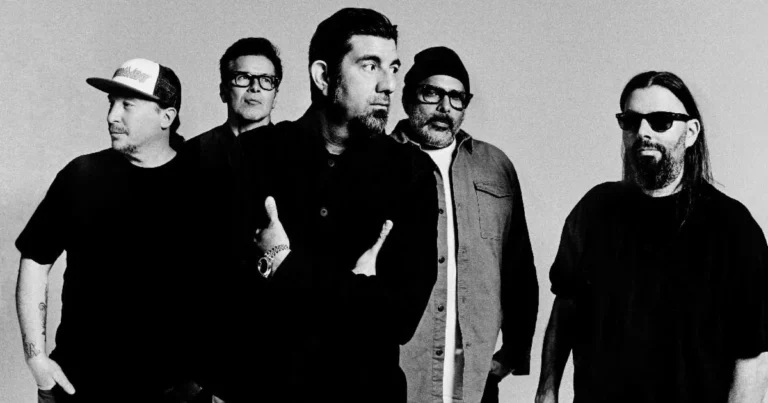
Deftones have shared an explosive new single, ‘milk of the madonna’. It’s the second single off the band’s 10th studio album, private music, which is slated for release on August 22. It follows ‘my mind is a mountain’. Take a listen below.
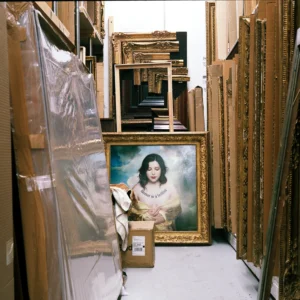
Yesterday, Dacus revealed that she has updated the (rather divisive) artwork for Forever Is a Feeling to honor her original idea for the cover, showing the Will St. John painting photographed in medium format by Jon Henry. Dacus is currently on tour, where she’ll be officiating weddings for concertgoers.
In this segment, we showcase the most notable albums out each week. Here are the albums out on August 8, 2025:
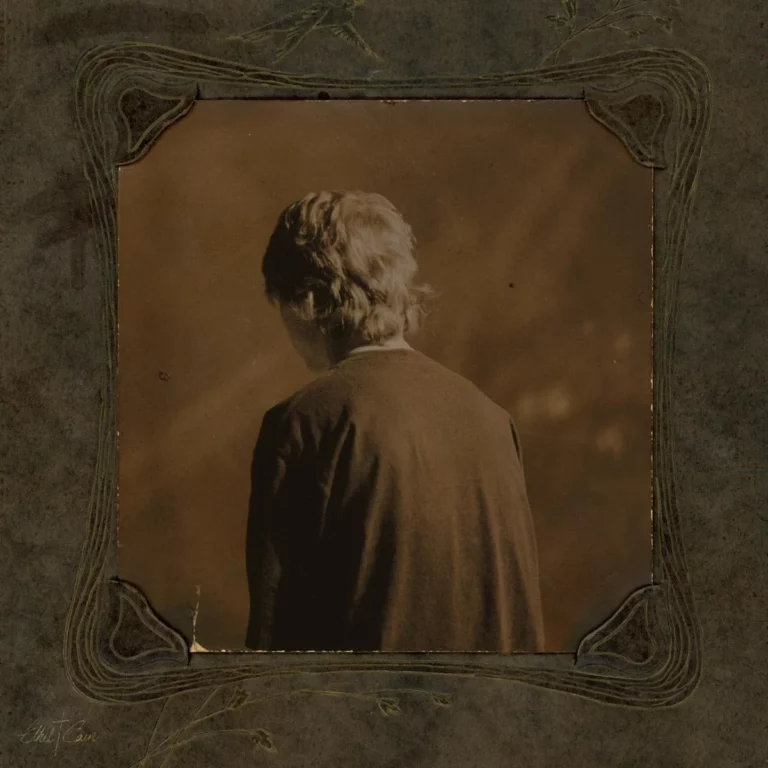
Ethel Cain, Willoughby Tucker, I’ll Always Love You
Ethel Cain‘s new album is billed as the prequel to her 2022 breakthrough Preacher’s Daughter, a debut album that served as the beginning of a trilogy following three generations of women. If Willoughby Tucker “closes the chapter” on Anhedönia’s alter ego, as she has claimed, it’s an unwaveringly tender and astounding portrait, caught between nostalgia and dreams of violence, tangled yet steadfast in its romantic beliefs. And while she has framed the ambient-leaning Perverts as a standalone project, it also acts as a musical bridge to the new album, which balances her atmospheric and narrative world-building. Cain can’t help but draw a line from love straight to death, but not without submerging herself in it. Read the full review.
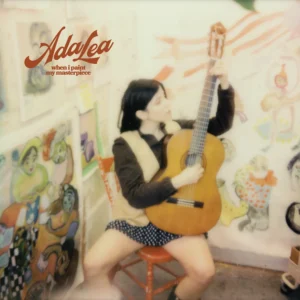
Ada Lea’s new album, when i paint my masterpiece, emerged from a period of burnout, during which the singer-songwriter took a break from music to focus on painting, poetry, and teaching. She found ways to practice her love of songwriting that weren’t reliant on music industry expectations, leading to a collection of unburdened, intimate, and free-associative songs, several of which are up there with her best. It was previewed by the singles ‘midnight magic’, ‘something in the wind’, and ‘baby blue frigidaire mini fridge’.
Amaarae is back with Black Star, a recklessly hedonistic and radiant follow-up to 2023’s Fountain Baby. On the early single ‘Girlie-Pop!’, the Ghanaian American artist sings about leaning genres into pop, a principle she applies to a variety of dance styles ranging from baile funk to Eurodance, ampiano to techno. The record boasts guest spots from PinkPantheress, Naomi Campbell, Charlie Wilson, Bree Runway, and Starkillers.
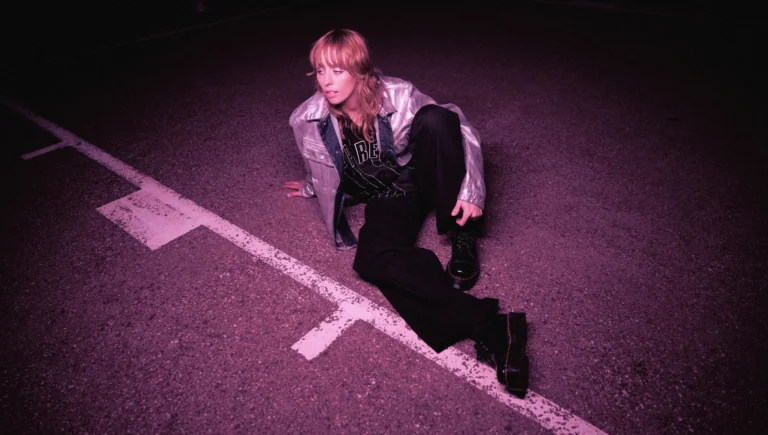
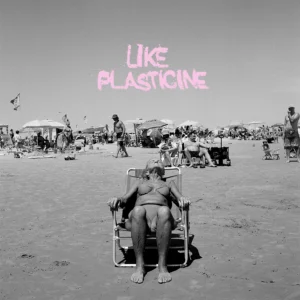
Gordi’s third album, Like Plasticine, has arrived. “Today, as I finally set this album free, I am reminded of its beginning,” Sophie Payten reflected in a press release. “Deep in the middle of the pandemic I began writing the songs that would make up Like Plasticine, wondering what the purpose of music was at all. I tried to stop thinking and just feel. When I look back on that time now, sitting in Phoenix Central Park surrounded by things I could make music with, I see ‘Like Plasticine’ arriving as though it was a fire hydrant erupting. Everything we try to contain comes out one way or another. So when you listen to this record, un-contain yourself, stop thinking, and just feel.”
Humour’s debut album is as fiercely heartfelt as it is surrealist, full of dreamlike hooks and tender revelations. “I don’t think the album needs or should be interpreted as being about Greece or learning the language or anything to do with that,” frontman Andreas Christodoulidis explained in our Artist Spotlight interview. “I liked the idea of learning Greek meaning exploring the past, exploring memories and nostalgia and fragments of memory and identity. For me, it’s not so much about the language particularly, but coming back to the past and the building blocks of yourself.”
While Magic of the Sale feels like a significant upgrade from Teethe’s self-titled debut, the band didn’t mess with their approach too much. They worked in separate rooms spread between Dallas and Austin, uploading demos and musical bits in a shared folder, before vocalist Boone Patrello edited it all together over four painstaking months. Co-vocalist Madeline Dowd, who painted the cover of their first album, also painted the new one’s cover art. As lushly atmospheric as it is melodic, the record features contributions from Hovvdy’s Charlie Martin, Xandy Chelmis of Wednesday/MJ Lenderman, Logan Hornyak of Melaina Kol, and Emily Elkin cello.
Danger in Fives, the third album by Wombo, is eerie, jagged, and entrancing. The Louisville band introduced more digital texture and drum machines this time around, aiming to “get away from a results mindset, where it’s about producing things for a certain expectation instead of doing it all for the joy of exploring,” per guitarist Cameron Lowe. They also explored different writing techniques, balancing wackiness with genuine emotion. Vocalist/bassist Sydney Chadwick added, “I don’t want to be in a band that’s confined to one form of writing. Where’s the fun and the creativity and the exploration in that? You have to push yourself and try something new.”
In writing the second For Those I Love album, Dublin producer and songwriter David Balfe ran the risk of re-traumatizing. As lyrically dense and heartrending as his award-winning debut, Carving the Stone focuses on working-class life, gathering observations and thoughts he had while walking around his home city. “I was just trying to work away on myself,” he said of the album’s title, which referenced a turn of phrase he often used when asked how the album was going. “There were the practicalities of the long recovery from the years that preceded the inspiration for the first album. I felt like I was just trying to
work away on myself while having an idea of what I was trying to uncover.”
The Black Keys, No Rain, No Flowers; No Joy, Bugland; Phil Elverum & Arrington de Dionyso, GIANT OPENING MOUTH ON THE GROUND; Machine Gun Kelly, Lost Americana; Anamanaguchi, Anyway; No Joy, Bugland; Gunna, The Last Wun; Roc Marciano & DJ Premier, The Coldest Profession; OSEES, Abomination Revealed at Last; J.I.D., God Does Like Ugly; Field Medic, Surrender Instead; Big Freedia, Pressing Onward; Sinsaenum, In Devastation; Mechatok, Wide Awake; blood pact scout, to live slowly, without fear of its consequences.




 Ethel Cain


 Ada Lea’s new album,
 Amaarae is back with
  Gordi’s third album,
 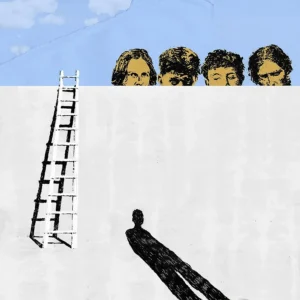 Humour’s debut album is as fiercely heartfelt as it is surrealist, full of dreamlike hooks and tender revelations. “I don’t think the album needs or should be interpreted as being about Greece or learning the language or anything to do with that,” frontman Andreas Christodoulidis explained in our
 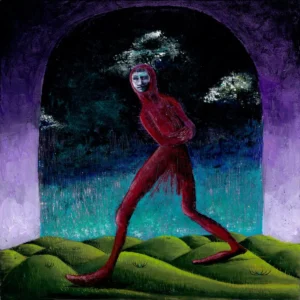 While
While 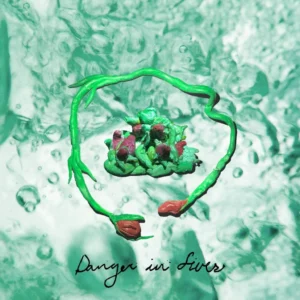
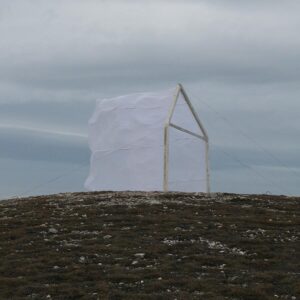 In writing the second For Those I Love album, Dublin producer and songwriter David Balfe ran the risk of re-traumatizing. As lyrically dense and heartrending as his award-winning debut,