Home Blog Page 554

This Week’s Best New Songs: Mount Eerie, MJ Lenderman, Georgia Gets By, and More

Throughout the week, we update our Best New Songs playlist with the new releases that caught our attention the most, be it a single leading up to the release of an album or a newly unveiled deep cut. And each Monday, we round up the best new songs released over the past week (the eligibility period begins on Monday and ends Sunday night) in this best new music segment.

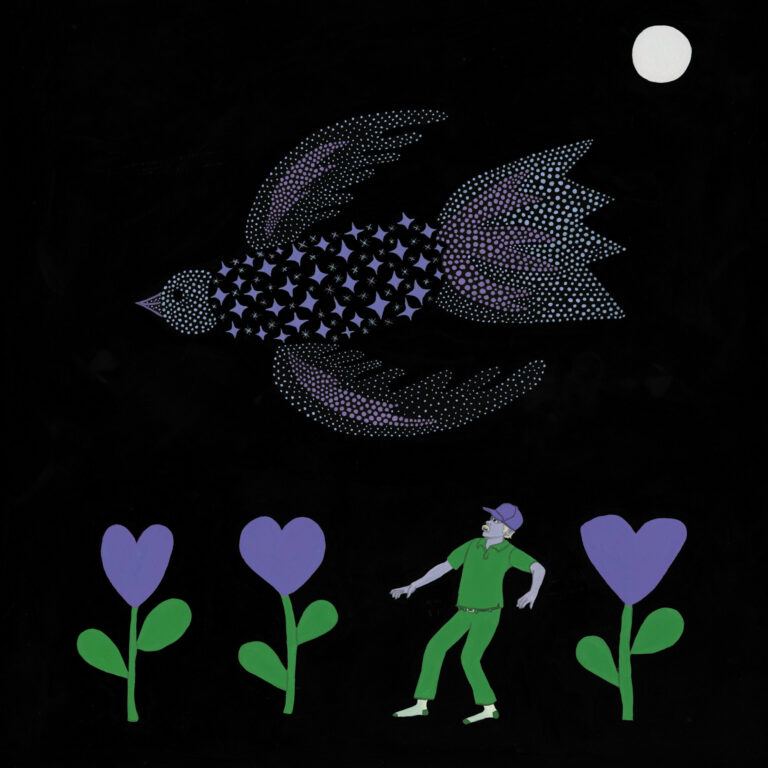
This week’s list includes ‘I Walk’, a haunted, beautifully swirling single off Phil Elverum’s upcoming Mount Eerie album Night Palace; MJ Lenderman’s ‘Wristwatch’, a glimmering highlight off his new album Manning Fireworks that serves as a study of male fragility (with “I got a houseboat docked at the Himbo Dome” in the running for lyric of the year); ‘Not This Time’, the intimate, aching new single from Georgia Gets By, the solo project of BROODS’ Georgia Nott; Jane Remover’s slinky, ecstatic new single ‘Magic U Want’; Grumpy’s glitchy yet cutting ‘Saltlick’, the New York-based project’s first single for Bayonet Records; Lunar Vacation’s latest single, the tenderly enchanting and expansive ‘Fantasy’; My Wonderful Boyfriend’s catchy, cathartic new song ‘My New Shirt’; and Ada Lea’s ‘come on, baby! be a good girl for the camera’, which playfully tackles the challenges of “making it” in the music industry.

Best New Songs: September 9, 2024

Song of the Week: Mount Eerie, ‘I Walk’

MJ Lenderman, ‘Wristwatch’

Georgia Gets By, ‘Not This Time’

Jane Remover, ‘Magic U Want’

Grumpy, ‘Saltlick’

Lunar Vacation, ‘Fantasy’

My Wonderful Boyfriend, ‘My New Shirt’

Ada Lea, ‘come on, baby! be a good girl for the camera’

Dark Winds Season 3: Cast, Release Date & Rumours

0

AMC’s Dark Winds has been getting praise from critics and fans alike ever since it first hit the screen in 2022. Viewers persistently gush over the show’s rich atmosphere and the fact that it depicts a world generally underrepresented on television.

Luckily for everyone involved, we haven’t seen the last of what the noir thriller has to offer.

Set in the ‘70s, Dark Winds follows Navajo Tribal Police officers as they investigate crimes and face their own personal demons. With a third season on the way, we’re hoping the show will finally jump from underrated to mainstream. Here’s everything you need to know in order to tune in.

Dark Winds Season 3 Release Date

Season 3 of Dark Winds is currently in production and set to debut on AMC and AMC+ in 2025. An official premiere date hasn’t been set at the time of writing. That said, season 1 premiered in June 2022, and season 2 in late July 2023. It’s safe to assume that season 3 will drop sometime during the summer.

Dark Winds Season 3 Cast

  • Zahn McClarnon as Joe Leaphorn
  • Kiowa Gordon as Jim Chee
  • Jessica Matten as Bernadette Manuelito
  • Deanna Allison as Emma Leaphorn
  • A Martinez as Sheriff Gordo Sena

In addition, AMC confirmed an impressive slate of guest stars for season 3, including Jenna Elfman, Bruce Greenwood, Raoul Max Trujillo Tonantzin Carmelo, Alex Meraz, Terry Serpico, Derek Hinkey, Phil Burke, and Christopher Heyerdahl.

What will happen in Dark Winds Season 3?

According to AMC, the third season of Dark Winds picks up six months after season 2. This time around, we follow Leaphorn and Chee as they look into the disappearance of two boys. At the same time, Manuelito tries to get used to her new life with the Border Patrol but gets enthralled in a conspiracy.

Is Dark Winds Season 3 Based on True Events?

The noir thriller is compelling enough to make viewers wonder whether it’s based on true events. However, that’s not the case. The series is inspired by a series of novels penned by Tony Hillerman. Still, the events depicted on screen are rooted in history, and many of the issues the characters face on the reservation are true to what happened in real life.

Additionally, series creator Graham Roland is dedicated to depicting the lives of the Navajo people as accurately as possible. Dark Winds has an entirely Native writer’s room and works with a language consultant and a cultural advisor.

Does Dark Winds Stay Loyal to the Novels?

While the storylines in the series are adapted from Tony Hillerman’s books, some storylines are blended together. The writers also make changes to the source material to better fit their TV characters and the stories they want to tell.

If you’re looking to compare and contrast yourself, the first season is mainly based on the novel Listening Woman, while the second tackles People of Darkness.

Emily in Paris Season 5: Cast, Release Date & Rumours

0

The second part of Emily in Paris season 4 hasn’t hit Netflix yet, but there’s already buzz about a potential season 5.

With creator Darren Star expressing his desire to continue the series, there’s a good chance the streaming service will make an announcement that will overjoy fans sooner, rather than later.

Given the type of shenanigans Emily and company tend to get themselves into, there’s little doubt the writers will run out of material anytime soon. After all, Emily has plenty of room to grow, both on the career and romantic fronts.

For now, the decision seems to be in Netflix’s hands.

Emily in Paris Season 5 Release Date

Since Emily in Paris hasn’t been officially renewed, there’s no premiere date for a potential season 5. Part 2 of Season 4 is scheduled to drop on Netflix on September 12, 2024.

While the first three seasons premiered about one year apart, there was a two-year gap between season 3 and season 4 of the series. We could see new episodes as soon as winter 2025, but it all depends on if and when the streaming service gives the green light.

That said, a role in Emily in Paris season 5 was auctioned off during the amfAR Gala at the Cannes Film Festival earlier this year. The role seems to have been offered by the show’s creator, not Netflix itself, but it at least means the people involved with the series are fairly optimistic about the rom-com’s renewal chances.

Emily in Paris Cast

  • Lily Collins as Emily Cooper
  • Philippine Leroy-Beaulieu as Sylvie
  • Ashley Park as Mindy Chen
  • Lucas Bravo as Gabriel
  • Samuel Arnold as Julien
  • Bruno Gouery as Luc
  • Camille Razat as Camille

What will happen in Emily in Paris Season 5?

Emily in Paris revolves around Emily Cooper, a young woman who moves from Chicago to Paris for a marketing job with a local agency. While she’s eager to expand her horizons, cultures clash as she settles into her new life.

We have no idea what might happen in a potential season 5 but we’re pretty sure the series will continue to follow Emily’s interesting career and romantic entanglements. The first part of season 4 saw Emily and Gabriel finally make things official, with Gabriel’s ex Camille still very much in the picture.

We can’t wait to see whether their burgeoning romance lasts – especially since Emily is set to escape on a Roman Holiday with another charming young man.

Is Emily in Paris Based on True Events?

While we’re sure there are young women who left the US to build successful marketing careers in the City of Love, Emily in Paris is purely fictional. The series was created by the same man behind hits Beverly Hills, 90210 and Sex and the City.

Junhao Wu: Just what is it that makes today’s homies so different, so appealing?


0

Junhao Wu (b.1996 Jiangxi, China) is an artist currently based in London. Graduated from MA Contemporary Photography; Practices and Philosophies at Central Saint Martins in 2022.

Richard Hamilton, Just What is It That Makes Today’s Homes So Different, so Appealing?, 1956, collage, 26 cm × 24.8 cm (Kunsthalle Tübingen, Tübingen)

In 1956, Richard Hamilton’s collage “Just what is it that makes today’s homes so different, so appealing?” was exhibited in London, an event widely regarded as the birth of Pop Art. Over sixty years later, driven by digitalization and globalization, our era has seen both continuities and profound transformations compared to that time. So, how can we describe the current age?

Contemporary philosopher Byung-Chul Han offers a unique perspective:

“Smoothness (das Glatte) is the label of our time. It can connect Jeff Koons’s sculptures, Apple phones, and Brazilian waxes. Today, why do we perceive smoothness as a form of beauty? Beyond its aesthetic effects, smoothness reflects a general social demand; it is a microcosm of today’s positive society (Positivgesellschaft). Smoothness causes no harm and offers no resistance. What it demands is ‘likes’. Smooth objects eliminate their opposites. All negativity (Negativität) is removed.

Smoothness is not limited to the appearance of digital machines. The communication achieved through digital machines also shows smoothness. People primarily communicate about pleasant, positive things. Sharing and liking are means of making communication smooth. Negativity is excluded because it impedes the speed of communication.”
— Byung-Chul Han, Saving Beauty, 2019

Filet-O-Fish®, 2022-02-22 12:50:29, McDonald’s, 13/21 Euston Road,
King’s Cross, London NW1 2RY,United Kingdom,51°31'48.65"N,0°7'23.42"W. Junhao Wu.

Inspired by these thinkers, artist Junhao Wu chose McDonald’s Filet-O-Fish as the symbol to describe the life around him, because the McDonald’s/Filet-O-Fish is smooth, fast, and standardized enough. In his view, the fast-paced lifestyle represented by modern fast-food giants like McDonald’s is much like the post-internet era in which we live, surrounded by rapid and overwhelming information. Social media envelops us in a flood of fragmented information, akin to the “junk food” of social life—high in “calories” but low in “nutrition.” People are exhausted by it, yearning for authenticity but unable to escape.

Furthermore, the Filet-O-Fish, considered the most “cost-effective” burger among McDonald’s offerings, symbolizes the survival reality of many in the post-Covid world amid a global economic downturn. They must seek more cost-effective ways of living, to survive, to obtain cost-effective calories, to find a delicate balance in a life high in calories but low in nutrition. This is not the disciplined “lifestyle” from an elite perspective, not the “smooth life,” but a helpless choice made after weighing options.

A deeper metaphor lies in the fact that the standardized Filet-O-Fish produced by McDonald’s worldwide follows the same procedures, ingredients, and “bun.” Despite seeming identical, each Filet-O-Fish differs in the surface of the “bun”—some buns are smooth and flat, while others are slightly wrinkled. This raises a deeper question: for the masses, in facing an uncertain tomorrow, is it only the smooth and perfect bun, the more positive mindset, or the smoother and more perfect life that is worth pursuing?

In response to these questions, in September 2021, Junhao began a Typology Photography project, or rather, a Rule Art practice. He started visiting various McDonald’s outlets across the UK and Europe, eating Filet-O-Fish, documenting his experiences, and using his iPhone to shoot the Filet-O-Fish from a top-down perspective, then casually posting these photos on various social media platforms… Initially, Junhao simply wanted to understand whether the presentation of a more perfect lifestyle on contemporary social platforms was the only way to gain more attention and traffic. He attempted to use the daily act of “eating McDonald’s,” which does not belong to elite narratives, and the various Filet-O-Fish, to challenge the standardized narrative of the perfect life on social platforms and to advocate for those real and imperfect things in life.

Unexpectedly, within half a month of uploading the photos, Junhao’s social media account gained 10k followers, but most comments were about “why is your Filet-O-Fish so smooth?” “How can I get a Filet-O-Fish as smooth as yours?” Some even emulated Junhao by using beautification apps‘ smoothing filters to smooth their Filet-O-Fish in pursuit more attention and likes. This ran counter to Junhao’s original intention of satirical critique through questioning the narrative of a perfect life but made him realize that his original attempt at irony and critique had, to some extent, reinforced the myth of “smoothness.”

Thus, Junhao decided not to stop at the simple “photograph and publish” level of visual expression but to add more written content, turning his focus to how to use his account’s existing influence to help the post-pandemic “young generation, who are not wealthy and just stepping into society,” cope with life’s uncertainties and find ways to adapt to the new normal. Over the past two years, this account has spawned popular topics in the Chinese internet like “McWorship” and “McAmen,” gaining Junhao’s social media account 47k followers and over 5 million views. He even received an invitation from McDonald’s China headquarters to join the company. However, Junhao chose to decline this opportunity to maintain his independence and the purity of his artistic expression. Today, this project has completed a full artistic event loop, from initial satire and exploration to sparking social concern, ultimately becoming a phenomenon in contemporary digital culture. All of this is undoubtedly a powerful response to contemporary lifestyles and the best interpretation of what contemporary art truly is.

Junhao Wu, Countless Tiny Thoughts Construct Our Lives (in McDonalds ), 2021-2024

Richard Hamilton wrote in a letter to Peter and Alison Smithson on January 16, 1957:

“Pop Art is: Popular (designed for a mass audience), Transient (short-term solution), Expendable (easily forgotten), Low cost, Mass produced, Young (aimed at youth), Witty, Sexy, Gimmicky, Glamorous, Big business.”

Although these descriptions rarely mention Fine Art, as Fine Art is usually endowed with a sense of eternity, serious purpose, and significant material value, the Pop artists of the time attempted to challenge the elitism within academic traditions, much like the Dadaist movement during World War I, which challenged the way art was perceived as a symbol of social and economic status.

Junhao Wu, Countless Tiny Thoughts Construct Our Lives, ROTOR, The Le Carrousel du Louvre Contemporary Art Exhibition 2024

It is suggested that Junhao’s project is undoubtedly a continuation of the spirit of contemporary Pop Art. Through deep exploration and reflection on contemporary popular culture, he further questions and challenges the commercialization of art. His work is not merely a depiction of popular culture but a critique and reflection on contemporary lifestyles. Through seemingly simple daily actions, such as checkpoint at different McDonald’s and eating Filet-O-Fish, he reveals the pursuit of “smooth life” in the post-internet era, the neglect of real life, the fanaticism for traffic, and whether the purpose of photography and creation has now superseded the purpose of life in today’s convenient and advanced photographic technology. His work not only inherits the use and appropriation of mass culture in Pop Art but also extends it to the context of modern digital media, critiquing the over-promotion and excessive guidance towards “perfect” and “refined” life on contemporary social platforms, it compels us to rethink: Just what is it that makes today’s homies so different, so appealing?

You can learn more about Junhao Wu through his website and Instagram.

Exploring Identity and Connection: The Innovative Transition of Gehao Zhang’s ‘WE ARE’ from Dance Theatre to Screen

0

Originally conceived and premiered as a dance theatre performance in 2021,“WE ARE”was adapted into a dance film begin from 2023, as the director Gehao Zhang sought to preserve and document the work amid restrictions on live performances. This transformation offered a fresh lens through which to explore the themes of identity, isolation, and human connection.

Zhang’s choreography in “WE ARE” is noted for its innovative approach to movement and expression. The work is characterized by fluid yet disjointed movements that reflect the internal struggles individuals face as they navigate societal roles. The dancers duet, set against an abstract and detached backdrop, contrasts personal introspection with an indifferent world. The black-and-white imagery serves to intensify this contrast, symbolizing the divide between self and society, as well as the tensions between isolation and connection.

In dance theatre, “WE ARE” was a visually striking and emotionally charged performance. Zhangs use of stark black-and-white design focused the audiences attention on the dancer’s physicality, abstracting the background to highlight the nuances of their movements. The male dancer’s duet, characterized by fluid yet fragmented gestures, effectively conveyed the complexities of personal identity and the quest for connection. The minimalist stage design, though simple, was emotionally intense, with the dancers moving with grace and urgency, underscoring Zhangs commitment to visual expression in dance.

The adaptation into a dance film provided a more nuanced and introspective examination of the choreography. The film format allowed for a detailed exploration of the dancersexpressions and movements through close-ups and meticulous camera work, capturing subtleties that live performance could not. The cinematic adaptation deepens the thematic exploration of “WE ARE” in several ways. While the black-and-white aesthetic on stage highlighted the dancers movements and emotional states, in the film, this visual choice gains additional layers of significance. The dance films manipulation of light and shadow, combined with precise framing and editing, enhances the portrayal of the dichotomy between individuality and collective existence. The stark contrasts in the imagery become a metaphor for the internal and external conflicts faced by the dancers, enriching the films existential themes.

The film format enables a more abstract and symbolic depiction of the dancers internal struggles. Shifting camera angles and close-ups create a fragmented narrative that mirrors the themes of identity and alienation. The interplay between wide shots and extreme close-ups offers a multifaceted view of the dancers emotional landscape, illustrating the complexity of navigating personal identity within societal constraints.

One profound insight from “WE ARE” is its exploration of identity as both a personal and collective construct. Zhangs work suggests that while the search for self is an inherently solitary journey, it is also intricately linked to ones social context. The dance films cinematic approach allows for a deeper investigation of this duality, with close-ups and dynamic camera angles revealing the nuances of the dancers emotional experience. This intimate portrayal highlights the continuous shaping and reshaping of personal identity through external interactions.

Gehao Zhang, a pioneering choreographer and director, renowned for his integration of dance with advanced media technologies. His expertise spans traditional and contemporary dance, as well as new media techniques, including interactive projections and digital manipulation. This dual proficiency enables Zhang to blend choreographic innovation with cinematic design seamlessly. His adaptation of “WE ARE” from stage to film exemplifies his ability to leverage both mediums to enrich the narrative and aesthetic complexity of his work.

WE ARE“also engages with the concept of human connection through a nuanced exploration of vulnerability. The films visual and thematic elements convey that genuine connection involves not only finding harmony with others but also confronting and embracing ones own internal conflicts. The dancers performance, framed within the minimalist and abstract context of the film, symbolizes the struggle to forge meaningful connections amidst existential uncertainty.

The international reception of “WE ARE“underscores its ability to resonate across diverse cultural contexts while showcasing its innovative approach. In China, this piece was acclaimed for its introspective and minimalist aesthetic, reflecting the audiences appreciation for subtle and contemplative artistry. “WE ARE” was showcased at various dance festivals and art events, its impact and resonance within the Chinese dance community. In UK, the films integration of Chinese movement vocabularies and aesthetics with contemporary dance was particularly notable. The London audience admired how Zhang seamlessly incorporated traditional Chinese elements into the film, enriching the works global perspective while preserving its cultural essence.

Overall, “WE ARE“exemplifies the power of dance to address complex themes through innovative formats. Its transition from dance theatre to dance film not only deepens the thematic exploration but also provides a more intimate portrayal of the dancers journey. “WE ARE” stands as a testament to the evolving possibilities of contemporary dance performance, engaging with profound existential questions in both theatrical and cinematic forms.

Kendrick Lamar to Play 2025 Super Bowl Halftime Show

Kendrick Lamar will headline the Super Bowl LIX halftime show at the Caesars Superdome in New Orleans, on Sunday, February 9, 2025. The rapper made the announcement in a new promotional video, which you can watch below.

“Rap music is still the most impactful genre to date,” Lamar said in a statement. “And I’ll be there to remind the world why. They got the right one.”

Jay-Z and his Roc Nation company will produce the halftime show for the sixth year. “Kendrick Lamar is truly a once-in-a-generation artist and performer,” Jay-Z shared. “His deep love for hip-hop and culture informs his artistic vision. He has an unparalleled ability to define and influence culture globally. Kendrick’s work transcends music, and his impact will be felt for years to come.”

Lamar  was one of the performs at the 2022 Super Bowl LVI halftime show in Inglewood, California, which also featured Dr. Dre, Snoop Dogg, Eminem, Mary J. Blige, 50 Cent, and Anderson .Paak.

The Weeknd Unveils Cover Artwork for New Album ‘Hurry Up Tomorrow’, Debuts New Songs in São Paulo

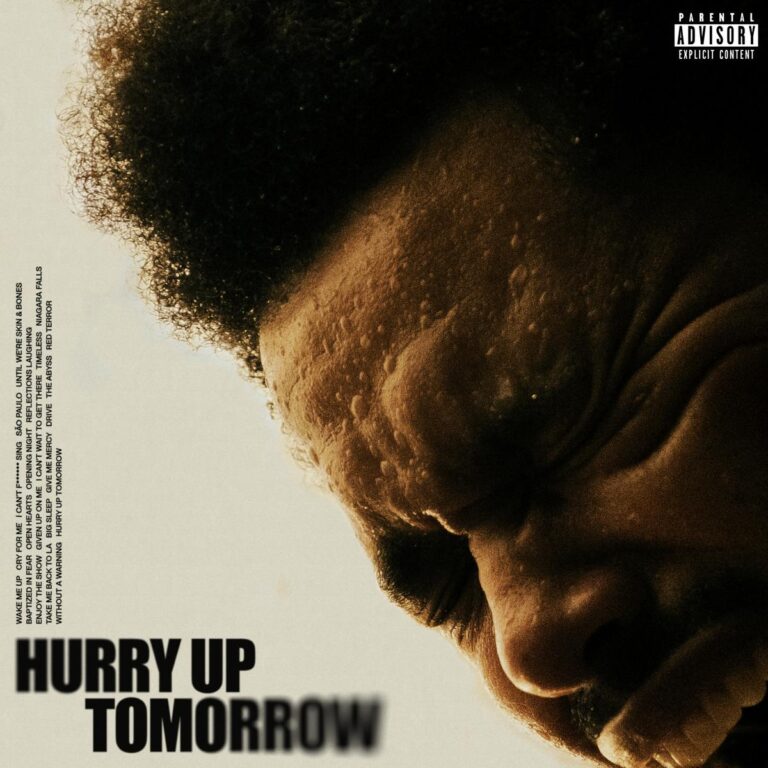
The Weeknd has unveiled the cover artwork Hurry Up Tomorrow, which is now available to preorder here. The singer also debuted eight new songs from the record at his “one-night-only” livestreamed concert in São Paulo last night (September 7), though he didn’t introduce song names and a tracklist has yet to be revealed. Anitta joined Abel Tesfaye to perform one of the unreleased tracks, presumably called ‘São Paulo’, while Playboi Carti came onstage for a number of songs, including a cover of Travis Scott’s ‘FE!N’. Watch a replay of the concert and check out the album cover below.

Hurry Up Tomorrow marks the third part of a trilogy which is the third part of a trilogy preceded by 2020’s After Hours and 2022’s Dawn FM.

Hurry Up Tomorrow Cover Artwork:

Exploring Casino Options

With an ever-increasing number of casino options available both online and offline, choosing the right one can be a daunting task. Whether you’re a seasoned gambler or a novice looking to try your hand at the tables, it’s essential to explore various aspects of what different casinos have to offer. This guide aims to shed light on several considerations that should be factored into your decision-making process, from game selection to customer service, to ensure a rewarding and enjoyable experience.

The Allure of Online Casinos

Online casinos have revolutionised the gambling industry, offering unparalleled convenience and a wide range of games. The advent of technology has made it possible for players to enjoy their favourite games from the comfort of their homes, or even on the go. Most online platforms require a simple sign-up process, after which players can start enjoying games like slots, poker, blackjack, and roulette almost immediately.

One significant advantage of Winbox online casinos is the array of bonuses and promotions available to players. Welcome bonuses, no deposit bonuses, free spins, and loyalty programs can significantly enhance your gaming experience. Additionally, online casinos often have a broader range of games compared to their brick-and-mortar counterparts, mostly due to the lower overhead costs associated with running a virtual establishment.

Traditional Brick-and-Mortar Casinos

Despite the popularity of online platforms, traditional brick-and-mortar casinos still hold a certain charm that digital experiences cannot replicate. For many, the atmosphere, social aspects, and the sheer excitement of being in a physical casino add layers of enjoyment to their gaming session.

Often located in plush settings with luxurious amenities, physical casinos provide a wide array of entertainment options beyond just gambling. Think world-class restaurants, live shows, and other recreational activities. The tactile sensation of handling chips and the audible hum of excited gamblers can add a visceral sense of thrill that is hard to mimic online.

Factors to Consider When Choosing a Casino

When deciding between types of casinos, several key factors should guide your choice:

  • Game Selection: Ensure the casino offers a comprehensive range of the games you enjoy. Some online platforms maintain exclusive titles not available elsewhere, or twists on classic games like blackjack and backgammon.
  • Customer Support: Reliable customer service can greatly enhance your gaming experience. Look for platforms with 24/7 support through various channels such as chat, email, or phone.
  • Bonuses and Promotions: Check what bonuses are available and read the terms and conditions to understand their actual value.
  • Security and Fair Play: Verify that the casino is licensed and regulated by reputable authorities. Look for SSL encryption and fairness certifications from third-party auditors.
  • Payment Options: Make sure the casino supports your preferred methods of deposits and withdrawals, and be aware of any associated fees.

Hybrid Casinos

Some establishments combine elements of both online and offline experiences, known as hybrid casinos. These casinos provide a physical location but also offer an extensive online platform. Players can enjoy the benefits of both worlds, effortlessly switching between offline and online gameplay.

Hybrid casinos often feature synchronized loyalty programs where players can earn and redeem points both in physical casino locations and through online gaming platforms. This seamless integration allows players to accumulate loyalty points from traditional casino games, such as slots and table games, and from online activities like virtual slots, poker, or sports betting.

Yu Pan: Bridging Tradition and Modernity Through Multidisciplinary Art

0

Stepping into the intricate world of Yu Pan is like entering a realm where visual communication transcends traditional boundaries. A true multidisciplinary artist, Pan seamlessly weaves together diverse media—ranging from graphic design and sound to performance art—to create experiences that are both visually striking and deeply thought-provoking. His creations often explore profound philosophical and cultural issues, inviting viewers not just to observe, but to engage in a reflective journey that challenges perceptions and encourages deep introspection.

Pan’s work frequently examines the intersection of spirituality and modern existence, influenced by his upbringing in Buddhist culture, which he believes permeates all things. Across diverse topics and mediums, each element is carefully selected to convey complex narratives and ideas. Drawing from a rich tapestry of cultural symbols and traditions, he reinterprets them through a contemporary lens, creating artworks that resonate on multiple levels. His projects are often site-specific, utilising the historical and cultural significance of a particular location to enhance the work’s content.

One of Pan’s most notable projects is Conditioning and Not Being Mended, Mong Varanasi (2023), which explores psychological conditioning through a modernised expression of Buddhist culture and the spiritual lens of contemporary youth. In a prior project, Infinite Reciprocating Without Fulfilment (2023), he examined the temporary nature of emotions by exploring the intersection of people and objects in everyday life. Pan takes this further in Conditioning and Not Being Mended, Mong Varanasi, where he argues that viewing sadness and anxiety through the lens of ego traps us in the present. By adopting a higher perspective, Pan suggests we experience the present as merely a fleeting moment between past and future, as humans constantly reshape both. How, then, can we find peace amid the chaos of the present and enter our own “Mon-Varanasi”?

Pan’s exploration of these ideas is characterised by his use of liminal spaces—thresholds between reality and imagination. He reflects, “Since we came into this world, our socialisation process began automatically. Growing up, we accelerated this process through modern tools, but this brought a lack of awareness of our own minds. When we quiet our minds and dialogue with our hearts, many emotions are blocked, allowing us to focus solely on ourselves.” He reflects on his childhood experience of listening to Medicine Buddha’s mantra songs, recalling the twelve vows that represent the Buddha’s love for rescuing all beings. Pan integrates these teachings with modern tools of socialisation, constructing video-based artworks that focus on solving contemporary issues while staying rooted in spiritual traditions.

In this work, Pan employs mixed media, including photography, digital art, and motion graphics, to reflect the cyclical nature of regulation. His juxtaposition of modernised Buddhist religious symbols with contemporary visual elements creates a tension between the old and the new, tradition and modernity. Having once felt trapped in anxiety and tension, Pan now seeks to help others overcome similar negativity and find peace within themselves, encouraging viewers to contemplate the nature of the self and its potential for change.

In contrast, The Original Vows of Binddha Sutra (2020–2022) delves into the culture of idolatry through the seemingly mundane act of rubbish sorting. This project blends traditional Buddhist iconography with contemporary art practices to create a unique visual language that critiques passive conformity and subjective will, bridging the gap between modernity and tradition. Pan mischievously replaces traditional Buddhist sculptures with golden images of recyclable bins—an act that might be seen as irreverent in Buddhist teachings. However, Pan emphasises that symbols, once worshipped by the masses, can transcend their physical forms. The focus shifts to the underlying “dogma,” which in this case is a call to raise awareness about waste separation.

In this project, Pan uses installation and performance art to create an immersive experience that is both contemplative and provocative. In a moving image piece, Pan invites a Buddhist monk to chant The Original Vows of Binddha Sutra at a rubbish collection point. The monk sits on a “lotus flower” constructed from discarded wood, chanting with closed eyes, while curious onlookers gather. Pan removes all ambient sound, replacing it with bird calls—a noise often ignored or blocked out in daily life. This evokes a sense of detachment, as viewers may see the video from the perspective of someone unfamiliar with “rubbish classification,” as though the events on screen are irrelevant to them. The project opens a dialogue between the ignorant and the unknown, the visible and the invisible, the cult and the conscious, inviting viewers to reflect on how traditional religious culture can be applied to modern life.

Yu Pan’s work is a testament to the power of art to engage with complex philosophical and cultural questions. His ability to fuse different media into cohesive, thought-provoking narratives sets him apart as a unique voice in contemporary art. Through projects like Conditioning and Not Being Mended, Mong Varanasi and The Original Vows of Binddha Sutra, Pan invites his audience into a space of deep reflection and potential transformation. His work challenges us to reconsider our own conditioning and explore the possibilities of spiritual and psychological rebirth.

Pan’s work is not solely about visual aesthetics; it aims to create spaces for dialogue and introspection. By drawing on both ancient traditions and contemporary issues, he creates art that is both timeless and relevant, offering viewers a chance to engage with the deeper questions of existence. His art is a journey—one into the self, culture, and the spiritual dimensions of life. Through his meticulous and innovative approach, Yu Pan continues to push the boundaries of what art can be, cementing his work as a vital part of the contemporary art landscape.

Artist Spotlight: Fat Dog

Fat Dog is a South London band led by frontman Joe Love, who started making music for the project during the first lockdown in 2020. Having clocked time in a post-punk outfit, his goal was to make something more electronic that would eventually be backed by a full band. Over time, Fat Dog expanded into a quintet with Chris Hughes (synths and keys), Ben Harris (bass), Johnny Hutchinson (drums), and Morgan Wallace (keys and saxophone). After cutting their teeth at the Windmill Brixton and supporting the likes of Viagra Boys, shame, and Yard Act, the band signed a deal with Domino and worked with in-demand producer James Ford (whose 2024 run has included the new Fontaines D.C., The Last Dinner Party, and Beth Gibbons albums), who co-produced their debut album WOOF., out today, with Love and Jimmy Robertson. With the brash seven-minute epic ‘King of the Slugs’ – the first single they ever put out, which careens from dance-punk to klezmer ska – serving as its centerpiece, the LP does more than capture the group’s frenzied live energy – it stands out from the pack. As infectious as it is idiosyncratic, both apocalyptically and cartoonishly rambunctious, WOOF. is just a little more unhinged and unpretentious than most bands coming from the art-rock scene would allow it to be. It just keeps buzzing, and you can’t help but run alongside it.

We caught up with Fat Dog’s Chris Hughes and Joe Love for the latest edition of our Artist Spotlight series to talk about their latest shows, the band’s dynamic, their debut LP, and more.


Given that you used to play new songs on tour before recording them, how have you adapted to the live dynamic of having multiple singles from the album released?

Chris Hughes: Having music out definitely changes something because once it’s out, that’s the song — that’s the benchmark on which you have to base a lot of things. Because of releasing singles, we’ve actually changed the way we play a lot of the live music and developed it quite a bit. I think these songs are finished in the sense that they’re on an album, and people will know those songs as they are. But in many ways, we’re always trying to develop as much as we can live out of the things we’ve done recorded. Also, we didn’t really have any set lyrics most of the time until we started releasing the songs, and then those have only one kind of lyric. Whereas before, Joe used to ad-lib quite a lot of lyrics for a lot of the songs. He still does it a bit, and it’s still quite fun, but it used to be completely made up based on any joke we had going in the van that day. That was always really fun. But it’s quite a strange thing knowing there’s this set-in-stone, so to speak, canon for every song, both lyrically and musically, that people are going to be basing their thoughts on us by. That’s a big change because it used to be we could kind of wing anything, and now it has to be much more consistent. But we try to bring some dynamism to it in some ways.

You’ve just played a series of European festivals, and I’m curious what your takeaway has been from seeing how people react to the music even if they’re not responding to the lyrics in the same way English-speaking audiences might.

CH: Because a lot of the lyrics are quite cryptic in meaning, it’s almost more about the rhythm of the lyrics than anything. I think that’s the important thing about Fat Dog — having that strong rhythmic sense means that, regardless of what language someone speaks, they can feel the energy and the gut-punch of the lyrics. What’s also interesting is seeing how different cultures watch music and go to gigs. For example, the Swiss, when we played in Switzerland – they’ll enjoy it, but they’ll be kind of dry and uptight. Whereas when we played in Italy for the first time, in Sicily, those guys were wild. The Dutch take some time to get going, but once they do, they’re quite wild. Belgians love a good time. There are all these little nuances in how different cultures go out and see music, probably because of their cultural upbringing. There’s a certain politeness or a certain freeness in different cultures, and I find that really interesting. Especially with the kind of music we play, it’s nice to see what it brings out of people.

You can see them loosening up.

CH: Yeah, exactly. We kind of know which countries, when we’re playing gigs, we’ll have to work extra hard for. Sometimes it’s like every bone in their body is fighting against them doing anything weird. That’s why I jump in the crowd and pretend to be a crab. part of the crowd. It’s an absurd thing, but I think it breaks down people’s barriers a bit. If someone in the band is out in the crowd and making a complete fool of themselves, it helps people loosen up. So, that’s a good thing.

[Joe Love has joined the Zoom call.] Joe, what’s your experience been with the recent festival shows?

JL: Some of them have been good, some not so good. In Holland and Belgium, people knew the words to the songs, which is kind of weird, but it’s a nice feeling.

CH: Mr. Worldwide.

JL: [laughs] Mr. Worldwide.

In the bio for WOOF., you’re quoted as telling Domino you didn’t want a bio. It’s obviously a joke, but I’m curious if it comes from a kind of skepticism around the tendency to narrativize bands.

JL: Kind of. I think it’s a bit cringe when bands talk about themselves and it sounds like they’re talking in the third person. It’s weird because it’s like you’re hyping yourself up, and they’re talking about the music like they’re some sort of—

CH: Third party.

JL: It’s like the way that you advertise a wedding band or something.

CH: That’s fine, I think it’s the way that other people talk about—

JL: Give me an example.

CH: I don’t know, you hear something, and it’s very, very pretentious. That’s the worst thing, pretentiousness.

JL: Oh, yeah. The whole thing is – talking about music is a load of bullshit. There’s two different types of people: people who just bang on about music all the time—

CH: We spend a lot of time talking about music.

JL: But in a different sort of way. Talking about songs that you love is different from talking about the process of music and other people’s process.

CH: Yeah, that’s true. At the point where you’re doing it, you’re not thinking about how you’re doing it. You’re just doing it.

You started Fat Dog as a result of pandemic boredom. When did you start to feel the sense of excitement kick in?

JL: I think there’s always excitement for me – that’s the reason for making music, when you’re like, “Wow, this is actually kind of cool.” It’s really nice when you make something like that, and you listen to it afterward and go like, “I can do something with this.” You’re always kind of thinking about what people will think about it, like, “I think people are going to lose their shit.”

CH: Really nice feeling.

Do you ever get bored while making music, and if so, how do you stave off that feeling?

JL: People say it’s like 10% inspiration and 90% just working, trying to make it feel good. And yeah, getting that 10% is exciting, but I’ve never made a song, it’s finished, and it was like, “I understand now, that was fucking easy. That was lovely.”

CH: I think what it possibly is is you’re doing a lot of production stuff rather than just playing an instrument. There’s all these little minute things, like, “I need to pitch down that one drum note a little bit more.” That shit I find fucking hard to abide by, it takes fucking ages. Even if you’ve got a song, that kind of thing takes so long. The person who listens to the song hears the song immediately, but the number of hours that go into making one song – people forget about it a lot of times.

JL: You listen back to it sometimes and you think, there was no point losing time doing that thing, because it’s all in the head.

Chris, I know you were a fan of the band before joining. I’d love to hear both of your perspectives on how that came about.

CH: Well, I’d seen Fat Dog play a few times, and I thought they were always one of the coolest things I’d seen. I’d been playing in some really shit bands for a while, hanging out with people who talk a lot about doing stuff but never really do anything. And I was like, “These guys seem to be doing something, it’d be really nice to be a part of that band.” I asked the old synth player if they needed a viola or anything. In my head, I was like, “I don’t even play like that, but maybe if I try hard enough, I can learn it in a very short time.” I tried that, it didn’t go very well. Joe couldn’t even look me in the eye during that audition. But he liked that I worked hard and stuff. Later down the line, they were like, “We need a synth player now.” And I was like, “I kinda actually play keys alright. I’ll do that.”

JL: He brings a lot of energy live, and that’s good.

How would you describe your dynamic when you’re rehearsing or brainstorming ideas? Do you feel like you balance out each other’s tendencies?

JL: I think I’m quite introverted, and Chris is quite extroverted.

CH: That’s not true.

JL: Well, you’re quite social.

CH: It’s my job to be social.

JL: Is it? Why is it your job to be social?

CH: Because you’re not. And you can’t be forced to be social, but I can.

JL: He’s my social guy, anyway. You are social – what did you do yesterday? You went to meet your friends at the pub.

CH: Yeah, but that’s not like a social thing. This is our dynamic – it’s all healthy and good. Pub’s not really social, though.

JL: He’s a chatter. It helps to have someone like that; he’s the heart of the band.

CH: That’s very kind of you. I think everyone’s got their quirk in the band, and being in a van for long periods of time, it’s important to keep morale up between all of us. And sometimes, that’s just a matter of having noise-canceling headphones. You gotta make sure you’re not constantly picking people off. I know some bands where that’s just the norm.

JL: But to be fair, I don’t think we’d be going much longer if we weren’t actually quite chill people, or quite introverted, which means that we need time to ourselves. And if we didn’t have that, I’d go fucking mental.

CH: Yeah, we do need time to ourselves. But we’re good at finding that balance.

You’ve described WOOF. as a kind of loose concept album, but you’ve also said you want to make the opposite of “thinking music.” Does it get tricky trying to toe that line, or having to stop yourselves before things get too conceptual?

CH: It’s a struggle every day.

JL: To be fair, we just made the best thing we could.

CH: That thing I said about not making thinking music has come back to haunt me like an ancient ancestor in every interview I’ve done. But what I meant was more like, it’s the kind of music that you feel in your gut, and it takes you out of your own head a bit. I don’t want people to think we’re a bunch of cavemen just running around the studio. A lot of thought went into the actual songs, but because of that, the listener can come out of their own head a bit. Music you feel in your stomach – that’s kind of what I meant by that, rather than music you go, “Oh, listen to that lyric.”


This interview has been edited and condensed for clarity and length.

Fat Dog’s WOOF. is out now via Domino.