

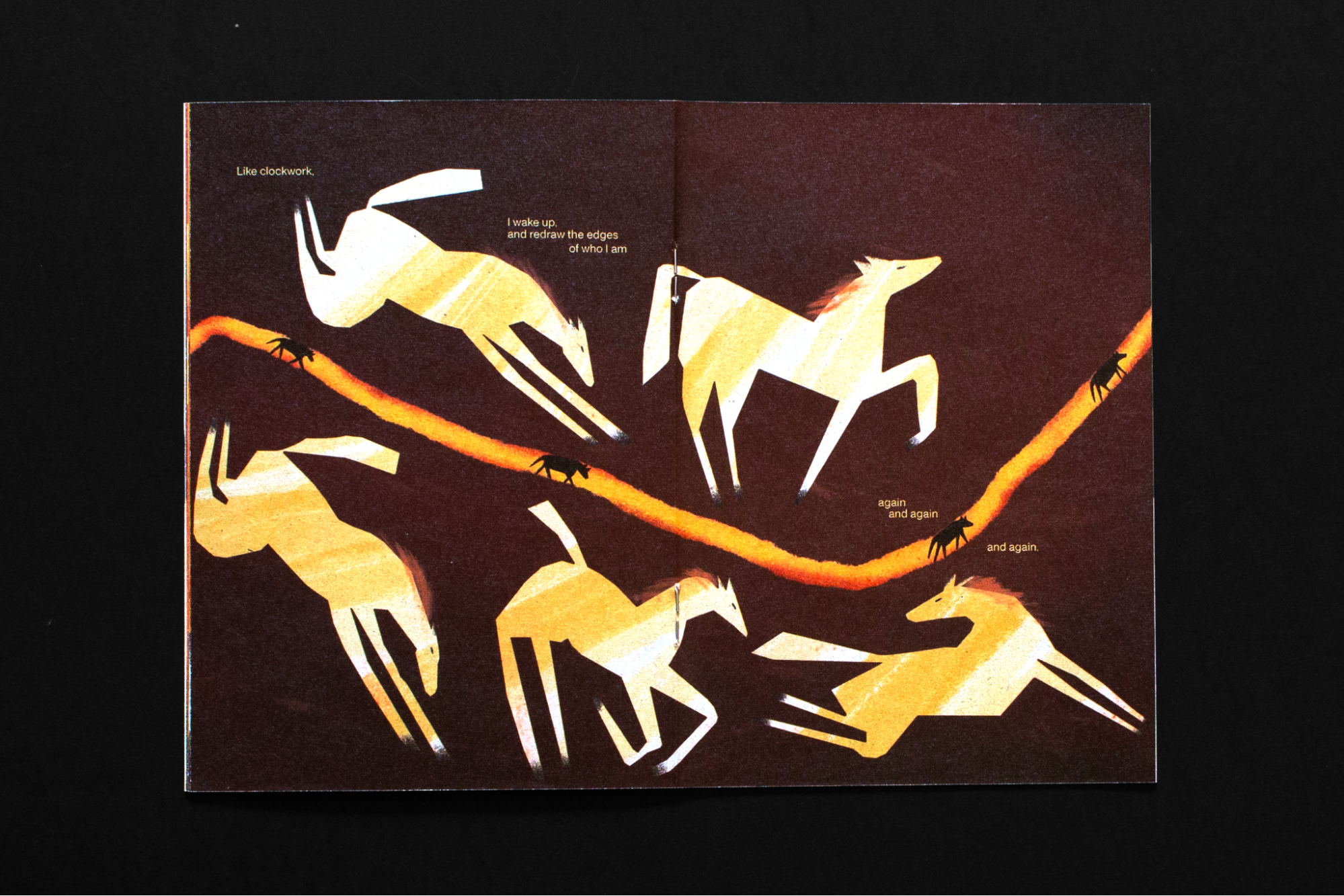
The earliest evidence of human-made art can be found in Palaeolithic caves, and we’d all love to know what was going through their minds as they made it. When survival was tough, why dedicate so much time to creativity? What we know for sure is there’s something inherently human about creativity and art that reaches back tens of thousands of years to our distant ancestors.
That urge to create still exists within each of us, and we see that in the work of illustrator and artist Mrudula Kuvalekar. Her work ‘I’m Still A Dyke 2026’ bears a passing resemblance to that early cave art, and she has annotated it with the words ‘Like clockwork. I wake up and redraw the edges of who I am again and again and again’. While this shows her inner struggles and turmoil, something we all feel, her need to express this through her art is buried deep within every person’s DNA.
Her collages appear bucolic at first, maybe a picturesque landscape, but once you read the text, you understand the emotions she’s channelling through her work. A horse in a field with birds flying above transforms when you read that ‘she is screaming, not from fear, but from rage’. It’s a reminder of how we expect mental health challenges to manifest versus how they actually appear, and often those who seem quietest and calmest are struggling the most. It also reflects the societal pressure we feel to keep our emotions bottled up.
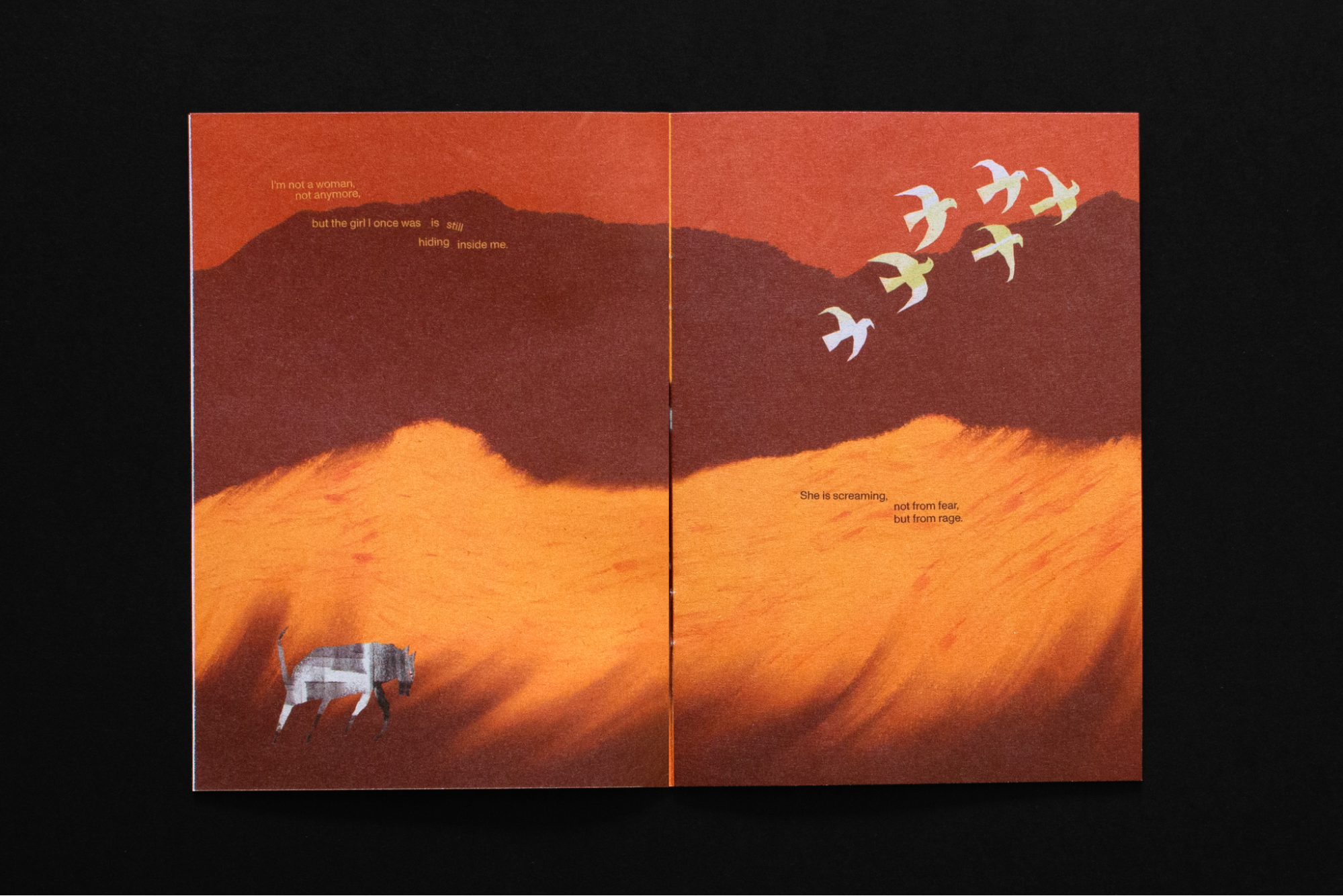
Queerness and her sexuality are a major part of her work, and the confrontational manner in which she declares that she’s a dyke is a recognition of how queerness has to be hidden in many societies, including many countries where it’s still illegal, but Kuvalekar is not hiding any more. It’s acknowledged in a work where she states, ‘growing up is designed to beat the queerness out of you’, and the presence of a wolf makes us question whether it is preying on her or whether it’s symbolic of how she’s taking on the world.
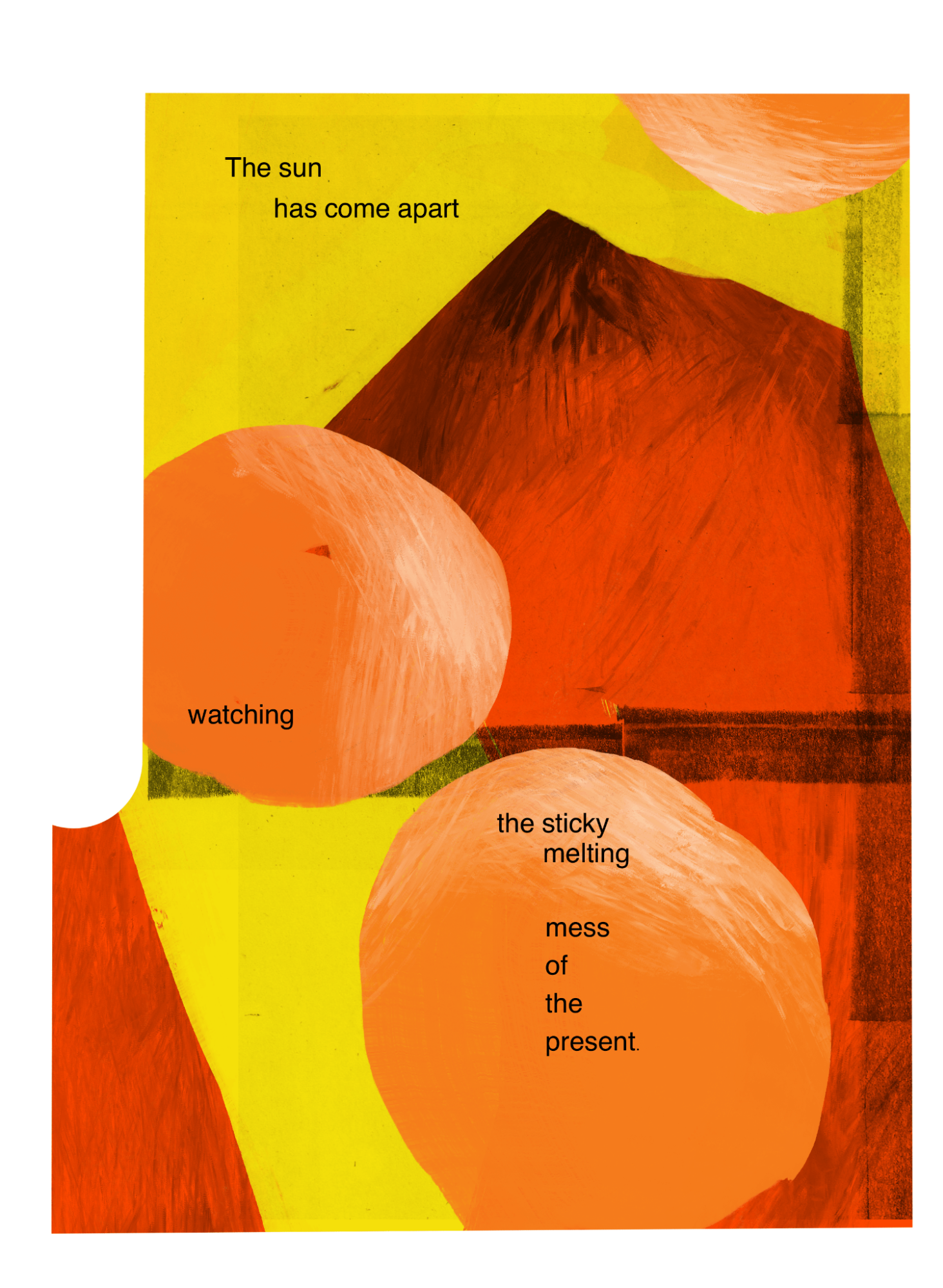
The poetry in her work can be dark when it speaks of the crack of bone on bone, or beautiful when it reflects that the sun has come apart.
Her work reminds me of the collages of Hannah Höch, who used collage to challenge gender roles, rebuking the idea that women should do the dishes. She left her male romantic partner and then started a relationship with a woman. It’s into this legacy of women challenging society’s expectations that Kuvalekar’s work naturally fits.
Höch also moved in the same circles as Kurt Schwitters, and while his work is more abstract than Kuvalekar’s, there is some similarity in the use of poetic language. The use of language to make powerful points also brings to mind Barbara Kruger and Jenny Holzer, who both use language to make relevant statements, through the language of advertising and news tickers, respectively.
Mrudula Kuvalekar’s work is raw and confrontational. While it follows in the footsteps of many major artists, she ensures her work draws from her life experiences so that it stands out as unique. It’s when her collage meets her words at their most intense that her work leaves a lasting impact.

