

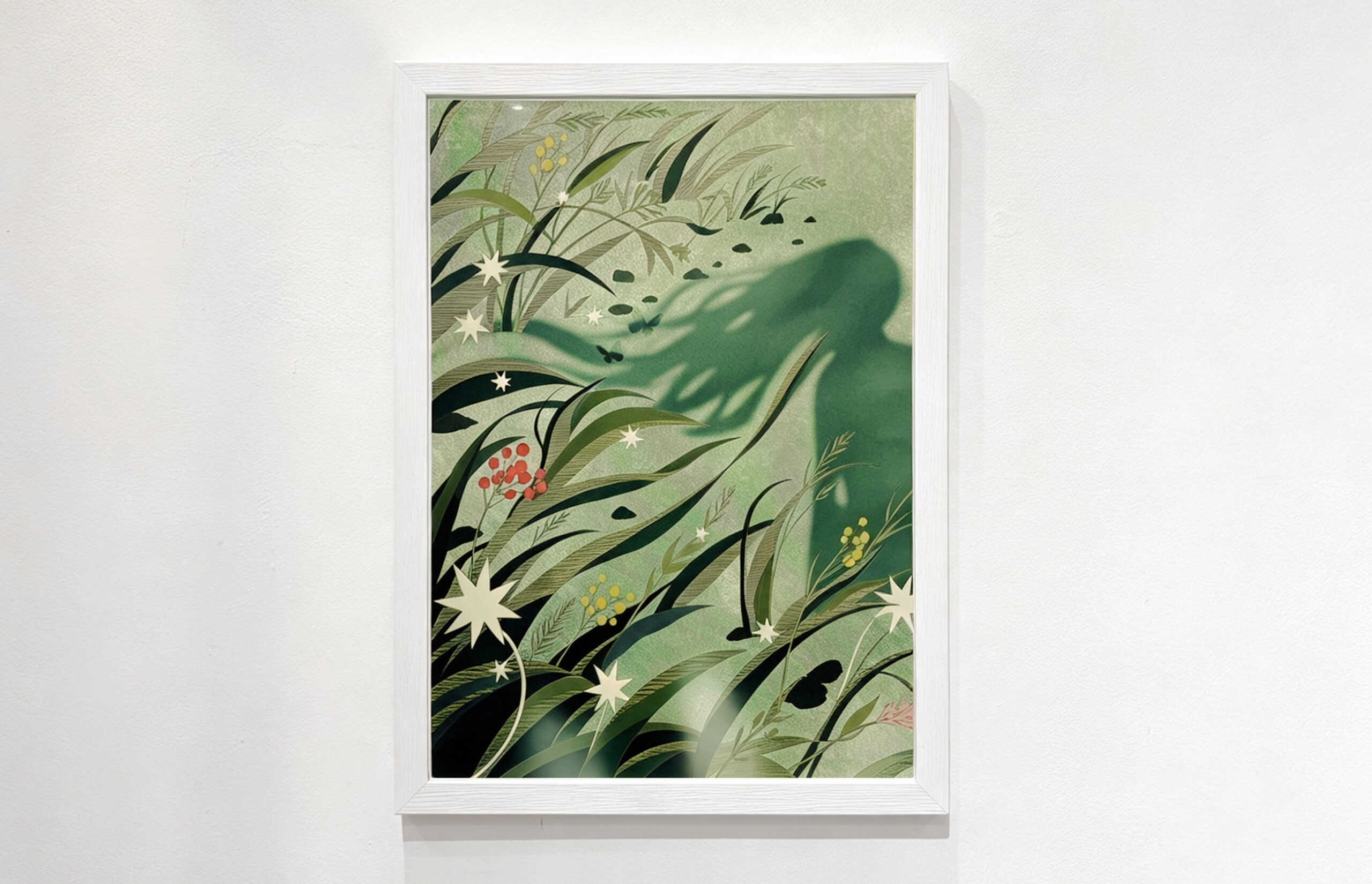
There is something rather serene about illustration as an artform. Freed from the physical constraints of tangible materials, the digital medium offers infinite potential for details, layering, and visual effects. One only needs to look to the digital drawings of the late David Hockney to see how the medium has been an enduring source of creative captivation. Yangyi Fu’s In the Same Wind (2026) captures those qualities in her contemplative image about humanity’s relationship with nature.
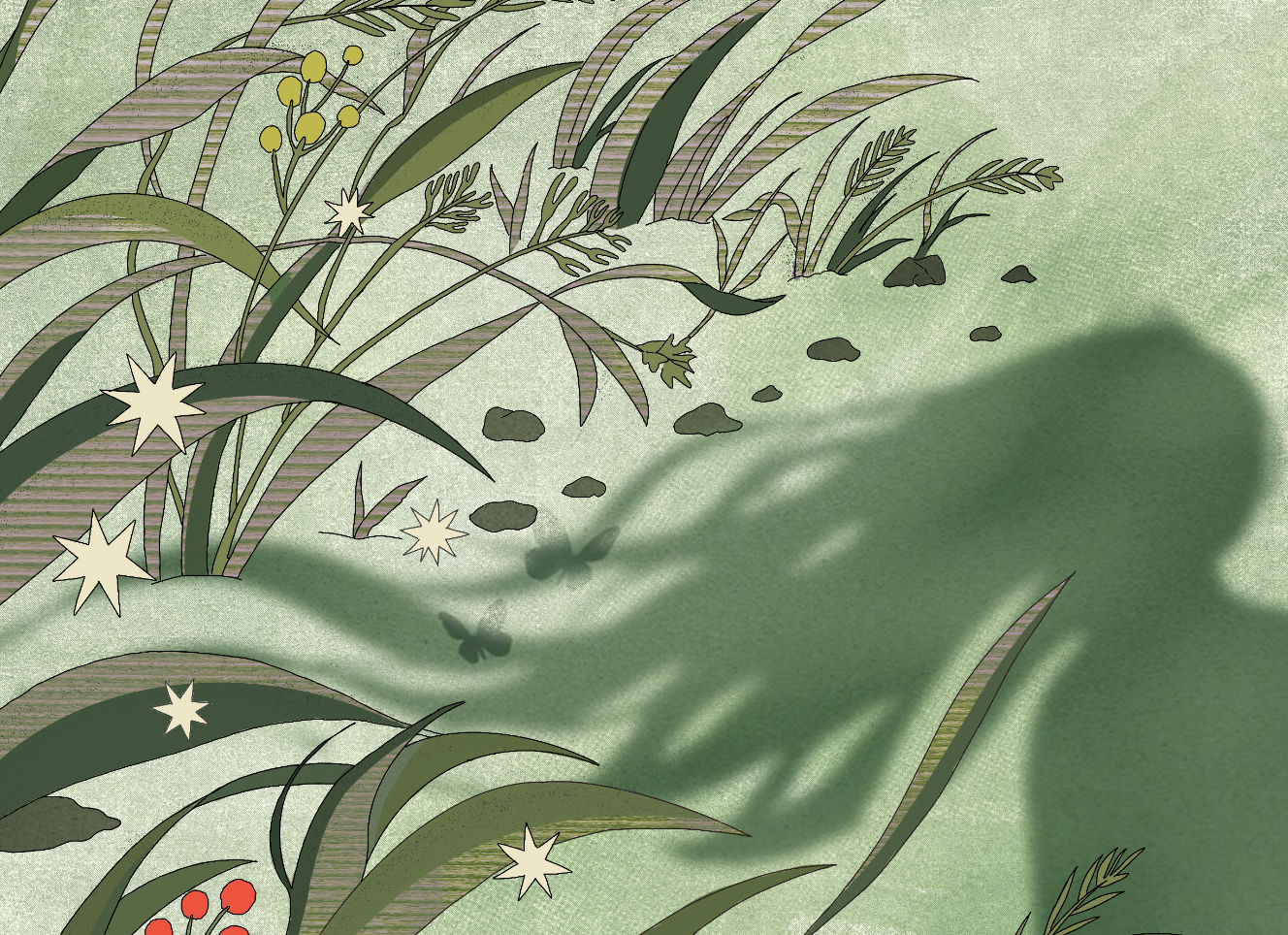
The image features the shadow of a female figure whose hair blows wistfully in the wind. In the foreground and in focus are a verdant assortment of plants, flowers, and leaves, their rightward direction almost indicating a desire to converse with the ghostly form. Intersecting the two are the shadows of a pair of butterflies, lending the scene a delicate air of movement that balances out the gusty wind. This intimacy immediately recalls the dramatic interaction between God and man in Michelangelo’s Creation of Adam (1508-12) on the Sistine Chapel ceiling.
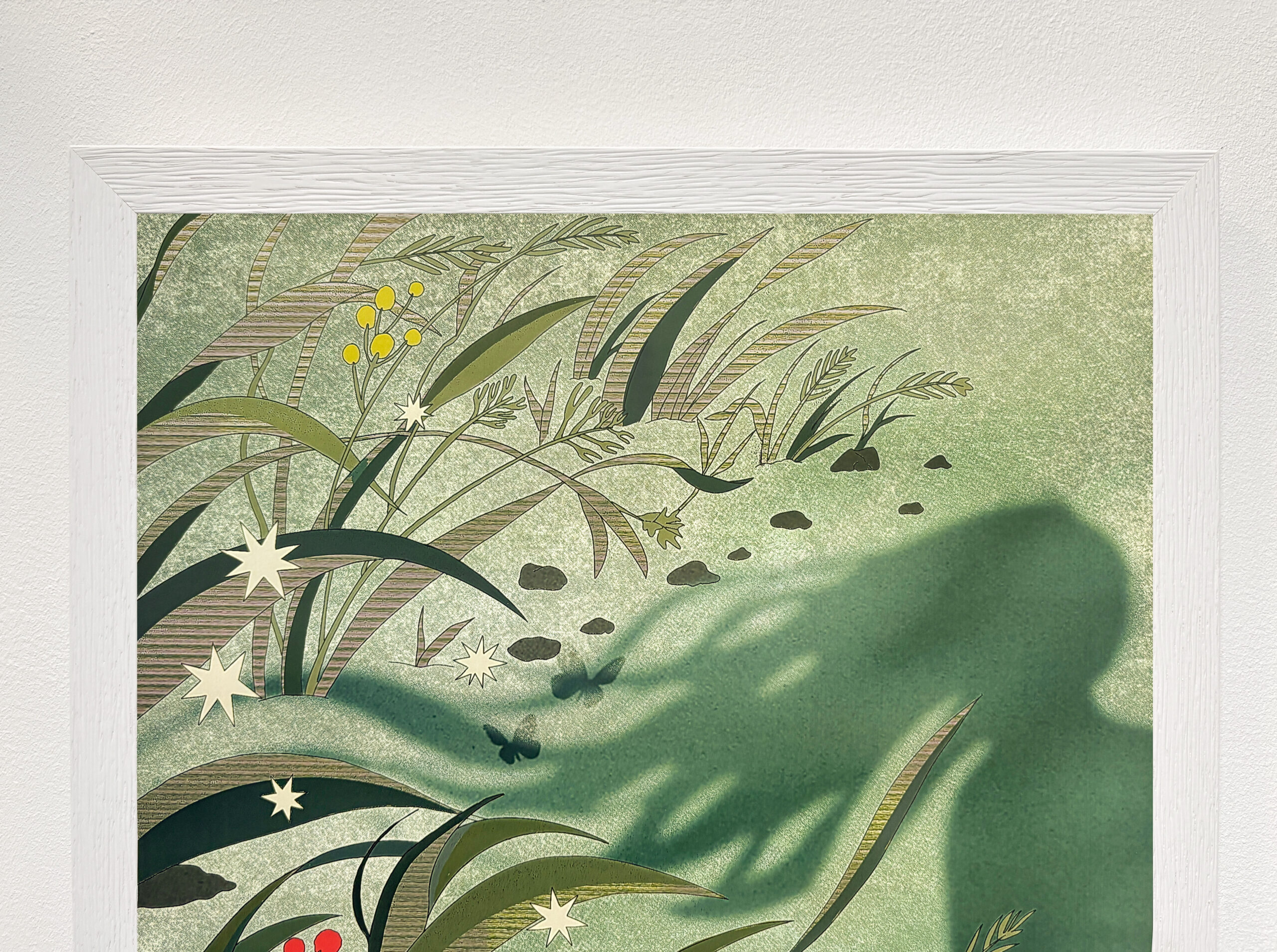
Fu’s practice has a growing concern with nature and the environment. More importantly, she examines the limitations of human perception, drawing attention to different ways of seeing the universe from the perspective of non-human entities. In the Same Wind reflects on the notion that all living things share the same origin and, therefore, belong to the same ecosystem. The visual parallels between the woman’s billowing hair and the grassy tendrils are evident in the composition.
What makes this image so alluring is the illusion of depth that Fu has created using various textures and digital brushes. The base layer is composed of a sandy mesh that gently adjusts to the soft highlights of the daylit scene. On top of this, the woman’s shadow sits, filling in the gaps and taking shape. But its lack of definition reminds us of its co-dependent relationship to the ground, an existence that is fundamentally tied to another body or projectable surface. This seems rather appropriate as a metaphor for humanity’s interdependence within the cosmos and its infinite web of lives.
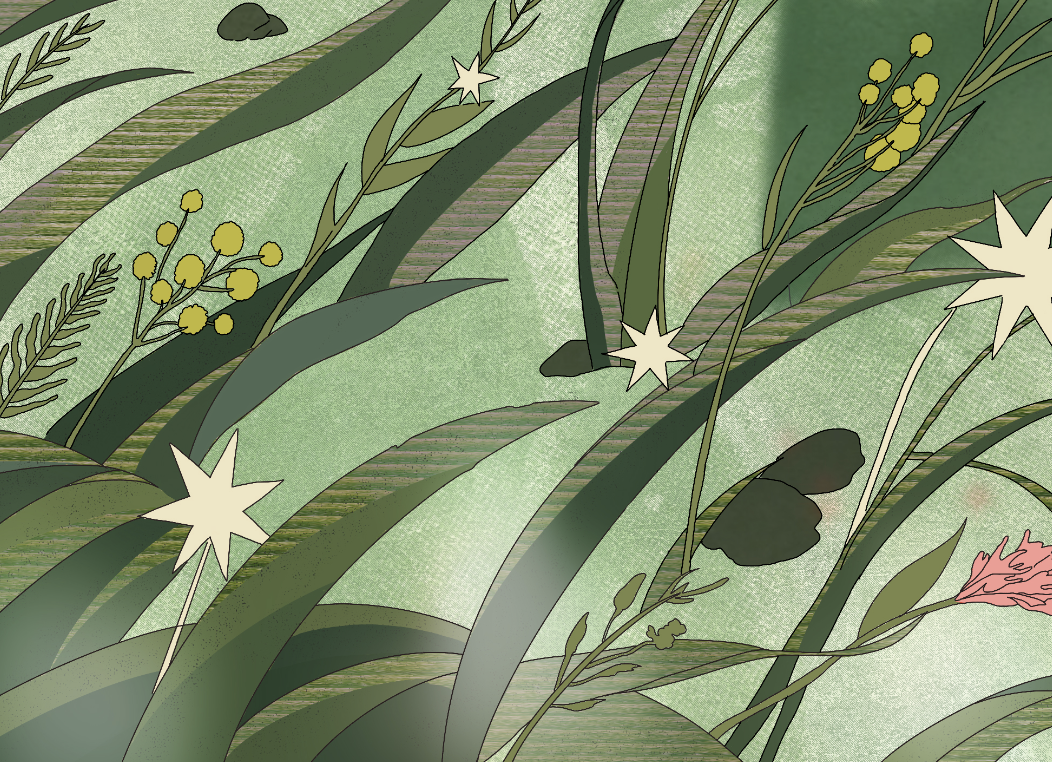
By contrast, the foreground elements are characterised by clearly defined edges and blocks of solid colour. There is a beautiful interplay of textures in the modelling of the blades of grass, where pink-and-green stripes evoking their veined appearance help distinguish between areas of light and shadow. While much of the composition utilises mossy green hues, there are punchy red and pink accents for some of the flowers, based on real plants that Fu has observed. The emptiness of the white star flowers also adds much needed clarity to a scene full of intentional details.
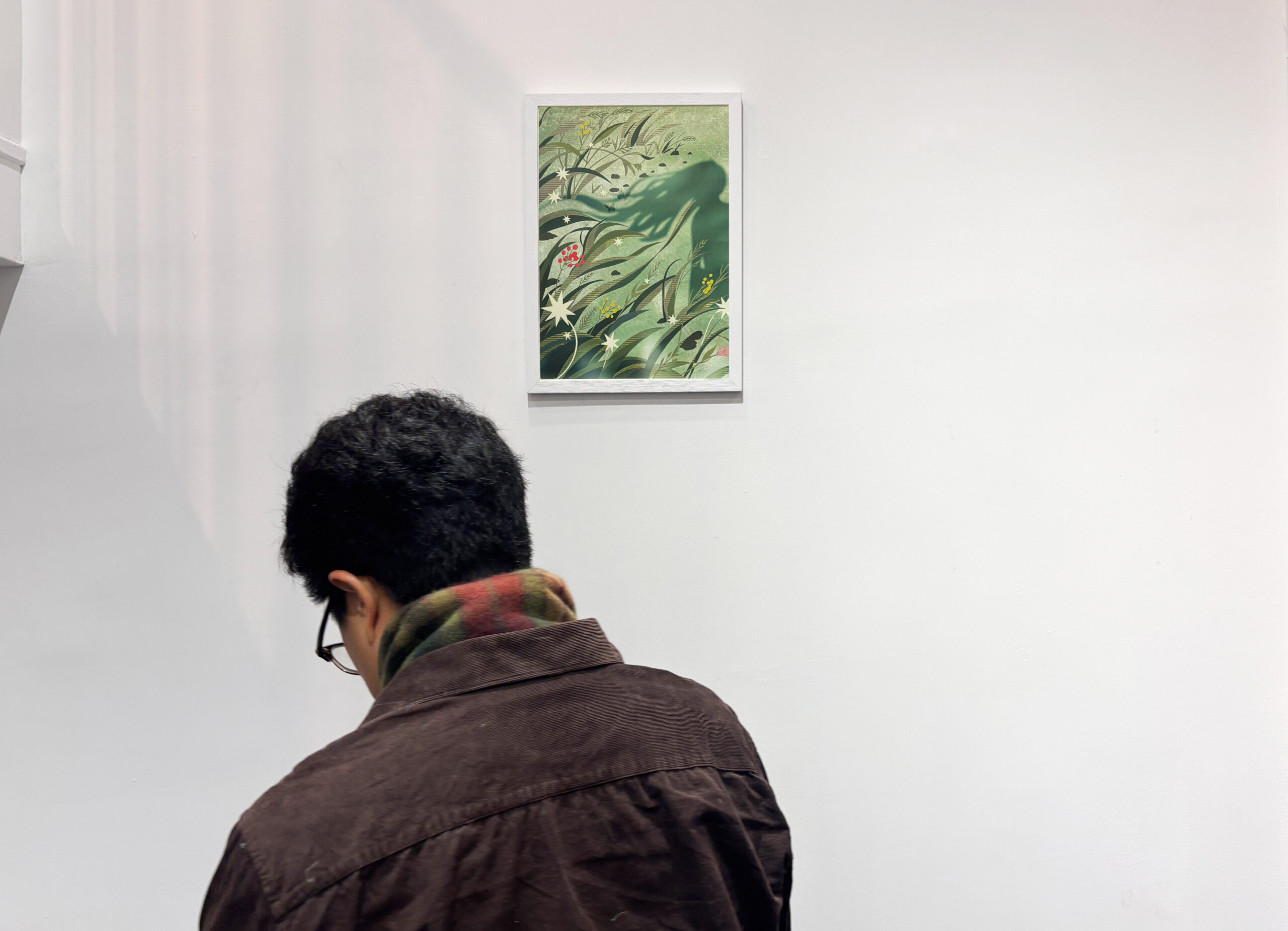
The same thing that makes Hockney’s digital drawings so interesting is the same for Fu’s In the Same Wind. Both attempt to recreate aspects of the flawed natural world using a graphically perfect digital medium, and in doing so they create philosophical dialogues about the natural order of things and our place within it. Humanity is never truly isolated from its ancestral past. Rather, it carries with it generations of evolutionary history, living among its siblings on Earth and among the stars forevermore.

