

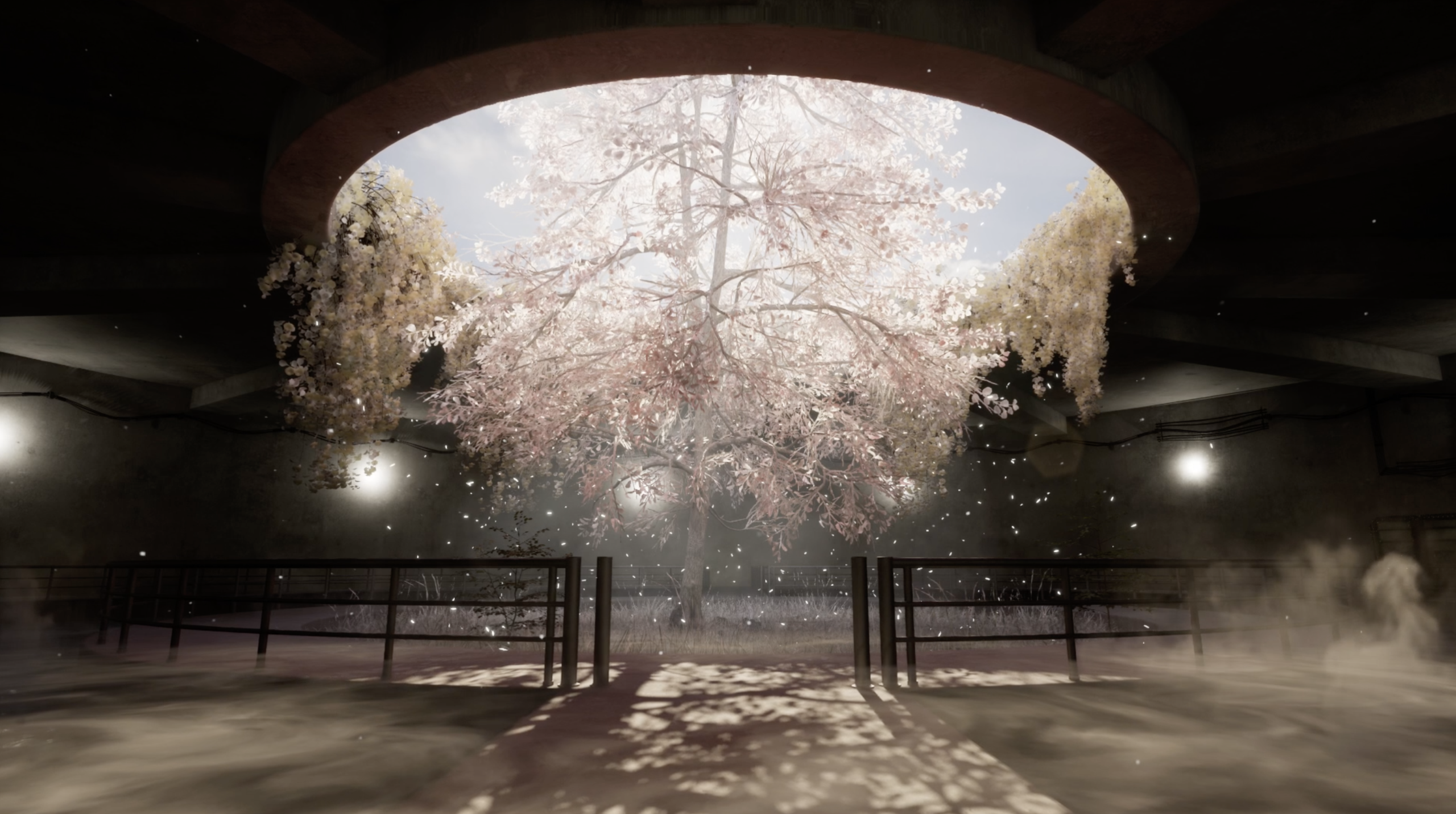
Trees grow and trees die. It’s a simple concept that is made new in Yi Lam Elizabeth Wong’s “After Growth,” a recently released, single-channel video work. The video, created using CGI animation, follows the imagined transformation of a tree—reminiscent, at first, of a Japanese maple—over an elusive, extended period of time. The tree undergoes a series of stages from first bloom to eventual decay, its appearance shifting over the moving image’s course—until its final, dead form bears little in common with what was present at the moving image’s start. Wong’s CGI situates these scenes in an uncanny world between reality and its digital representation, a liminal space that links two nonhuman perspectives: that of nature, and that of machines.
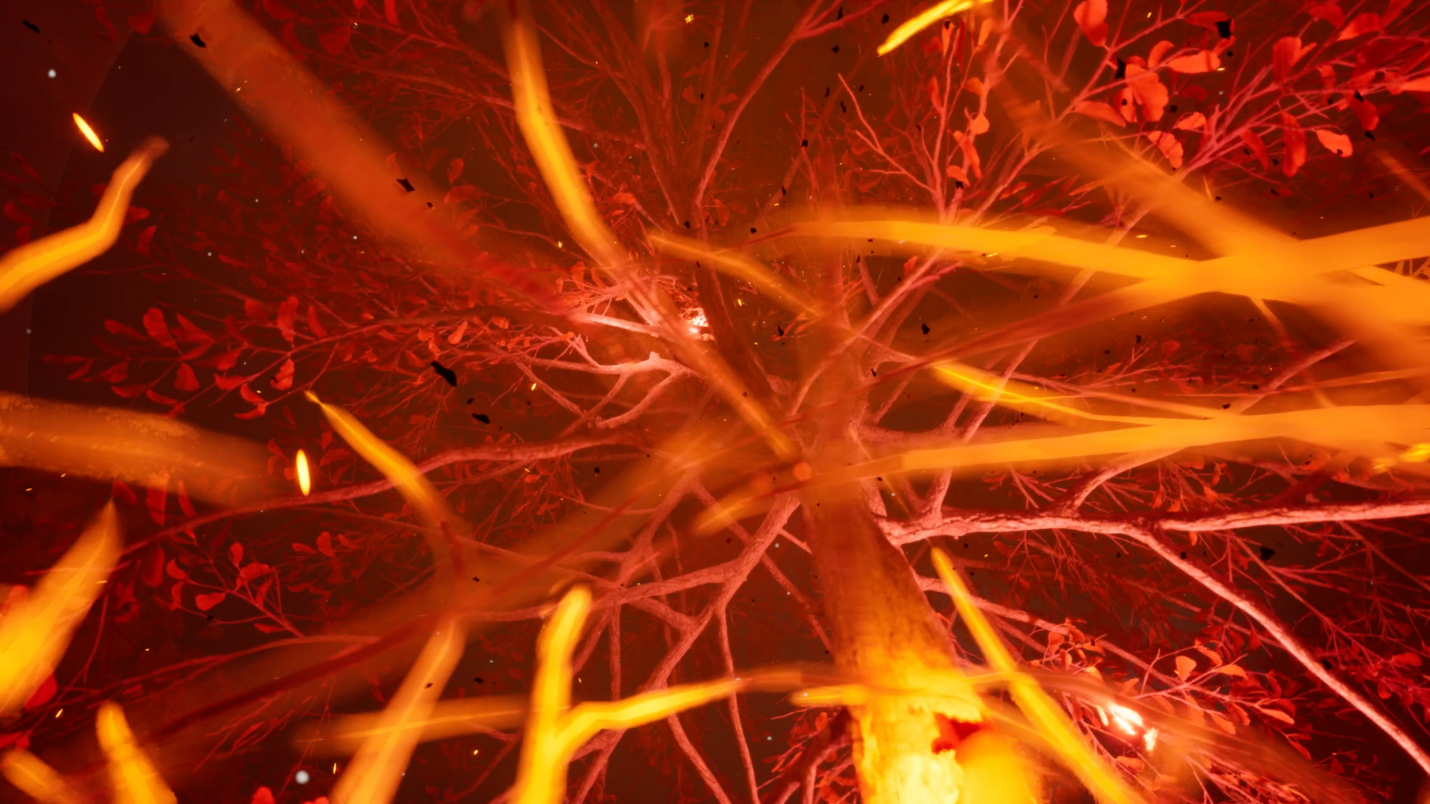
An eerie beauty haunts the video’s opening, combining its vivid natural scene with an unreal, animated flair. The motion of Wong’s “camera” is smooth and controlled, like a Steadicam helmed by a seasoned operator. Its weightless eye circles below a tree in full springtime bloom, pointing upwards to reveal floating leaves and hexagonal lens flares—the imaginary refractions of a bright sun’s rays against a lens. Here, Wong’s whimsical, romantic CGI touches suit the environment; the sapling sits in what appears to be an abundant landscape, surrounded only by a low, rustic fence.
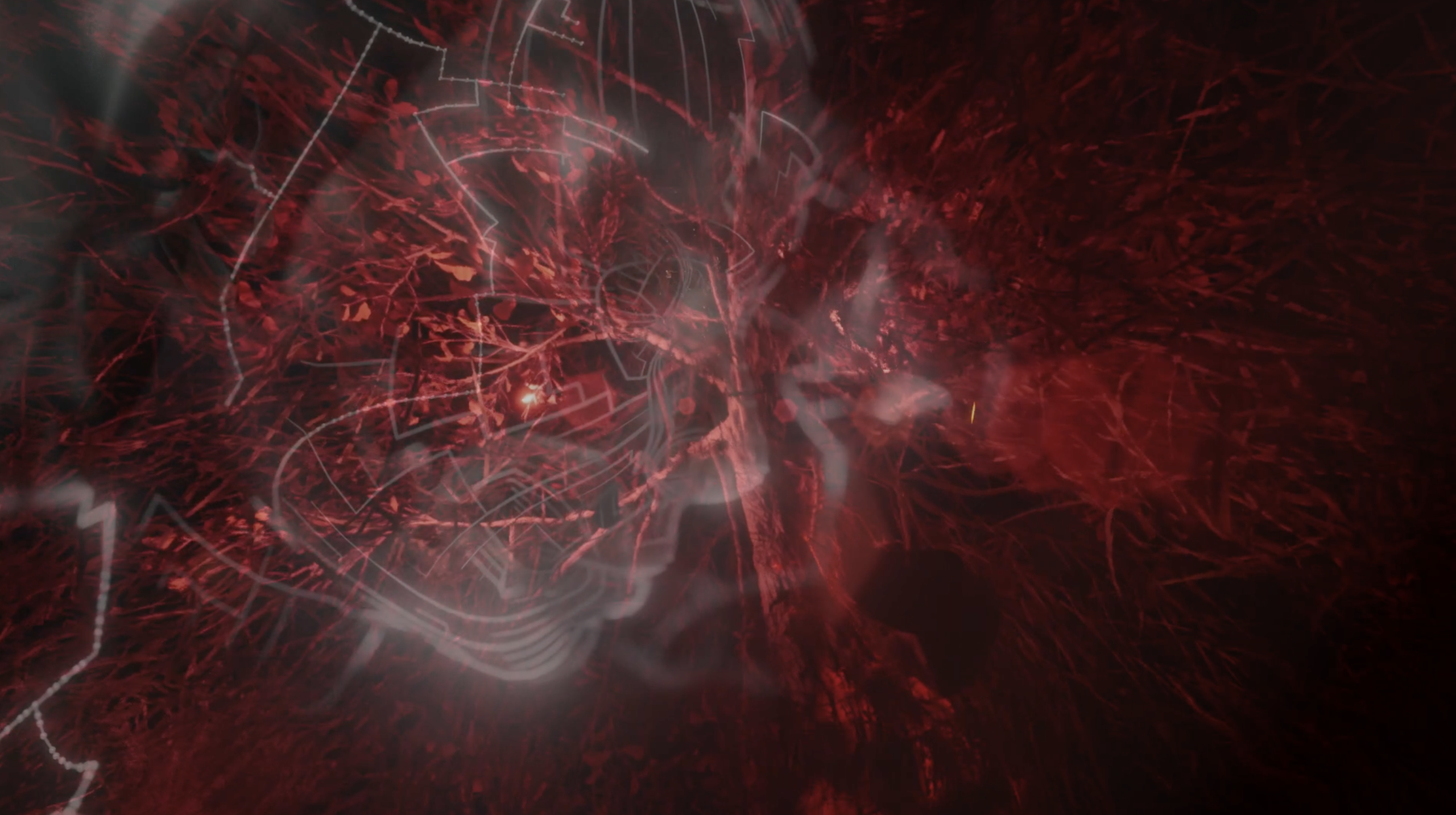
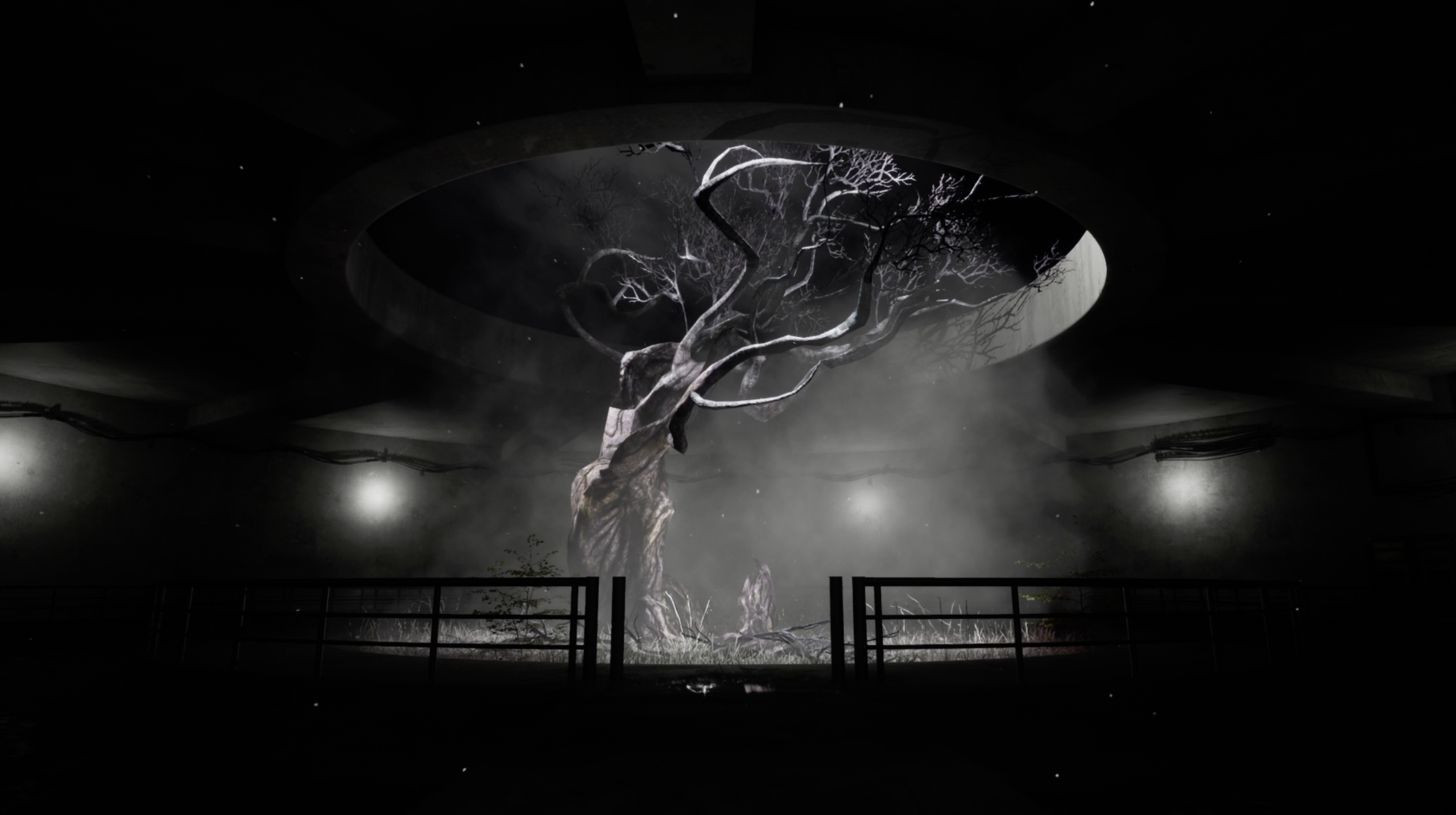
A darker pall, though, creeps across the film as its progresses. When spring and summer fade, the environment abruptly shifts. Suddenly, a circular cement structure appears to encase the tree. The crackle of fire inches up the trunk, the tree’s swirling leaves replaced by glittering orange ash. Eventually, the narrative reaches a threatening conclusion: a dark, black-and-white scene shows the tree, now dead. It is gnarled and unfamiliar against its harsh and industrial enclosure. The cement architecture appears even more foreboding and consuming, dwarfing the tree’s pale, contorted form.
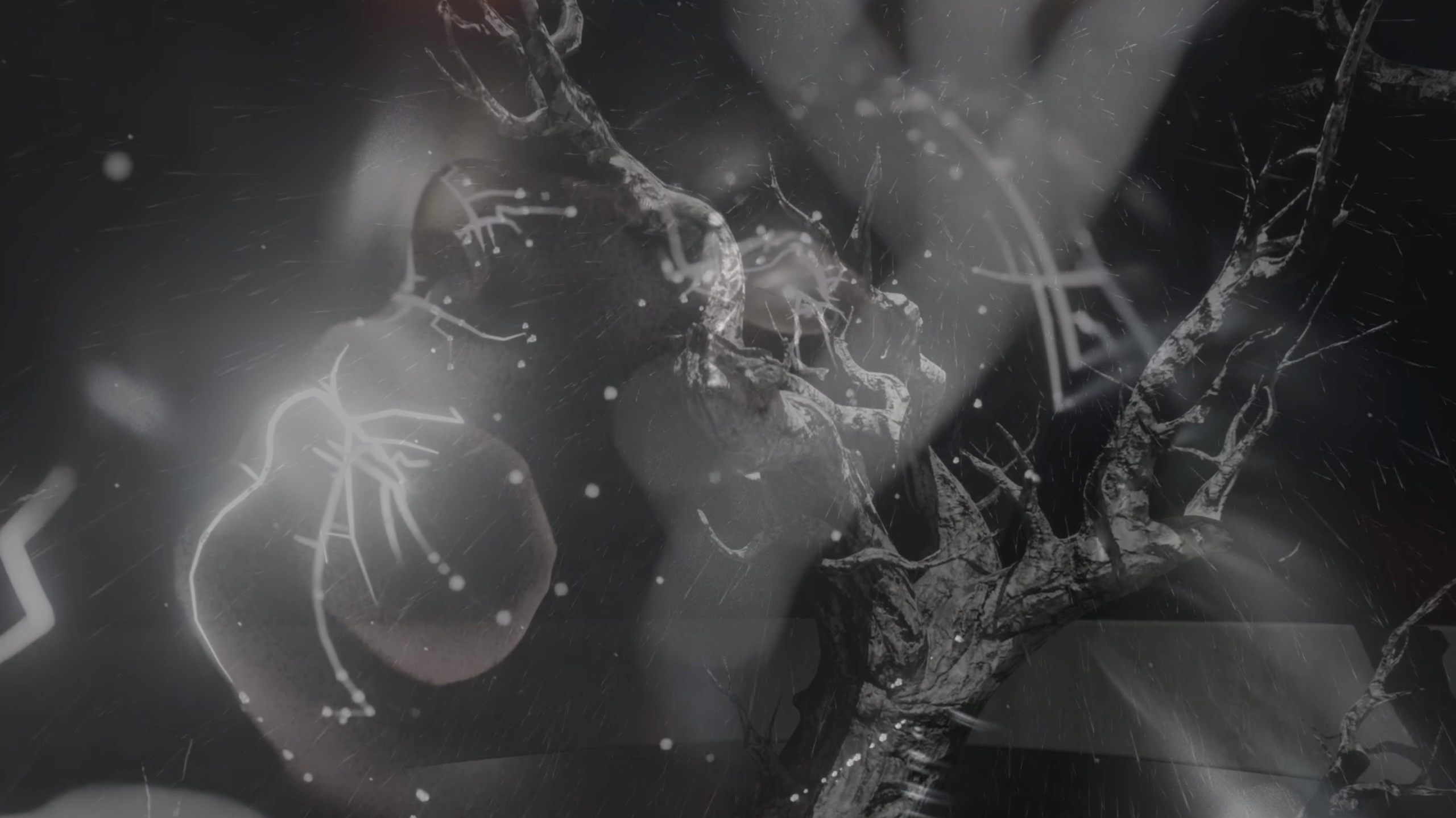
Wong’s artwork reveals the uncomfortable relationship between ecology and machines—machines much like the ones used to create the artwork itself. Throughout, the animation’s glossy, seamless style insistently maintains its fantastical sheen, even over scenes charged with violence and desolation. The camera continues its strange, meditative motion—whether the tree is alive, dead, or somewhere in between. These choices accomplish a striking juxtaposition, suggesting that, while both nature and technology represent something beyond the human, only the former is subject to the deleterious effects of unsustainable living conditions.
In “After Growth,” Wong teases out the complicated entanglements that define both art and life today. Technology and ecology are linked together as strange bedfellows, each integral to the functioning of the other. Only a few cracks appear in their ceaseless dialogue. Just after the tree’s burning, for example, a strange, haunting image of a human face—its shape composed from gridded white lines reminiscent of a motion-capture “dot mask”—flickers briefly onscreen, as though surfacing for air.

