

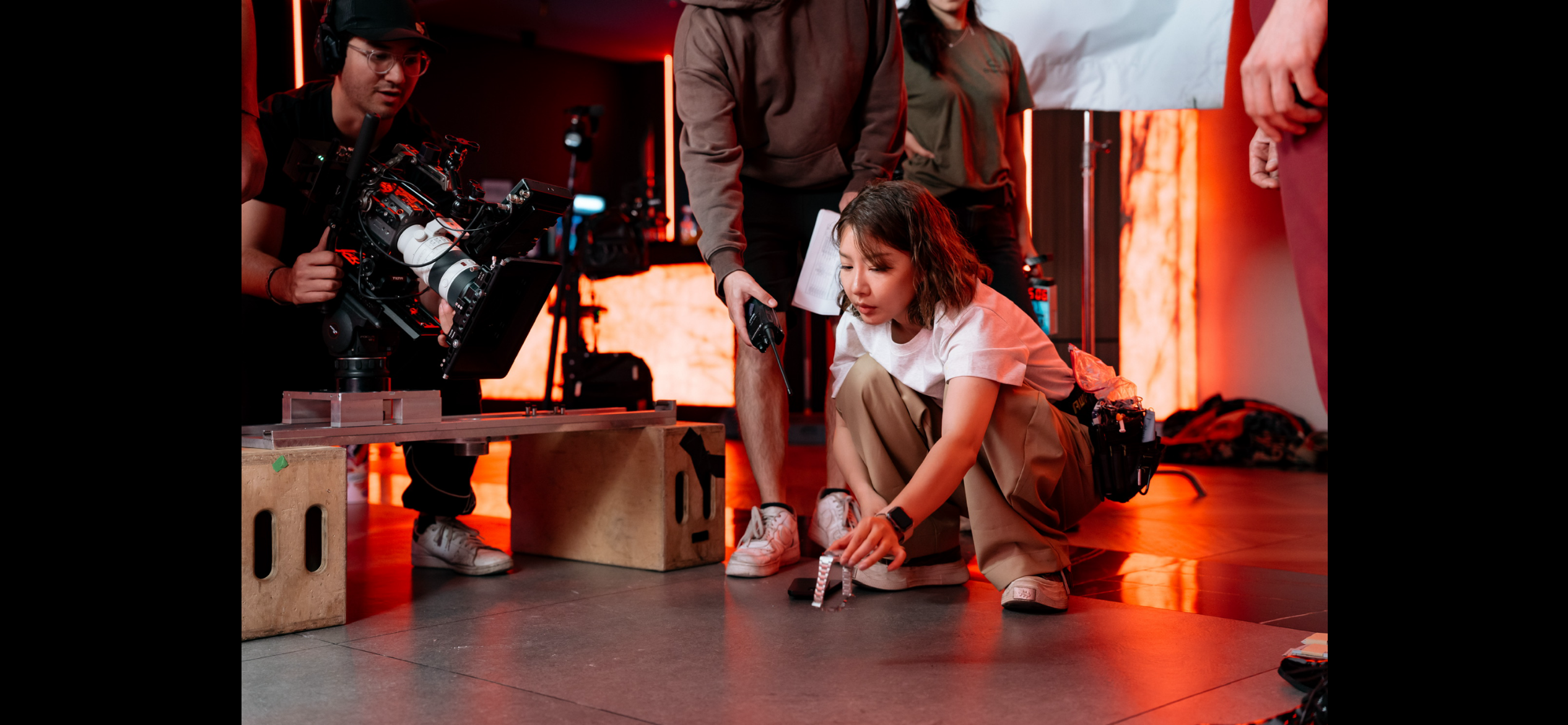
From concealed identities and family secrets to crime, romance, and personal reinvention, the short-form dramas designed by Yixian Guo move through very different worlds. Guo begins each project by considering what a setting can reveal about a character before the dialogue fills in the details. In her work, sets, props, color, and spatial relationships are not simply decoration; they are part of the storytelling.
Based in Los Angeles, Guo works across production design, filmmaking, and writing. In recent years, she has served as Production Designer on seven short-form drama productions across GoodShort, TikTok, and ReelShort. Her credits include GoodShort titles My Hidden Mafia Dad Ends It All, Bye Loser Husband, and The Imposter’s Obsessed Brother; TikTok projects Amnesia Wife: Ace Sniper, Surfing To The Right Groom, and Santa, Take Me Back to My Mom; and ReelShort’s God Of Ruin. Across these productions, Guo has been responsible for the overall visual concept, sets, props, and set decoration, while leading the art department through preparation and production.
The range of these projects has required Guo to establish distinct visual identities quickly and precisely. A family home, office, bedroom, or luxury interior may need to communicate social status, secrecy, tension, or intimacy within seconds. Guo begins with the story and character relationships, then translates those ideas into concrete choices involving furniture, color, wall treatments, materials, set dressing, and key props.
Short-form drama has become a sizable content business. Sensor Tower estimated that the category generated nearly $700 million in global in-app purchases in the first quarter of 2025, almost four times the amount from a year earlier. The United States accounted for close to $350 million, or roughly 49 percent. Those figures cover purchases through Apple’s App Store and Google Play and do not include advertising or other payment channels.
Guo’s projects have also reached substantial audiences across multiple short-form platforms. Public listings reviewed on November 11, 2026 showed TikTok-distributed Amnesia Wife: Ace Sniper at 93.2 million views and ReelShort’s God of Ruin at 8.7 million plays. On GoodShort, My Hidden Mafia Dad Ends It All displayed 1.4 million views and 234,400 followers; Bye Loser Husband showed 1.1 million views and 175,800 followers; and The Imposter’s Obsessed Brother showed 696,800 views and 116,100 followers. Together, the five public listings displayed more than 105 million views or plays. Because each platform uses its own reporting system, the figures are best understood as platform-displayed audience indicators rather than directly comparable counts of unique viewers.
Among these productions, Amnesia Wife: Ace Sniper offers a particularly clear example of Guo’s contribution behind the camera. With 93.2 million views displayed on its public listing, it is currently the most widely viewed short-form project in her production-design portfolio. As Production Designer, Guo was responsible for translating the script into a complete and credible physical world and for carrying the visual direction through execution with the art department.
One military-barracks scene began with almost nothing. The production was given an old, largely empty room containing wood floors, exposed ceiling beams, worn walls, and only a small amount of existing furniture. Rather than covering the room’s age and texture, Guo decided to use its roughness as the foundation of the design. The challenge was to make the room immediately recognizable as a military barracks without making major structural changes.
Guo introduced rows of black metal bunk beds, restrained military bedding, an American flag, and practical details associated with soldiers’ daily lives. The bunk beds became the most important transformation. Repeating the metal frames established the room’s function almost instantly while creating depth and visual layers behind the actors. Even when the camera revealed only part of the room, the audience could still understand it as a shared military living space. Guo deliberately kept the dressing controlled and functional rather than filling the room with decorative objects simply to make the set look more elaborate.
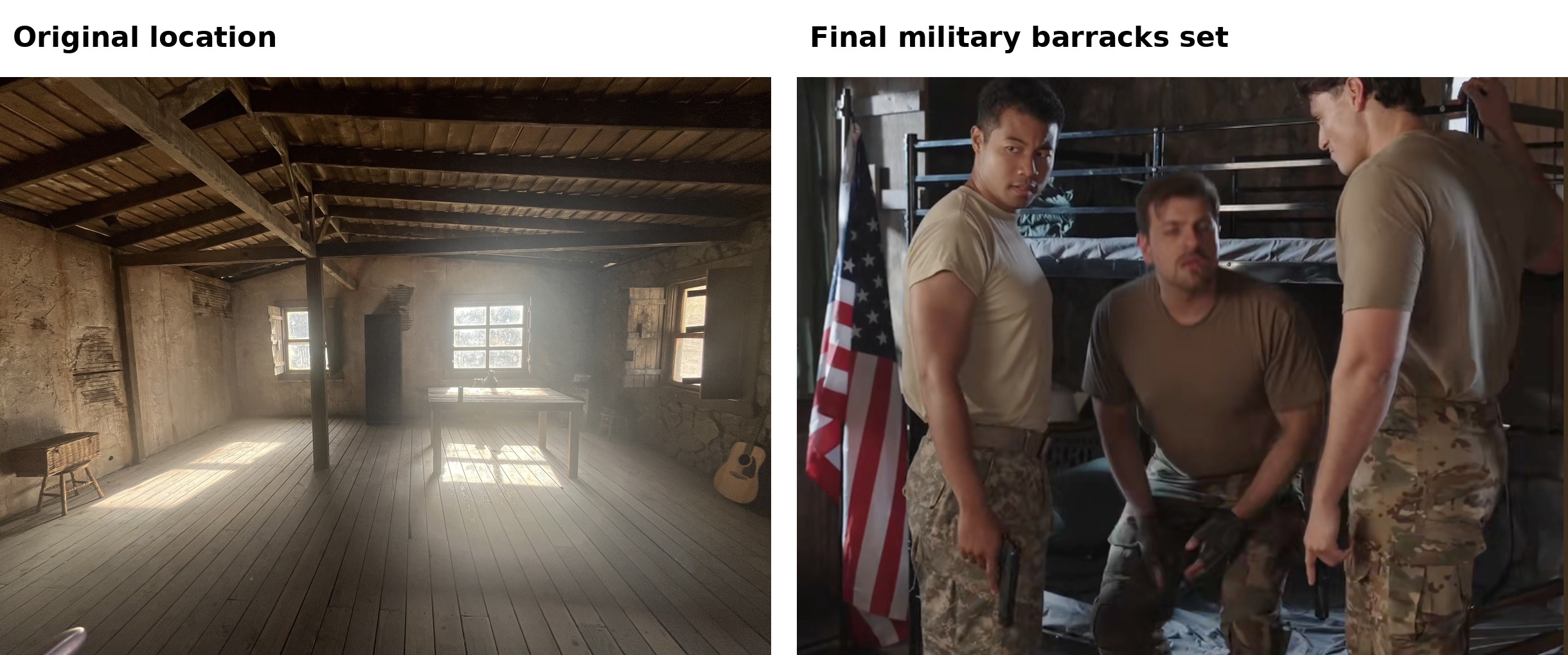
Seeing the finished scene, with uniformed actors standing between the bunk beds and the American flag at the edge of the frame, Guo felt that her approach had worked. The room no longer read as an empty old location; it felt like a place where these characters could plausibly live, train, and rest. The transformation reflects a principle that continues to shape her work: successful production design does not always call attention to itself. Its more important task is to make the audience believe that the story world exists.
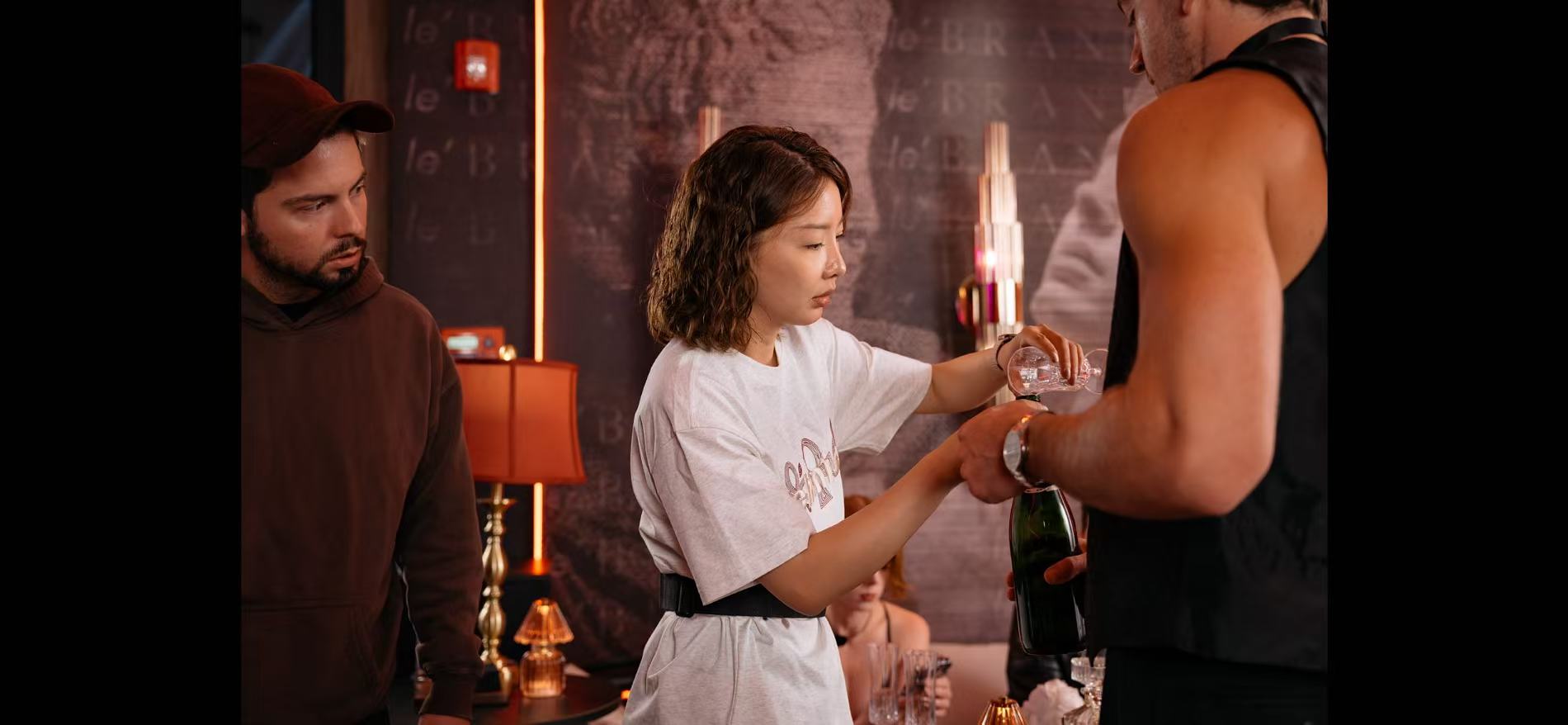
Guo’s background in graphic design also informs her process. Composition, color, and visual hierarchy shape how an audience reads an image, while her experience as a writer and filmmaker keeps those decisions tied to character and dramatic purpose. She says that when she watches films or series, she often notices the space behind the characters first—what sits on a desk, why a piece of furniture is placed where it is, and which visual clues suggest how a person lives. For Guo, those details are most effective not when viewers stop to admire the set, but when they accept the character and the world around them without consciously questioning it.
Her experimental film Self in Echo gives Guo more room to explore the relationship between a person and their environment. The film examines individuality under the pressure of family expectations, cultural habits, and social conditioning, using objects, light, color, and texture to make those pressures visible. Compared with the rapid rhythm of commercial short-form production, independent filmmaking gives her more time to let an image linger and to connect production design more closely with personal expression, psychology, and spatial metaphor.
Beyond her commercial projects, Guo’s independent film work has also received continued festival recognition. Self in Echo received awards from the International Independent Film Awards and Cinema World Fest Awards in 2026 and was a finalist at the Los Angeles Film & Script Festival. It was also selected by festivals including “L.A. Film Fest” Los Angeles Independent Film Festival and the Hollywood International Diversity Film Festival. Apple, a short film for which Guo served as Production Designer, was also named an Award Winner by Cinema World Fest Awards and the Power24 International Film Festival, and reached Finalist status at the Independent Shorts Awards International Film Festival.
Across seven short-form drama credits and festival-recognized independent films, Guo’ s production design spans different genres, platforms, and scales of production. Her commercial projects have reached audiences in the tens of millions, with Amnesia Wife: Ace Sniper alone displaying 93.2 million views, while Self in Echo and Apple have earned Award Winner and Finalist recognition across multiple festivals. Her work combines visual oversight and art-department leadership with close attention to character and story. Whether working on a high-viewership commercial series or a more personal independent film, Guo’s goal remains the same: to create spaces that do not merely fit the story, but actively carry narrative information.

