

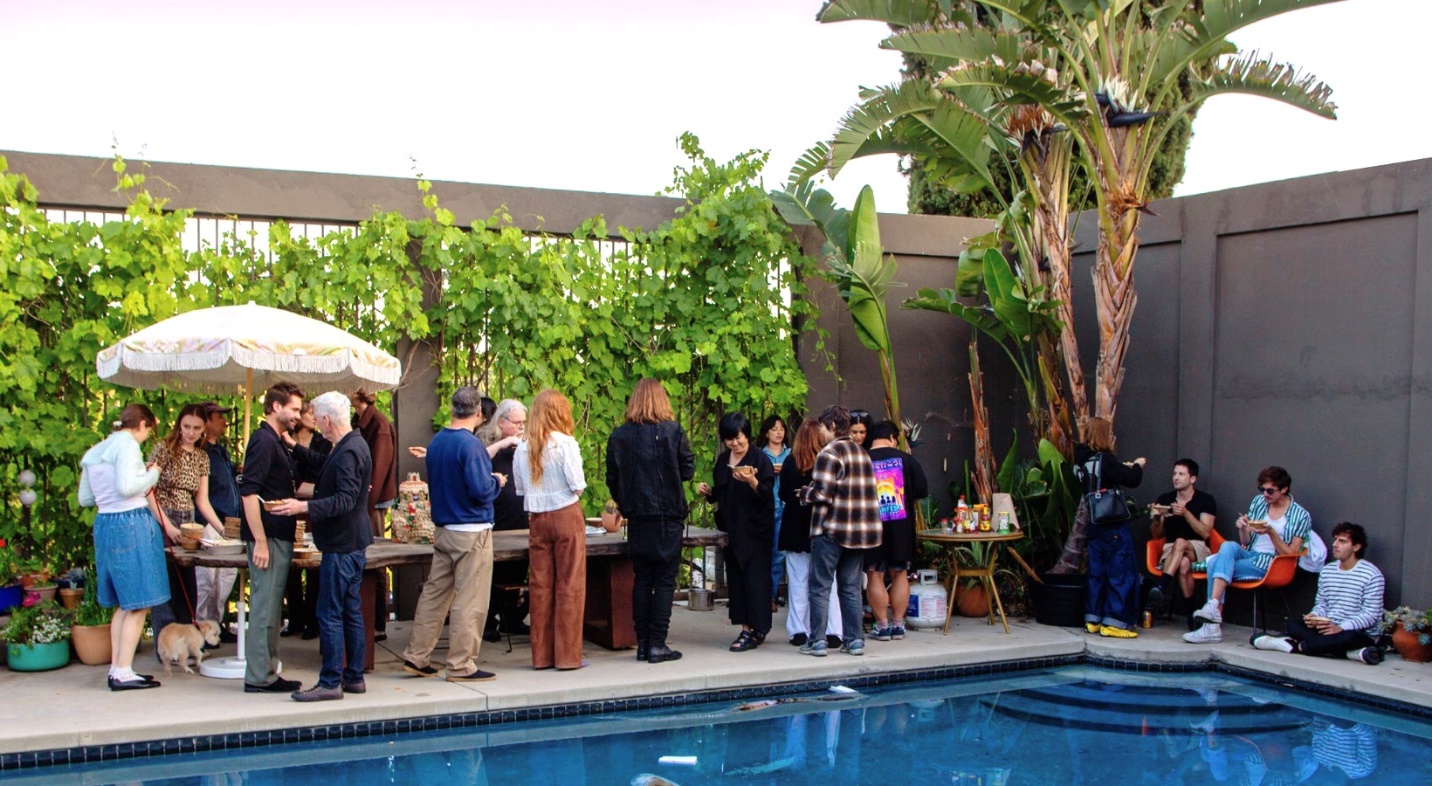
Few spaces in Los Angeles carry the cultural resonance of The Wolford House. Designed by James De Long, a protégé of Frank Lloyd Wright, the celebrated mid-century modern residence has long occupied a distinctive place within the city’s contemporary art landscape, where architecture, artists, and public dialogue intersect. During the summer of 2025, CUPPED transformed the house into an immersive gathering of seventy-seven artists. Among its most compelling contributions was Bin Fang’s WHITE RUSSIAN, a work that quietly reimagined the ordinary drinking vessel as a site where labor, intimacy, memory, and cultural ritual converge.
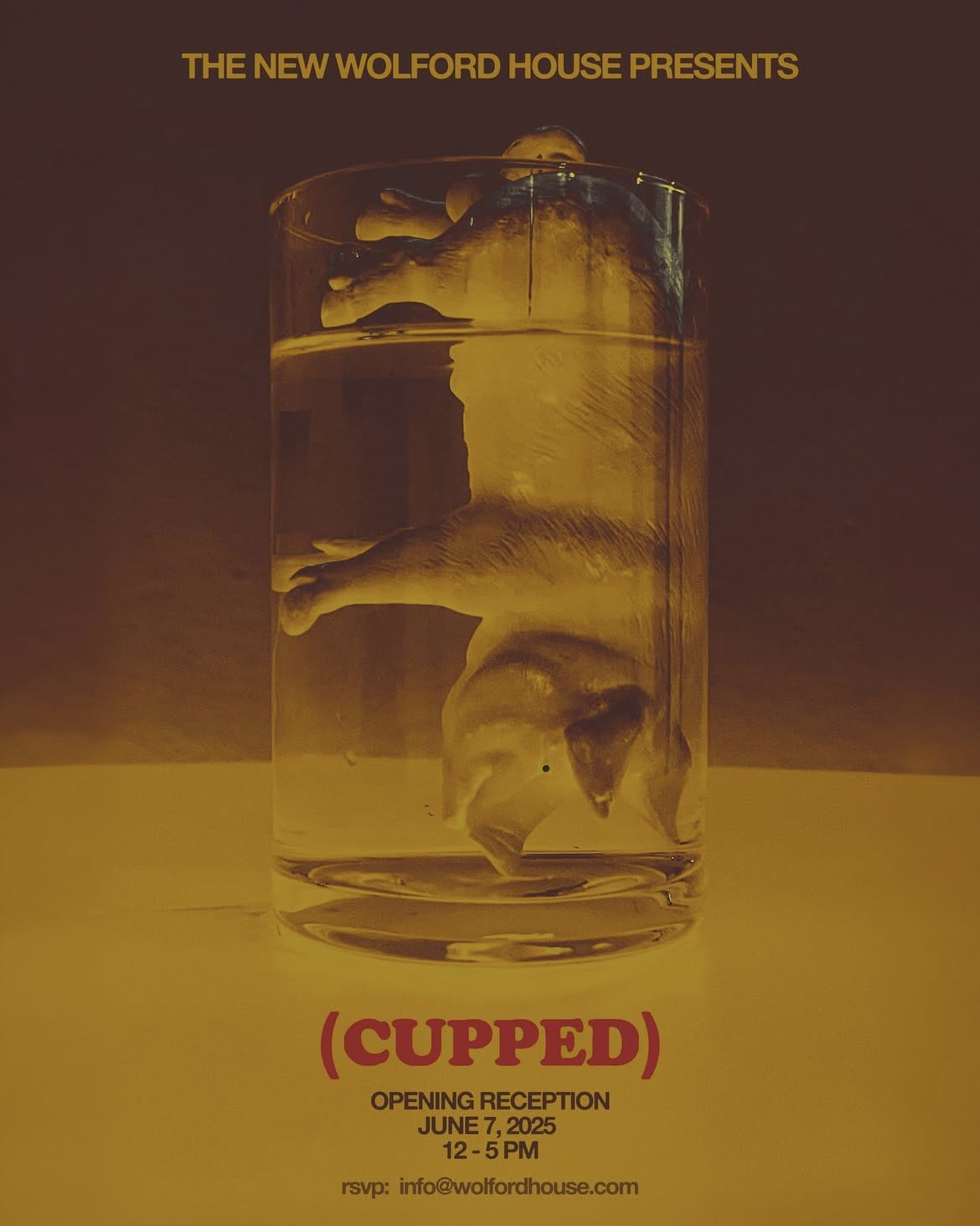
The cup carries a cultural history that extends beyond drinking, appearing in rituals, social exchanges, and expressions of desire. Within CUPPED, this familiar vessel offered artists a way to examine how everyday objects acquire meanings beyond their practical use.
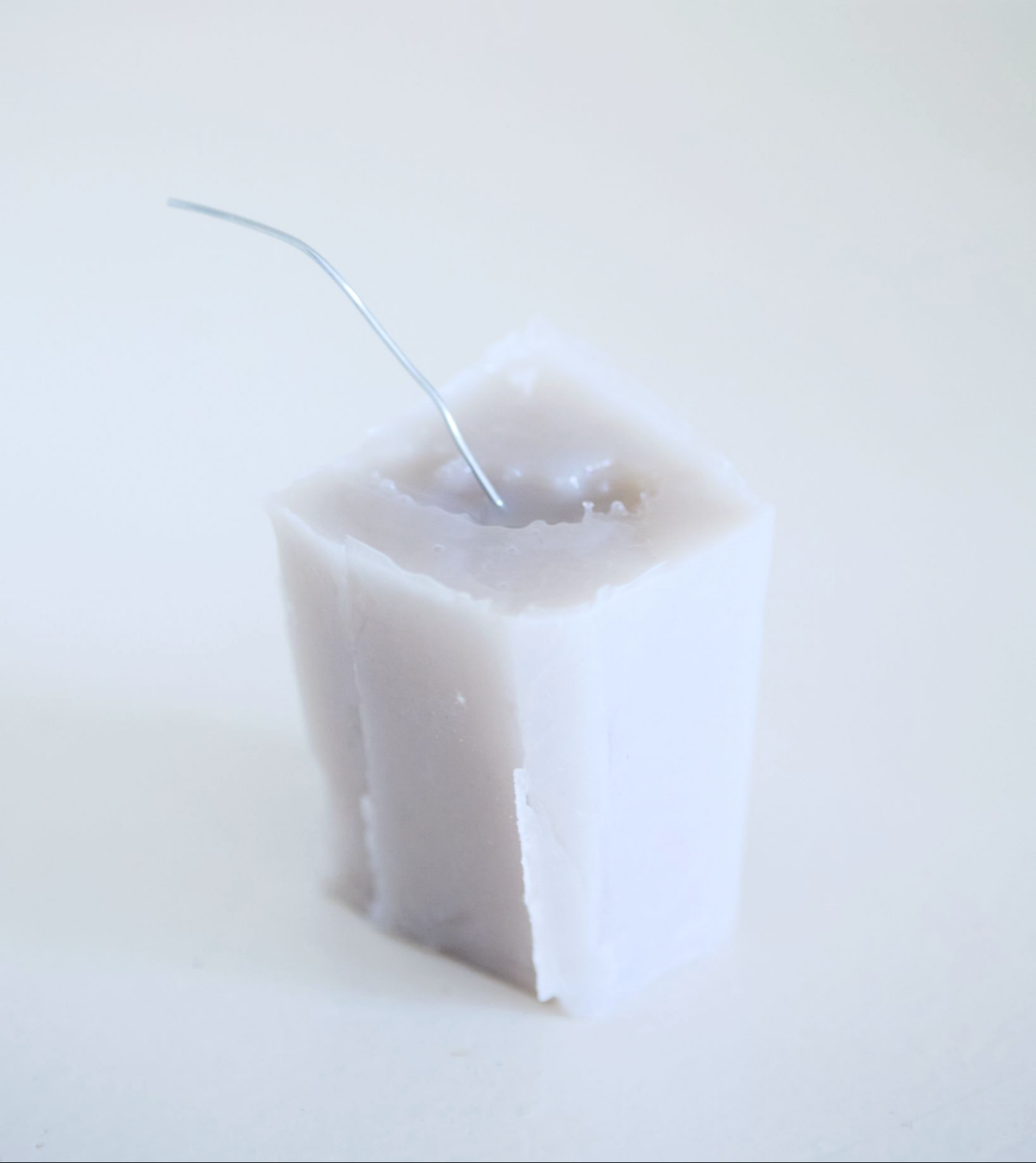
Among the works on view, Bin Fang was notable not only as one of the participating artists but also as one of the exhibition’s core curators. His work WHITE RUSSIAN attracted particular attention for its intimate scale and unconventional material vocabulary. Constructed from silicone rubber and aluminum wire, the irregular sculpture measures just 2.5 × 3 × 1.5 inches. While retaining the enclosed interior of a vessel, it abandons the rigidity and stability typically associated with a functional cup. Its softened surface, compressed form, and pliable structure bring it closer to the suggestion of a bodily fragment than to a familiar drinking object, subtly unsettling the viewer’s expectations of utility, material, and form.
Fang is a Los Angeles-based multimedia artist working across language, video, installation, image, sound, and drawing. His work has been exhibited at Bolsky Gallery, Human Resources, Printed Matter, and Wolford House. His practice frequently engages with labor, fragmented memory, performance, and experiences that become altered or difficult to communicate through translation.
WHITE RUSSIAN developed from Fang’s experience working in underground clubs. Responding to the cup as the exhibition’s central form, he returned to the cocktail glass—not simply as an object of use, but as something tied to repeated acts of service, bodily proximity, and the unstable sensory conditions of nightlife. “I wanted to use a cocktail to reorganize memories of intimacy, labor, and bodily perception in the club, and to translate them into a more embodied language,” Fang explains.
The title refers to the White Russian cocktail, a drink whose mild appearance conceals the intensity of its ingredients. Pale, creamy, and sweet, it resembles a milkshake despite being made with vodka and coffee liqueur. Fang is drawn to that contradiction—to the way softness can disguise strength, and to the quiet absurdity of the two existing side by side. Rather than illustrating the cocktail itself, the sculpture absorbs that tension into its material language.
Cast in silicone rubber, the work has a yielding, tactile surface that recalls skin more than any manufactured object. Beneath it, a simple aluminum wire armature keeps the form upright without resisting its tendency to buckle, sag, or fold into itself. Instead of correcting those distortions, the structure allows them to remain visible, leaving the object suspended somewhere between collapse and support.
The result still holds the interior space of a vessel, yet it no longer behaves like one. It invites the hand while quietly refusing its function. As the eye moves across the creased silicone and catches glimpses of the wire beneath, the sculpture begins to evoke the physical memory of pressure, repeated touch, and service work—less a representation of nightlife than a residue of the body moving through it.
At 2.5 by 3 by 1.5 inches, WHITE RUSSIAN requires close viewing. Its irregular opening, folded surface, and underlying wire structure become visible only as the viewer approaches. “I wanted the work not to be seen completely at once, but to invite the viewer to move toward it,” Fang says. “That movement shortens the distance between the body and the work, making the act of looking slower and more private.”
The scale recalls both a cup held in one hand and a small area of the body examined at close range. The viewer’s approach therefore becomes part of the encounter, producing intimacy while preserving an awareness that the object remains only partially open.
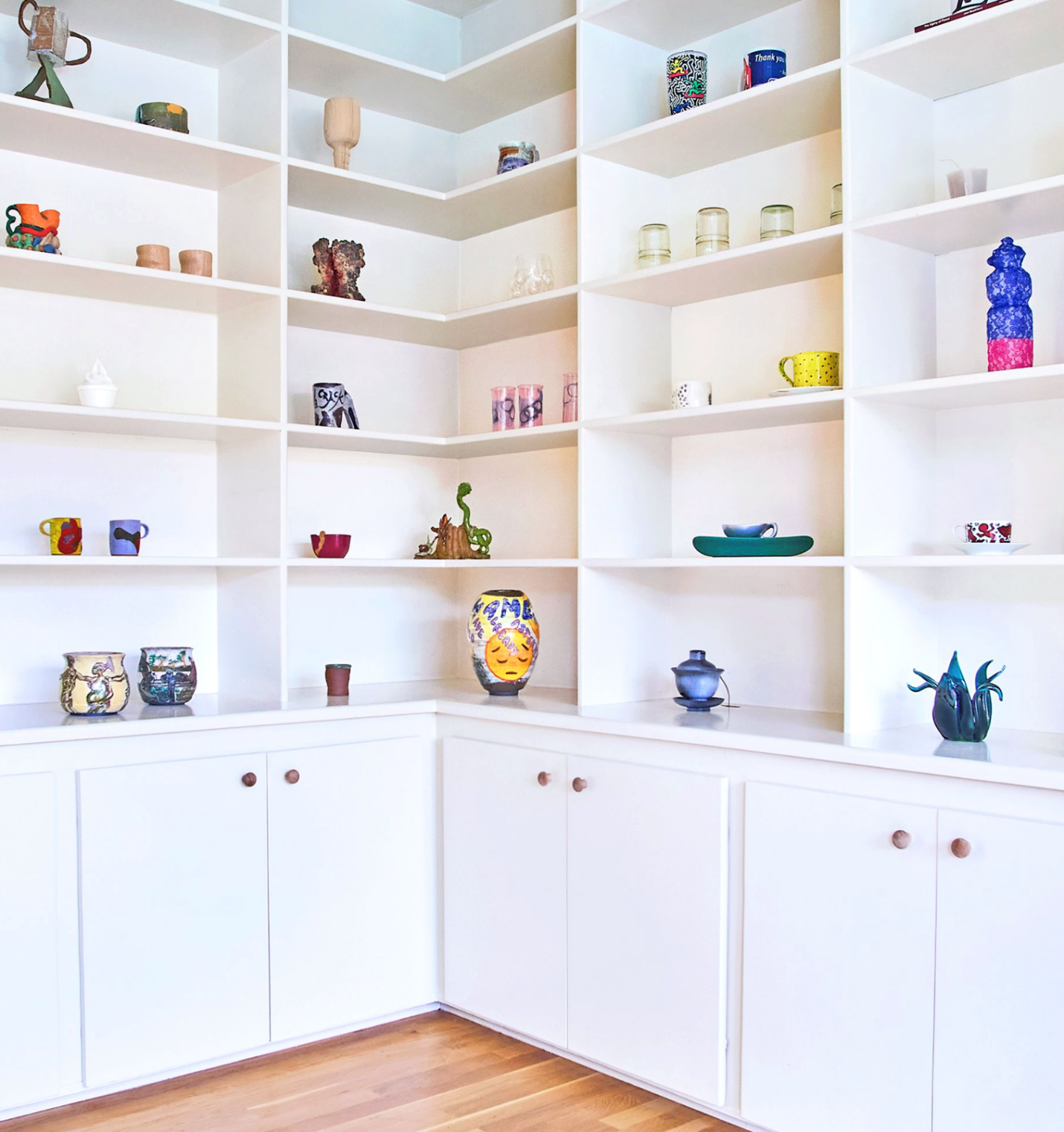
The residential setting of The New Wolford House intensified the work’s uncertainty. Cup-related objects appeared within rooms associated with domestic routines and everyday use. Fang’s sculpture initially aligned with that environment through its scale and vessel-like shape, yet its deformation interrupted the expectation that a cup should be stable, graspable, and ready to use.
The sculpture also reflects Fang’s understanding of the cup as a temporary boundary. Its enclosing form offers a space in which sensations and memories can remain before they settle into a fixed explanation. The interior remains visible, while the material surrounding it appears flexible and unsettled.
Within CUPPED, WHITE RUSSIAN moved the cup away from ceramic utility and toward bodily perception. Its silicone folds, concealed wire structure, and handheld scale preserve the familiarity of a vessel while making practical use impossible. Through this altered form, Fang gives material shape to memories of nightlife, service labor, and physical proximity without reducing them to a single identifiable scene.
At The Wolford House, where architecture, community, and artistic exchange have long converged, WHITE RUSSIAN did more than complicate the familiar form of the cup. It quietly shifted the exhibition’s attention toward the bodies, memories, and forms of labor that everyday objects continue to carry. In doing so, Fang expanded CUPPED beyond an exploration of the vessel itself, revealing how even the most ordinary forms remain inseparable from the cultural experiences that shape them.

