Lucia Shuyu Li’s artistic impulse originates from within and finds its way into many applications.
Unlike some artists who are highly specialized, she is not defined by the form her art takes, but rather the sentiment or the ideas behind it. Because of this, she has been able to shine as a multidisciplinary artist, working across installation, performance, painting and sound. Her work has similarly been displayed in a variety of locations and settings, from galleries to museums to universities. Her work has also found its way into a new book called Ephemeral Metamorphosis.
What inspires her? The complexities of contemporary society she says. She delves into the abstract and surreal dimensions of existence, undertakes sociological inquiries, and in the process strives to unravel the nuances of spatial form. She is also a bit of an artistic rebel.
“I am unwavering in my commitment to challenging the confines of conventional painting,” Lucia states, “and I do this by embracing a diverse range of multimedia and unconventional formats.”
Fragile boundaries
She was born in China in 2001 but for years has had her base in the US. She received a masters of fine arts from the Maryland Institute College of Art and has exhibited across the US, as well as internationally. Those boundaries between her Chinese heritage and her American art career, between cultural identities, as well as perception and reality, have continued to fascinate. She also channels some of her artistic energy into the classroom and works as an educator at Montgomery College in Silver Spring, Maryland where she teaches students drawing and ceramics.
“My academic studies allowed me to develop a research-driven methodology that integrates philosophy, psychology, and multi-media based work,” says Lucia. She credits the academic enviroment at MICA with significantly shaping her understanding of contemporary art discourse. That experience also expanded her approach to interdiscriplinary experimentation, she says.
Working between performance, installation, and conceptual research, Li has received support from the Maryland State Arts Council and the Abell Foundation, while continuing to build an interdisciplinary practice across institutional and experimental art spaces in the United States.
The Chinese American Museum in Washington, DC, has also taken note of her innovative work and her work was included in the Soaring for Peace exhibition this year.
Far gone but so close
When asked about her artistic achievements, Lucia highlights two projects as being particularly meaningful for her.
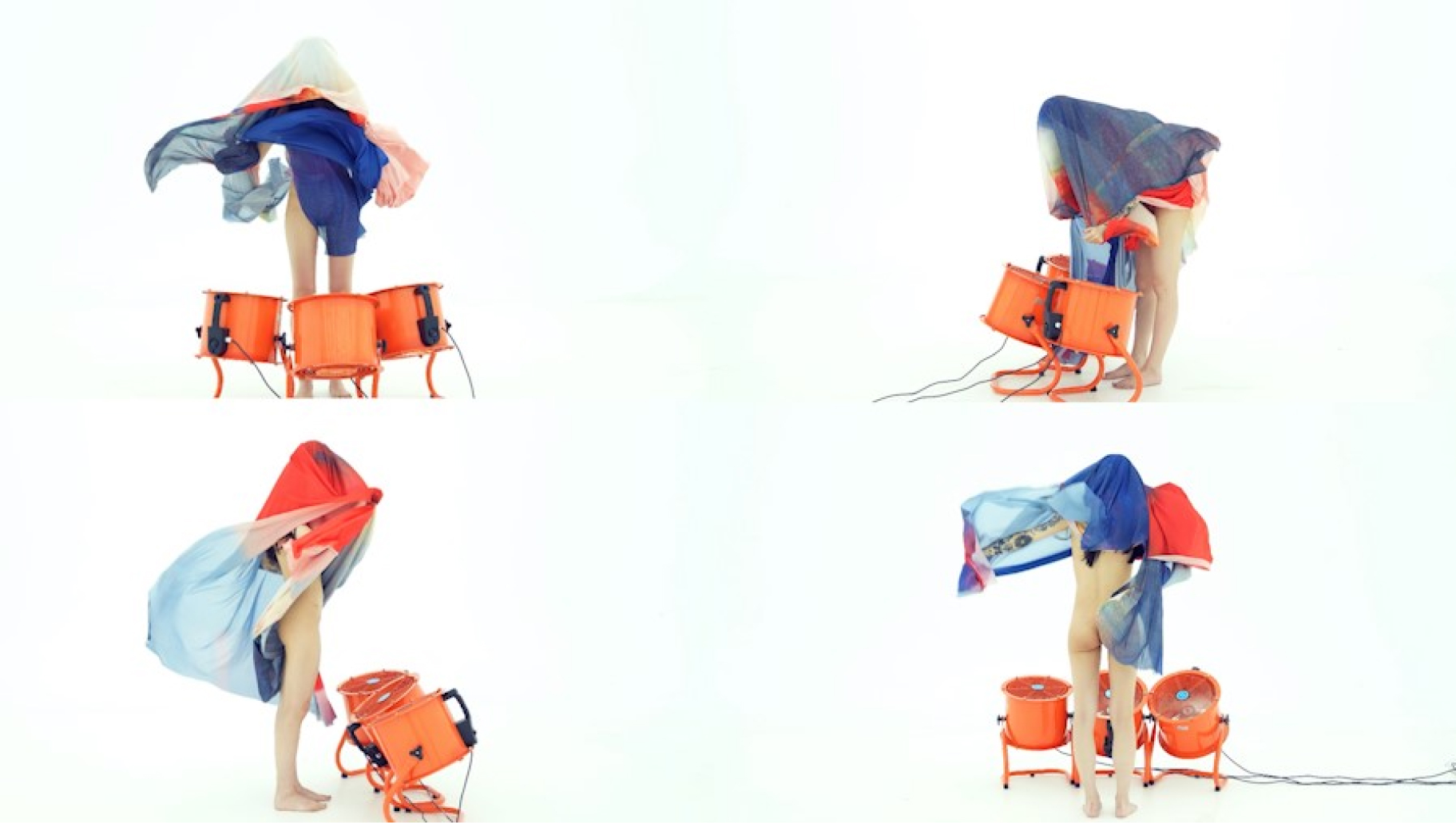
The first, called FAR GONE but so Close, is a performance artwork exploring the relationship between the body, identity, and the mind. Naked and facing three fans, Lucia uses a light cloth to cover her face and body, symbolizing her personal identity. The force of the wind constantly lifts and pushes the cloth away, representing the uncontrollable pressures exerted by the environment and society on individuality.
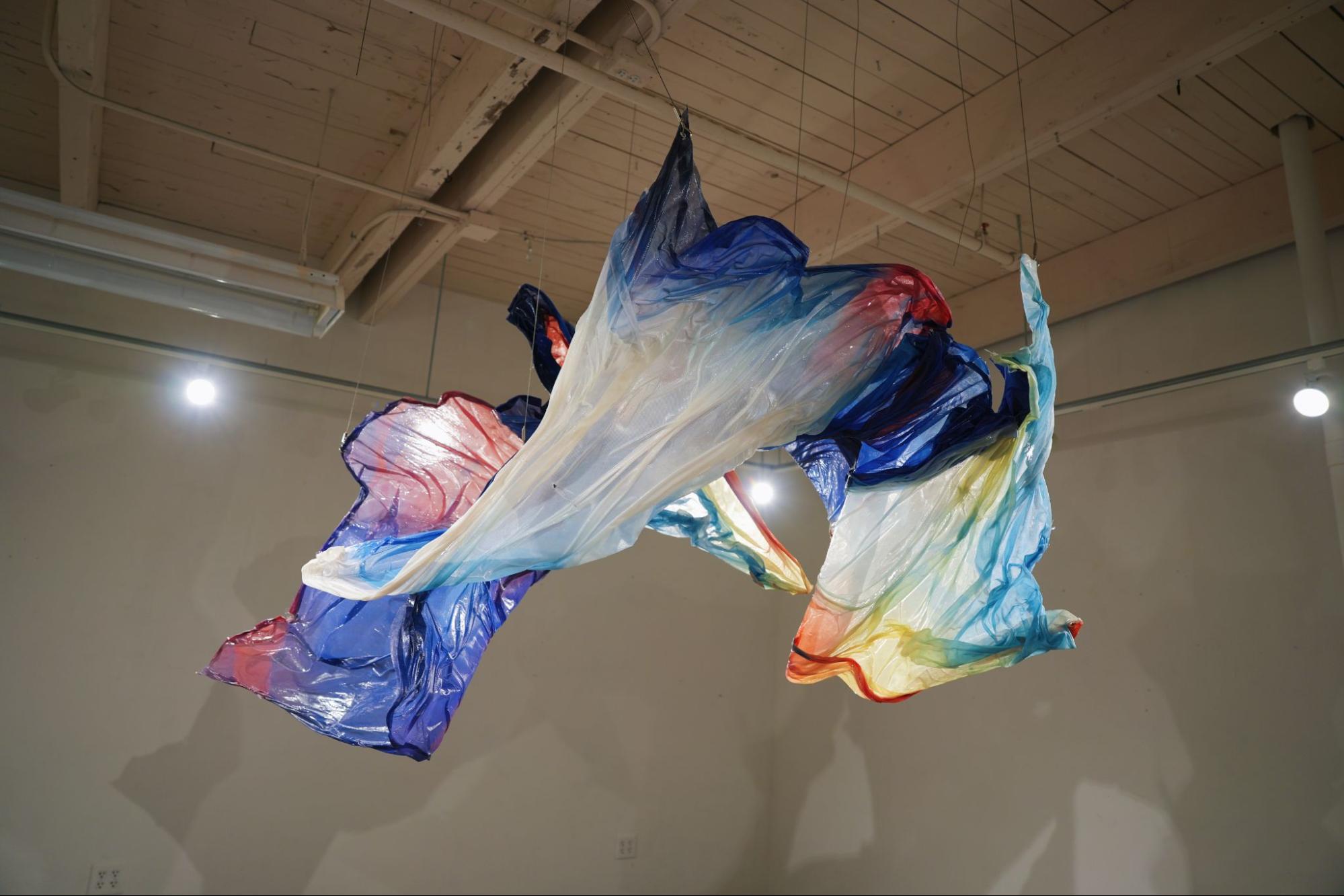
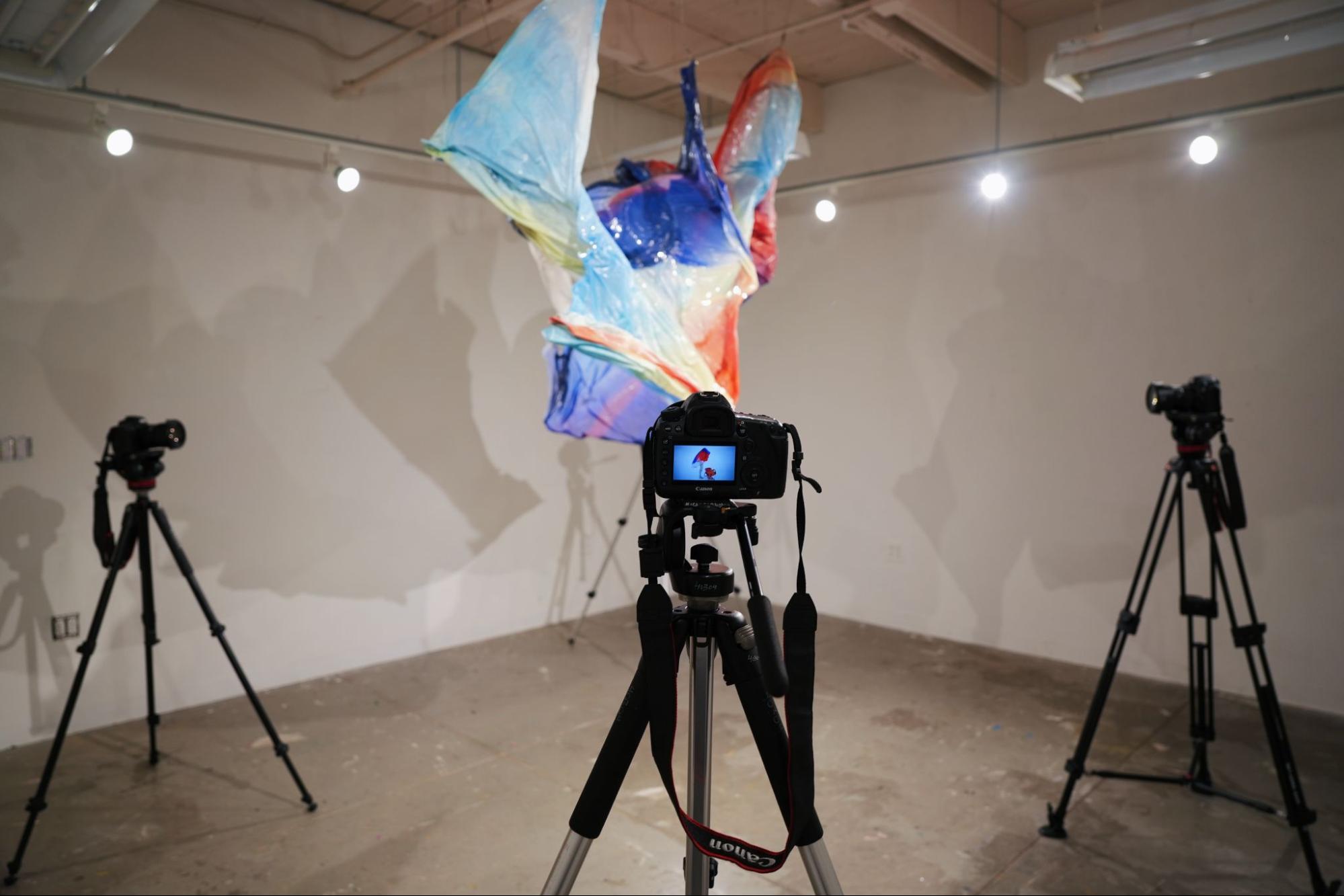
Lucia documented this performance and later transformed it into FAR GONE but so Close. In the installation, the originally soft cloth is reconstructed into the shape it formed while being blown by the wind. Four cameras continuously photograph the cloth. At first, viewers assume the cameras are recording the present moment, but on closer inspection they discover that the cloth, though physically still, appears to flutter on the screens.
“My own image also reappears within the installation space,” says Lucia. “This shift between reality and illusion creates a surreal atmosphere that disrupts the temporal and spatial boundaries of live performance.”
Painting sickness
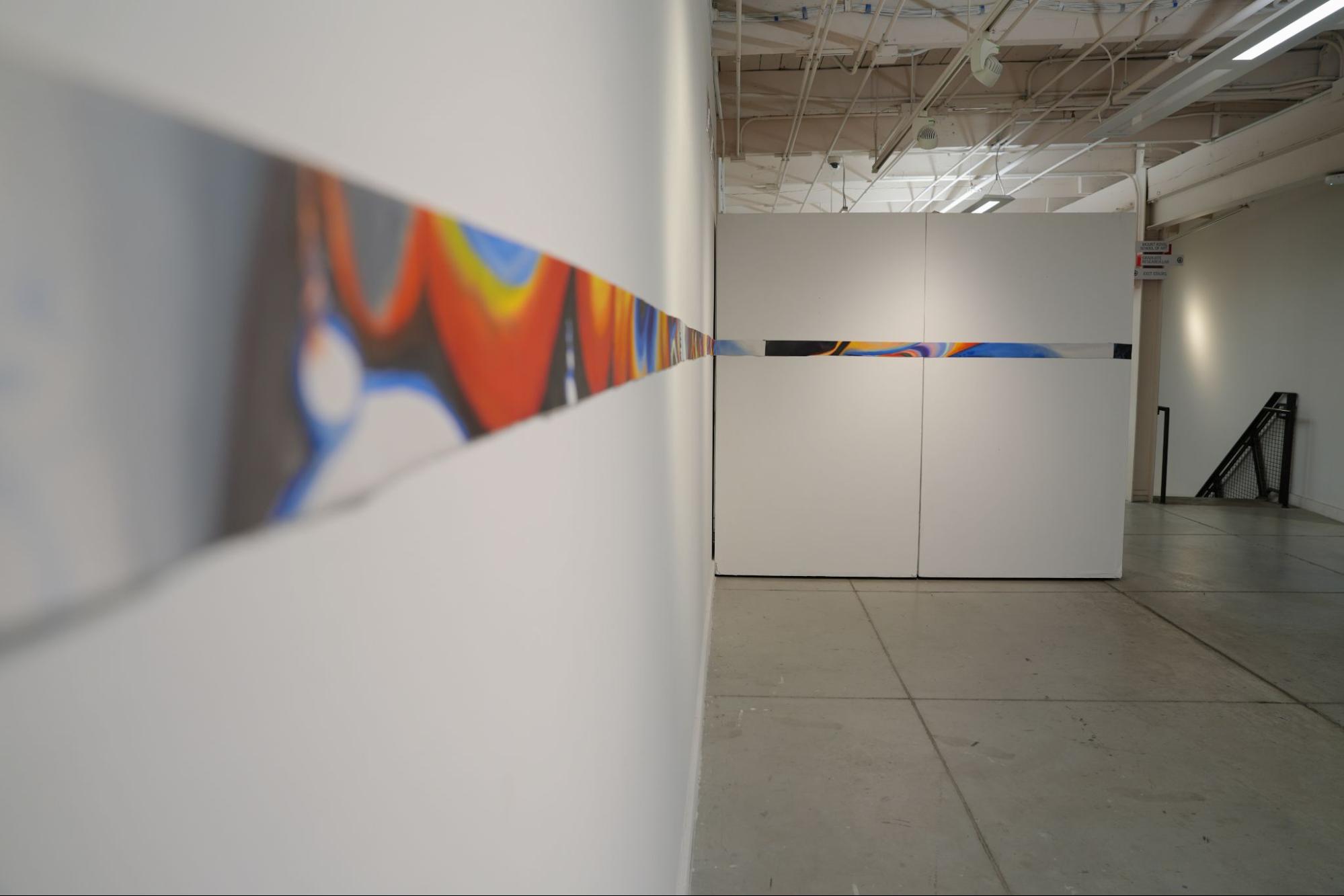
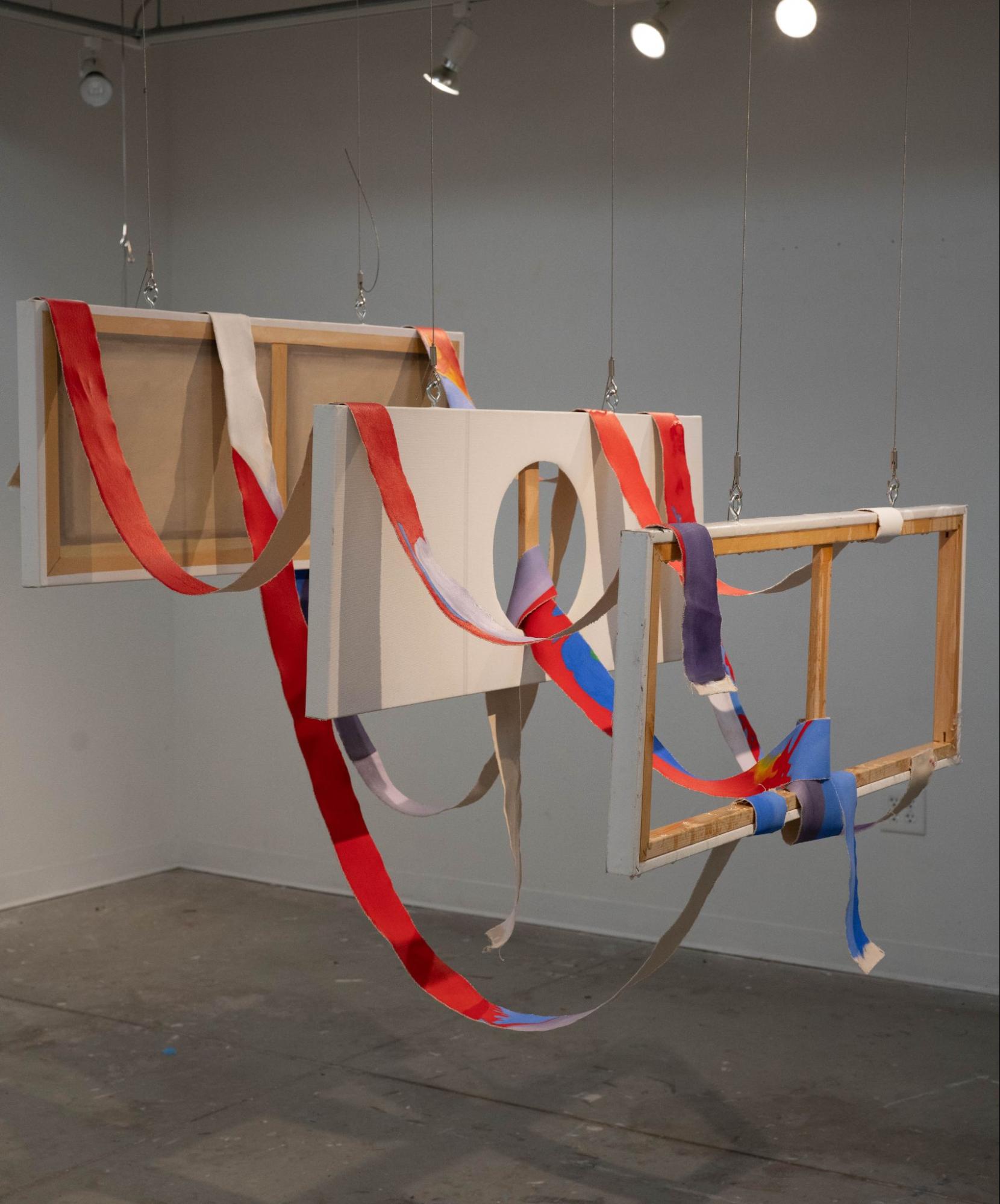
Another achievement that means a lot to Lucia is Painting Sickness, which developed out of her work with oil painting. Told by critiques that her technical skills were strong, but that her paintings appeared flat, Lucia turned this perceived weakness into strength, creating a triptych installation that evolves step by step from stretcher bars to a completed painting.
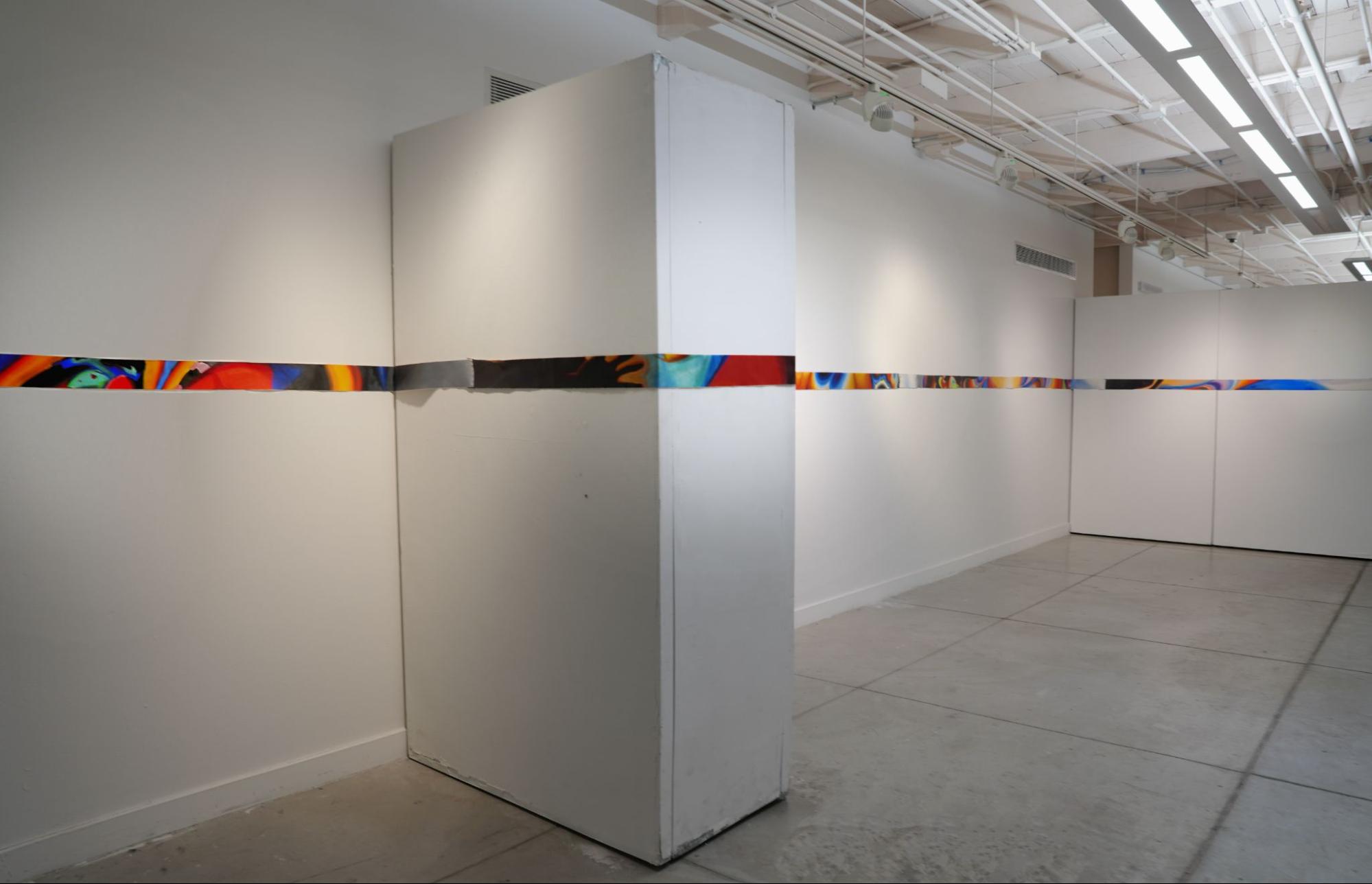
The canvases in Painting Sickness imitate the realistic appearance of the back of a canvas, a detail many viewers only notice after closer observation. “I also cut previous paintings into strips and layered them onto the three-canvas structure,” says Lucia. “This combination of traditional painting and conceptual installation reflects an important direction in my practice.”
For Lucia, Painting Sickness was born out of her frustration with traditional oil painting. She found discussions around it exhausting and wondered if, in the age of digital media, it had become an obsolete art form. By cutting her paintings into strips, Lucia created a new format. Audiences became interested in the original painting before it was sliced up for the exhibition.
One might see distant parallels to William S. Burroughs’ cut-up method from Naked Lunch.
“Before creating the installation, I had never intended to destroy the painting,” remarks Lucia. “This led me to reflect on the difference between cutting apart an existing artwork and intentionally creating a painting designed to be dismantled from the beginning.”
More immersive environments
When asked about what she would like to do next, Lucia sees more collaborations with institutions, museum projects, and international research-based exhibitions as a natural direction.
But more isn’t the only key word here. Lucia would like to go deeper, by creating more immersive performative environments that combine sound, installation, and embodied action. Such environments could allow her to explore contemporary psychological and social conditions, but also provide viewers with their own illuminating experiences.
Lucia also would like to keep building cross-cultural and multidisciplinary collaborations, especially those working in experimental performance, sound art, and conceptual research.
“For me, performance art functions as a method of research rather than purely representation,” says Lucia. “My work explores the tension between internal psychological states and external institutional systems, often using repetition, sound, spatial disruption, and physical endurance as performative strategies,” she says.
Lucia says she intends to above all stay true to her artistic vision and plans to keep exploring the intersection of memory, perception, power and vulnerability through the fulcrum of the body.