

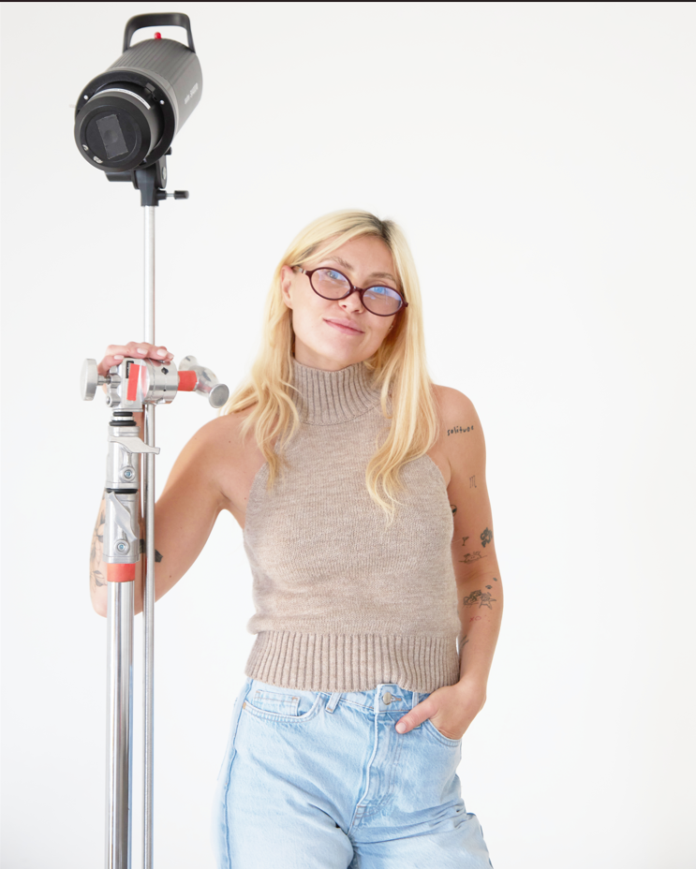
Today, people increasingly view a photograph not simply as a good shot, but as something that came about through the interaction between the photographer, the person in the frame, and the shooting process itself. With so many images around us, what matters now is not only what is depicted in them, but also how they were created—and why some photographs deeply move us, while others go unnoticed.
Bella Beishembaeva’s works, which have been noticed and highly praised at international exhibitions such as “L’atelier d’art. Rencontre des mondes” in France (March 2026) and “Emotional Echoes” in Italy (November 2024), demonstrate that photography is a controlled process. Bella is a world-renowned photographer and is considered a leading expert. She has developed her own scientific method that helps her create artistic and deeply meaningful photographs.
“I haven’t thought of the shot as the ultimate goal for a long time. The shot is merely the result. First, you need to establish contact, build trust, and create the right mood—and only then can the camera capture something genuine,” Bella explains.
Photography as a process before the shoot
The key to her approach isn’t when you press the shutter button, but much earlier. The most important thing is to establish a psychological connection and begin observing the person. Bella’s method consists of several steps: first, she watches how the person behaves without words, noticing involuntary movements, pauses, and glances. She lets him gradually get used to the camera and the setting, observing how his emotions naturally evolve. Bella calls this stage “analytical.”
“For the first 20 minutes or so, I hardly take any photos. I just observe. I watch how the person holds their hands, how they breathe, where they look. This isn’t just small talk to get acquainted; it’s more like a diagnostic process,” says Beishembaeva.
Avoiding Staging as a Method
One of her main principles is not to force people into unnatural poses.
“When someone starts ‘acting’ for the camera, it’s immediately obvious. It’s not about a bad pose, but the fact that there’s nothing behind it—it’s empty. My goal is to remove this barrier between the person and what they want to show,” Beishembaeva explains.
Instead of shooting according to a pre-written script, she captures genuine, raw emotions that emerge during conversation. In her view, photography isn’t an attempt to recreate some image, but simply to capture and preserve how a person feels in that moment.
Method as a Quality Criterion: Predictability of the Result
Another important point: she pays more attention to the actual shoot than to post-processing. She says that it is during the shoot that the most important elements for the future photograph are established.
“Photo editing cannot create emotion; at best, it can prevent it from being ruined. If nothing genuine happened during the shoot, no editor can help,” says the photographer.
So, for her, a good shot is the result of a well-thought-out process that can be repeated over and over again, yielding consistently high-quality images. In addition to taking many photos herself, Bella has also developed her own teaching methodology.
This method forms the basis of Beishembaeva’s signature course on artistic and professional photography, which has been studied and applied in their work by over two hundred students. In the course, Bella teaches students how to use visual thinking, create entire photo series, understand how people perceive images, and properly prepare both herself and her subjects for a shoot.
“Bella’s teaching method changed my professional mindset and taught me a new approach to creating any visual content. The course helped me learn to work with the meaning of photography and achieve predictable results,” says Alan Dangarin, one of her students.
International Exhibitions and Recognition
In November 2024, two of Bella Beishembaeva’s works, “Polina” and “Breath,” were selected from over a thousand submissions to participate in the international exhibition Emotional Echoes in Italy. The works were evaluated by a jury comprising renowned figures from the art world. Among them were: Snezhanka Spasova Nikolova—an artist, curator, and founder of A.L.L. Gallery; Anna Mandrikyan—an international professional photographer whose photos have even been exhibited at the Louvre; and Alexey Volchkov—an internationally renowned artist.
The entries were evaluated according to very strict criteria: the judges assessed the craftsmanship and originality of the works, how innovative they were and how they contribute to the development of art, how well they align with the award’s mission, as well as the overall coherence and concept of the projects.
Following the selection process, the works “Polina” and “Breath” were deemed to fully meet the main requirements. Bella’s artistic approach was particularly noted for her ability to combine her own visual language with methodical work on the emotional state of the person she is photographing. Separately, the work “Breath” received the international Art of Emotional Freedom Award.
This award is given to projects that effectively explore themes of emotional freedom and deep psychology, as well as contribute something new to contemporary visual art. Among experts, this series was noted for how well it conveys psychological nuances, for its cinematic quality, and for the personal story behind each image.
Participation on the International Jury
In addition to her own photography, Bella was invited in 2025 to serve on the expert jury of the ARTÉNO International Art Awards. This is a major international platform that brings together artists, photographers, designers, and digital content creators from many countries. The competition focuses on contemporary art, visual techniques, and conceptual photography. Participants are evaluated based on the originality of their work, their technical skill, and the cultural significance of their work. From the very beginning, the competition received over 10,000 submissions from more than 50 countries, and it quickly became a prominent international platform where both emerging and established artists can showcase their work.
Bella Beishembaeva’s contribution was particularly highlighted at this exhibition. It was described as part of an international initiative that supports contemporary visual art, helps foster cultural exchange, and recognizes artists whose works possess a strong artistic foundation and profound meaning.
“Bella’s expertise was particularly important in evaluating works that explore identity, perception, and narrative through visual form. She made a significant contribution to maintaining a high level of professional objectivity, transparency, and quality in the selection process. Her expert opinion ensured a deeply structured and balanced evaluation of the submissions,” said David Markovich, head of the ARTÉNO International Art Awards organizing committee, explaining why Bella Beishembaeva was invited to join the jury.
According to him, her research experience and personal practice in visual art align very well with the core principles of this award, which values originality and a contemporary perspective on art.
Academic Practice and Expert Evaluation
In addition to her creative work, Bella Beishembaeva is also engaged in scientific research. She studies how color, composition, and overall visual language influence the emotions and reactions of people viewing photographs. In her academic work, Beishembaeva focuses on how well a photograph conveys artistic meaning, the emotional impact it has, how the composition is structured, and how the image is perceived psychologically. Her approach is grounded in rigorous research in the field of photography and how people communicate through images. Bella Beishembaeva has authored four academic articles: “The Influence of Photography on the Formation of Internal Self-Perception” (APNI, 2023), “Analysis of the Psychological Characteristics of Human Interaction with Photographic Content” (APNI, 2024), “The Role of the Color Palette in Shaping the Emotional Expressiveness of the Frame” (European Scientific Journal, 2025), and “Photography as a Means of Making Sense of Historical Changes” (“Science Bulletin,” 2026). These works explore how visual content influences our feelings, perceptions, and how we understand culture. All of her articles can be found on Google Scholar and eLibrary.
As Ruslan Evseev, founder of Florida Men’s Fashion Week, who has been involved in international fashion projects in Europe and the U.S. for over two years and also organized the fashion show and art exhibition “L’atelier d’art. Rencontre des mondes” on March 6, 2026, in Paris: “Her research shows that her practice is grounded in a very solid theoretical foundation. This sets her apart from many other photographers who simply work on commission or take commercial photos,” Evseev concluded.
A New Context for Visual Culture
Now that digital content is becoming increasingly abundant and technologies that generate images on their own are advancing, it is especially important that the process of creating a photograph be thoughtful and controlled. Beishembaeva’s approach illustrates this shift very well. We see how photography is transforming from a mere pretty picture into an entire system of interaction, where what matters is not only the final result but also the path taken to get there.

