

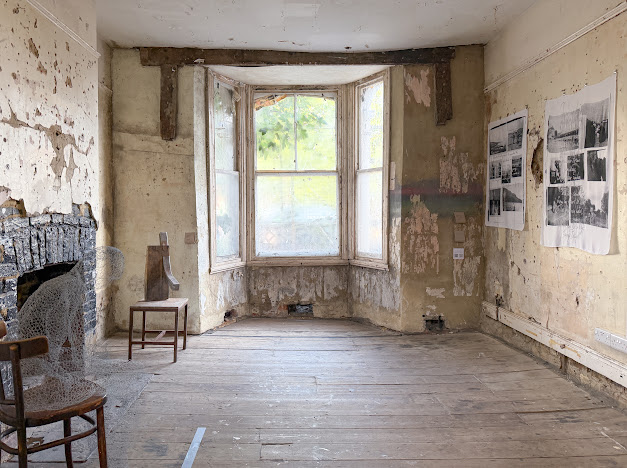
Intimate Residues is concerned with what is essentially invisible, so it is fascinating that the exhibition itself is strikingly physical. In the exhibition, organised by Why U Design and curated by Angie Chen, Eve Yin and Jinrui Zhao, emotional attachment appears in fabric, fragrance, clay and hair, dried flowers, handwriting and steel. Across five loose groupings of time, gesture, object, body and space, intimacy is understood as something that does not simply wrap up when contact ends. Instead, it is viewed as something migratory, capable of settling into and circulating within memory, material, place and ordinary routine. The categories give this movement a structure, sure, but it is striking how readily the artistic works escape them.
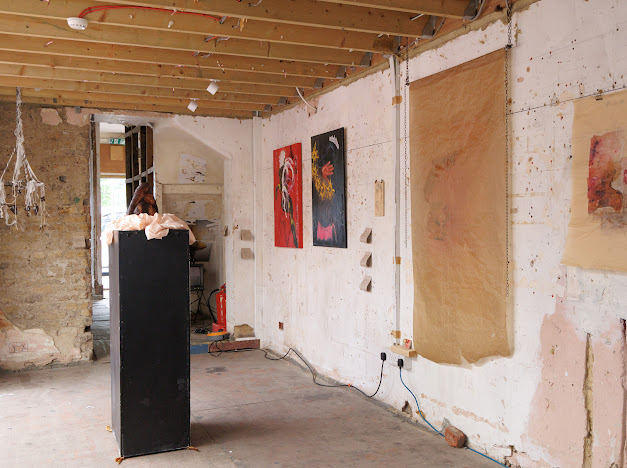
There is something particularly affecting about the exhibition’s manipulation of scale. Huge stretches of emotional life are repeatedly condensed into surprisingly finite things. Andrew Dawson’s Absence and Presence allows a father-son relationship to continue through correspondence, while Leah Jelf gathers decades of photographs and handwritten fragments into embroidered family histories. In Jelf’s work especially, whole generations suddenly occupy the same physical surface. Still, this compression never makes them restrictedly contained. At the opposite extreme, Jota’s i never asked your name gives a one-night encounter several fragrances of its own. Duration, the exhibition seems to be suggesting, is a poor measure of intimacy. An entire lineage can inhabit a wall; a matter of hours can linger in a smell forever.
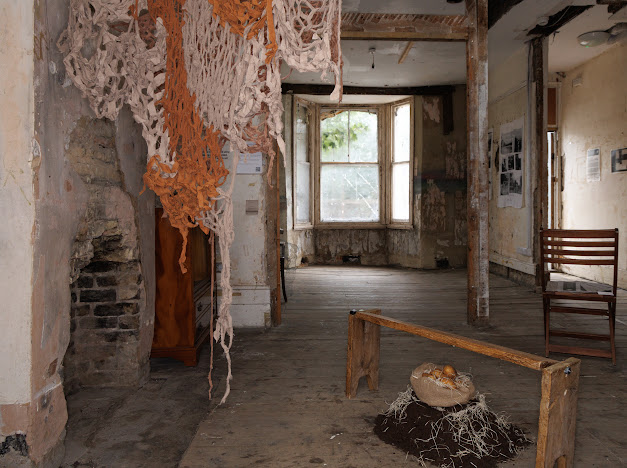
For an exhibit about intangible attachment, Intimate Residues is also remarkably textured. Sarah Baumgartner’s naturally dyed, hand-knitted structures foreground the labour and touch embedded in their crafting; elsewhere, Carolin Meyer works intimacy literally into clay, combining earth from her partner’s family garden with strands of both women’s hair. These materials illustrate the intensity of relationships through lending attachment somewhere physical to reside, collapsing distinctions between what we feel and the environments through which we come into contact with those feelings.
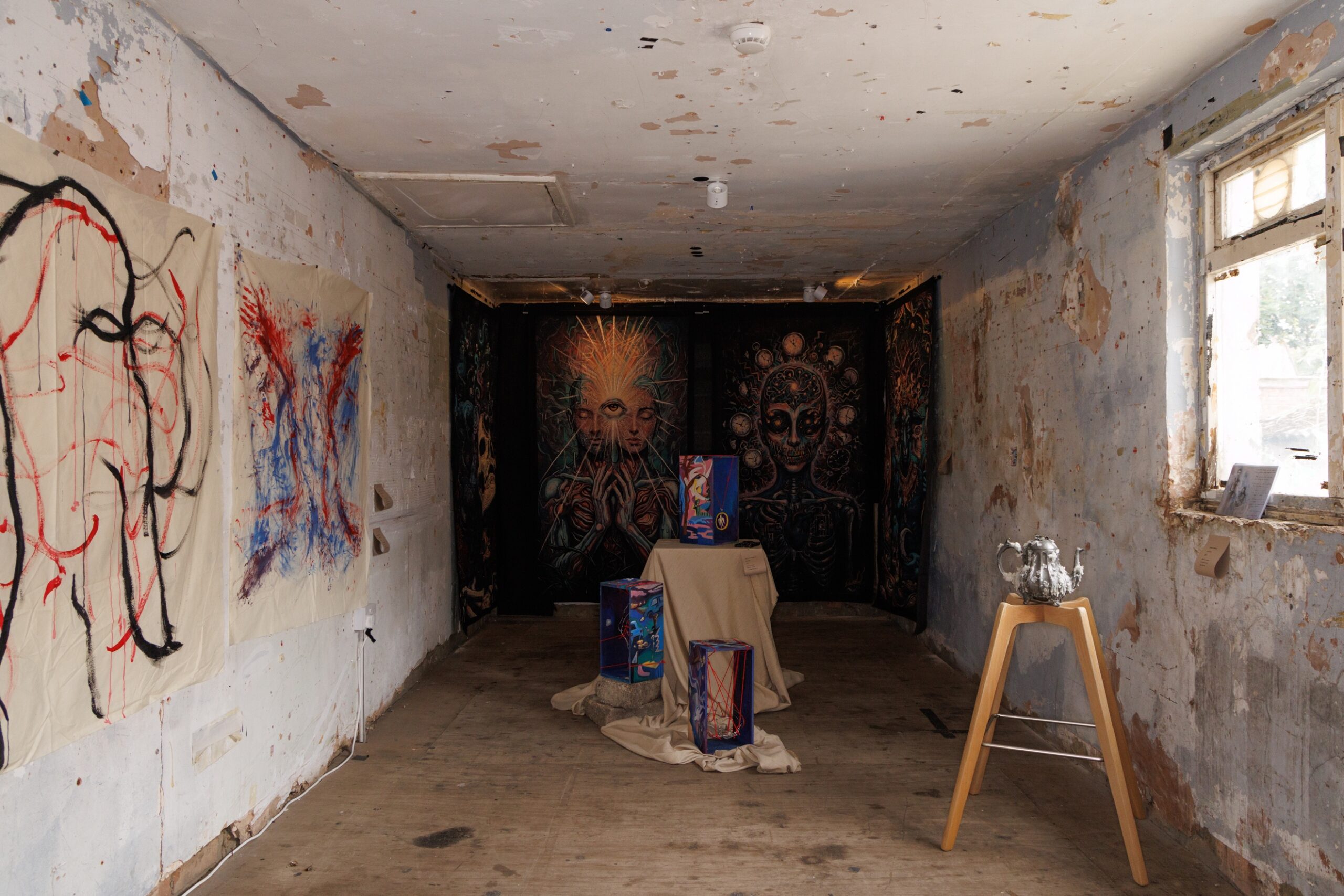
Notably, making intimacy tangible does not make it tidy. The exhibition is not afraid of its stickier registers, allowing closeness to be confrontational, precarious, weird, even frightening. I kept returning to Kattie Coe’s suspended mobile, where lace and bandage-like softness meets thorn-like steel. Its resemblance to something associated with infancy and care made its sharpness sincerely unsettling. It left me thinking about how little agency we have, particularly as children, over the whether the intimacy and care that shapes our earliest moments turns out gentle or grating. That unease sits alongside the exhibition’s recurring reclamations of queer desire, including Meyer’s reworking of Le Sommeil. Here, intimacy can nurture and wound, liberate and embarrass, comfort and haunt.
By the end, what stayed with me was not a single work but how much more expansive, stranger and messier intimacy had come to feel. I arrived conceiving of it primarily as something exchanged between people; Intimate Residues locates it just as readily in objects, senses, generations, ideas and places. I left wondering whether intimacy was ever really contained within a relationship or lifespan at all, or whether I’d simply never thought to look for all the other places it goes — and lingers.

