

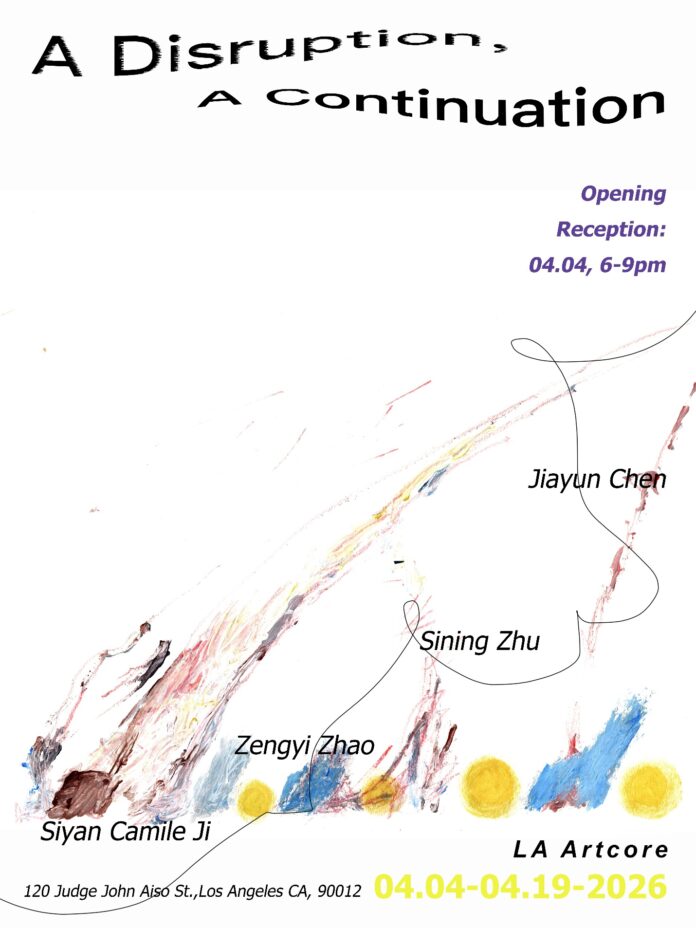
On April 4, 2026, LA Artcore presented A Disruption, A Continuation, an exhibition examining how material, image, and space shape perception. Through a combination of drawing, photography, and installation, the exhibition led viewers through shifting modes of attention, exploring the instability of materials through variations in scale, surface, and spatial tension.
The exhibition featured works by four accomplished artists, Jiayun Chen, Siyan Camille Ji, Zengyi Zhao, and Sining Zhu. Concrete, acrylic marks, photographic intervals, and broken silicon wafers each carried a distinct kind of pressure, allowing the exhibition to move between physical encounter, visual rhythm, emotional distance, and technological fracture.
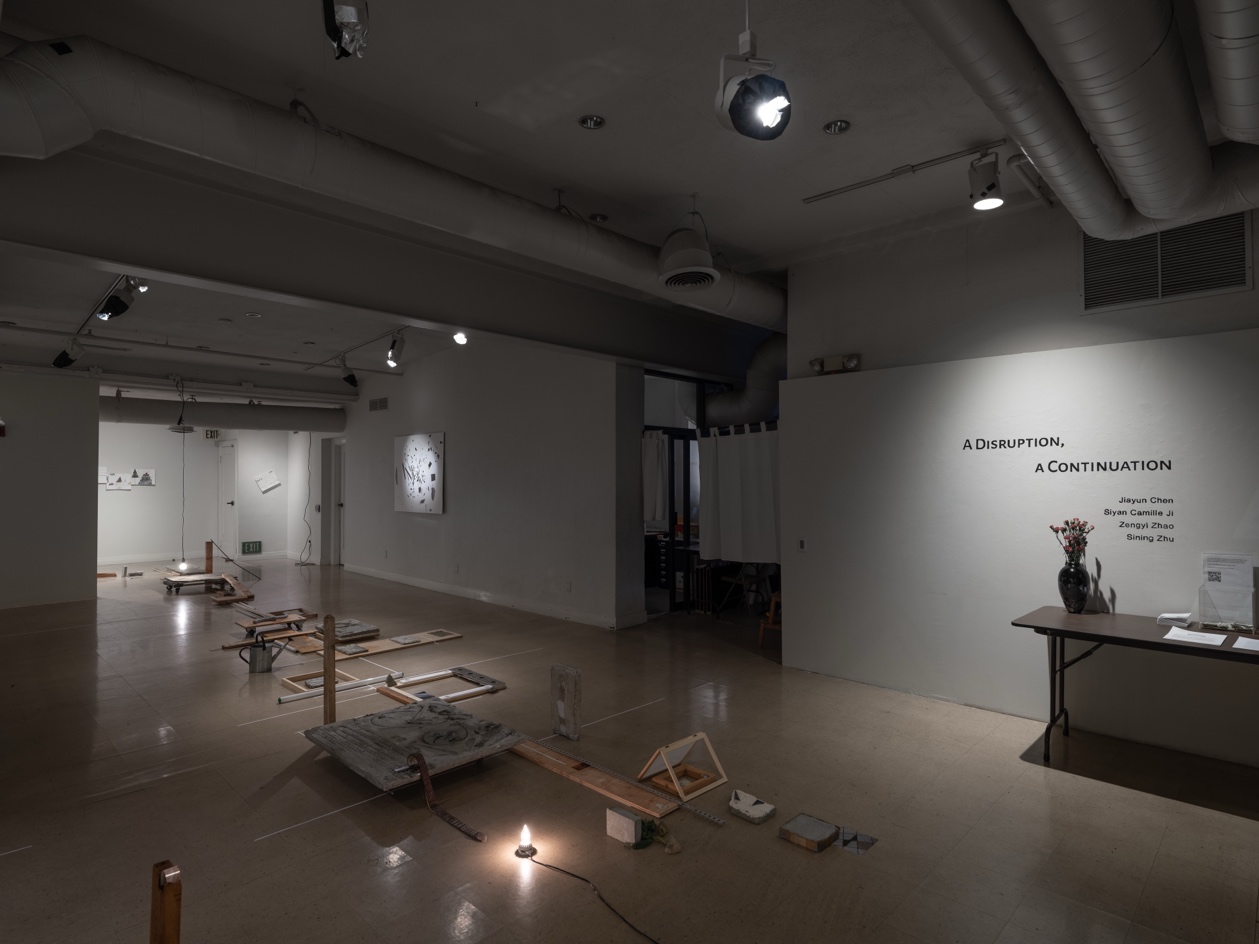
Sining Zhu’s Still A Long Dream——Datum was the first work that changed the pace of looking. Spreading across the gallery floor through concrete, wood, images, tape, water, and mixed media, the installation pulled attention downward. The viewer had to slow down, move around its edges, and read the materials through changing angles and proximity. From one side, the arrangement suggested a measured structure; from another, it appeared more fragile, more exposed, as if its order could shift at any moment.
Zhu’s use of materials associated with Dynasty Plaza in Los Angeles’ Chinatown gave the installation a specific urban resonance. Its effect came from the way it made place feel unstable and physically present. Standing near the work, one sensed the pressure of objects that had been used, displaced, preserved, or left behind. Zhu turned those traces into a spatial experience that was restrained, precise, and quietly unsettling.
After Zhu’s floor-based installation, Jiayun Chen’s Wobbly-Legged Rat shifted attention upward, toward the drawn surface. Her acrylic drawings carried a different energy. Forms leaned, clustered, stretched, and broke apart across the image plane. They seemed to suggest architecture, figures, and fragments of language, yet never settled into anyone reading. The longer one looked, the more active the works became.
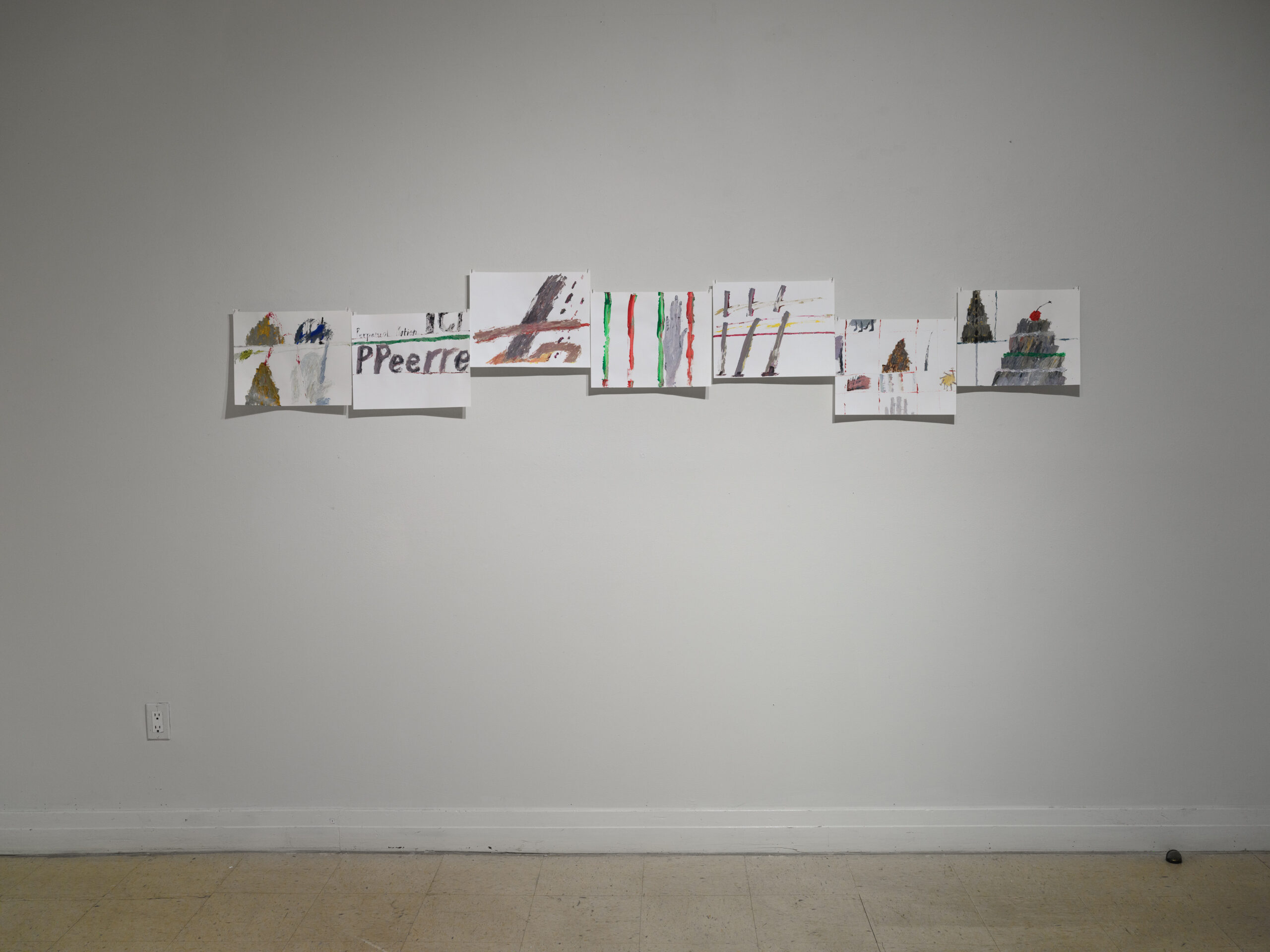
Chen’s drawings held attention through their sense of balance and imbalance. Certain forms appeared to stand or support weight, while others seemed ready to slip out of structure. This physical quality gave the works a sculptural charge, even as they remained rooted in line, gesture, and surface. Their instability felt deliberate, animated by rhythm rather than disorder.
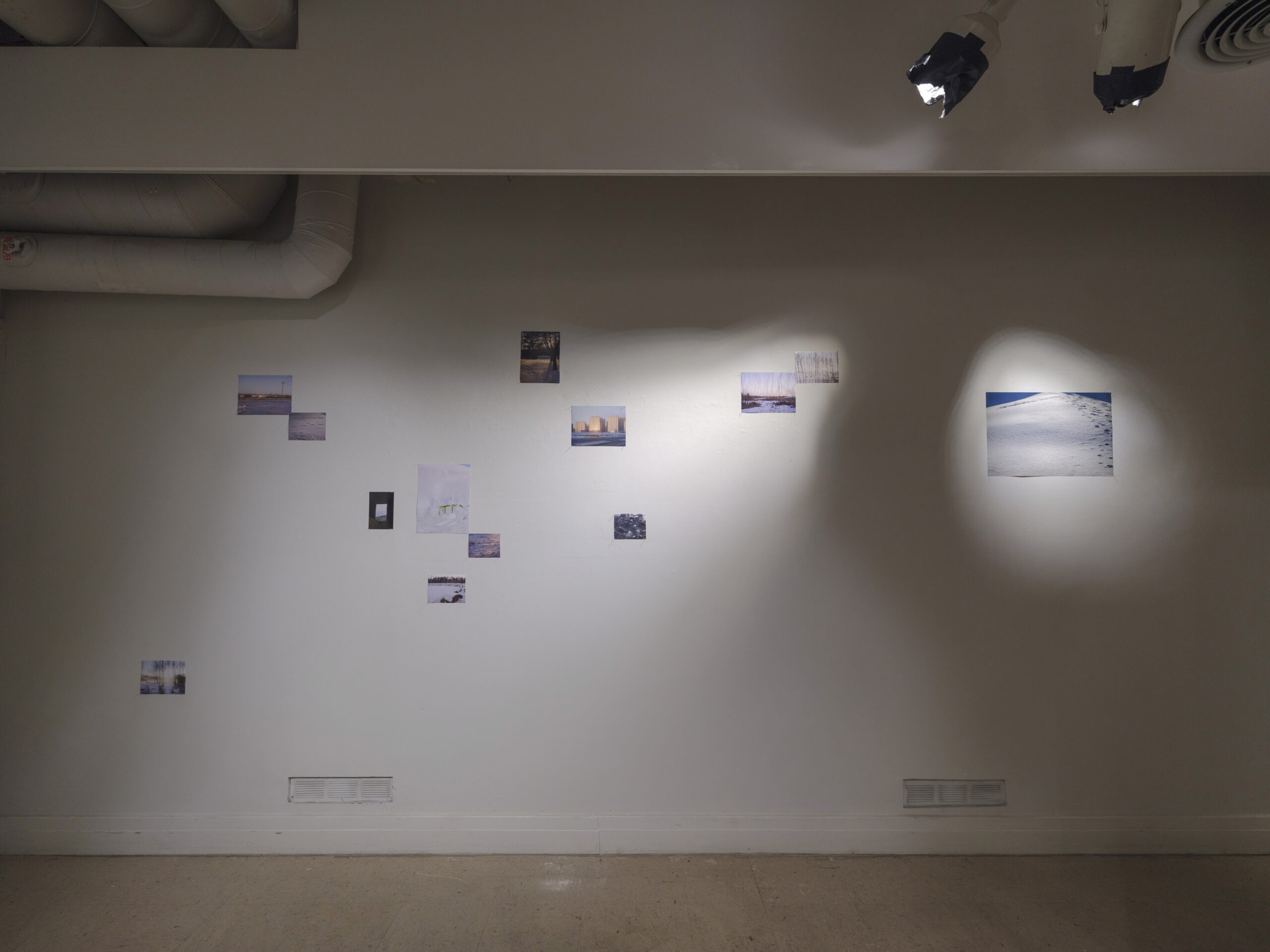
Siyan Camille Ji’s The Distance Unmeasured introduced a quieter rhythm. Installed across the wall with careful spacing, the photographs encouraged a slower kind of movement. The viewer did not simply look from image to image; the spaces between them became part of the experience. These intervals created pauses, allowing the photographs to feel connected without forming a fixed narrative. Ji’s photographs, made in the United States and during a return to the artist’s hometown, appeared together as fragments of perception, memory, and distance. The series built through tonal shifts, quiet transitions, and the relationship between closeness and separation. Standing before the wall, one became aware of how distance can be felt. Ji’s work gave the exhibition one of its most contemplative moments.
Zengyi Zhao’s 99.999999999% brought a sharper and more confrontational visual register. The photographs of damaged silicon wafers stood out through their scale and clarity. Set against stark backgrounds, the fractured fragments appeared suspended and exposed, as if a hidden technological material had been brought abruptly into public view. The impact of Zhao’s series came from this shift in scale. The wafers are tied to semiconductor production and the hidden infrastructure of everyday electronics, yet here they appeared as broken, enlarged, and highly visible forms. The photographs held a sharp contrast between technical precision and material failure. In the gallery, that contrast gave the series a cold intensity. Zhao made technological fragility visible without softening its force.
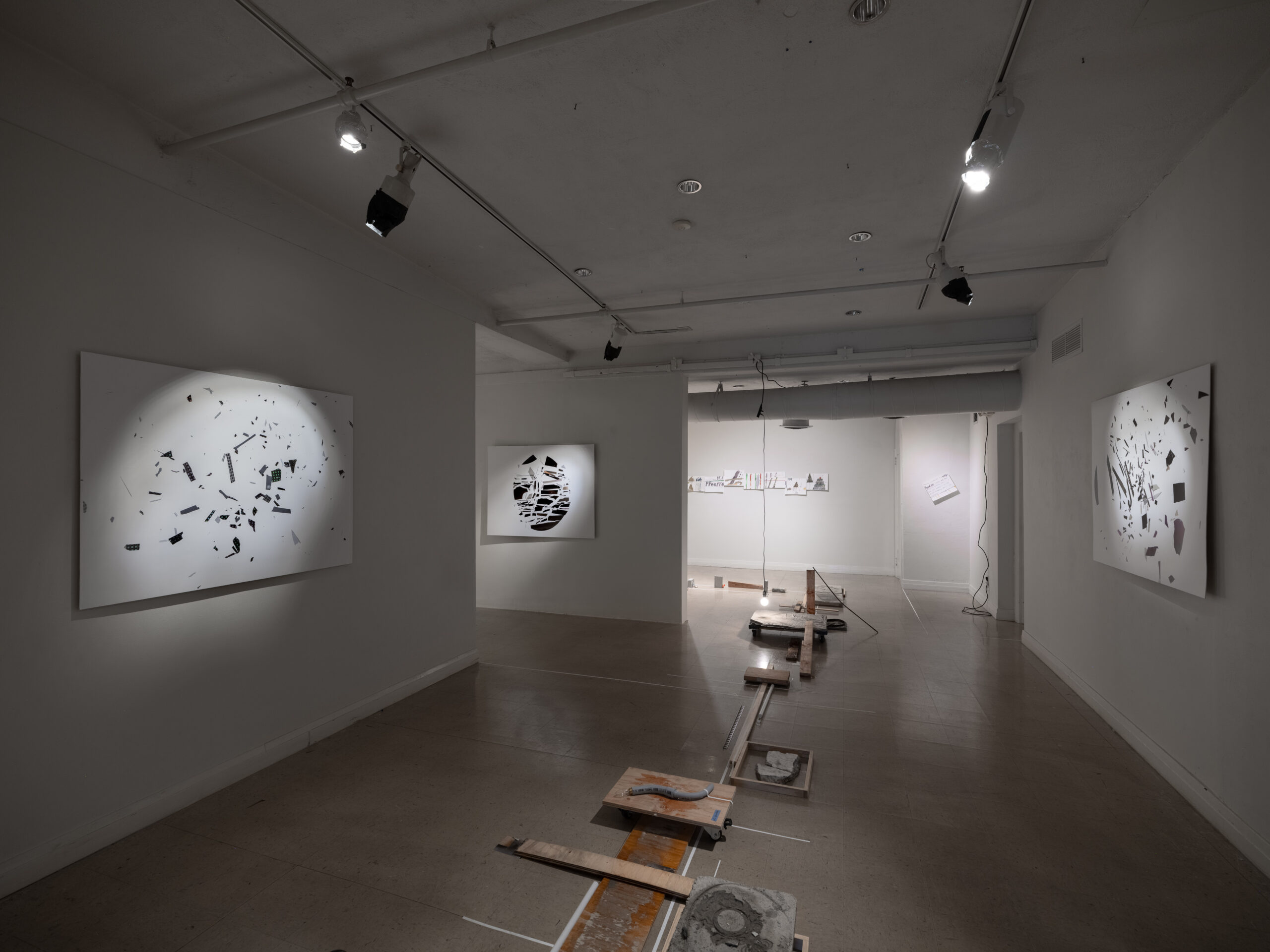
Seen together, the four artists created a viewing experience that moved between floor, wall, surface, and image. Zhu drew the body into a spatial field. Chen activated the eye through line and gesture. Ji slowed perception through photographic spacing. Zhao confronted the viewer with enlarged fragments of technological breakage. Each work held its own pace, and the exhibition was strongest when those different rhythms remained distinct.
By the end of the exhibition, LA Artcore felt less like a neutral container than a space shaped by material pressure. Concrete absorbed traces. Drawn forms leaned and shifted. Photographs held pauses between places and memories. Silicon fragments exposed the fragility of precision. A Disruption, A Continuation created its strongest impression through this accumulated attention to surfaces, intervals, and residues. It was an exhibition that asked viewers to keep looking, and to notice how much can remain unsettled even in quiet, carefully controlled forms.

