

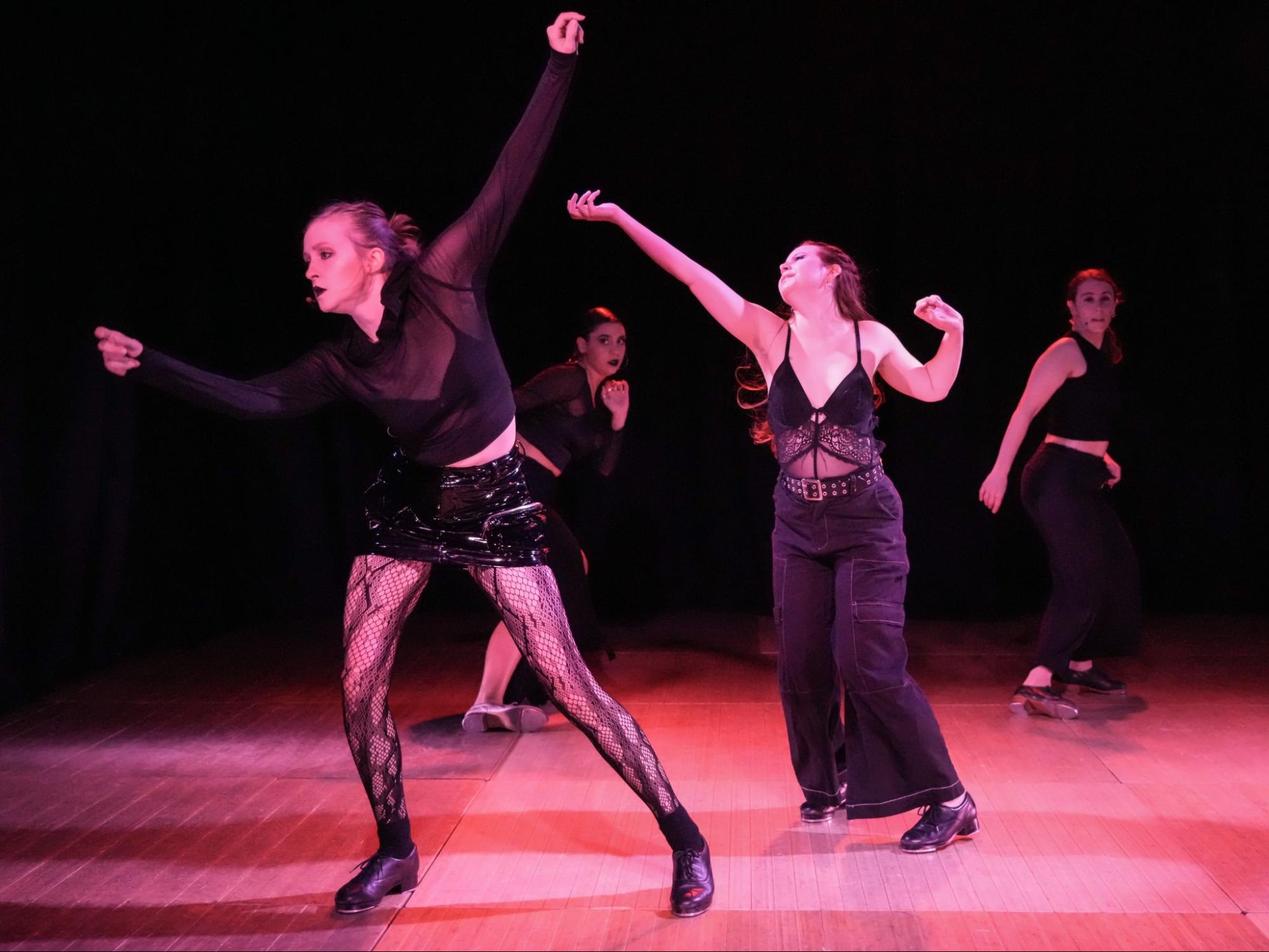
For Maria Clara Laet, a Rio de Janeiro-born tap dancer and historian, the rhythmic landscape of the Americas is not a collection of disparate genres. Rather, it is a singular, branching tree, believe it or not.
Laet, whose multifaceted career has taken her from the high-energy parades of Brazilian blocos to the prestigious stages of New York City’s Apollo Theater, is currently at the forefront of a movement that bridges Brazilian cultural heritage with the technical precision of American tap dance.
Laet’s artistic philosophy, as a dancer, is deeply informed by her academic background in history. She views tap dance and Brazilian musical traditions, like Samba and various Afro-Brazilian rhythms, as kin.
“Brazilian rhythms and tap dance share a deeply rooted history,” Laet explains. “They are profoundly shaped by West African music and dance traditions. We can think of the two as different branches of the same tree, emerging from a shared cultural foundation but evolving in different territories.”
Her work seeks to synthesize these parallels, focusing on elements common to both traditions: a grounded connection to the earth, the dynamic structure of call-and-response, and the spiritual dimension of percussive movement. By integrating these elements, Laet provides a sophisticated, scholarly approach to rhythm that transcends simple choreography.
Laet’s ability to mobilize large audiences was forged in the heat of Brazil’s Carnaval, where she performed for crowds; thousands of people. Her experience with the Unidos do Swing bloco, a parade-style ensemble that merged classic Brazilian anthems with jazz, proved to be a pivotal training ground.
“Street parties during Brazil’s Carnaval have an indescribable energy,” she notes. “Adding tap dance to that moving, parade-style format was a risk, but the crowd’s response was incredible. Many had never seen tap before, so I was proud to help introduce this art form to a new audience.”
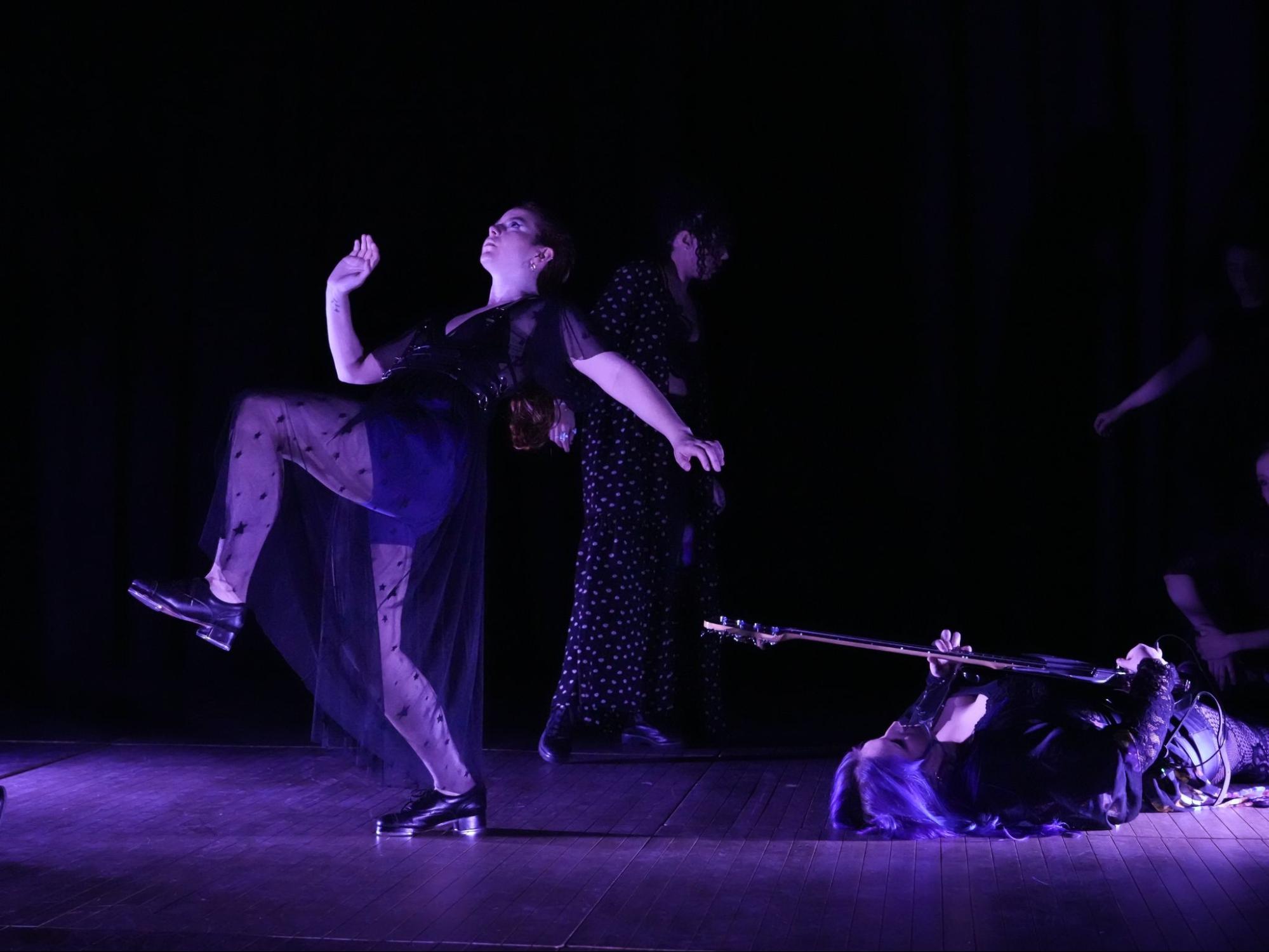
This capacity to adapt to diverse environments has served her well in the United States. Since relocating to New York, Laet has become a foundational figure in kamrDANCE, an ensemble dedicated to “multidisciplinary musical storytelling.” In her role with the company, she operates beyond the traditional definition of a dancer, often singing, playing percussion (cymbals), while performing complex tap choreography simultaneously.
Currently, Laet is preparing for the highly anticipated premiere of The Mercy Velvet Project at the Festival of Arts and Ideas in New Haven, CT, premiering June 26 and 27.
The Mercy Velvet Project is a multidisciplinary rock opera and dance performance created bykamrDANCE artistic director, Alexis Robbins. The performance group reimagines the 1999 album “Live in Vain” by the band Mercy Velvet through a fusion of live music (bass, guitar, electronics), tap dance choreography as percussion, contemporary dance and vocals. The show explores themes of human connection, community, and finding meaning, and is a queer and femme-led production.
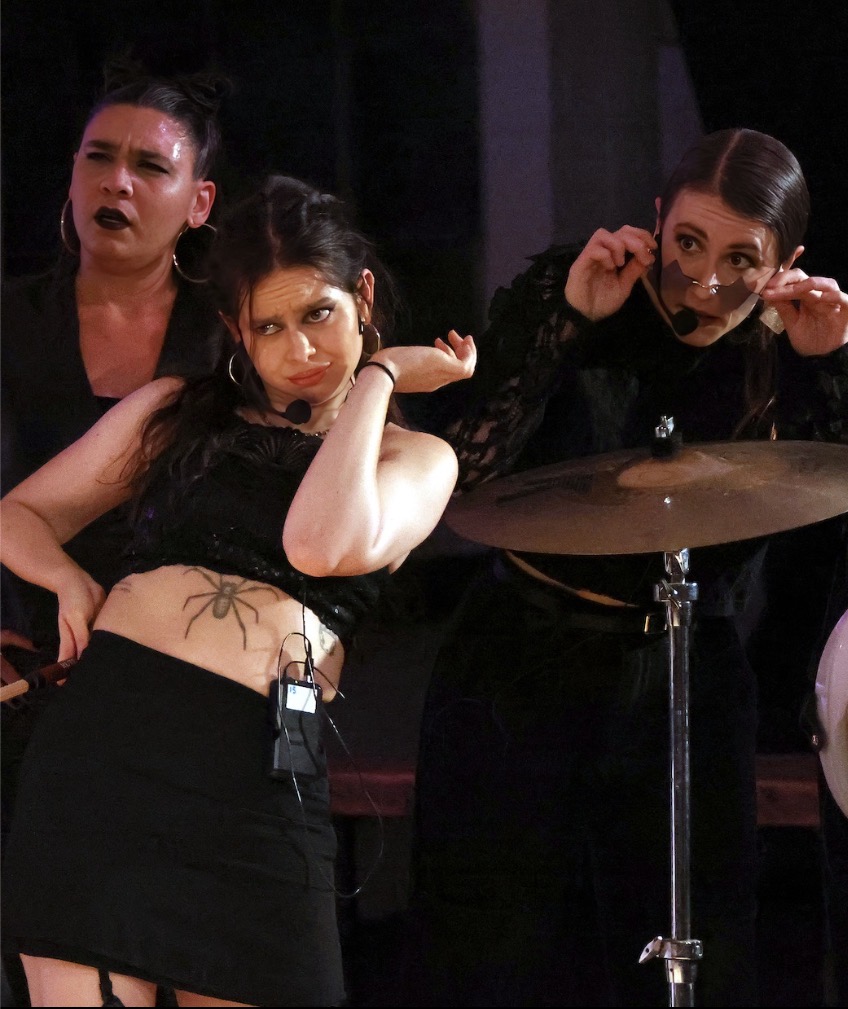
The performance will be an embodied re-creation of the studio album, performed in order of the tracks on the album, as the work explores what makes us human and our collective need for community to survive. Together, the musicians and dancers will move together as one.
By exploring existential themes of human connection, the performance demands stamina, requiring Laet to remain on stage for 90 minutes of continuous, high-intensity movement, performing songs from the project’s album.
“The preparation has been focused on conditioning,” Laet says. “The choreography created by Alexis Robbins is exceptionally demanding. We are running the show back-to-back to build stamina and muscle memory while engaging in character development sessions to deepen the intention behind every movement.”
For Laet, the evolution of her craft is inextricably linked to the strength of her professional alliances. Whether collaborating with Isabella Serricella on the movement piece Waters of August or partnering with percussionist Thiago Trad at the Rhythmic Arts Center, Laet views collaboration as a catalyst for innovation.
As a recipient of the prestigious Tap City Award and a featured artist in upcoming 92NY initiatives, Laet’s trajectory suggests that her unique synthesis of historical research and performance art is poised to leave a lasting mark on the international dance community.
“Collaboration with other artists expands horizons and the perceived limits of the universes we create in our minds,” she said. “I make sure that the artists I collaborate with are kind human beings, because I truly believe that together we can go further than we can go alone.”
As Laet explains: “Whenever I am creating a piece there is a web of references, metaphors, personal experiences and inspirations weaved together in my brain that shape the work into what it can be. The possibilities are multiplied exponentially when weaving another person’s creative universes into my own and subsequently a richer and more diverse substrate can be created for a piece to grow in and flourish.”
Follow @mariaclaralaet on Instagram.

