

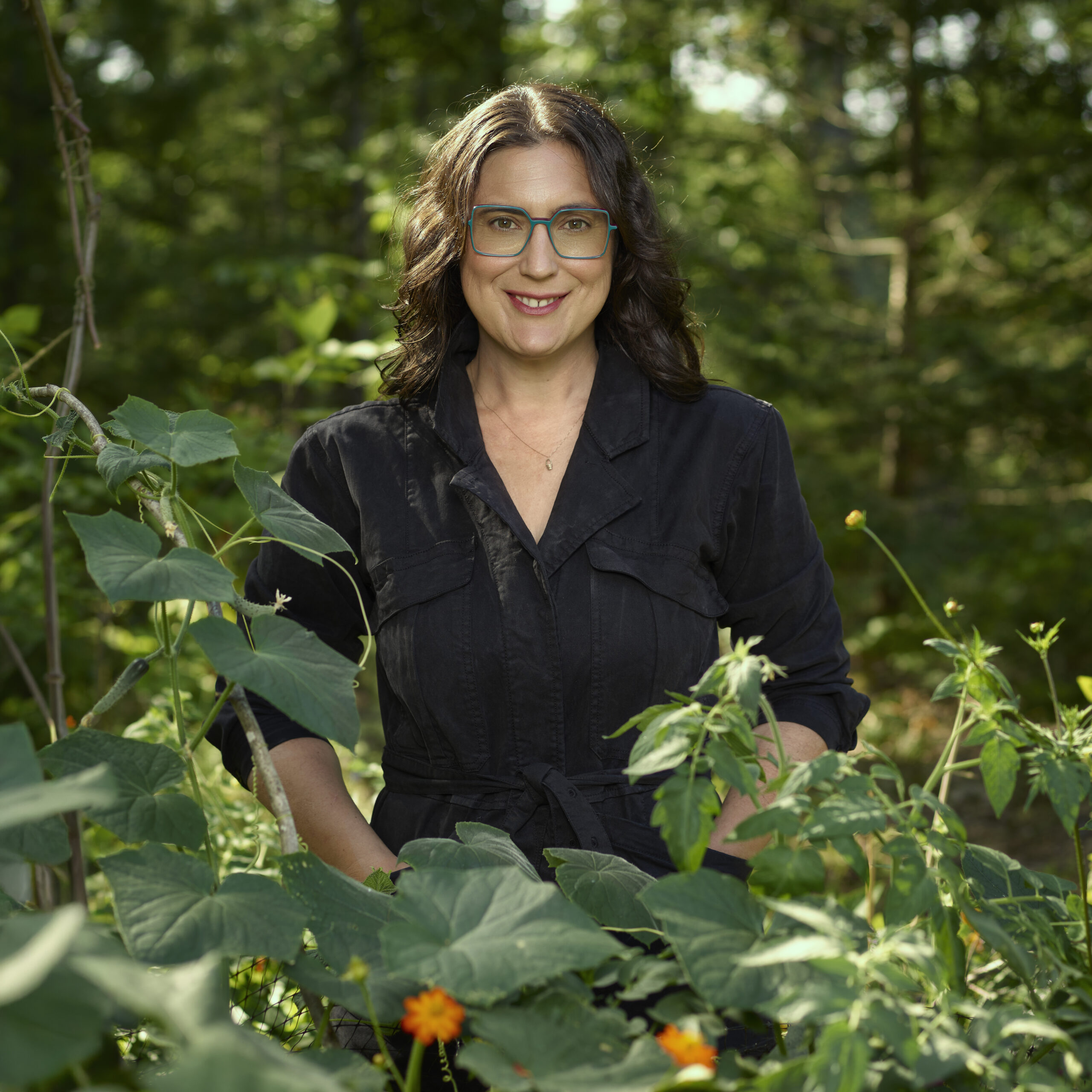
Carly Glovinski (b. 1981, Dover, New Hampshire) makes work rooted in observations of her surrounding environment, and a curiosity about natural and human-made systems. The elements of time and place are often embedded in work that embraces a slip in perception and employs a wide range of materials. Glovinski lives and works in Maine, where she tends to an ongoing living work, Wild Knoll Foundation Garden.
Her installation, Almanac, is on view at Mass MoCA through 2026. Her three-story mosaic, Opelske, is on permanent view in the Boston Seaport. She has been awarded residencies at Shoals Marine Lab in 2025, Kenyon College in 2024, Surf Point Foundation in 2021, and the Canterbury Shaker Village in 2020, and grants from the New Hampshire Charitable Foundation, the Berkshire Taconic Community Foundation, and the Blanche Colman Trust.
Her work has been included in numerous group exhibitions both nationally and internationally and has been published or reviewed in publications including, The Boston Globe, Two Coats of Paint, Colossal, New American Paintings, ArtMaze Magazine, and Hyperallergic, and is held in the collections of Farnsworth Art Museum, Colby Museum of Art, Fidelity Corporation, and Cleveland Clinic, among others. She received her BFA from Boston University in 2003.
How did you first come to gardening, and when did it start feeding directly into your art practice?
I have always been into gardening. Growing up, my parents did a lot of landscaping in their yard and I was always going with them to nurseries and wanting to be involved in that. I spent most of my early adulthood without much greenspace. Later, I was dabbling and playing around in my tiny little backyard space — just kind of winging it. I actually came to start entwining my art practice with it around 2019, when I was invited to make a work about time for a show and I started pressing flowers, thinking of a pressed flower as an interesting thing to make a big shaped painting of, and also an interesting way to think about marking time, maybe seasonally and emotionally.
It wasn’t until I went to do my artist residency at Surf Point and had the idea for Wild Knoll Foundation Garden (Wild Knoll) as a project that I was bit by the garden bug — like, vampire bit. I think of this garden project as a “living work”. In order to make it successful, I had to learn how to garden and immerse myself in that world. It’s now both a literal and symbolic foundation for much of my work.
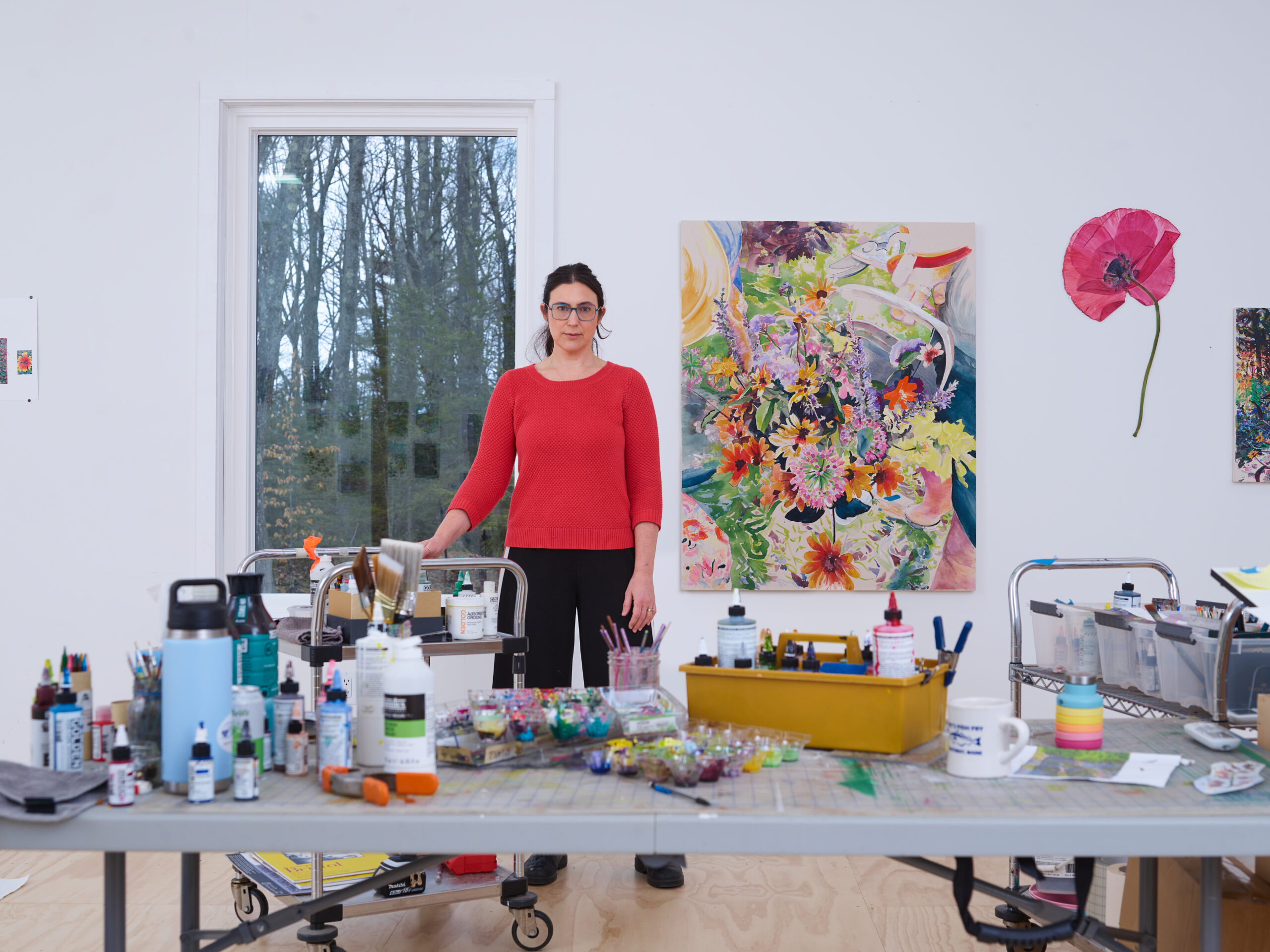
Your three current large-scale works — Almanac, Opelske, and Wild Knoll Foundation Garden — are each rooted in specific places across New England, but they’re intertwined. What connects them, and did that relationship emerge organically or was it something you planned from the start?
Almanac and Opelske could not have happened if I had not started Wild Knoll and let it lead.
Opelske, Almanac, and the Wild Knoll Foundation Garden are three deeply intertwined projects that merge my roles as both artist and gardener. Together, they reflect years of inquiry into the materiality of flowers — what they mean as living things, symbols, specimens, and objects of care.
These pieces draw inspiration from the writings of Celia Thaxter and May Sarton, two fellow New Englanders a century apart who similarly kept the tending of a garden central to their creative work and life.
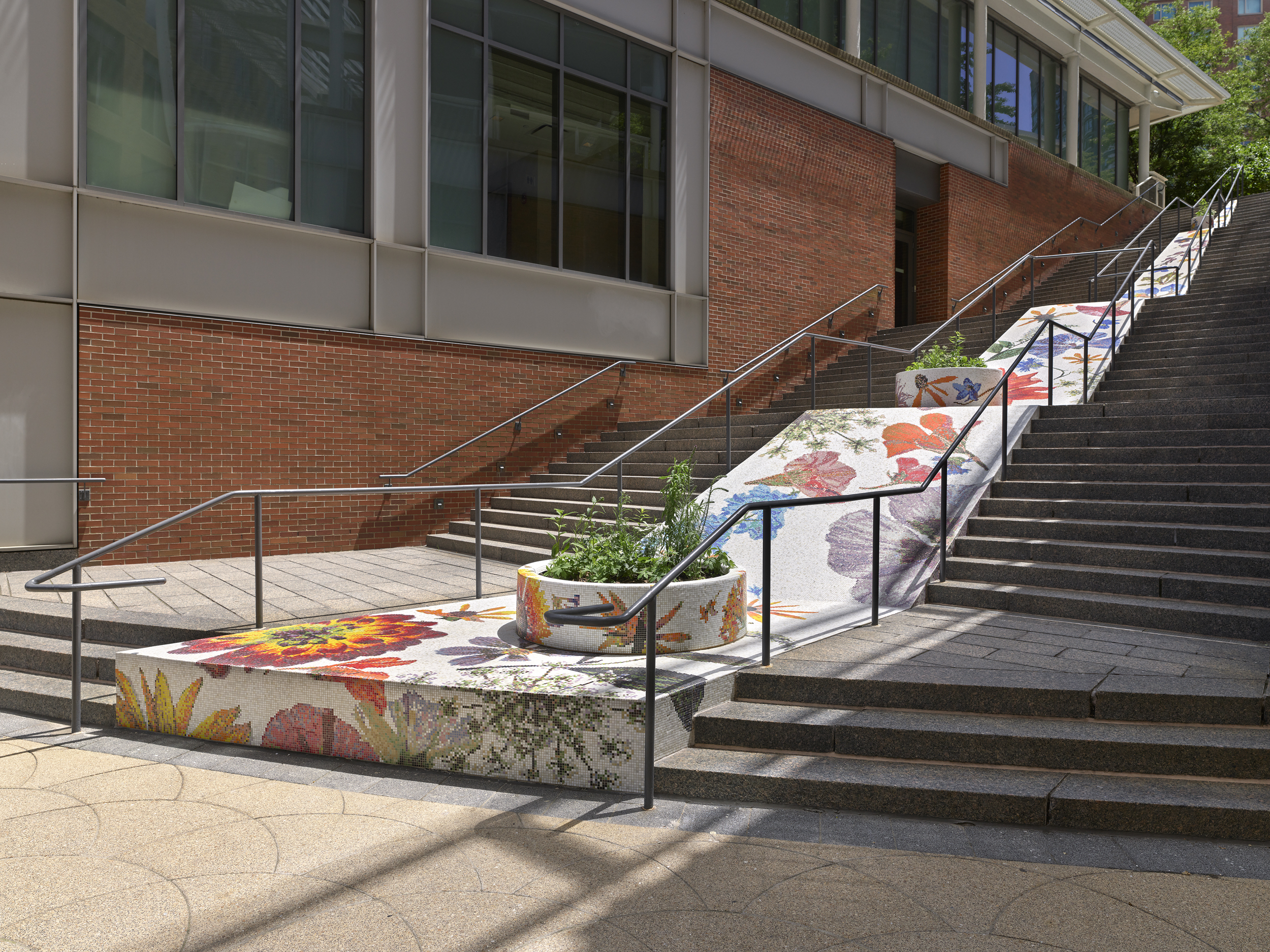
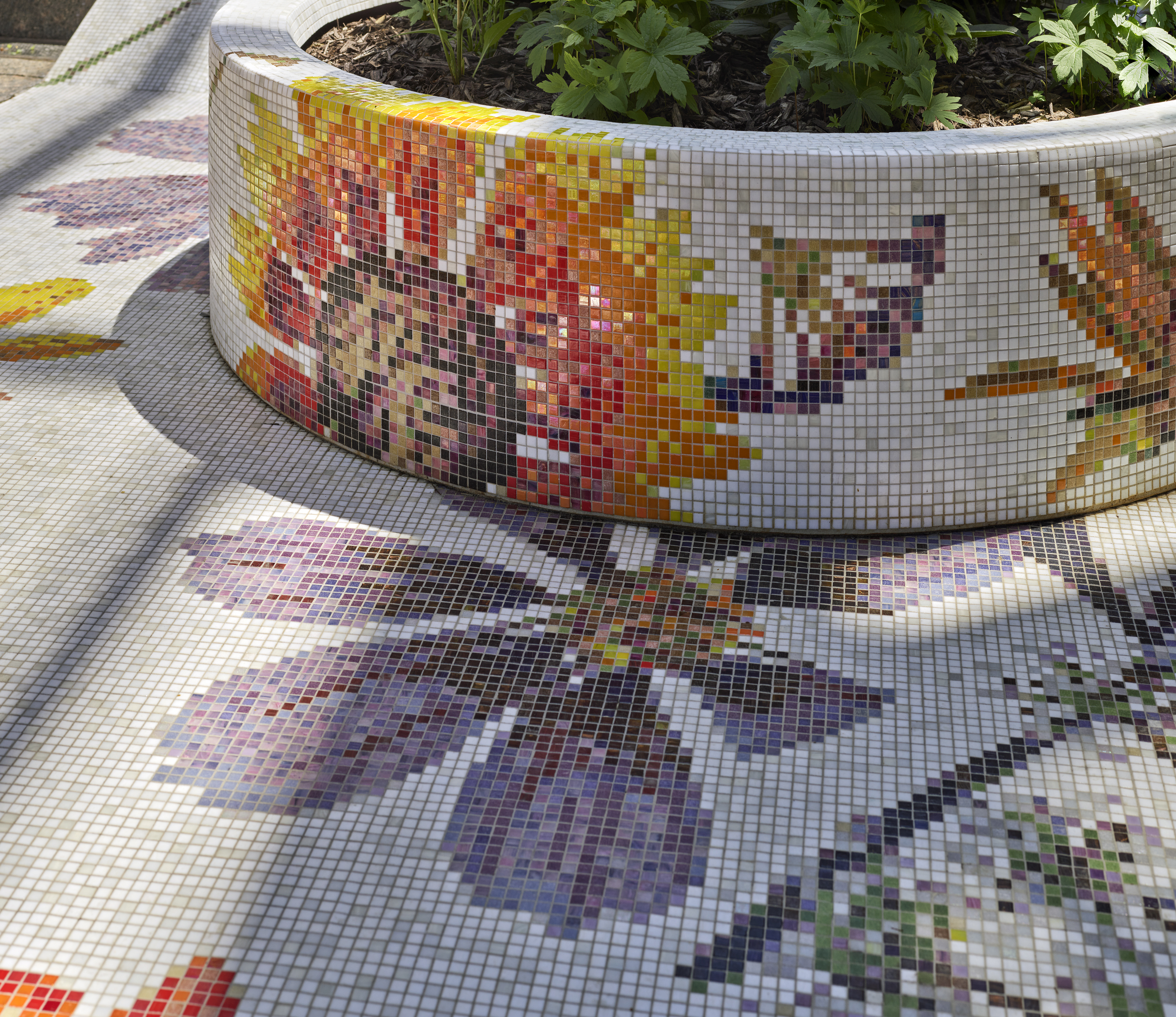
The imagery in Opelske, my first public artwork, began as real flowers from Wild Knoll Foundation Garden at Surf Point that were pressed and made into paintings. Many of the original paintings are a part of my work, Almanac, at Mass MoCA. Then, with the help of the amazing team at Artaic, we translated them into hundreds of thousands of glass tiles using their unique design and fabrication process.
The pressed flowers grown and tended at Wild Knoll became source material for Almanac, my largest painted pressed flower work to date — spanning 100 feet at MASS MoCA. Organised chronologically by bloom time, Almanac is both a botanical calendar and a visual record of the New England growing season. There is no way I would have been able to really understand the succession of flowers if I did not actually grow them. It explores flowers not only as delicate symbols of memory — gifts given in moments of joy and grief — but also as crucial ecological agents supporting pollinators and plant lifecycles. To press a flower, I’ve come to realise, is to hold space for both.
While these projects each live in their own places — gallery, city stairwell, garden bed — they are intimately connected. One could not have happened without the others. They share not only material lineage (flower to press to paint to tile) but also a unified practice of observation, care, and attention.
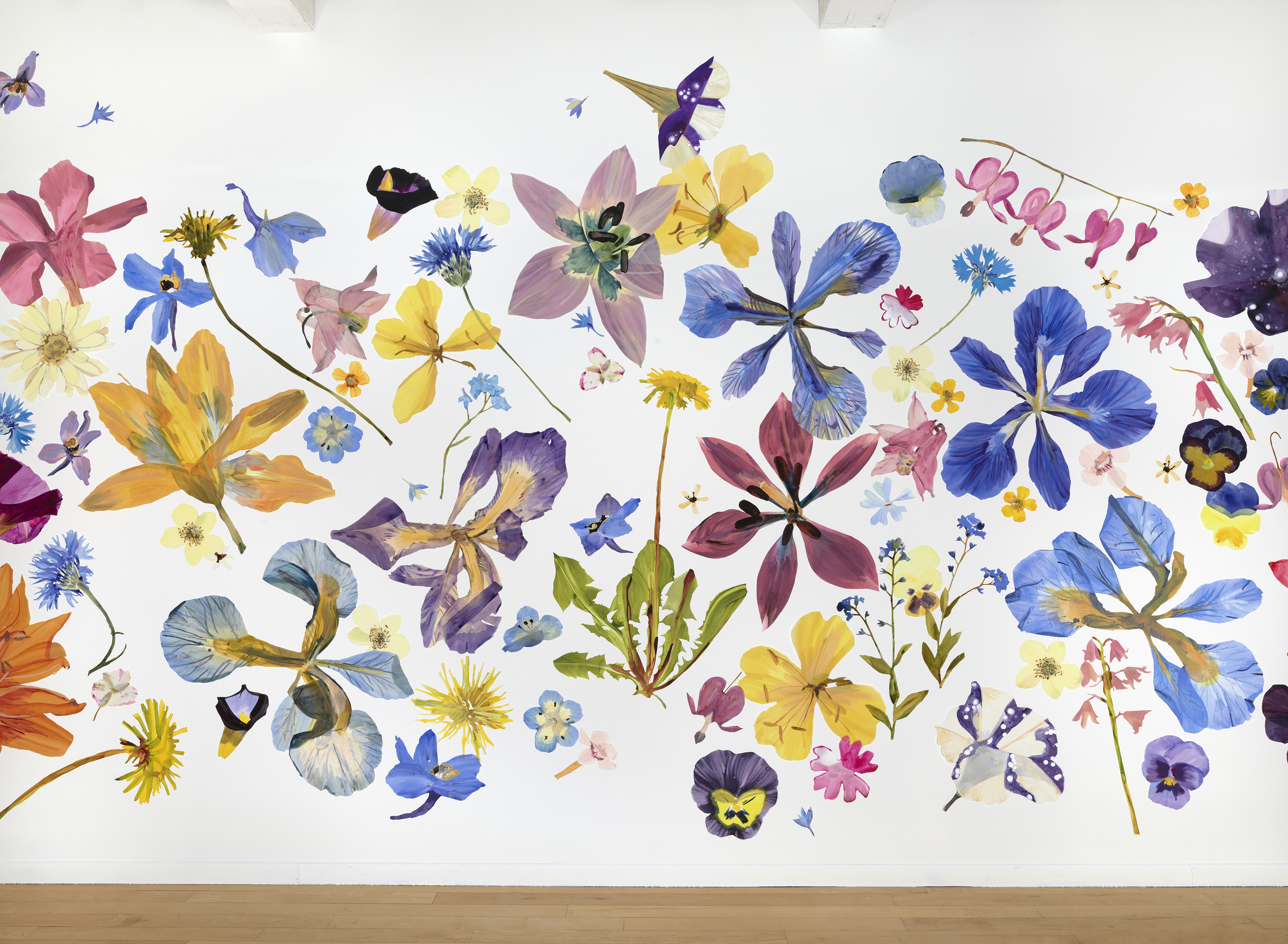
Almanac, 2024, Installation view
Acrylic on Mylar
On view at Mass MoCA
Courtesy of the artist and Morgan Lehman Gallery
Photo Credit: Julia Featheringill
Opelske in the Boston Seaport brings together a three-story mosaic and a pollinator garden in a very urban, high-footfall environment. How do you think about the relationship between the physical artwork and the living garden?
Yes! For the first time in a work, I got to wear BOTH hats — Artist and Gardener.
Opelske was created as a walkable, layered experience — a floral stairway that invites people to slow down and reflect, encouraging a mindful community that cares for each other and nature. The site is situated with a park above and flows down to the harbour below. I loved the idea of creating a pollinator pathway of all native plants that linked these two spaces, and supported ecosystems beyond just us humans. Choosing native perennial plants that are made to thrive in Boston’s climate means they also will require less maintenance once established, and I think provide an important environmental education point to the piece. Over the years, I hope to be able to divide the plants as they outgrow their containers and share with community gardens in the area.
The title of the work is borrowed from Celia Thaxter’s An Island Garden (1894), which follows a year of her caring for her cherished garden. In it, there is this passage, “The Norwegians have a pretty and significant word, “Opelske,” which they use in speaking of the care of flowers. It means literally “loving up” or cherishing them into health and vigor.” As soon as I came across this word, I knew it was just right. It reflects both the sentiment and physical space for the work, as you literally ascend the stairs.
Wild Knoll Foundation Garden at Surf Point sits on the site of a house that no longer exists. What drew you to that kind of haunted ground, and did working there teach you anything new about what the intersections of gardening and art?
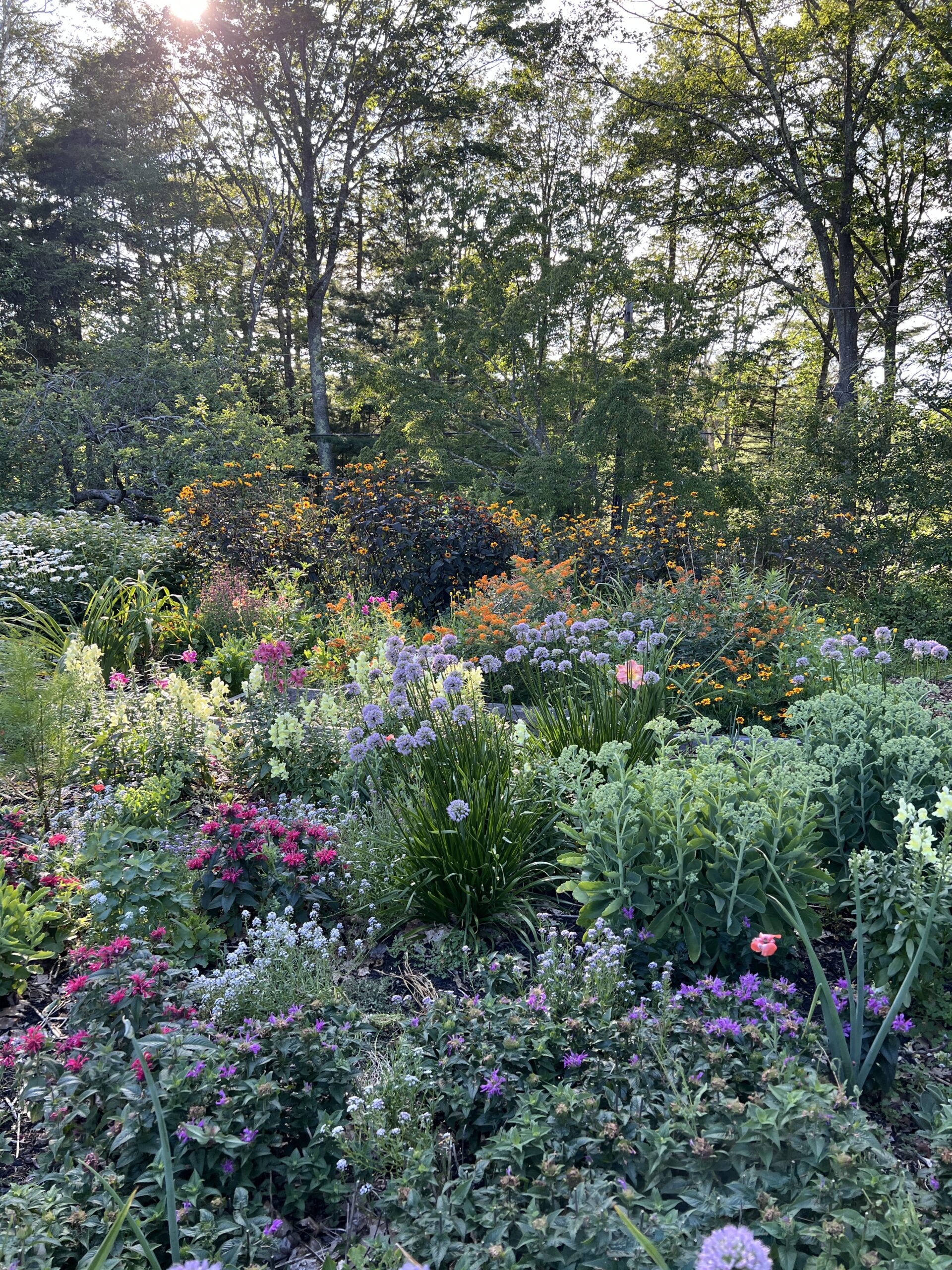
I don’t know how else to describe it other than this site had a vibe. Even all overgrown with a big blank slab where the house once stood, it had a story that I wanted to know. It was encountering this site that started everything. It introduced me to the work of May Sarton, a writer who lived and worked here for decades. In 2021, while I was at the art residency Surf Point, on the York Maine oceanfront, I encountered the overgrown foundation site of the house where she lived and worked for decades Learning this and seeing the overgrown plants, I wanted to know more, so I immediately read her journal-style book, The House by the Sea. This book revealed her as an avid gardener and reading the passages she wrote about her day to life of writing and tending her garden on that very spot in 1973 opened a portal for me, and connected some kind of missing link.
For me, reading that book on the spot where it was written, galvanised the idea that gardening is so much the same as making art in the way I was accustomed to — going to my studio, showing up and being curious — labouring with care, and persistence to nurture the work into the world.
I had the idea to honour the concept by creating a house of flowers, according to the scale of the original, finding blueprints and building the garden beds to same scale of the rooms. At the same time, I began rehabbing the overgrown terrace gardens. That was 4 years ago. This garden is where I grew the majority of the flowers you see here. It is where I learned to pay attention to plants, to really look.
Beyond the many parallels between maintaining a studio practice, tending to this garden has taught me the value of gardens as social infrastructure. I don’t think I would have been able to experience that connection as fully if I was just gardening in my backyard. This garden has literally grown a community up with it. My tending it is just one piece. But now that the garden is established, it has become a dynamic, evolving place for community engagement, events, plant sales, and collaborative art installations.
You spent time this summer as artist-in-residence working directly in Celia Thaxter’s recreated Island Garden. Thaxter was herself a writer who documented her garden obsessively. Did being in that space change how you approached the studio, or shift anything in the new paintings?
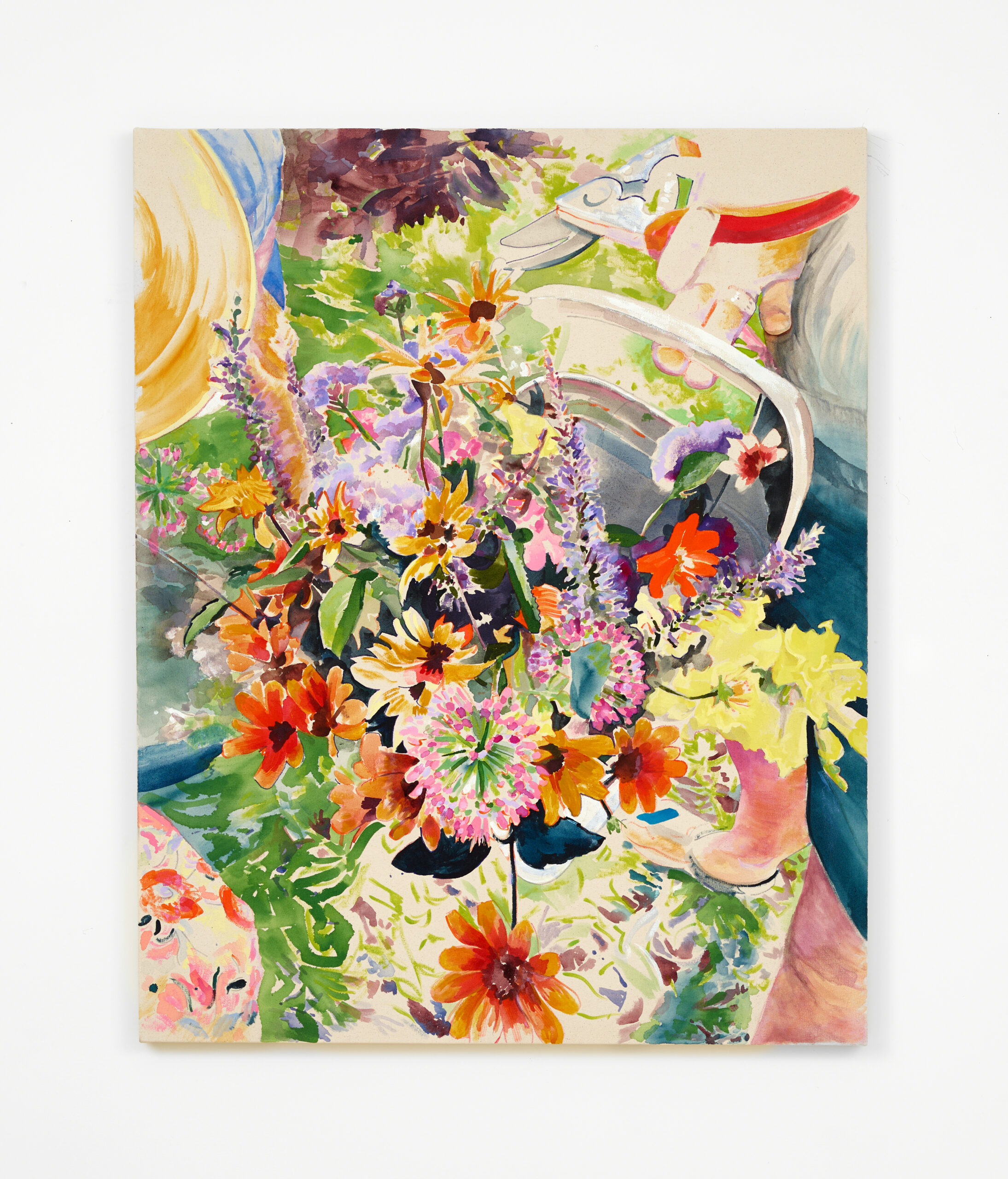
Yes — it really did cement my return to painting, and this multi-generational conversation I feel like I am having with both Celia and May. Celia Thaxter’s garden on Appledore Island, five miles off the Maine coast. You can actually see the island across the ocean from where Wild Knoll is. Best known through Thaxter’s book An Island Garden (1894), the historic flower garden has long stood as a sanctuary for creative life, and her artist friends that she invited to hang out and work from the garden made paintings that still have big art historical significance. Childe Hassam’s painting of her garden hangs in the MET today. It was a huge privilege to work directly from the reconstructed garden beds, making plein air paintings for the first time while also participating in its care. It feels silly to say now, but it was the first time I actually sat down and made a painting directly from a garden. Back in my studio, working from pictures and sketches, I realised I wanted to be making paintings about the experience of making a garden, not just the place itself. That shift has felt hugely important to me and the trajectory of my work. Considering why I am returning to paintings on canvas for the first time in 20 years — I think I had to make a garden first, so that experience and the ongoing tending could become the subject matter.
The upcoming Morgan Lehman exhibition moves between very different surfaces, including canvas, herbarium paper and dibond. What drives the choice of material?
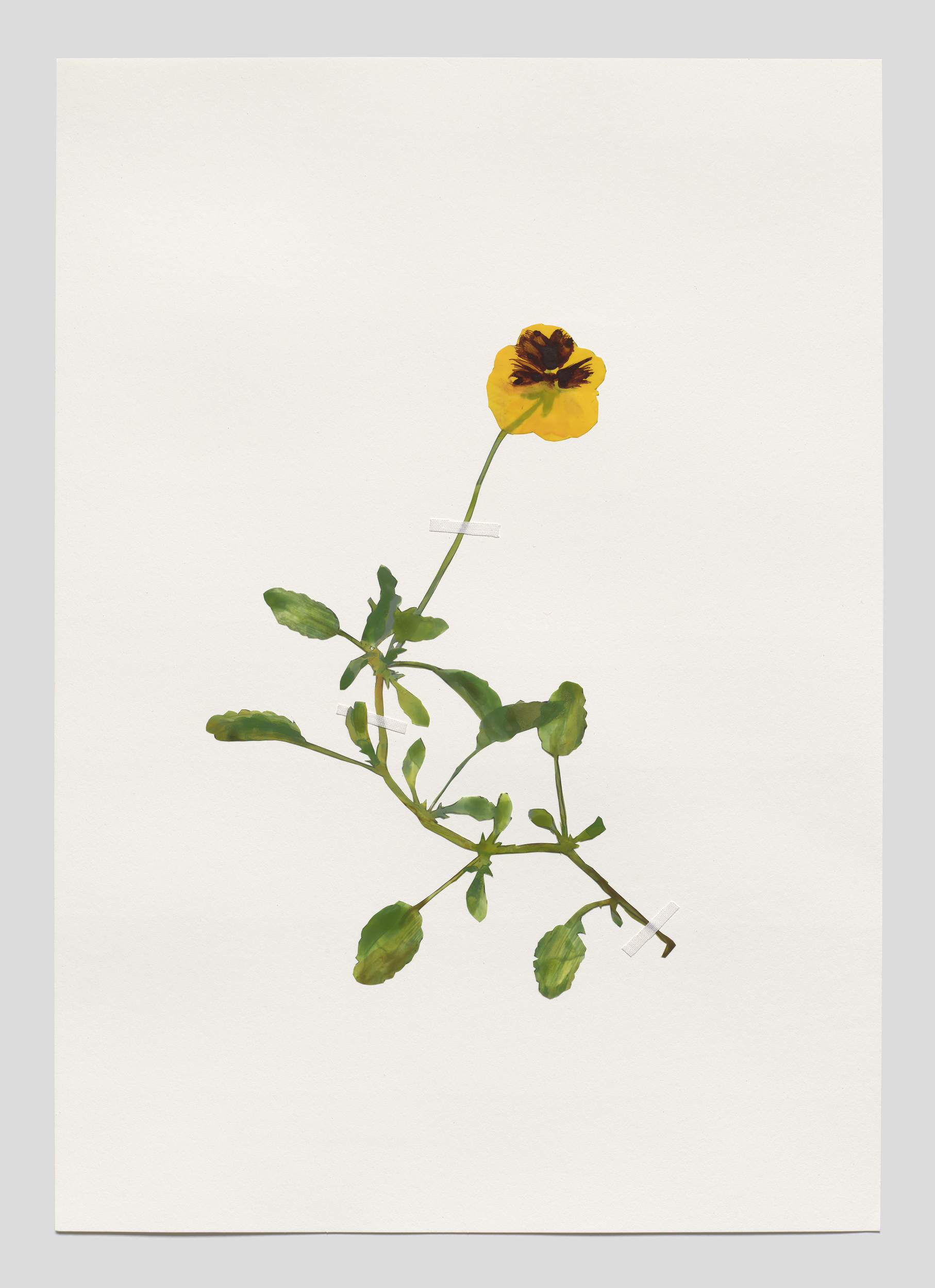
Originally trained as a painter, I’ve developed a multidisciplinary approach that embraces a lot of different materials and processes. I’m always asking how materials can carry meaning, or be actors. Because I am interested in how attention reshapes understanding, often, my material choices enable slight perceptual slips — things that look familiar but become other upon closer inspection. The choice of material can often be inseparable from the meaning of the work itself. This is certainly true in the case of the use of herbarium paper as a surface in several of the works in the show. This paper, used to archive pressed plant specimens in botanical research, has been siloed in the science world — but it is an ideal art paper too, and at its “regulation” size and weight plus the conceptual connect to my pressed flower work — it’s right up my alley, and a great example of how I use materials to imbue an additional layer of connection in my work.
You’ve described gardening as a radical act of care. What, in your view, makes it radical?
Gardening can feel quiet, even private — but framed differently, it’s a deeply radical act of care because it resists many of the dominant logics shaping contemporary life — it takes a long view. You commit to the land and the surrounding ecosystem. You plant without immediate return. You tend without guarantees. That attention — seasonal, cyclical, patient — is a refusal of urgency that runs counter to the urgency and pace we are used to.
It’s also an act of reciprocity rather than control. You’re not imposing order so much as participating in a system of soil, insects, weather, and decay. Care moves in multiple directions: you tend the garden, and the garden sustains you — materially, psychologically, ecologically. That mutual dependence pushes against the idea that humans stand apart from or above nature.
Gardening becomes radical, too, in how it reclaims agency at a small scale. In a world where many systems feel abstract or inaccessible, tending a plot of land — whether a backyard, a windowsill, or a public garden — is a way of making tangible change. You are directly shaping a living system, however small, and witnessing its effects.
There’s also a social dimension. Gardens can function as sites of collective care and knowledge-sharing — spaces where skills, stories, seeds, and labour circulate outside of purely transactional systems. In that sense, they quietly model alternative economies rooted in generosity, stewardship, and interdependence.
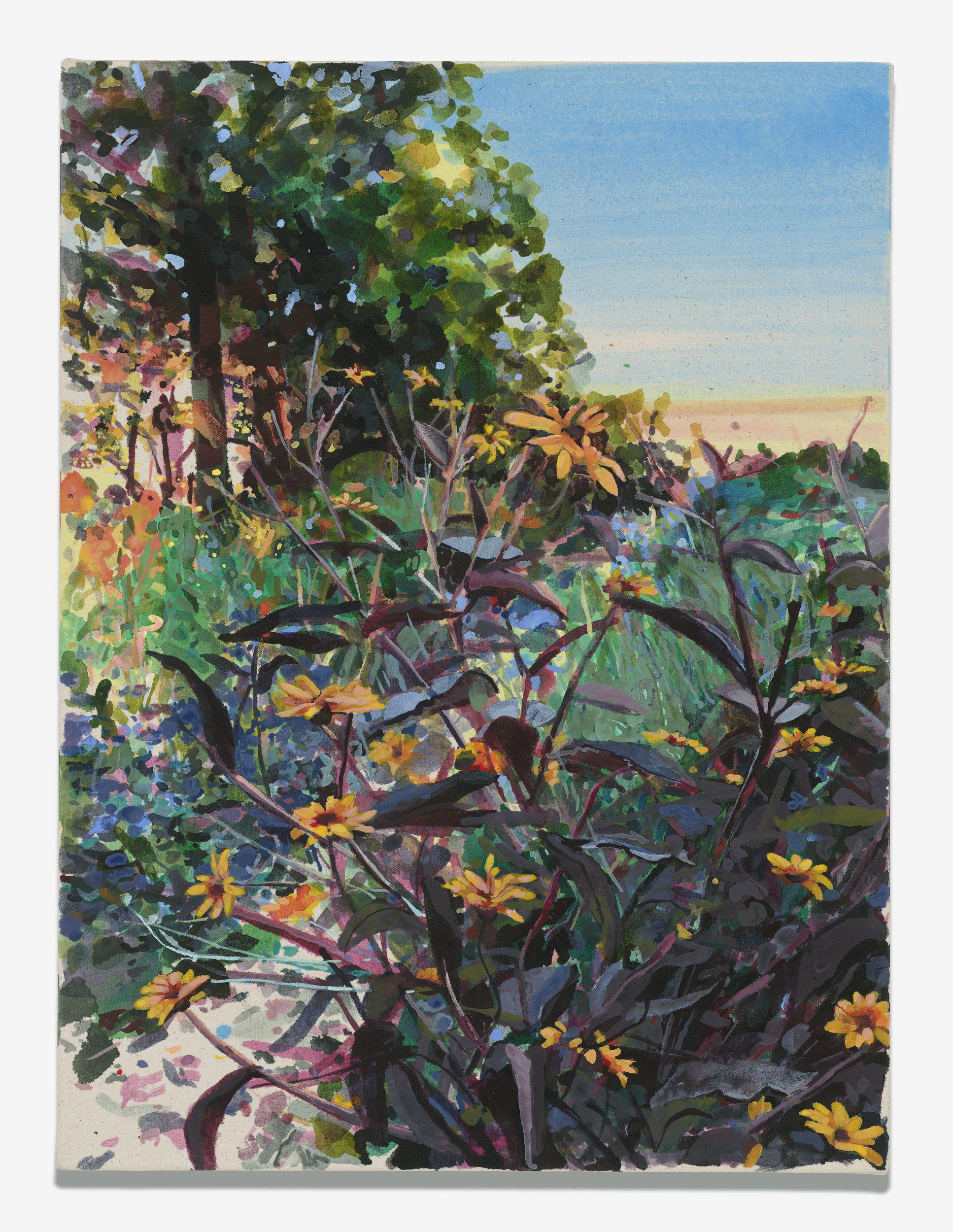
Wild Knoll Burning Hearts, 2025
Acrylic on canvas
24×18 inches
Courtesy of the artist
Photo credit: Julia Featheringill
Do you currently have a favourite flower?
Ugh! So hard. I have a lot of favourites. Nasturtiums probably take first. I love collecting the the seeds and those lilypad shape leaves, and how the flowers look when they are pressed. Plus, they are edible!

