

Wanqing Zhang is an internationally acclaimed graphic designer whose creative practice is rooted in a profound exploration of “invisible boundaries”—the hidden frameworks that shape daily existence but often remain unspoken. As she observes, people unconsciously coexist with these boundaries: culture compresses the pain of depression into unspeakable privacy; the grid system’s discipline on designers constantly swings between adherence and disruption. Only when we begin to reflect do we realize that these boundaries determine who is seen, how they are seen, and how breakthroughs can be sought.Through graphic design, Zhang crosses the boundary between the visible and the invisible.
Design transforms systematic silence into a visual language.
In Zhang’s research on adolescent depression in China, Zhang identifies the “invisible shackles” created by a complex interplay of social forces.How was this invisible framework established, and why has it remained so stable? She chose her own generation as the entry point, systematically analyzing the multiple forces behind this framework:
How the traditional Chinese notion of “don’t wash your dirty linen in public” stigmatizes adolescent depression, turning it into a secret that everyone knows but never speaks of.
How the wave of corporate privatization and social restructuring—with its massive unemployment—planted the fear of poverty and job loss deep in her parents’ generation.
How that fear evolved into intergenerational trauma, transformed into an obsessive pursuit of meritocracy toward the next generation. How collectivism forces people to compare suffering, quietly muting individual voices in the process. And how social culture cynically rebrands mental illness as “yuyu” (a derogatory internet term for depression), equating it directly with weakness and failure.
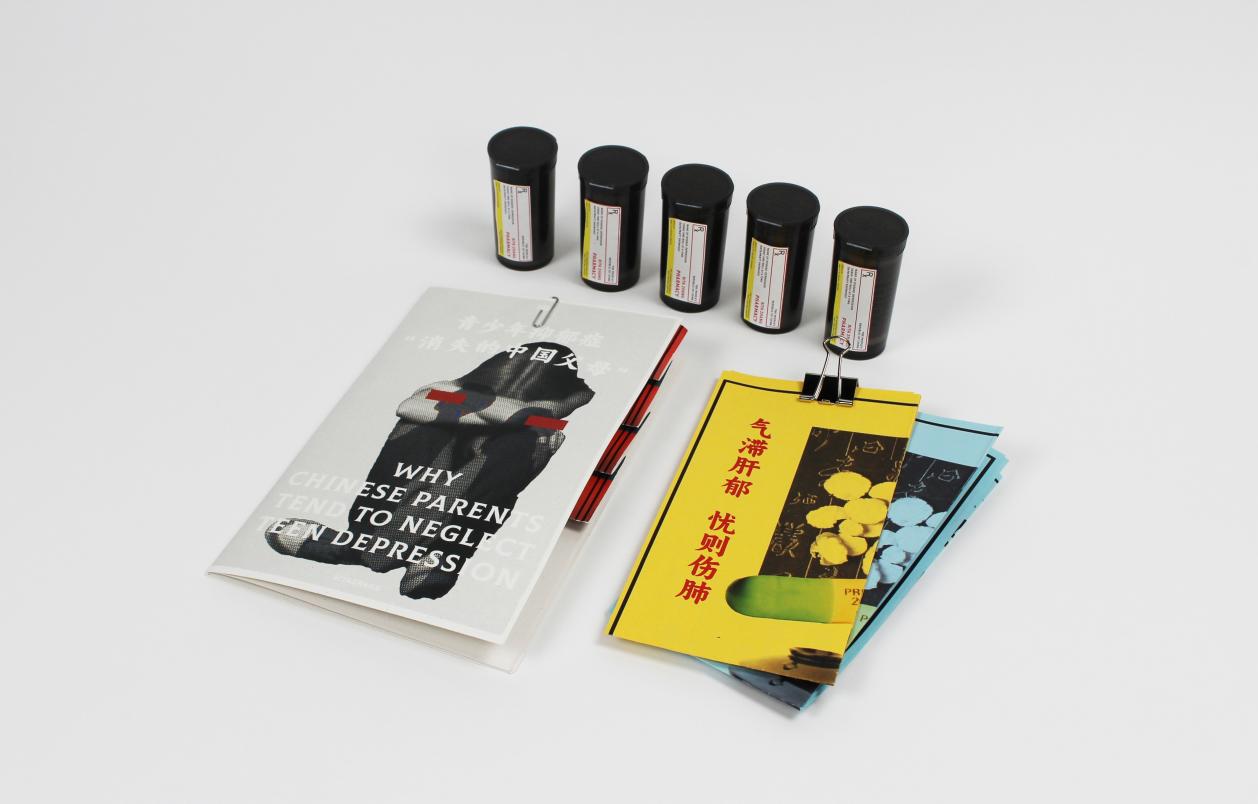
Zhang translates heavy data and research findings into visually striking book design works. Folding cards – whose act of folding and unfolding metaphorically suggests how the issue of depression is often concealed beneath social silence. When the card is fully unfolded, it presents hard data on the prevalence, diagnosis, and misdiagnosis rates of depression in China. Deliberately aged posters, using collage to mimic vintage styles, introduce readers to how treatments for depression have evolved alongside social changes.
Zhang aims to raise public awareness of the high prevalence, hidden nature, and profound harm of adolescent depression, while emphasizing the urgency of early identification and effective intervention. This work has earned prestigious international honors, including Gold Awards from the Indigo Design Award, Muse Creative Award, and IDA Award, as well as a Silver from the London Design Award, and a feature on the global art platform Al-tiba9.
Design asks: how to keep order from becoming a new constraint between chaos and order?
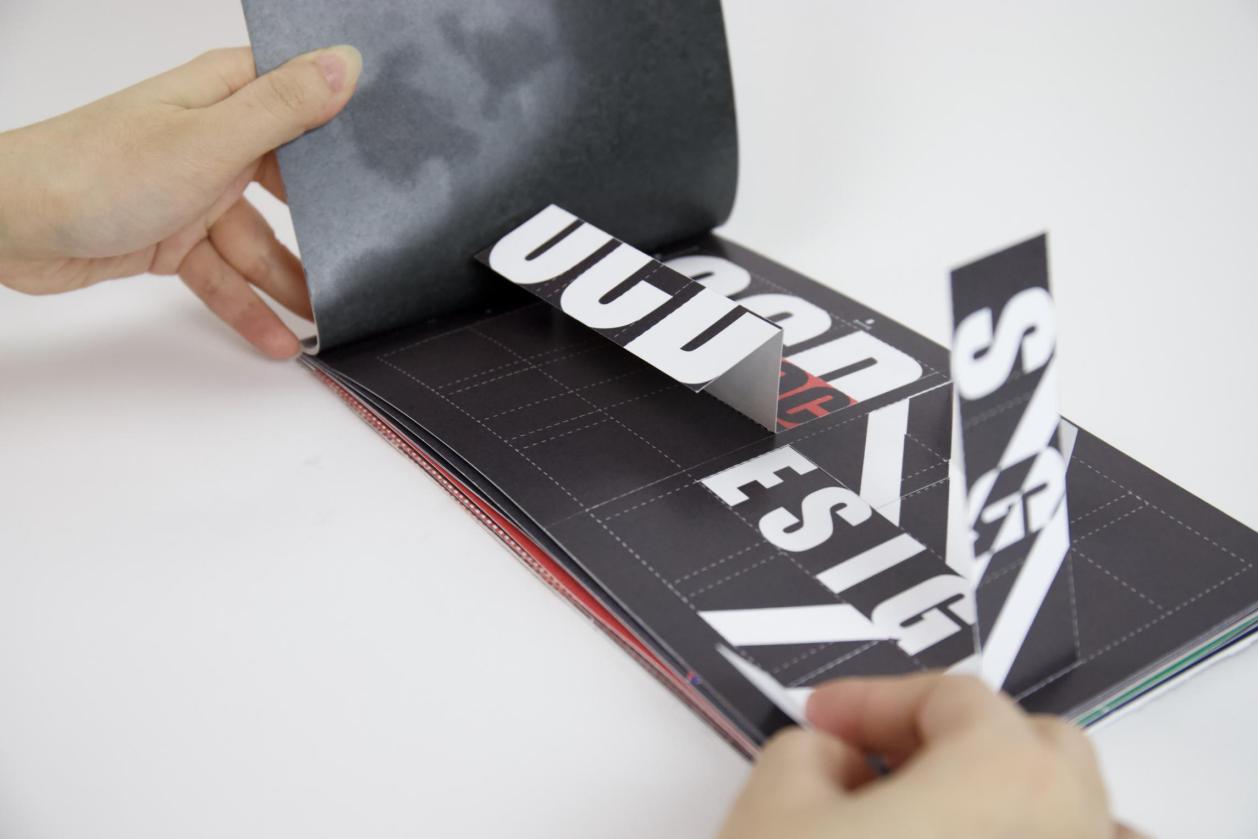
As a designer, Wanqing Zhang and her team members (Yongjia Wu and Jenyun Hu) noticed that the grid system is widely regarded as a fundamental principle in graphic design – almost a “rule” in a certain sense. Whether creating or delivering work, designers subconsciously use the grid system to evaluate their layouts. Over time, this habit gradually evolves into a creative mindset resembling obsessive-compulsive disorder. At the same time, designers such as David Carson have been attempting to break this discipline and establish their own unique visual styles.
Confronted with this invisible boundary, Zhang raised her own question: does the grid system help or hinder creativity? To explore this, she conceived the concept and led the collaboration with two other designers to create an interactive book. Zhang served as the lead concept creator and graphic designer, designing the interactive mechanisms and visual language. In this book, readers can choose either to assemble a turntable with a funny-face pattern or to scramble it. They can also open small mechanisms on pages originally laid out according to the grid system – only to reveal completely chaotic, rule-breaking compositions. Through these engaging and playful interactions, the book repeatedly asks readers the same questions: Does the grid system suppress a designer’s creativity? How can we find a balance between the grid system and chaos?
The book’s color choices are equally bold and playful, designed to guide readers into natural reflection without making them feel lectured or pressured.This work – both playful and intellectually profound—has also received industry recognition, winning a Silver Award at the Indigo Design Award, further confirming Zhang’s ability to lead conceptually rigorous and visually innovative design projects.
The consistent string of victories in top-tier international design competitions, coupled with sustained attention from global media platforms, attests to Wanqing Zhang’s status as a top-of-the-field designer of her generation. She possesses not only technical mastery but also a rare depth of critical inquiry. Zhang’s practice transcends traditional graphic design; she acts as a visual communicator and a catalyst for social reflection. By reshaping complex data and deconstructing established design dogmas, she demonstrates how design can lead the industry from “aesthetic form” toward “profound insight.

