

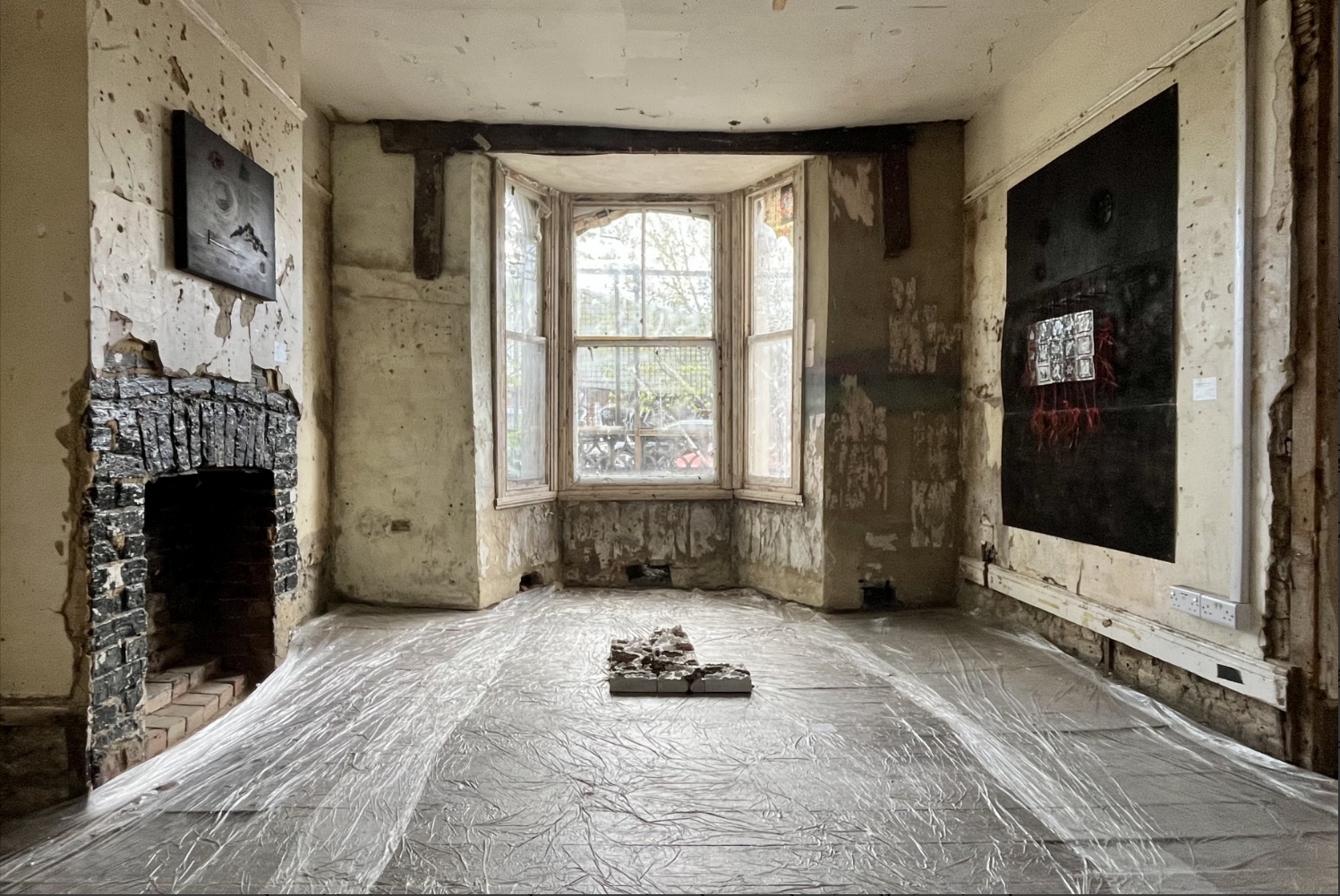
In the heart of the Peckham arts district stands Safehouse—a Victorian residential relic etched with the scars of time. Once a derelict structure fading into urban oblivion, it now serves as a “temporary sanctuary” for artists, providing the profound material foundation for the exhibition Animot. The title derives from Jacques Derrida’s seminal work, The Animal That Therefore I Am (2008), in which he coined the term “Animot” to deconstruct the linguistic violence humans inflict upon non-human beings through monolithic categorization. Within this domestic ruin, the exhibition stages a radical intervention into power, language, and the gaze.
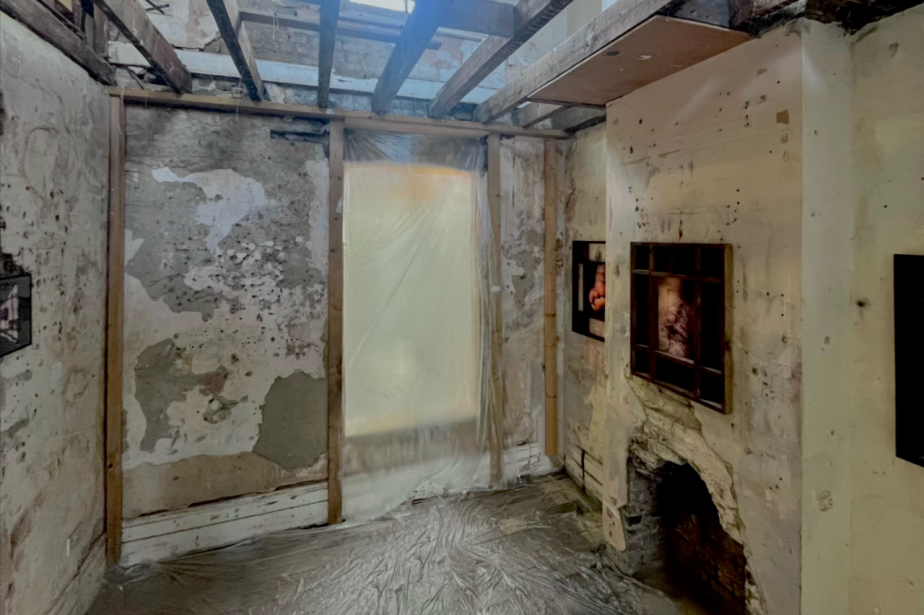
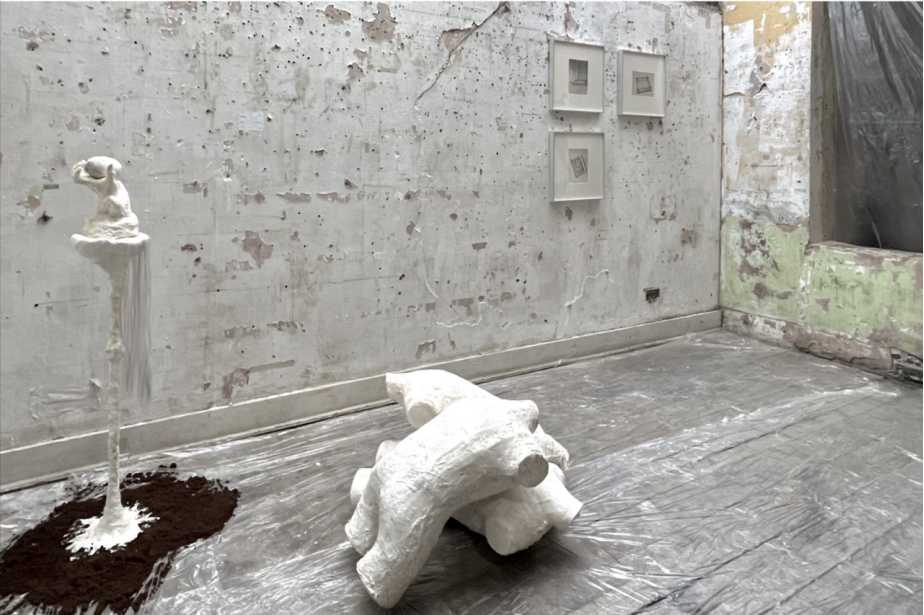
To blur the heavy residential history of Safehouse, the curatorial team shrouded the floors in vast expanses of translucent plastic membrane. This covering acts as a strategy of “de-tagging”: the raw, weathered textures visible beneath the plastic evoke an “unfinished tense,” stripping the space of its definitive social functions and plunging it into a fluid, liminal state that refuses categorization. At the center of the ground floor, the membrane cascades from the ceiling like a waterfall, bisecting the space and partitioning twenty works—spanning photography, installation, jewelry, and painting—into two distinct visual realms. This spatial rupture effectively dismantles the “sovereign gaze,” preventing the spectator from consuming the exhibition in a single, panoramic sweep.
The exhibition’s visual identity mirrors a core narrative in Derrida’s text: the philosopher, emerging naked from the shower, finds himself locked in a gaze with his cat and feels a profound sense of “shame” imposed by human civilization. The choice of a Sphynx cat for the exhibition poster—devoid of fur and biological ornamentation—symbolizes an extreme equilibrium of power. When both human and non-human are stripped bare and rendered defenseless, the hierarchies of subject and object begin to collapse. Visually, the cat appears to step off the poster and onto the plastic-covered floor, guiding the audience into a non-authoritarian field constructed by the membrane.
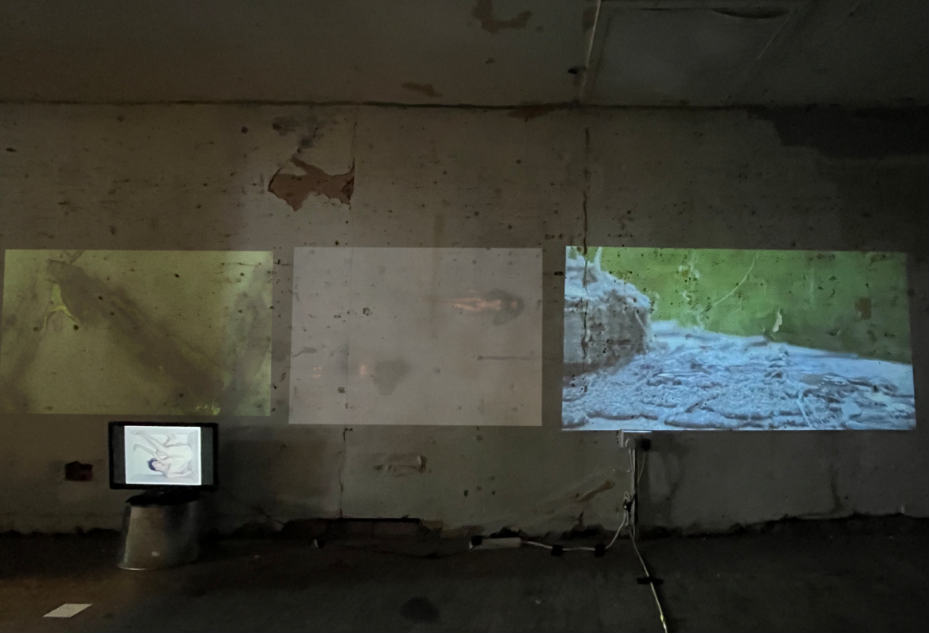
The first floor offers a moment of reflection on contemporary institutional structures. A meticulously constructed “Blackout Video Room” pays homage to Tracey Emin’s recent immersive projections at Tate Modern. In this lightless void, moving images are liberated from external interference, compelling the audience to shed the arrogance of anthropocentrism and engage in a deep, visceral visual struggle with the non-human imagery.
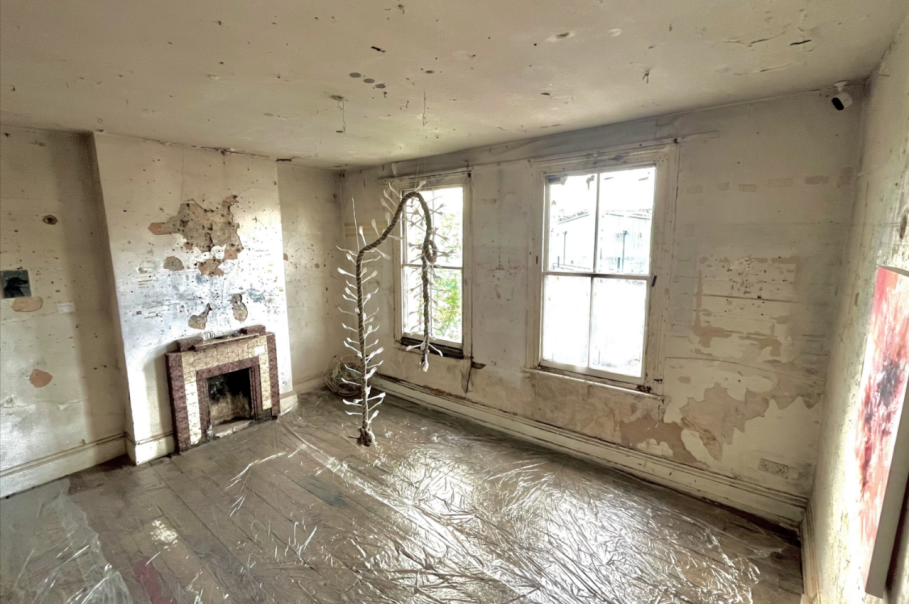
At its core, Animot is a commitment to anti-anthropomorphism. While we are accustomed to projecting human emotions onto the non-human—a subtle form of “managerial control”—the crumbling walls and plastic veils of Safehouse render such control obsolete. By “withdrawing the right of interpretation,” the curators force the human spectator to descend from their position of supremacy.
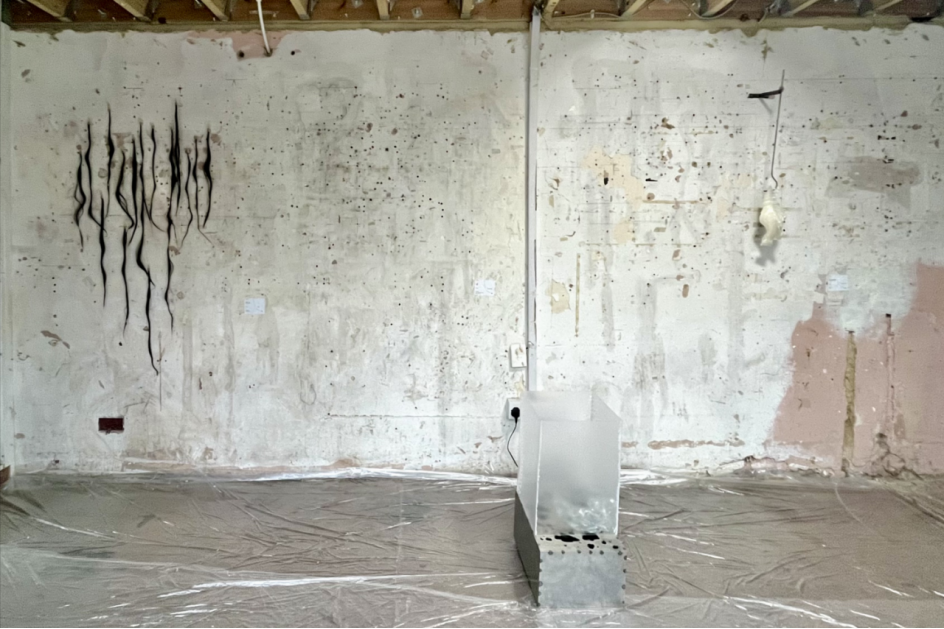
The twenty artworks on display are no longer “managed assets” to be observed and categorized; they are heterogenous subjects inhabiting a temporary refuge. Navigating this unstable space, the audience is led to rethink the relationship between human and non-human: not as one of naming and possession, but as the name Safehouse suggests—a relationship of coexistence and mutual respect, seeking sanctuary together amidst the ruins.
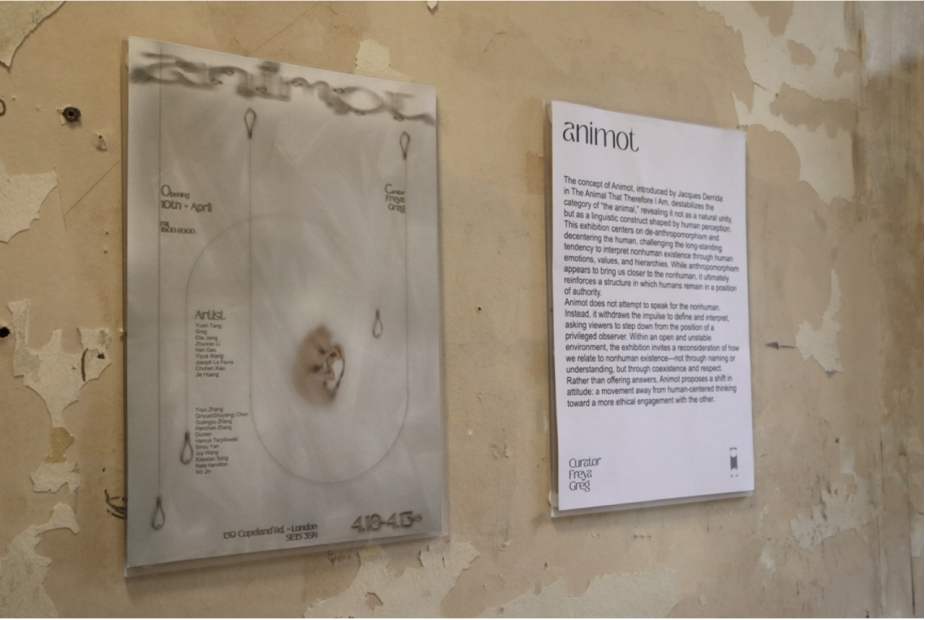
Animot successfully translates Derrida’s linguistic critique into a spatial phenomenon, reminding us that true ecological care is not a sophisticated “managerial game,” but a profound surrender and restoration of power.
Featured Artists:
Chuhan Xiao, Duolan, Ella Jiang, Greg, Guangyu Zhang, Han Gao, Hanchao Zhang, Henryk Terpilowski, Jie Huang, Joseph Le Fevre, Joy Wang, Nata Hamilton, Qinyue(Shuyang) Chen, Sinyu Yan, Wz Jin, Xiaoxiao Song, Yiyue Wang, Yoyo Zhang, Yuxin Tang, Zhuoran Li
Curator:
Freya (yiyi) Chen
Greg
Special Thanks:
Britney Teng, Ella Jiang, Yi Lai
Photo Credit:
Britney Teng, Ella Jiang

