

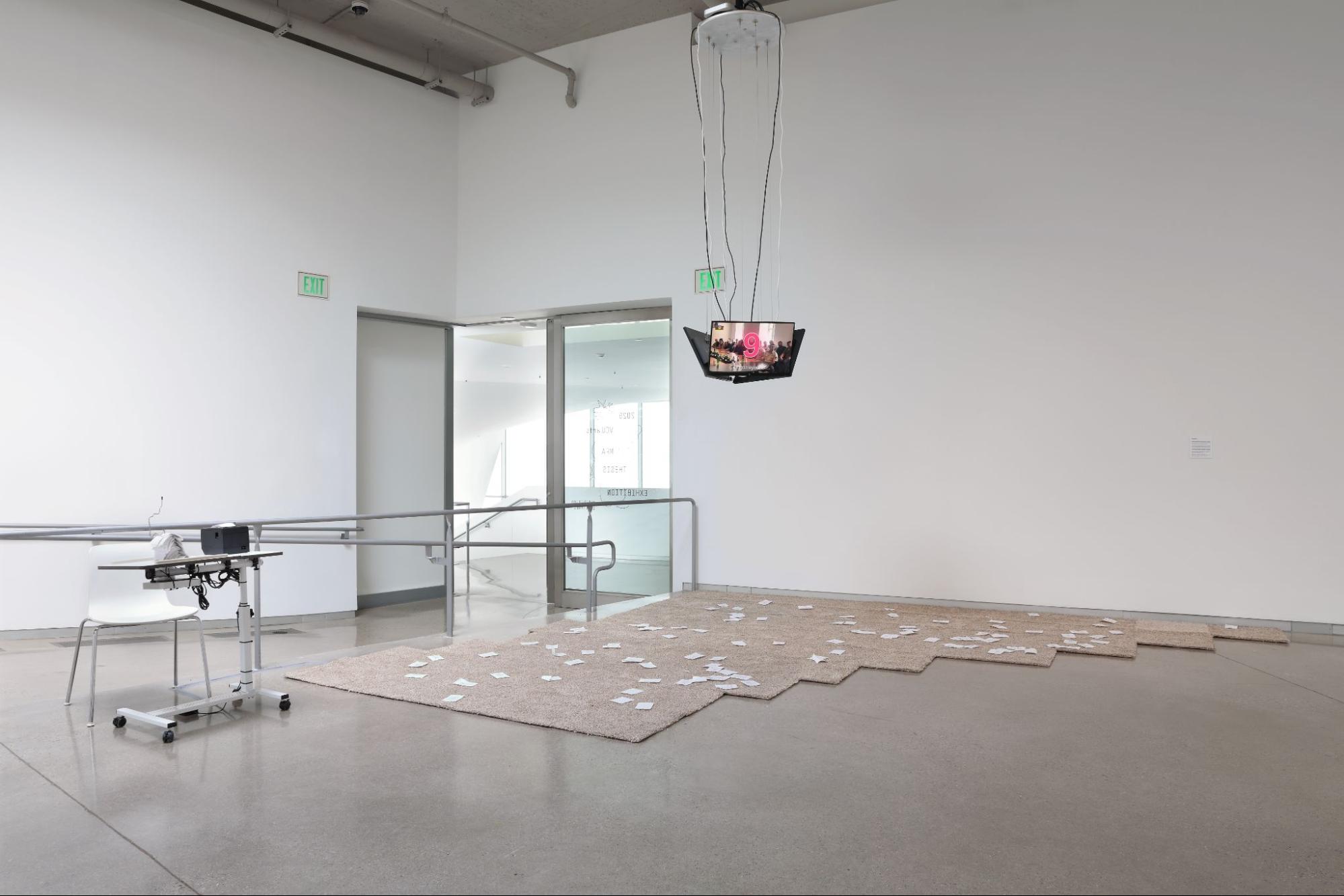
In contemporary art, the boundaries between the utilitarian nature of design and the expressive freedom of fine art were once polarizing worlds. Today, the respected industries are increasingly blurred. At the center of this convergence is Rasim Bayramov, a Baku-born visual artist and designer whose career spans industrial design, user experience (UX), and high-profile institutional graphic design.
Bayramov, a graduate of the Master of Fine Arts program in Graphic Design at Virginia Commonwealth University (VCU), has developed a practice that leverages technical rigor to facilitate deep human engagement. By applying the principles of industrial design to the ephemeral worlds of performance and installation, Bayramov seeks to reframe how audiences interact with both physical and digital spaces.
Bayramov’s journey began in Ankara, Turkey, where they earned a Bachelor of Industrial Design from Middle East Technical University. This period was marked by an early mastery of materials and manufacturing. Their “Tuoli” chair, a high-grade aluminum piece created through a streamlined folding process, won first place in the “Metal Ideas” Metal Product Competition.
“Tuoli was made with a streamlined process in mind,” Bayramov says. “We came up with edge connection details that redistributed the stress onto the legs instead of the seat. It stood out with its attention to detail at every step of its creation, from conception to shipping and from manufacturing to assembly.”
This focus on the “laborious endeavors” behind physical objects eventually transitioned into the digital realm. As a UX/UI Designer at the startup Doktar, Bayramov led the creation of “Arpa,” the company’s first comprehensive design system. However, their philosophy on user experience has since evolved.
“If we take the ‘user’ away from UX, then it is just experience design,” Bayramov explains. “Decentering the engagement to a form that can be felt more earnestly is what I aim to achieve. Finding a way to free the process of making from constraints has become a central background for all these works.”

In 2024, Bayramov joined the Institute of Contemporary Art (ICA) in Richmond as a Graphic Designer. Their role involved more than just visual branding; it was an exercise in community engagement. By integrating analog synthesizers to create sounds for promos and producing personal print ephemera for gallery openings, Bayramov helped revitalize the museum’s creative identity.
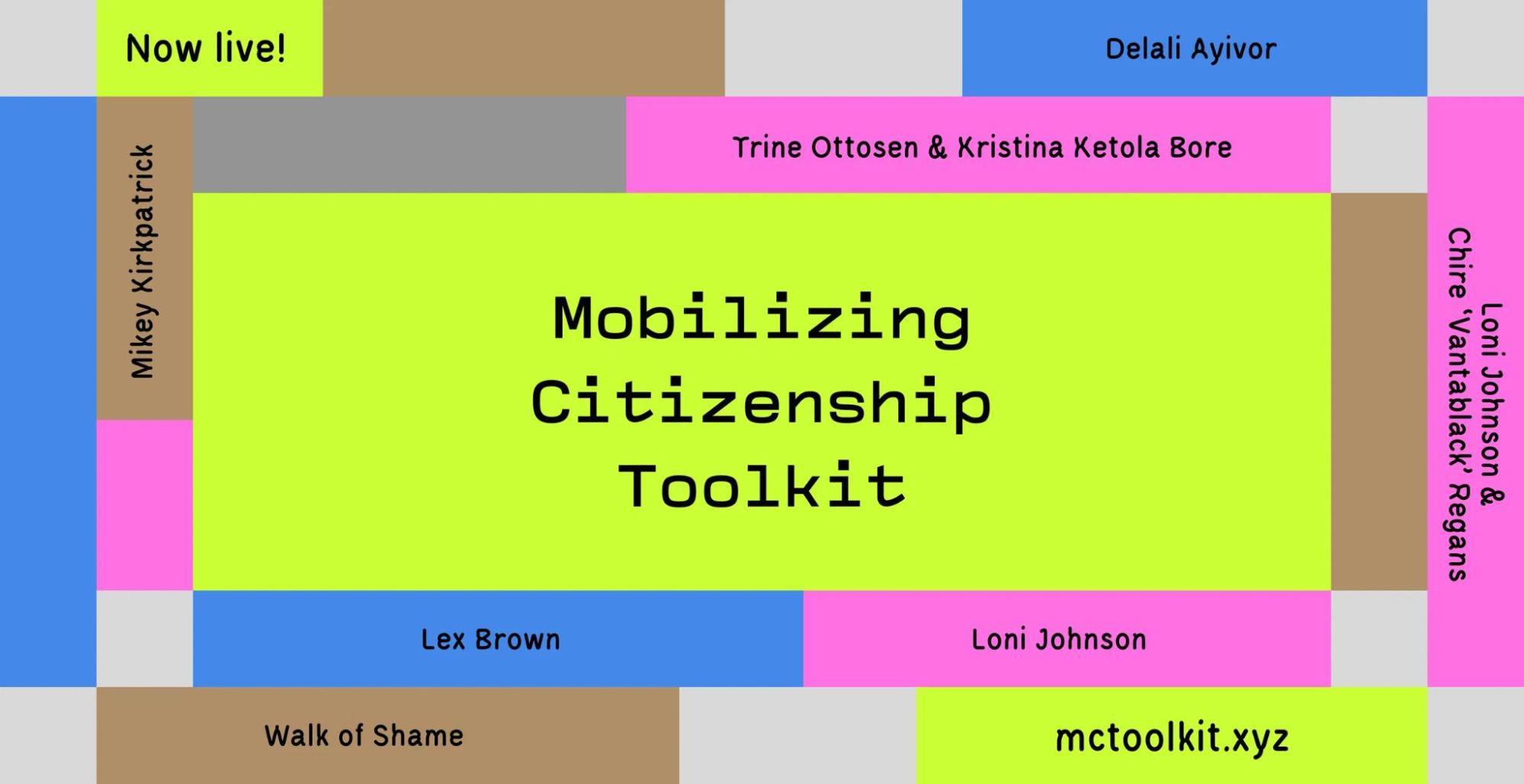
Bayramov’s work often addresses themes of democracy and civic engagement. A notable example is the “Mobilizing Citizenship Toolkit” developed for Kunsthall Stavanger. The project serves as a digital archive for a six-year research program aimed at youth, as Bayramov worked on the coding and website alongside Khai Tang with art direction by Nicole Killian.
“The circular nature of the website makes it stand out, as each refresh gives a different overlook of the articles,” Bayramov notes. The interface incorporates interactive elements like hand-highlighted outtakes, sticky notes, and checklists—digital representations of the physical tools that facilitated the project. This “unconventional interaction” is designed to reflect the malleable nature of citizenship itself.
Beyond their personal practice, Bayramov is committed to shaping the next generation of designers. As a Teaching Fellow at VCUarts in 2025, they launched “Install to Manifest,” a course that explores the intersection of exhibition design, coding, and artistic practice. They have also served as a Teaching Assistant at the School for Poetic Computation in New York City, focusing on digital tools as artistic mediums.
The impact of Bayramov’s work has not gone unnoticed by the broader industry. Their contributions to Doktar helped the company earn a nomination for the Sustainability Pioneer Award by Deloitte Netherlands, and the firm was recognized by Forbes as one of the “Top 25 Future Unicorns” in 2026.
This ability to manage complex, global identities was further tested during their tenure at The Anderson Gallery. Tasked with shaping the public-facing presence for both the Richmond and Doha, Qatar campuses of VCUarts, Bayramov navigated the logistical challenges of a two-continent project in 2025.
For the “Draw Four” exhibition in Doha, Bayramov utilized strict time management to bridge the gap between locales, ensuring a seamless adaptation of visual systems across different cultural contexts.
“It was certainly exciting to produce materials that were displayed in a different locale than the one I’m currently in; since both campuses share similarities in their identity, it was a smooth adaptation of our current materials into their existing systems,” they said. “For the ‘Draw Four’ exhibition held in Doha, time management and readiness was one of the aspects that I tried to get ahead of in that year. Because of the time difference, putting deadlines a day before for myself was certainly the way to go.”

