

“Know thyself” is the famous saying from ancient Greece, but how do we discover who we are and what we want to achieve? It’s even harder in today’s age, where we’re bombarded by advertising, guided by social media algorithms, and often face pressure from our peer groups to conform to standards that we never signed up for. How can we possibly know ourselves when so many external voices are telling us who and what to be?
Artists are naturally inclined not to conform and to push these boundaries, and that’s what we can see in the group show ‘Learning What Actually Feels Like Me’, which was held at Avivson Gallery in Highgate, North London – specifically, what it means to be a woman on this journey, in a patriarchal world, where women are more often pressured to conform to societal norms.
All eight artists bring their unique styles, and while they may employ different techniques and materials, they are all on a journey of self-discovery through creative expression. For some, this comes from abstraction; others prefer more figurative works; some choose to paint, others to collage. While the works in the show look very different, they have been brought together by this common theme.
Abstract art is often a raw expression of emotion, and we can see that in Mariia Denysenko’s work, where lines of red and blue leave empty spaces between them. After all, emotions do come in waves, and in these pieces we can see moments of both intensity and serenity.
It follows the paths set by the great abstract expressionists such as Helen Frankenthaler and Willem de Kooning, asking us to reflect on what we see within the colour balance and rhythm of the piece. When we look at a work by Mark Rothko, are we looking at it, or is it peering back at us? When we spend time trying to understand a work by Mariia Denysenko, are we really the viewers or merely vessels for the painting itself, and the emotions it’s channelling through us?
Natalia Kungurova adds order to her abstraction with lines and patterns that reflect her inner emotional state, while leaving it open to the viewer to decide what to take away. While Maria Verner’s explosive works are about love and its power, a statement that’s particularly relevant when the news cycle appears to be one filled and driven by hate. Both artists explore the idea that we all perceive and manifest emotions differently, but we are still part of a broader community, and it’s this commonality we should focus on.
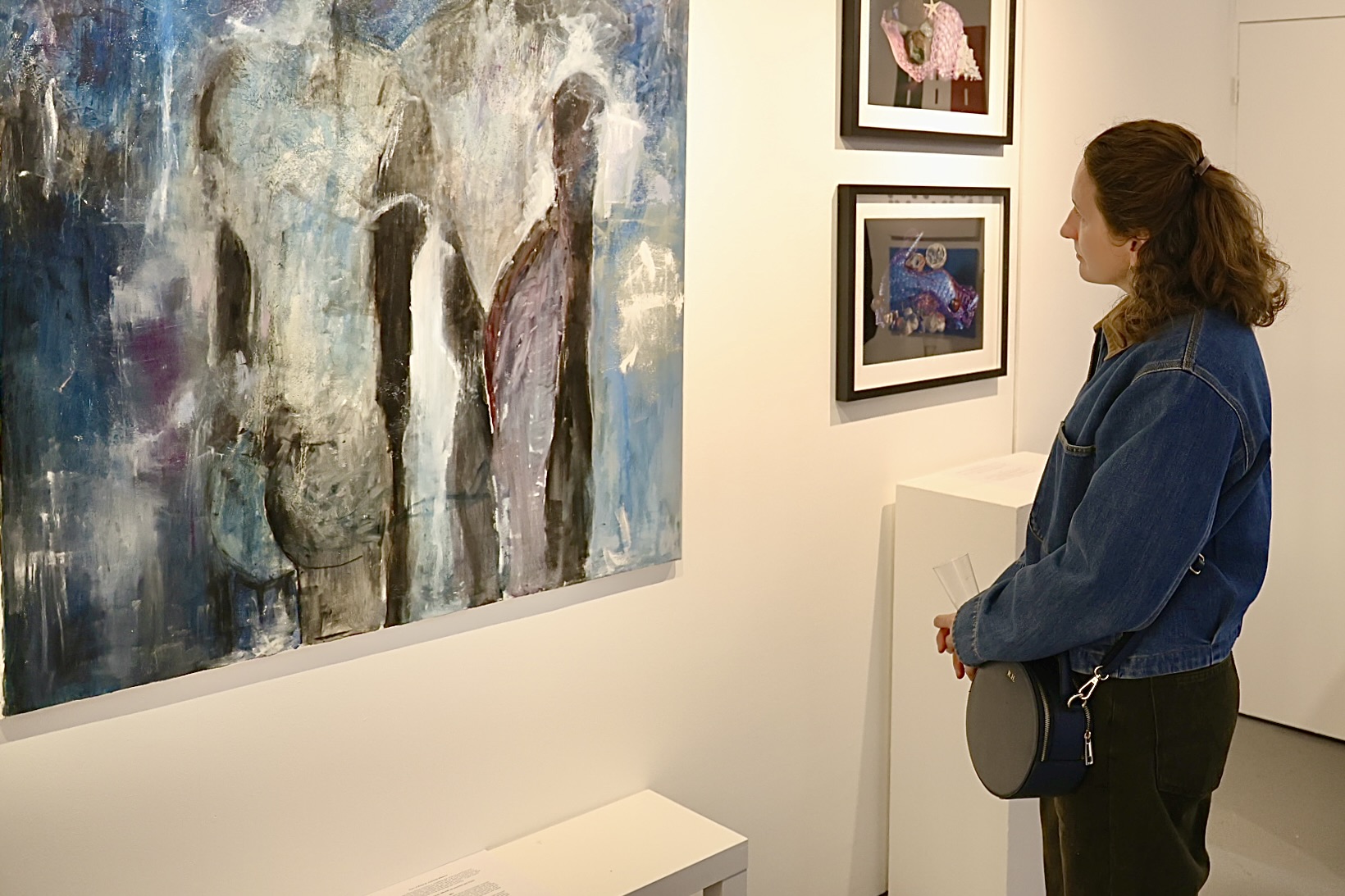
A few of the artists bring the abstract world closer to the real one we inhabit. Natasha Antipova-Kaploukhaya’s bold painting feels purely abstract; that is, until you notice the photograph of the two women lying down in the corner, as if relaxing after being overwhelmed by the emotive brush strokes that hang above them.
Did the photographic element come first, and is the painting a response to it? The way that Julie Cockburn weaves dots onto old photographs to give them a contemporary twist? Or is it a distortion of the original source material with paint, as Gerhard Richter does? Is there more of the image that we can no longer see? It’s this tension that makes us want to learn more and create our own narrative around the work.
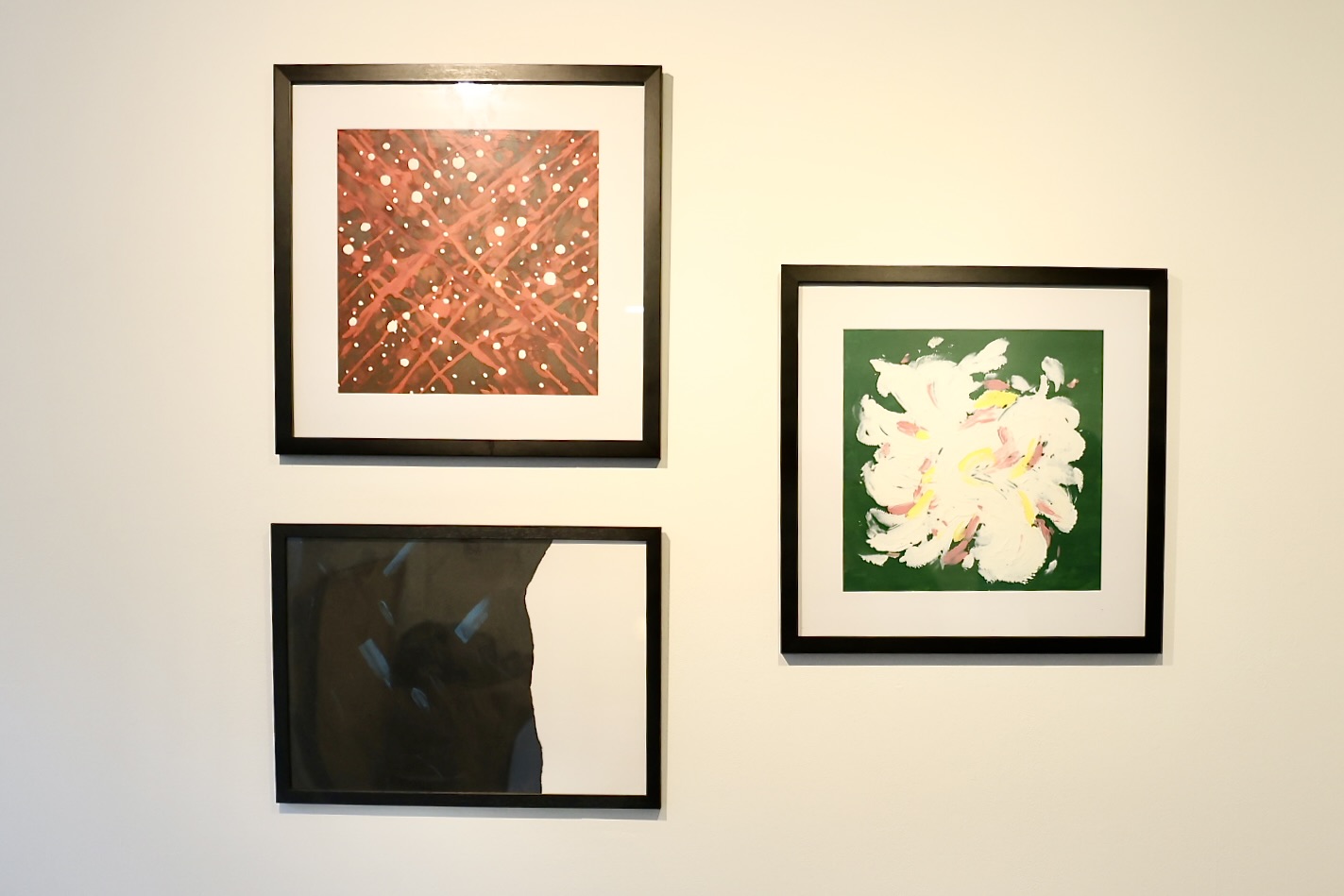
Veronika Khacaturian brings humour into her more abstract pieces, where a large swirling, and mainly white mass on a green background is titled ‘Dropped the wedding cake on to the billiard table’, and another is ‘Spilled borscht’. It pokes fun at the idea that we humans search for the image, even when there isn’t one, much like how we see faces in clouds – as if her paintings are functioning as a type of Rorschach test. By tapping into our instinct for pattern recognition and subverting it, Khachaturyan brings her original take on contemporary abstraction.
These works may be playful, but there is a darker twist: ‘dropped a nuclear bomb’ hints at the febrile state of geopolitics and makes us question whether this abstract work is actually a view of a post-apocalyptic wasteland from above. Much like the work of Japanese photographer Ishiuchi Miyako, who captured everyday items like a simple dress in the remnants of Hiroshima after a nuclear bomb was dropped on the city. There’s humour and horror in Veronika Khacaturian’s work.
Anastasia Klimova’s ghostly figures appear to be fading either in or out of existence, as if they are traces of memories that can be reached but never realised. Much like how our memories change over time, changing depending on whether we access them frequently or rarely. It also hints at how women are often deemed invisible, ignored by men who want the attention centred on them.
Just like Edvard Munch’s famous ‘The Scream’ was a figure representing our attempts to block the sound of a scream tearing across the landscape, are these figures ghosts of memories we’d rather forget or reminders of the past that haunt us, as we see in the works of Kathe Kollwitz? Do we learn from our past failures if we remember them, or are we doomed to repeat them if we forget? It’s up to us to decide how we tackle this catch-22.
Inessa Garder’s collage feels almost futuristic as we gaze down a white avenue, inspired by her memories of Moscow’s New Arbat Avenue. The papers used in the work are drawn from different sources, yet they create an architectural vision that captures both the rectilinear nature of buildings and the chaos of a busy street filled with movement and energy.
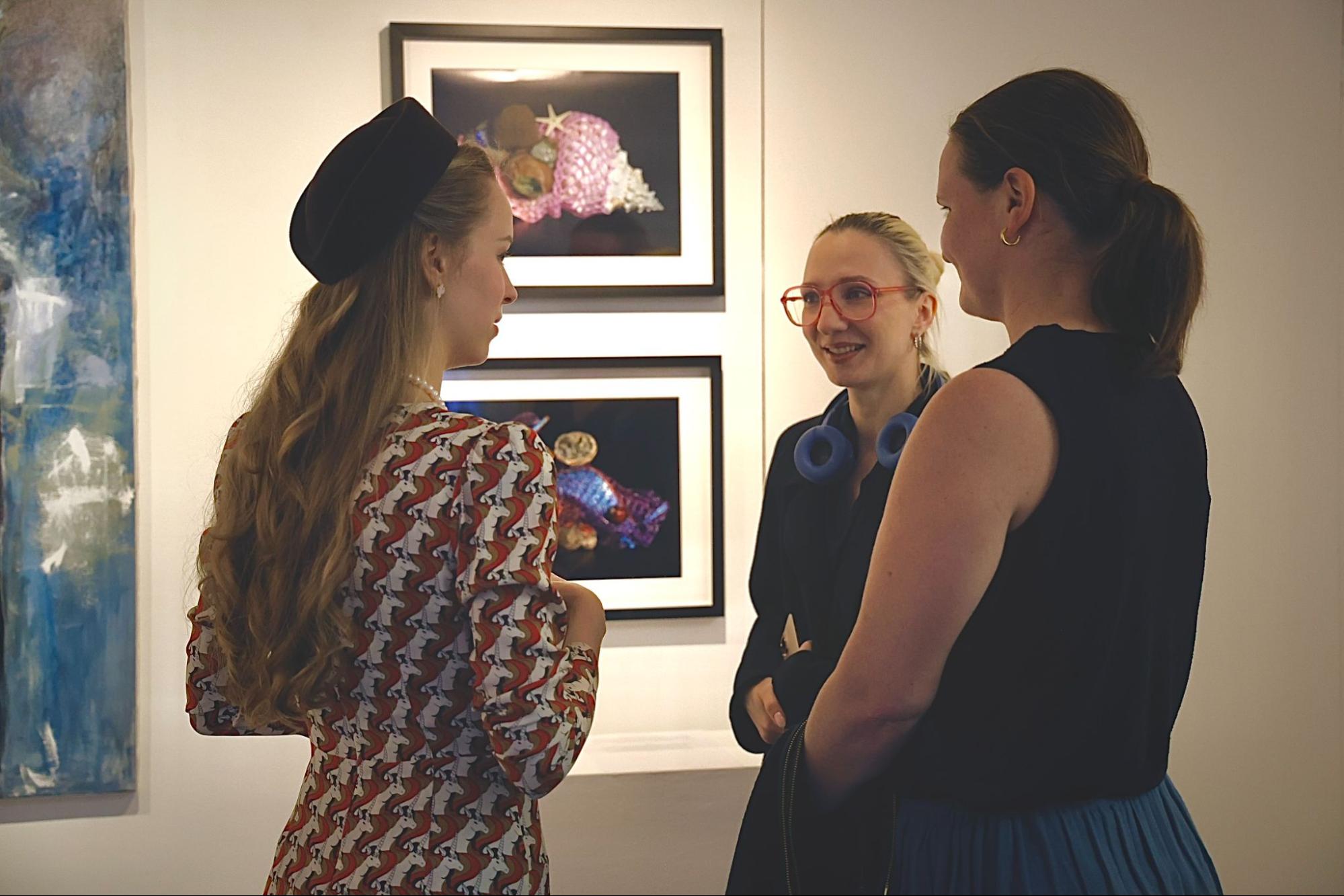
Marie Lourier is the sole photographer among the artists and uses rotting fruit and vegetables, a symbolism common in historical vanitas paintings, to reference the fragility of life, creating a tension between beauty and decay, and reflecting on how women are often valued for their beauty and later discarded when that beauty is perceived to fade.
It also reflects how women are very rarely the aggressors in this world but are often those who suffer the most in times of war, famine and drought. We see this in women being some of the most vulnerable refugees, and even in stories from Ancient Greece, where women were punished due to the capricious nature of the Greek Gods. Bringing this to modern times, Lourier references the story of the Little Mermaid, who lost her voice for love, and another story of a woman being punished for wanting to live her life as she chooses.
All eight artists remind us that self-discovery is in the journey. Life is about constantly re-assessing who we are and rediscovering elements of ourselves we had once deemed lost. By doing so, they ask us to question the values we hold dear and whether we should live life differently. Society often tells women what they should be; these eight artists are deciding to reject that and figure it out for themselves through art, creativity and expression.
Learning What Actually Feels Like Me was curated by Darya Kalembet and held at Avivson Gallery from 13-16 April 2026.

