

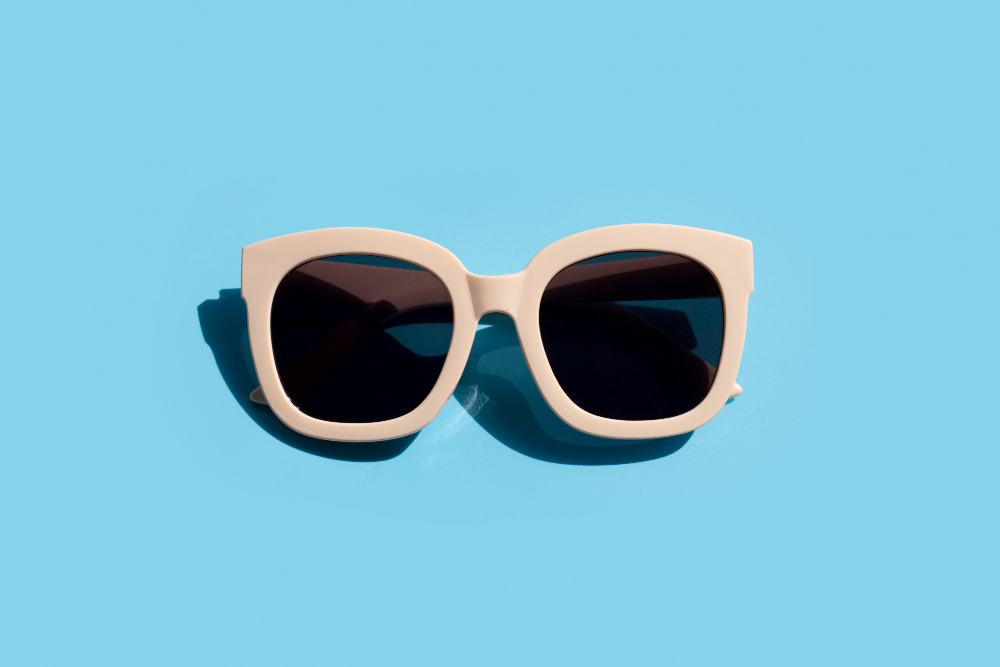
Sunglasses have quietly stopped behaving like accessories. They’re doing more than finishing a look. They’re setting it.
This summer that shift feels even clearer. Outfits are getting simpler, lighter, less constructed. The detail that pulls everything together is often just a frame on the face.
Everything else can stay fairly straightforward. Sunglasses do the rest.
Tailoring your outfit to your sunglasses
A plain white tee, a clean shirt, simple tailoring, even sportswear all read differently depending on what’s on your face. It’s immediate. Nothing else in the outfit needs to change.
Slim frames tighten things up. Chunky acetate adds weight. Dark wrap styles lean more technical. Softer shapes feel easier, less deliberate.
That variation is why eyewear has become one of the most reliable ways to shift a look without rebuilding it.
Summer dressing has got more direct
There’s less interest in layering or complicated combinations right now. The focus has moved toward ease. Clothes that work on their own without much adjustment.
Sunglasses fit into that way of dressing better than most pieces. They don’t require coordination. They don’t rely on context. They sit on the face and immediately change how everything else reads.
That’s why they’ve become part of daily wear rather than something saved for specific conditions.
Indoors, outdoors, and everywhere in between
The old rules around sunglasses don’t really apply anymore.
They’re not reserved for bright days or holidays. They stay on through trains, cafés, studios, airports.
Part of that is practical. Light exposure isn’t consistent anymore as screens, artificial lighting, and constant visual demand mean brightness is less about the sun and more about everything else around us.
Light-filtering and anti-blue light lenses sit inside that shift. They don’t announce themselves. They just soften the edges slightly. In practice, they end up being worn like any other pair of sunglasses.
Function Blending Into Style
Light-filtering lenses, including blue light sunglasses have made their way into everyday eyewear in a fairly natural way.
They started with a functional purpose: Reduced eye strain when looking at screens outside, meaning better focus across long days. That part still matters, but it’s no longer the main reason people reach for them.
Once they’re on the face, they become visual rather than technical. A slight tint, a softer reflection, a different way light sits on the lens. Those details read as style long before they read as function.
They’ve effectively merged into the same category as sunglasses.
Choosing blue light sunglasses
Multiple companies offer blue light sunglasses, but you want to look for brands that give you actual information on how much blue light they actually filter. Look for someone with patented blue light technology with explicit filtration rates, like Horus X who specialize in blue light lenses.
Making your outfit more fashion forward this summer.
Sunglasses are often the first thing someone sees, even though they’re one of the last things added.
That’s part of why they’ve become so important in how people dress now. They don’t require explanation. They don’t need context. They just change how everything else is read.

