

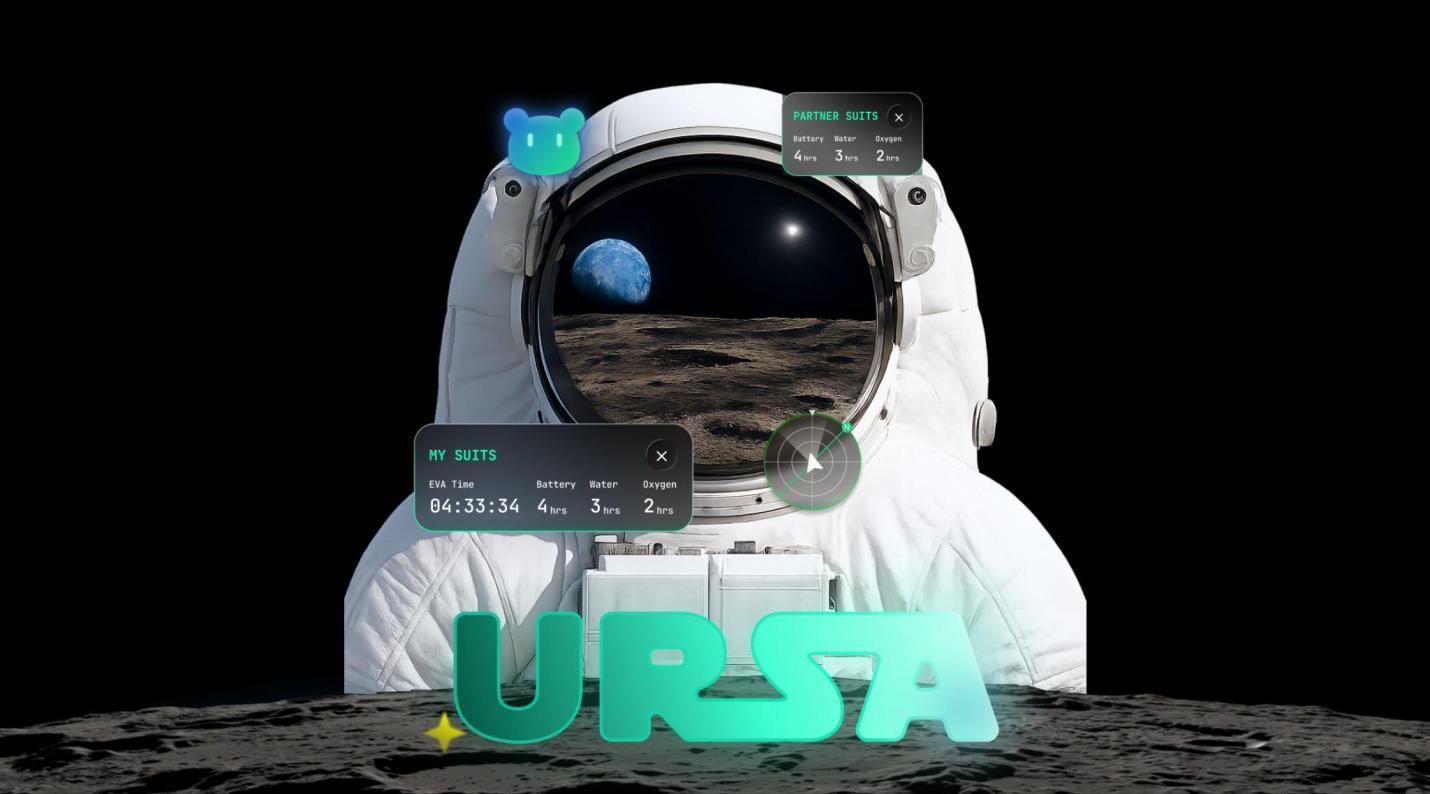
Currently, artificial intelligence, wearable devices, and spatial computing technologies are accelerating their implementation, driving a new transformation in human-computer interaction toward ubiquitous, and integrated experiences. Traditional interaction paradigms are gradually being disrupted, and digital technology is no longer confined to device interfaces; instead, it deeply penetrates human perception, everyday behavior, and life scenarios, reconstructing the way humans connect with intelligent devices.
Amidst this industry transformation, the core logic of design is also undergoing a fundamental shift. The industry is moving away from mere visual upgrades of interfaces, toward creating experiences that are more context-aware, and integrated into everyday life. How technology can better understand human behavior, support wellbeing, and integrate naturally into daily routines across devices and environments has become a central theme in contemporary digital experience design.
Yue Fan, a designer working at the intersection of merging technologies and human-centered experience design, exemplifies this transformation. exemplifies this trend.Currently working on digital health and wearable experiences at Samsung, she designs cross-device experiences that make complex information more intuitive for users worldwide. Her broader practice spans AI, spatial computing, and multimodal interaction. Her leading work, the URSA concept design project, has been recognized with prestigious international awards, including the Muse Design Award, the New York Product Design Award, and the Indigo Design Award, for its innovative design philosophy and practical value.
At the 2026 Indigo Design Awards, in addition to receiving a Gold Winner distinction, URSA was also selected as a finalist for “Digital Design of the Year” alongside internationally recognized projects such as the Samsung Galaxy S26 Ultra website and the Oura Ring app. The Digital Design category included 55 winning projects in total, but only five advanced to the final shortlist. Other finalists came from globally recognized design organizations including Cheil, The Barbarian Group, and Instrument, while URSA was the only finalist focused on future human-computer interaction.
URSA is not simply about interaction in futuristic space environments, but a far more immediate question: how intelligent systems should support people in high-pressure environments without constantly interrupting them.
Its hands-free interaction model, adaptive guidance system, and non-intrusive information design all address a larger challenge facing future intelligent systems: how technology can help people perform complex tasks more safely and efficiently in demanding environments.
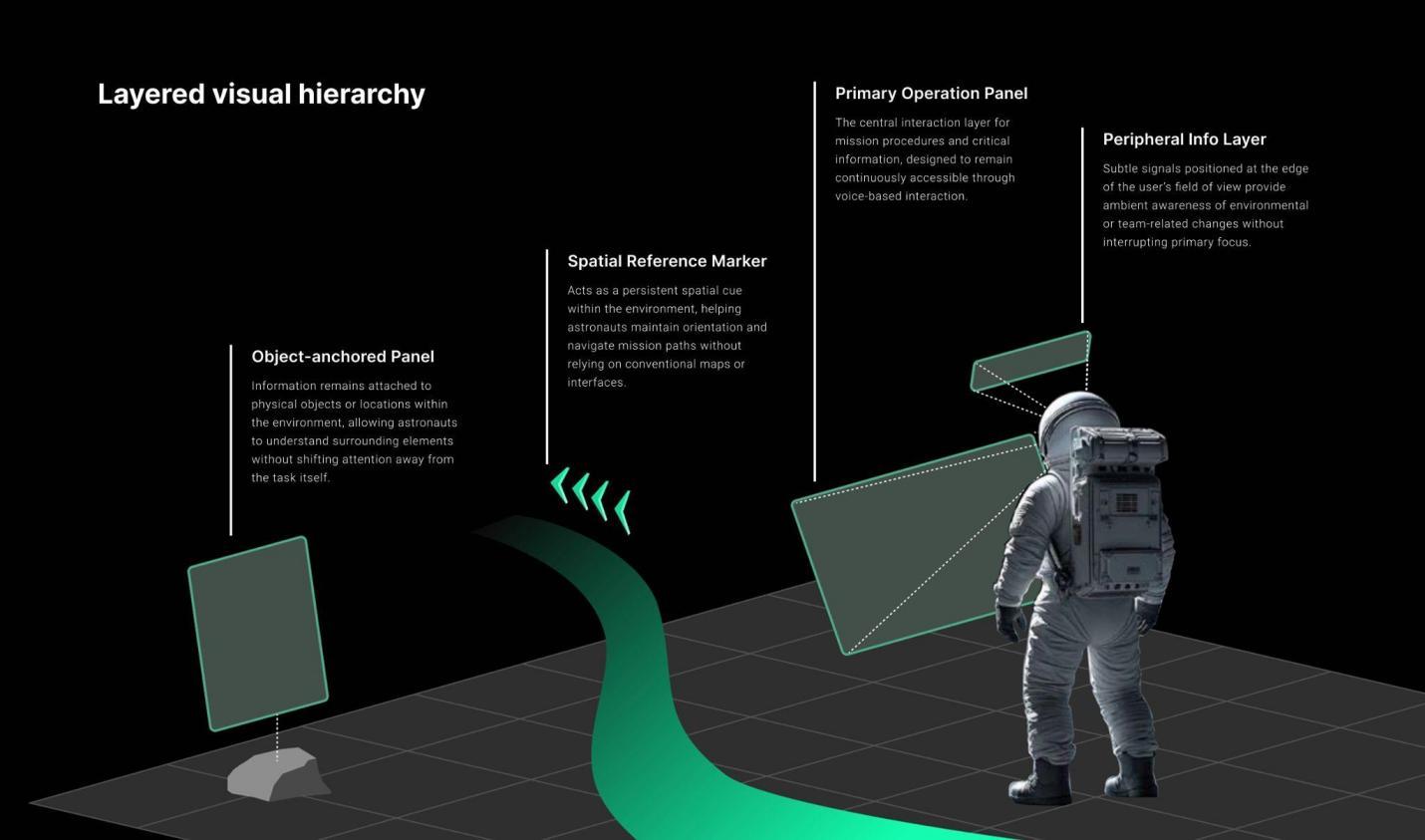
These principles also extend beyond space exploration into fields such as healthcare, emergency response, industrial maintenance, and digital health, where users are often required to process large amounts of information under conditions of limited attention and mobility. In these contexts, reducing cognitive burden and minimizing unnecessary distractions are becoming increasingly important aspects of human-AI collaboration.
In Yue Fan’s view, the future of human-computer interaction will gradually shift away from simply operating interfaces toward understanding people — their cognition, behavior, and how attention shifts in real-world environments.
That perspective is deeply connected to her background.
Before entering the fields of user experience and emerging technologies, Yue Fan studied landscape architecture before later pursuing design at the University of California, Berkeley, where her work focused on human-computer interaction and emerging technologies. Rather than viewing interfaces purely as visual layouts and information structures, she became increasingly interested in how information exists within human environments, and how technology relates to human behavior, perception, and attention.
“Many digital systems are still designed around constantly competing for people’s attention, even though human attention is fundamentally limited,” Yue Fan explains. “Effective interaction is not simply about making systems more powerful. It’s about understanding what people actually need in different situations.”
That line of thinking eventually became the conceptual foundation for URSA.
In high-pressure environments such as space exploration, astronauts must simultaneously manage navigation, environmental hazards, procedural tasks, and team communication, even as human attention remains limited. Under these conditions, increasingly complex interfaces do not necessarily improve performance. In many cases, they become an additional source of cognitive strain.
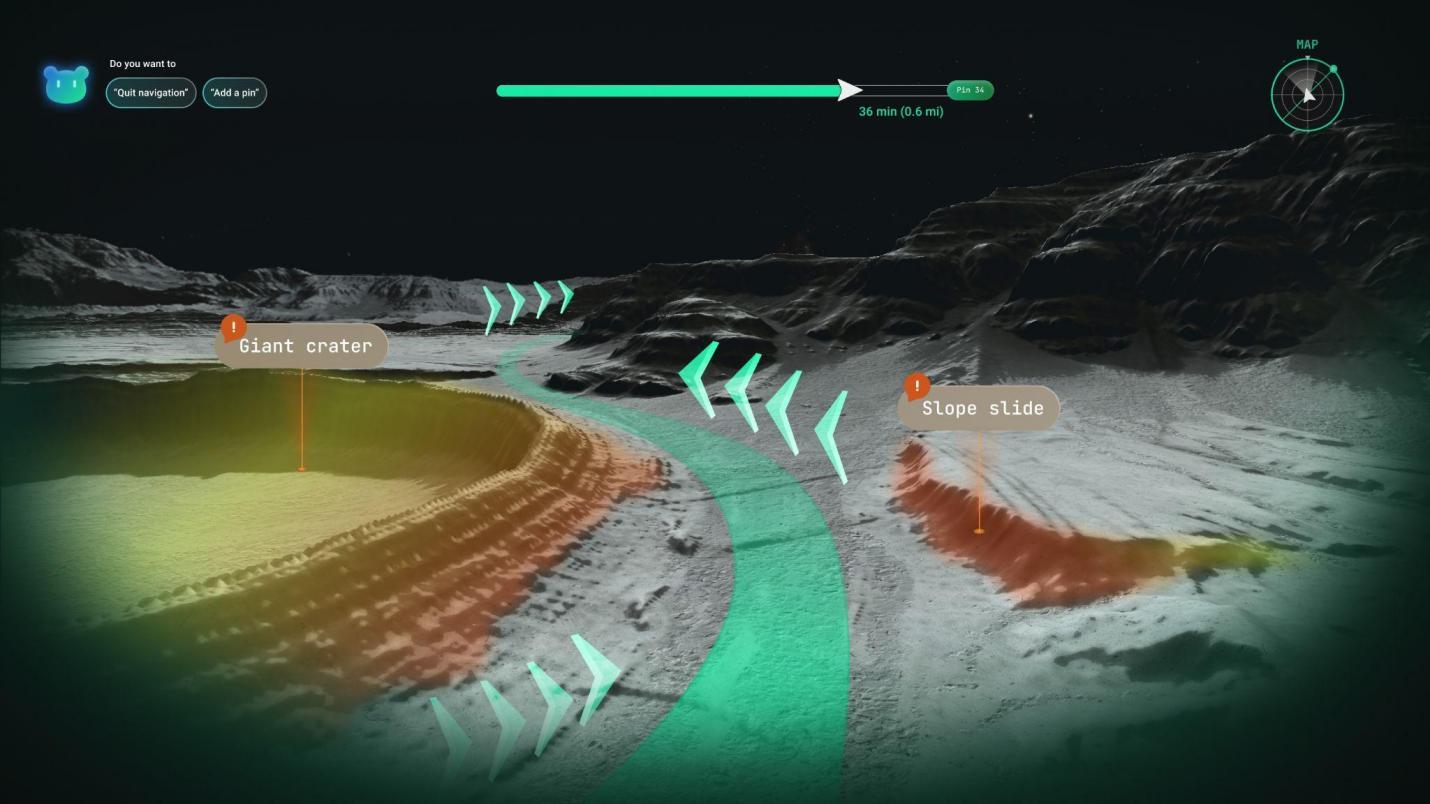
URSA attempts to address this challenge by exploring how critical information can appear at the right moment while minimizing unnecessary interruptions.
Unlike traditional interfaces that continuously compete for user attention, URSA explores a more contextual interaction model in which systems dynamically adapt how information is presented based on user tasks and environmental conditions. Its spatial guidance system, multimodal interaction approach, and AI-driven contextual awareness are not isolated features, but part of a broader approach to interaction design focused on reducing unnecessary cognitive load while allowing users to remain engaged with the real environment around them.
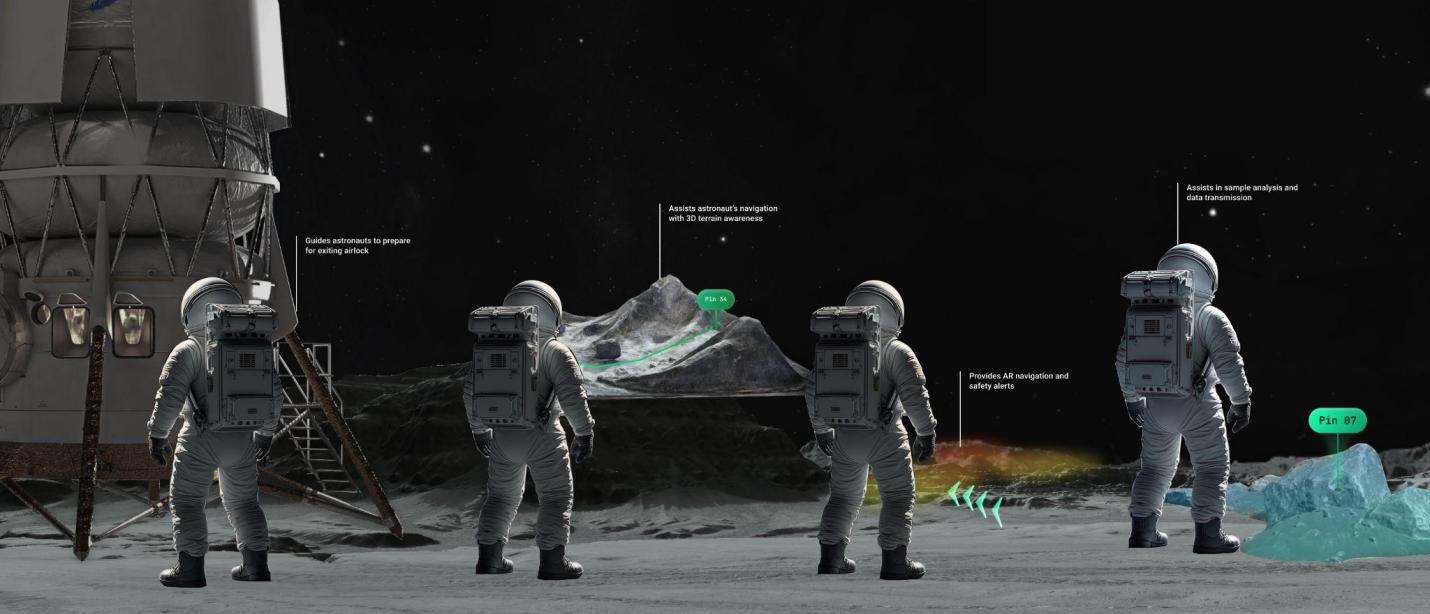
From AI systems to wearable devices, technology is gradually shifting from being a tool people actively operate into something increasingly integrated into everyday life. Yue Fan’s design practice continues to revolve around a central question: how intelligent systems can provide meaningful support while still respecting human cognition, attention, and the rhythms of everyday life.

