

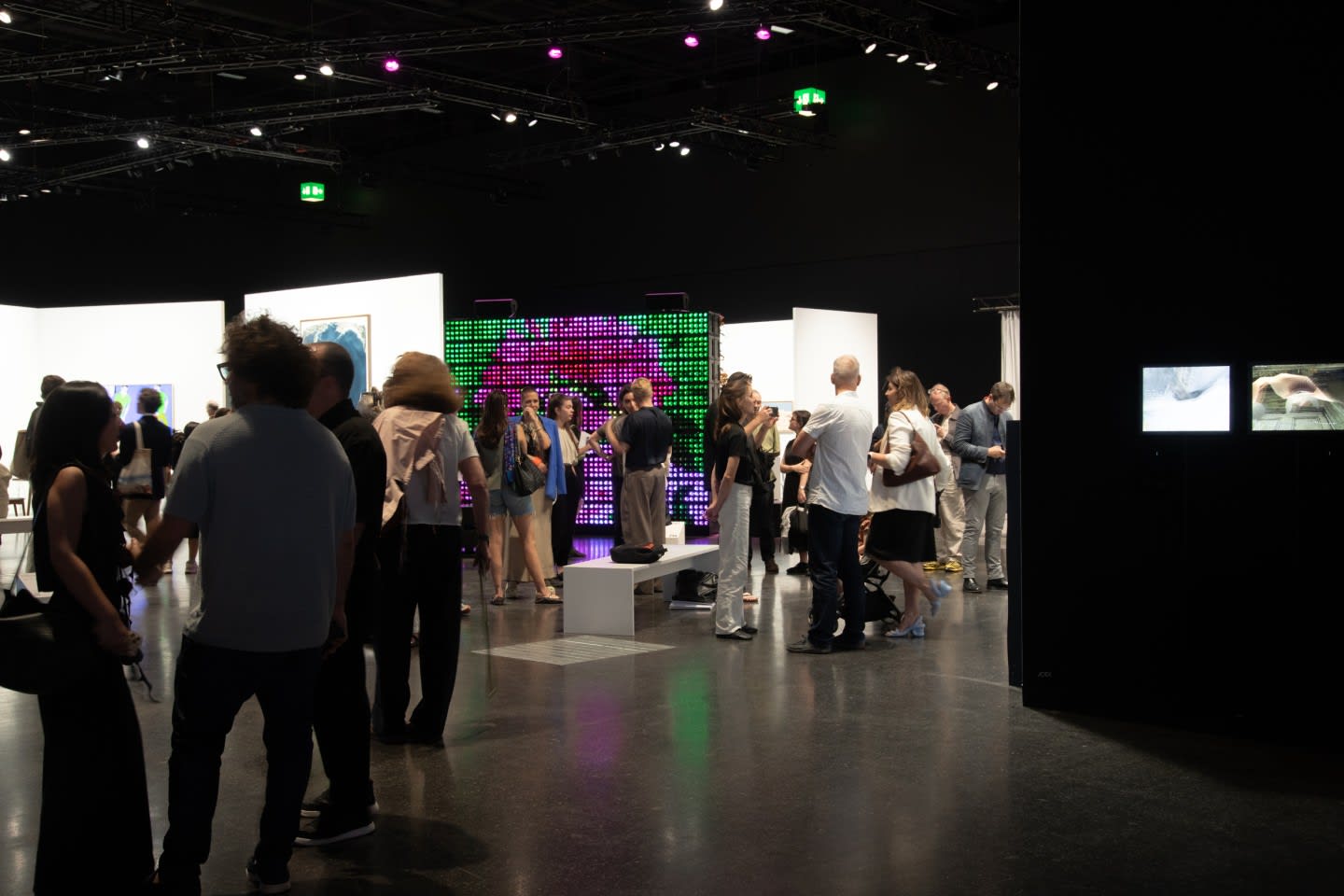
Curated by Eli Scheinman and Trevor Paglen under the theme The Condition, Zero 10 is Art Basel‘s global initiative celebrating art of the digital era. In its largest form to date, the space brings together established as well as up-and-coming artists, galleries and interdisciplinary practitioners offering unique lenses on the links between art, technology and culture.
This year, Zero 10 in Basel was a particularly sonically immersive and visually memorable experience. Incorporating computational art, textile pieces, photography and interactive installations, visitors’ conversation centered on the space’s whimsical, innovative and thought-provoking works, reinforcing the value of a dedicated space to celebrate digitally-themed art.
Here are five highlights that had me returning to them for a closer look:
The most hypnotic: Infinite Garden (2025) by Leander Herzog
I was particularly taken by the alluring infinite botanical garden presented by Nguyen Wahed. The work is a generative, ever-shifting ecosystem where no single moment ever repeats itself. The rhythm of the artwork is hypnotic, akin to navigating a first-person game through a magical, infrared garden. What makes it conceptually rich is how it’s built: Herzog works not with conventional 3D geometry but with the equivalent of digital mark-making, with lines held at a consistent 1-pixel width, points remaining square, always facing the viewer. This deliberate constraint is what gives the whole project its flickering quality.
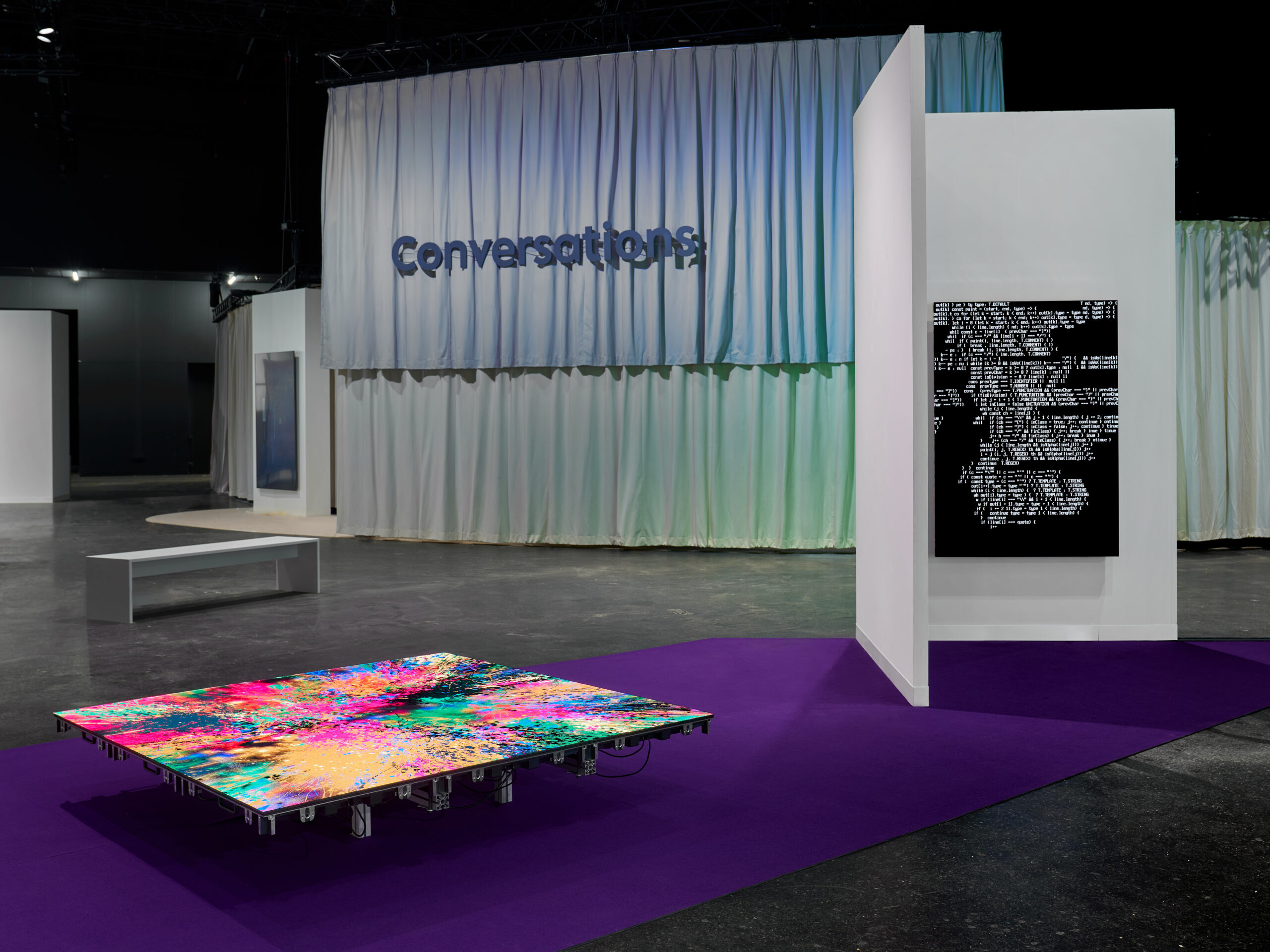
The most immersive: Green Screen (2023) by Hito Steyerl
Presented jointly by Esther Schipper and Andrew Kreps, Hito Steyerl’s breathtaking Green Screen (2023) is a large-scale installation incorporating both an LED wall made from recycled glass bottles as well as living plants and AI-generated imagery. Bioelectrical signals from the plants drive the work’s soundscape and low-resolution animations of blooming flowers, forging a dynamic exchange between living organisms and digital technologies. The result is a genuinely immersive environment that draws passersby in for an extended stay.
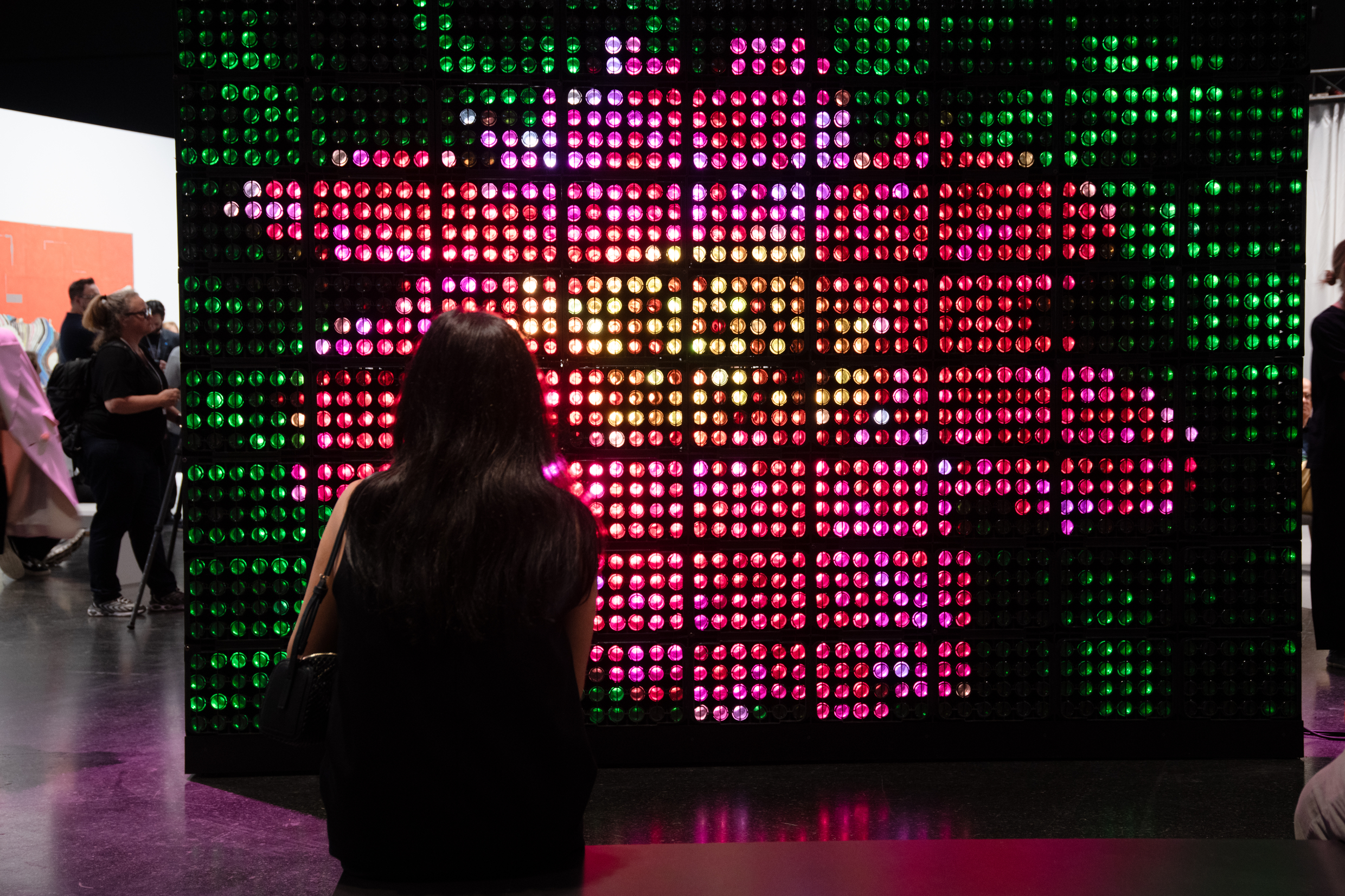
Hito Steyerl
Courtesy of Art Basel
The most thought-provoking: Panoptic Chiasma (2026) by Rafael Lozano-Hemmer
In Panoptic Chiasma (2026), presented jointly by Max Estrella and bitforms gallery, Rafael Lozano-Hemmer examines the technological infrastructures that increasingly mediate contemporary perception. This was a standout in creative approach: through interactive works that track viewers’ facial features, heartbeat, thermal signatures and movements in real time, the series exposes the mechanisms of AI and surveillance that are often invisible but shape how we see and are seen.
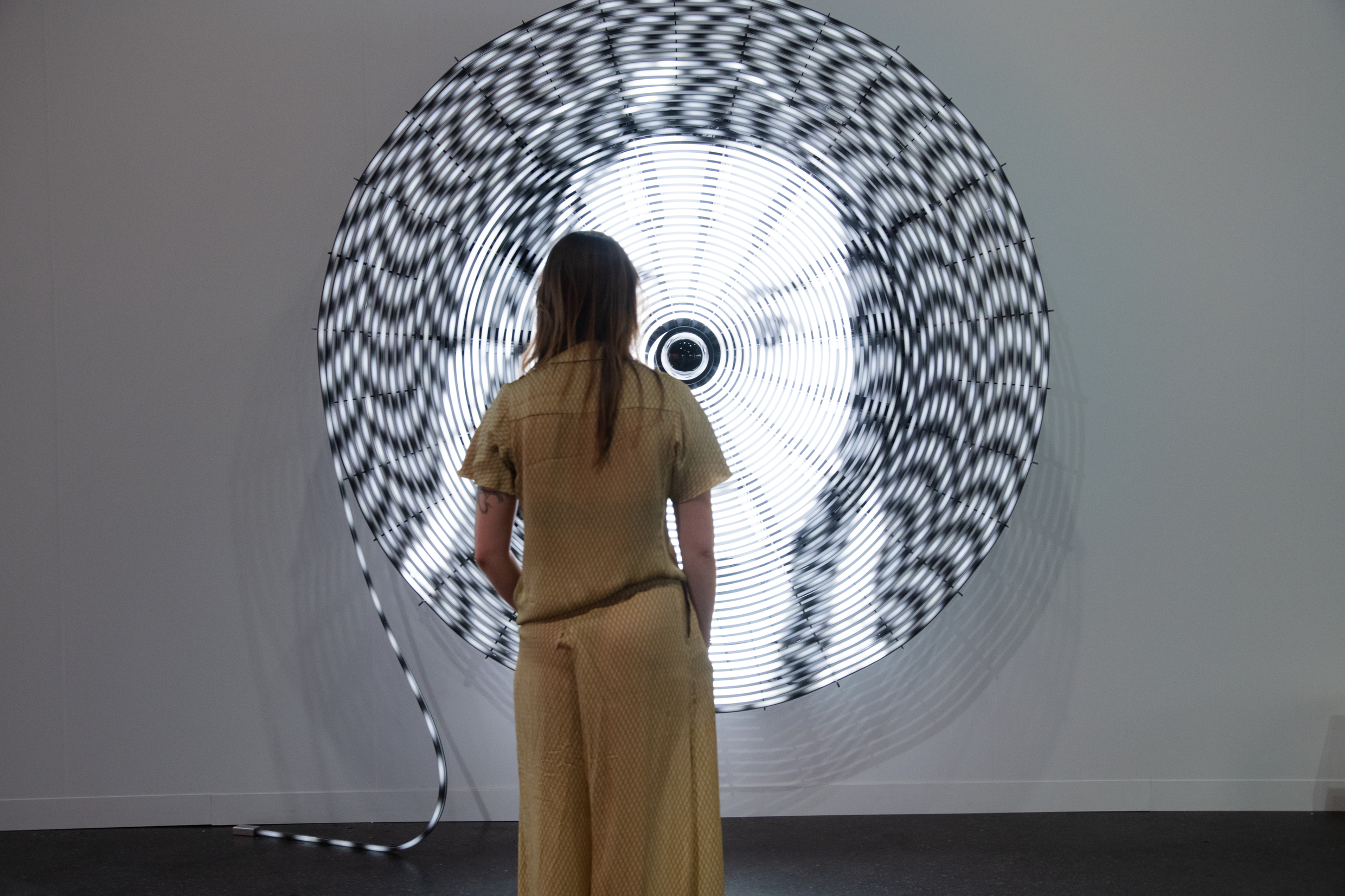
Rafael Lozano-Hemmer. Courtesy of Art Basel
The most moving: STANDARD (2023), Flare (Oceania) (2022) and Western Flag (Spindeltop Texas) (2017) by john gerrard
john gerrard’s triptych — STANDARD (2023), Flare (Oceania) (2022), and Western Flag (Spindletop, Texas) (2017), presented by Fellowship — brings together three real-time digital simulations centred on environmental collapse, fossil fuel extraction and systems of power. Generated continuously through custom software, the works exist in a state of constant motion, in which wind, smoke, fire and light unfold as meditative processes. Viewed side by side, the triptych becomes especially affecting, intensifying its reflection on energy and the environmental crisis.
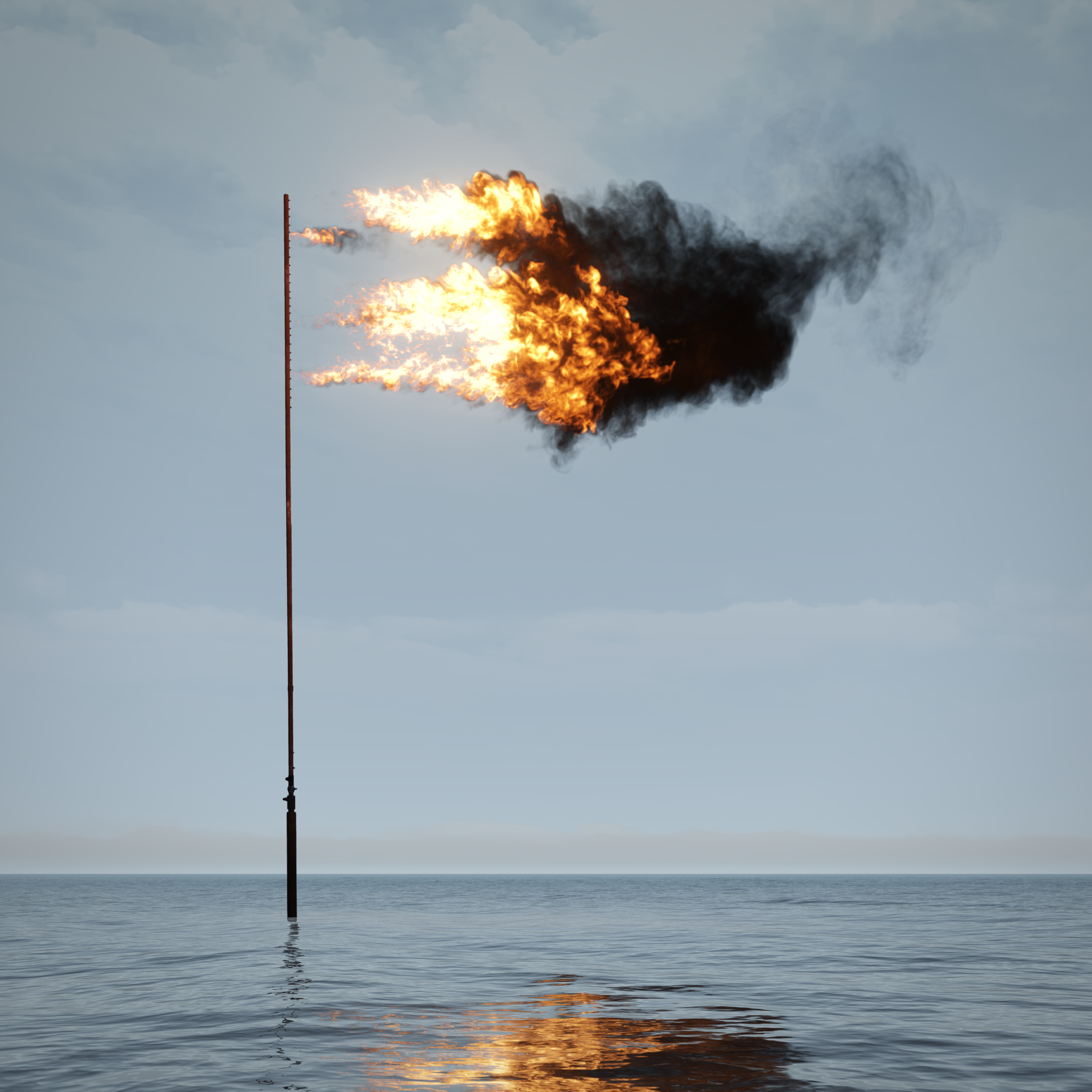
Real-time simulation
Installation dimensions variable
Edition of 5 + 3 APs
The most awe-inspiring: Ocean V (2010) by Andreas Gursky
Andreas Gursky’s Ocean V (2010), with its immense scale, offers a rare moment of stillness amid the sensory overload of the fair, allowing viewers to confront their smallness against the vastness of the natural world. Part of the artist’s ongoing series of digitally constructed oceanic landscapes, the work draws on satellite imagery to transform oceans into something unfamiliar, drawing attention to themes of global conflict and the climate crisis.
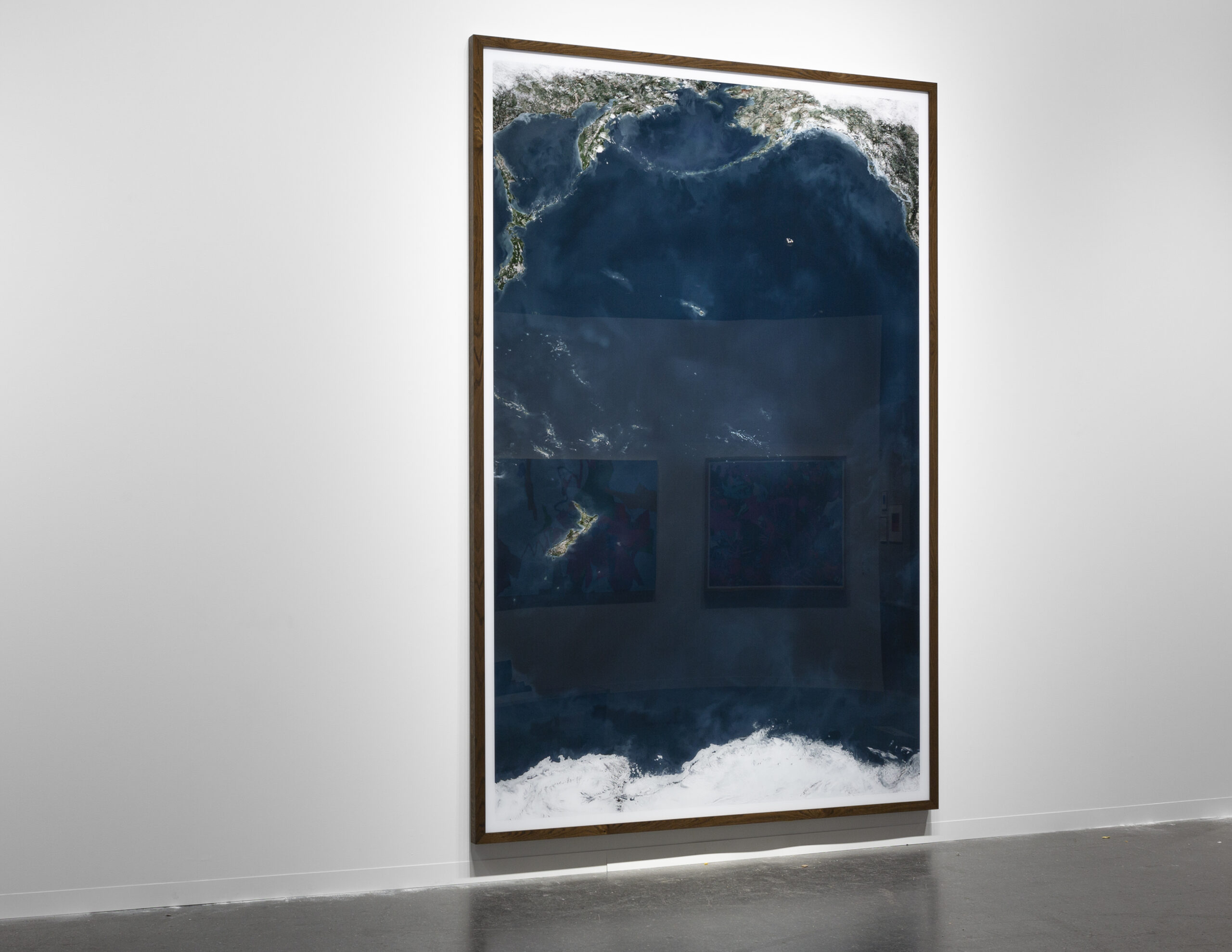
Ocean V, 2010
C-print, Diasec
Size of image: 346 × 229 cm
Size of plate: 359 × 242 cm | Size of image: 136 1/8 × 90 1/8 inches
366.4 × 249.4 × 6.4 cm | 144 1/4 × 98 1/8 inches (framed)
Copyright Andreas Gursky / VG Bild-Kunst, Bonn, 2016
Courtesy Sprüth Magers
Photo: Jochen Arentzen

