

The statistical reality for female filmmakers behind the camera has long been a subject of industry scrutiny. According to a report from the Center for the Study of Women in TV and Film, women account for just 22% of directors, 23% of writers, 30% of editors, and a mere 8% of cinematographers. While the percentage of women working as producers has seen a gradual upward trajectory—rising from 18% in 1998 to 23% in 2025—the executive tiers of physical production remain heavily male-dominated. Yet, a new generation of executive talent is proving that female producers are positioned as the next major force in global entertainment.
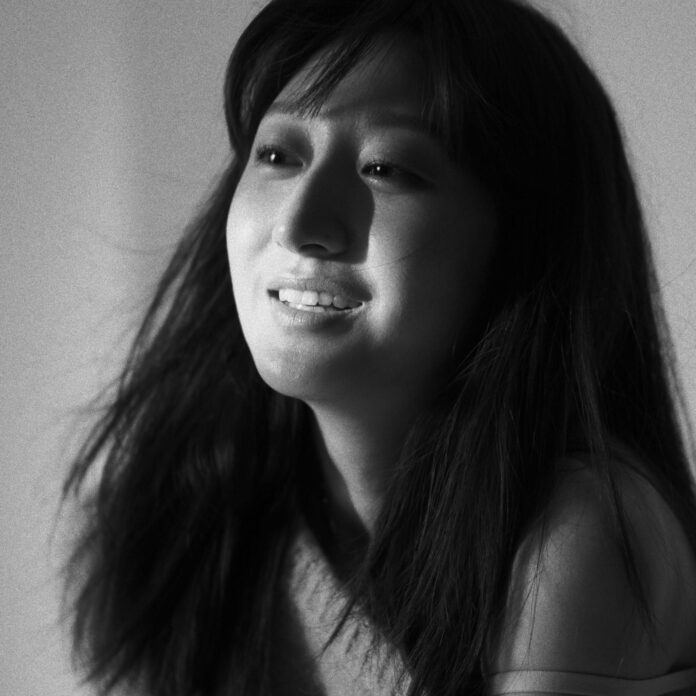
As part of this shift is Los Angeles-based producer and line producer Huiqi “Neeko” Kuang. With a film and TV producing career bridging the gap between creative performance and high-stakes logistics, Kuang has built a cross-border portfolio spanning festival-selected narrative films, commercial campaigns and live broadcasts with Academy Award-winning stars.
“I actually know many incredible women producers who are doing excellent work, so I feel hopeful about where the industry is going,” Kuang says.
“If we talk about why women are still underrepresented, I think that is not only true in film, but in many industries that have historically been male-dominated,” she said. “Producing requires leadership, negotiation, pressure management, and a strong ability to make decisions, and for a long time, women were not always encouraged to step into those positions. But I believe that is changing. More women are developing their own voices, exploring their abilities, and taking on leadership roles. I truly believe we will continue to see more women producers in the future.”
Kuang’s unique strength lies in a hybrid background that informs her producer instincts. She began her formal entertainment training at the Sichuan Conservatory of Music, earning a Bachelor of Fine Arts in Acting in 2021, which gave her an intrinsic understanding of character development and the creative vulnerabilities of a cast. Seeking to master the executive dimensions of the business, she transitioned into physical production, completing a Master of Film and Television Producing at Chapman University in 2025. Combining creative instincts with strong execution, she transitioned into physical production and began leading cross-border projects involving large crews, tight schedules, and complex stakeholder coordination.
Her artistic sensibilities paid off early in the narrative space. In 2025, her short film Stranger secured a prestigious nomination at the LA Shorts International Film Festival. “It was a meaningful recognition because short films often require a great amount of creativity, resourcefulness, and teamwork within a limited scale,” said Kuang. “Being part of a project that received recognition from LA Shorts was very encouraging for me as a producer.”
Beyond indie narratives, Kuang has adapted seamlessly to tech-driven industry evolutions, viewing emerging tools not as a threat to creators, but as a financial equalizer on set.
“AI is one of the biggest topics in the industry right now,” she notes.
“From my perspective, AI also gives filmmakers a much larger canvas,” adds Kuang. “In the past, certain ideas required extremely high budgets to execute, especially when it came to visual concepts, world-building, or complex post-production. Now, AI can help reduce some of those budget limitations. It gives smaller productions more room to imagine, and it gives larger productions more flexibility and room for experimentation. I do not see AI as replacing filmmakers. I see it as expanding what filmmakers can try.”
Operating as a line producer for Steaming Media, Kuang’s 2026 slate pushed her into the absolute highest tier of international broadcast logistics. She was tapped to coordinate the U.S. production unit for the 2026 China Central Television (CCTV) Spring Festival Gala—a historic broadcast that pulled in a staggering 23 billion views in mainland China. The segments featured a massive cross-cultural “We Are the World” collaboration program bringing together global icons Jackie Chan and Lionel Richie.
“Honestly, it was very nerve-racking at first,” Kuang admits. “We were filming with Grammy and Academy Award-winning musician Lionel Richie, who is a true global superstar, so the entire team was extremely prepared and focused. Everyone understood the importance of making sure the shoot went smoothly. But after meeting Richie, I actually felt much calmer. He was very kind and generous, and he complimented my work, which meant a lot to me. The whole team worked together very smoothly, and we were able to complete a wonderful project. Being part of such a major production reminded me how important preparation, communication, and calm execution are when working at that level.”
Managing A-list talent requires a flawless blend of diplomacy and absolute scheduling precision. “For the U.S. recording segment, coordination had to be very precise,” Kuang explains. “I communicated with Richie’s team to confirm important production details, including microphone testing, artist holding arrangements, and the timing of his arrival and recording.”
On set, she also helped support the recording process, including assisting Grammy Award-winning Lionel Richie with the pronunciation of the Chinese greeting ‘da jia hao,’ which means ‘hello everyone.’
“When working with A-list talent, every small detail matters because their time is extremely valuable and the production has to move efficiently,” said Kuang. “My role was to make sure the environment felt prepared, respectful, and smooth for both the artist and the production team.”
Kuang’s logistical sharp-shooting was equally critical for a massive 2026 athletic commercial campaign she spearheaded for Mizone—one of China’s premier national sports drink brands—starring NBA Chicago Bulls icon Derrick Rose. The campaign leaned heavily into Rose’s legendary, real-life 50-point game, utilizing the brand’s signature “Get back in the zone” messaging to frame his on-court momentum.
As the producer, the bulk of Kuang’s battles were fought and won during a chaotic pre-production window. “Securing the right basketball location was very challenging because we were filming during the period leading into March Madness, when many college basketball venues were unavailable or difficult to access,” Kuang says. “I spent more than half a month communicating and coordinating to meet the production’s location needs. I also communicated directly with Rose’s team to confirm key details, including makeup, transportation, arrival time, and the on-set schedule, making sure the entire shoot moved forward smoothly.”
Whether orchestrating stadium-sized shoots for global sports icons or structuring multi-million-view digital campaigns, Kuang always delivers the work on time, within budget and with on brand messaging.
“The most important thing I always do is communicate clearly with the brand about what they most want the commercial to express,” Kuang says. “Before thinking about the full campaign, I need to understand the key point: Is it a product feature, a brand feeling, a lifestyle message, or a specific collaboration value? Once that point is clear, we can build the story around it. I see it as moving from a point, to a line, to a full picture. This process helps make sure the final content stays aligned with the client’s goals while still giving the creative team enough space to make something engaging and memorable.”

