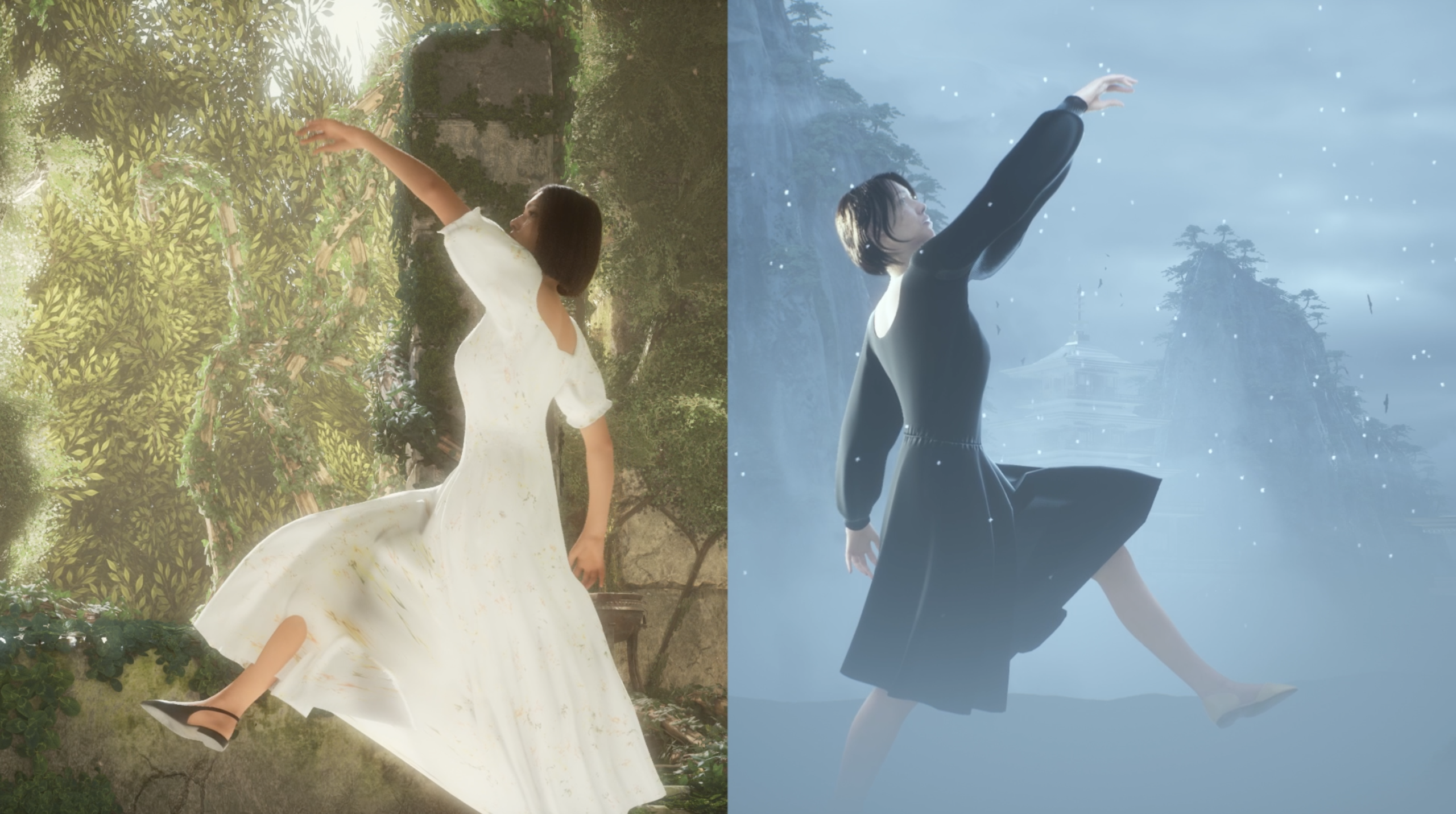
In Bloodline of Echoes, Haibo Jia uses text and digitally generated moving image not only to convey language as “symbolic power” (in Bourdieu’s terms), but also to advance the argument that linguistic capital, within globalisation, relegates the self to the periphery of its own native society and culture. The market value of “legitimate speech” for Globish individuals — those whose goal is to live in the interstices of cosmopolitanism, or to navigate the international professional playground with fluidity — comes at the expense of stripping one’s native language of its affective charge, and of relinquishing the heritage, ethics, collective memory and experience that inhabit the vernacular and the mother tongue.

The historical and political layers of this work are entwined in a complex symbology, associated with modern Chinese visual culture, family values and intergenerational dynamics. The prelude of Bloodline of Echoes is a giant burning sun, which stands for both an ideological centre and a token of the motherland, to which a young and an older woman kneel in ritual prostration as a metaphor for kinship and bodily inheritance. Yet the ancestral worship that connects the two women overlaps with explicit generational divergence and encoded hierarchy; although the mother and daughter perform in unison for the entirety of this video-work, what they say stems from diametrically opposed worldviews.
As Bloodline of Echoes unfolds, Jia has the two women dance and gravitate against differing compositional backdrops. On the one hand, this lets us focus on their individual narrations and their fundamental differences. On the other hand, as both bodies replicate the same movements, it also becomes apparent that an individual will ultimately always remember what may have been forgotten about a native language, or re-learn a native concept, tradition, or practice that once needed no translation.

This Yin/Yang duality is dramatised by the colour of their dresses. However, Jia also deploys the notion of ambiguity to lay bare the cultural negotiations experienced by individuals in the context of globalisation, and the friction of identity such negotiations generate “at home” among family members and compatriots. In fact, the daughter wears white, the colour of mourning in Chinese tradition, as if she recognised what she had to renounce in order to abide by the Westernised global linguistic market. Whereas the mother wears black, which in Chinese cosmological schema corresponds to winter — exacerbated by the dark and snowy landscape to which she belongs in this digitally constructed environment — and associates her with the ancestral memory and deep past her daughter is compelled to obliterate through migration, education, cross-cultural adaptation, and the deconstruction of her native language.

Two fundamental questions outlive Jia’s work, and concern the impact of globalisation on both language and identity as elements endlessly transformed across history and generations: Is globalisation reshaping identity in the same way it reshaped language? And will it harden languages other than English — the current lingua franca — into codes of their own?