

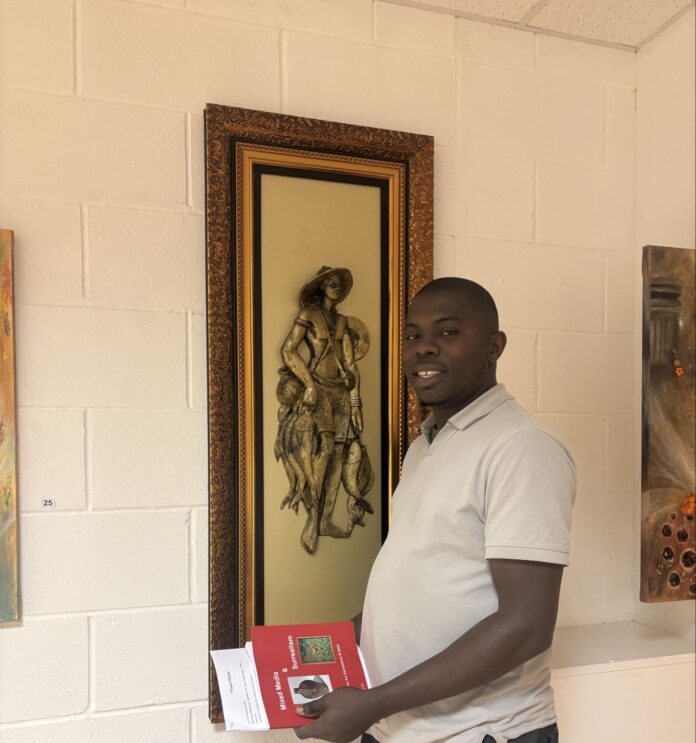
When you think of relief sculpture, you may envision the Parthenon in Athens, or neoclassical buildings in London or Washington, D.C. However, Temitope Fagade takes this centuries-old technique and uses it to create contemporary works that reflect his identity, culture and heritage.
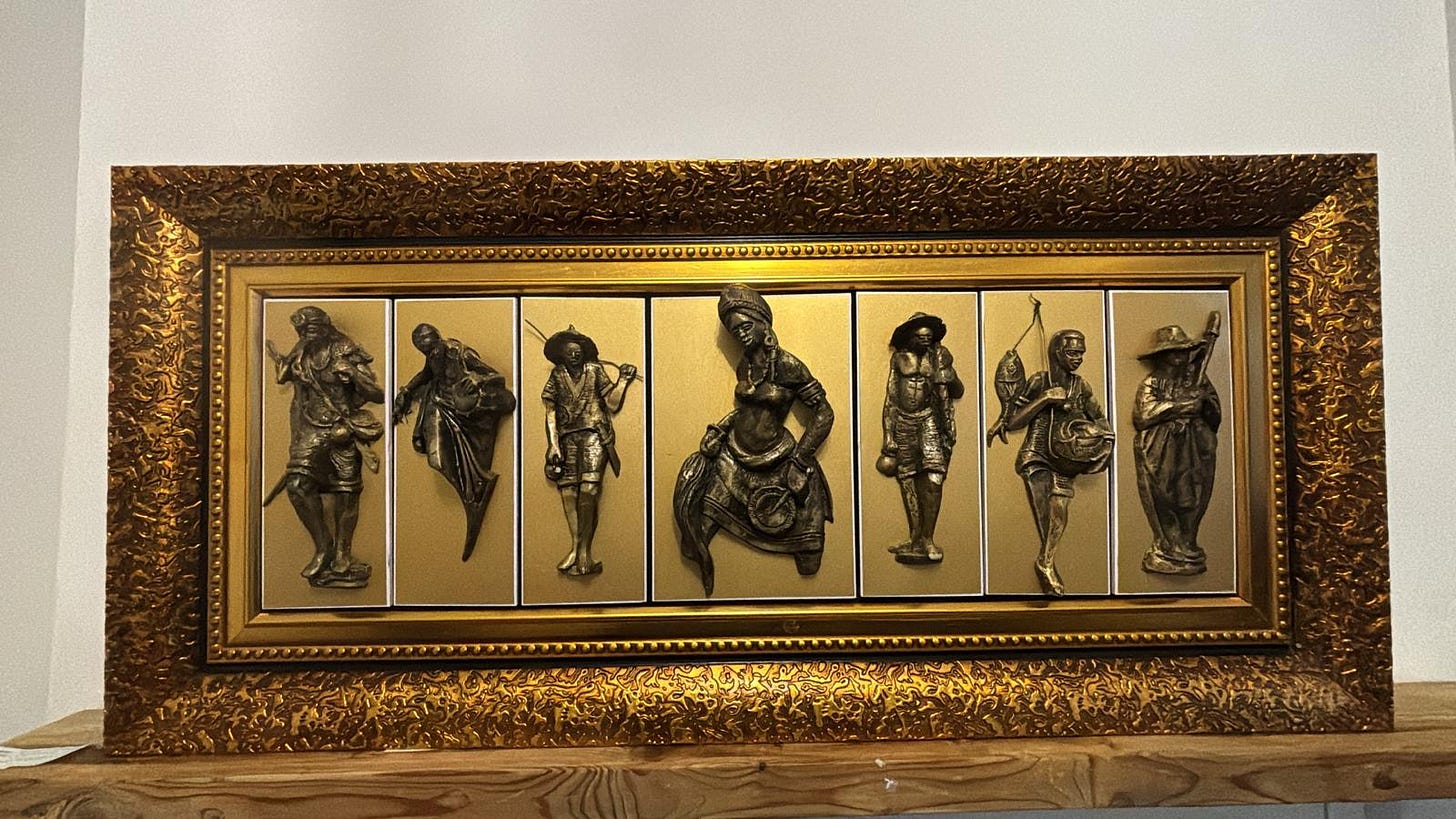
In his cast metal relief, Work and Pride, we see seven figures, including a hunter and a fisherman, rather than deities or famous heroes. It takes the ordinary work that keeps societies functioning and elevates it into the medium of relief sculpture, asking us to question who gets to be celebrated. Right at the centre, larger than the other figures, he places the mother, the greatest of all labours, in raising a child who has the potential to change the world around them and influence the lives of many others.
While the characters’ labour and dress reflect their, and the artists’, Yoruba heritage, they also offer an alternative perspective than you would find in London, where statues mainly represent and venerate monarchs, aristocracy and military commanders. It feels more in line with the Soviet tradition, in which statues were dedicated to workers, including the famous Worker and Kolkhoz Woman statue featuring a giant worker and a farm woman.
In contemporary art, I see a similar theme in the work of British sculptor Thomas J. Price, who creates oversized statues that are composites of multiple black men and women. He creates these statues in recognition of the underrepresentation of black men and women in art, and he wants to place these sculptures as a means of representing all the black men and women in the UK, the US, and the many other countries where they have been shown. Representing the unrepresented feels like the same theme Fagade explores in his work.
What makes his work unique is the use of metal relief, a painstaking process seldom seen in contemporary art. One of the few art-historical pieces I can compare it to is the reliefs on the gilded-bronze doors of the Florence baptistery by Lorenzo Ghiberti, works so magnificent that Michelangelo referred to them as the Gates of Paradise, and the unofficial name has stuck. I’m also reminded of the reliefs on the doors of 9 Millbank, London, modelled on those in Florence and depicting scenes of scientific advancement.
Unlike these historical examples, Fagade is not capturing such lofty moments, but rather the more down-to-earth activities of everyday people that are just as important yet are often overlooked in fine art.
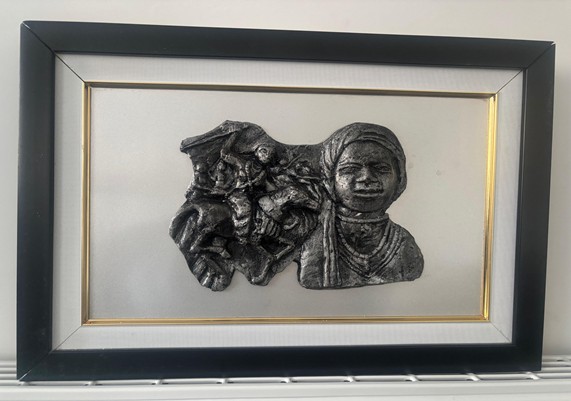
He does make reference to historical greats in his metal relief of Queen Amina, also known as Amina of Zazzau. She was a legendary 16th-century warrior queen who ruled the city-state of Zazzau in present-day northern Nigeria. However, unlike the historical reliefs we’ve mentioned, this work references a history that Western art, both historical and contemporary, does not discuss.
By merging Yoruba visual culture with the monumental nature of this medium, Temitope Fagade is contributing to the development of contemporary African relief sculpture. His work highlights his indigenous artistic heritage and also brings it to new audiences, matching what contemporary viewers are looking for in art.
Temitope Fagade, working in metal relief, is a welcome return to a medium largely consigned to art history and rarely seen in contemporary art. He is also using it to spotlight a history and culture that is not visible in the UK art scene. These two, combined, ensure he has a unique voice that makes his work stand out from that of other contemporary artists.
More information on Temitope Fagade may be found on his website.
All images are copyrighted by the artist.

