

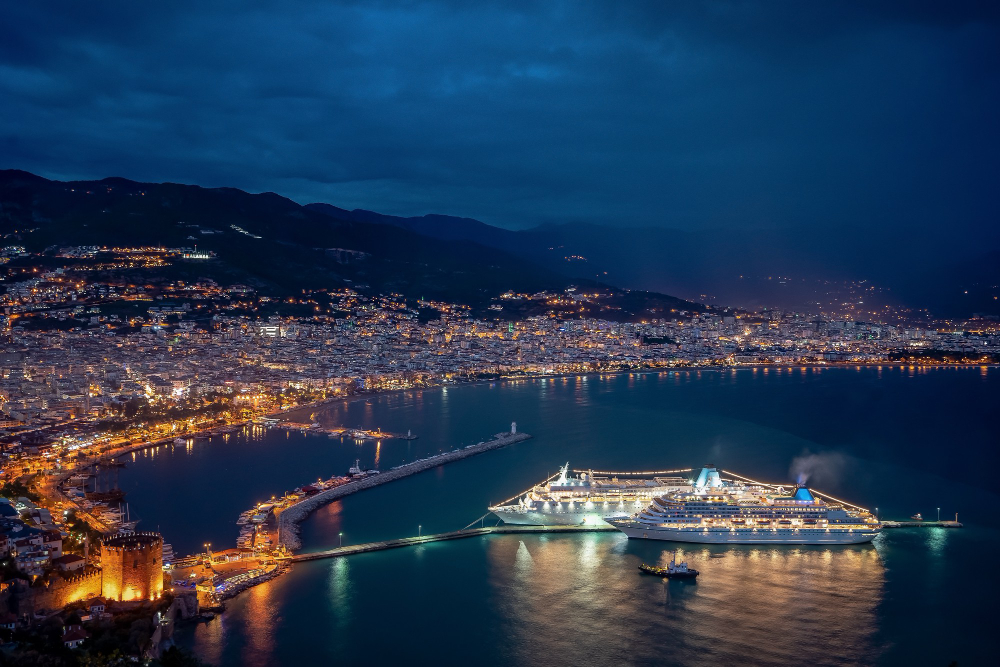
There’s something quietly cinematic about arriving somewhere by sea. Before the first street, gallery or café comes into view, there’s the gradual approach, a coastline emerging through the light, a harbour slowly taking shape, the feeling that a place is being revealed rather than simply reached. In an age when most of us measure travel by speed and convenience, a sea journey offers something genuinely different. For anyone thinking about future trips, browsing 2027 cruise holidays gives a real sense of how varied these slower, destination-led journeys have become, from coastal cities to island-hopping routes and longer sailings shaped around scenery, culture and time.
More than just getting somewhere
The appeal of travelling by sea isn’t purely practical. It’s emotional, visual, deeply cultural. The journey itself becomes part of the experience rather than a dead zone between one place and the next. A flight compresses distance into hours, often leaving you with the odd sensation of arriving somewhere before you’ve mentally left the place you started. A sea route, by contrast, lets that distance unfold. The weather shifts. The light changes. The horizon becomes part of the memory of the trip itself.
This slower pace matters more now than it perhaps used to. For a long time, travel was framed almost entirely around doing as much as possible, more cities, more attractions, more sights to tick off. That kind of travel can still be genuinely exciting, of course, but it can equally leave you more exhausted than when you left. Slow travel is a different proposition. It encourages you to actually pay attention, to spend longer with a place, to value the in-between moments just as much as the headline sights.
Why the sea changes everything
Sea travel fits naturally into this shift, largely because it resists total immediacy. Even on larger, well-equipped ships, the surrounding environment creates a different sense of time. There are mornings when the view is simply open water and sky. Evenings when the approach to a port becomes the evening’s main event. Stretches of coastline that look entirely different from the sea than they ever would from a road or train window. The result is travel that often feels more atmospheric than efficient, and for many people, that’s precisely the point.
There’s also a long cultural history tied up in all of this. Literature, film, painting and photography have returned to the sea again and again as a place of transition, somewhere that can represent escape, reinvention, longing or discovery. A harbour suggests departure as much as arrival. A ship can feel like a temporary world of its own, separate from ordinary life yet always moving towards something new. These ideas still shape the way we imagine sea journeys, even when the reality is far more comfortable than the voyages of the past.
It’s not one-size-fits-all
Modern cruise travel has taken some of that older symbolism and placed it within a contemporary holiday format. This doesn’t mean every journey is slow or particularly reflective. Some itineraries are genuinely busy, with new ports almost every day and a packed programme. Others are far calmer, longer stretches at sea, scenic sailing, overnight stays in port. That variety is important, because travelling by sea no longer points to a single kind of experience. It might mean a short coastal journey, a culture-led route through historic cities, a voyage built around islands and food, or simply a trip through northern landscapes where the scenery is the whole point.
Sea routes also do something interesting to your relationship with geography. When you fly, countries can feel strangely disconnected from one another, reduced to departure boards and baggage carousels. By sea, the spaces between places become more tangible. Islands feel like islands. Port cities reveal something about why they grew where they did. Coastlines become part of the story. For culturally curious travellers, that perspective can be particularly rewarding. Venice, Lisbon, Istanbul, Barcelona, Copenhagen, these aren’t just cities that happen to be near the sea. Their histories, architecture, food and identities have been shaped by it. Arriving by water connects you, in a small but real way, to the routes that once carried merchants, artists and ideas across the world.
Travel thoughtfully, not just slowly
That said, sea travel shouldn’t be romanticised without question. Like all forms of tourism, it carries environmental and social implications. Popular ports can get very crowded, and short port visits can put real pressure on local communities. A slower pace of travel ought to involve more considered choices, not just a gentler timetable. That might mean choosing itineraries with longer stays in port, exploring independently where you can, or simply spending your money in local businesses rather than on-board packages. Being a thoughtful traveller matters regardless of how you’re moving.
The best slow routes aren’t necessarily the longest or most remote, either. They’re the ones that leave space for observation. A short journey can still feel genuinely meaningful if there’s time to walk through an unfamiliar neighbourhood, sit in a square, or watch daily life away from the tourist trail. A longer journey can feel rushed if every stop is treated as a checklist item. Slow travel is less about the number of days and more about what you actually do with them.
The value of a natural pause
This is where sea travel offers something quietly useful. It builds in natural pauses. The movement between destinations isn’t hidden away, it’s part of the itinerary. You have time to look outward, to think, to reflect on where you’ve been before you arrive somewhere new. In a culture that tends to encourage constant activity, that sense of pause can feel unexpectedly valuable.
The appeal of slow routes isn’t going anywhere. People are increasingly looking not just for places to visit, but for ways of travelling that feel more connected, more memorable, more considered. Travelling by sea won’t suit everyone, and it doesn’t answer every concern. But it does offer a genuinely different way of thinking about movement, a reminder that arrival doesn’t have to be instant, that distance can be experienced rather than simply skipped over, and that the journey itself can still carry real weight.

