


Using AI tools in academic fields is often deemed controversial. But there’s no denying it’s been a go-to for many. 86% of students were found using AI in their studies during the recent survey of the Digital Education Council. Another report suggests that 51% or researchers use AI. However, the full acceptance of AI tools for academic writing is still up for debate. Because many say that over-reliance on them can lead to academic dishonesty and block a person’s personal growth and skill development.
Academic writing is more than putting words on a page. Reviewing literature. Verifying evidence. Organizing arguments. Polishing language. All entails countless hours before a final draft is reached. And this alone highlights what AI tools for academic writing are for. They’re assistive tools. Not replacements.
In this guide, you’ll find the best AI tools. Options that can help discover credible sources, improve academic language, summarize complex studies, and streamline the writing process. All without replacing critical thinking.
Top Five Best AI Tools for Academic Writing
PaperPal
PaperPal is purpose-built for academic and scientific writing. As an all-around tool, academics can use it to research, write, and edit more efficiently. It features a suite of AI tools. Like the essay writer, grammar checker, plagiarism checker, paraphrazer, summarizer, proofreader, translator, citation generator, and lots more. Each one contributes to faster writing without sacrificing accuracy or academic voice. PaperPal’s models are also trained on published research articles. So users can expect it to understand the conventions in scholarly publishing.
Key Features:
- Supports translation in over 50 languages
- Reference discovery from more than 250 million research articles
- Over 30 readiness checks for confident manuscript submission
Pricing:
- Free Package
- Prime Package – $11.58 per month
Real Use Case:
A PhD student preparing a manuscript for submission can use PaperPal. It can instantly improve clarity, grammar, and structure. This allows for a more polished writing before peer review. It also helps meet the professional standards expected by academic publishers.
ChatGPT
ChatGPT works as a highly advanced chatbot. And that positions it as one of the multipurpose AI tools for academic writing. It helps users brainstorm topics, organize ideas, explain difficult concepts, and make structured outlines. Not just serve as a replacement for original research. Since the work is done through conversations, it can also reduce writers’ cognitive load and heighten control during the writing process.
Key Features:
- Creating outlines for essays and dissertations
- Draft refinement before final writing
- Conversational approach for researching and understanding complex concepts
Pricing:
- Free Plan
- Go Package – $8 per month
- Plus Package – $20 per month
- Pro Package – $100 per month
Real Use Case:
ChatGPT can help students try to polish a position paper before submission. As a chatbot, users can ask it to play “devil’s advocate” for testing arguments. This makes it easier to find weak spots in the logic.
Perplexity AI
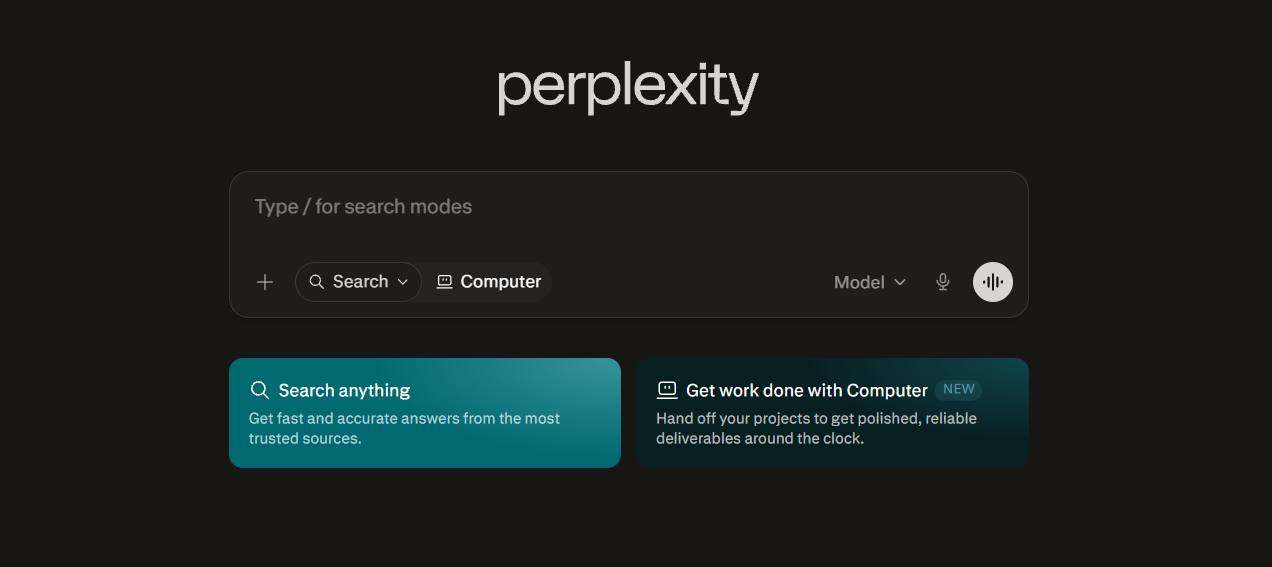
In academic writing, Perplexity AI is an ideal research assistant. It merges conversational search with source-backed answers. As an AI-powered answer engine, this option provides academics with aggregated information and reliable references. As such, Perplexity AI cuts the need for time-consuming webpage search. It speeds up early-stage literature review and material summarization.
Key Features:
- Building an outline or research plan for an academic paper
- Cross-checking information across multiple references
- Updated developments in academic topics
Pricing:
- Free Package
- Pro Package – $20 per month
Real Use Case:
Students trying to earn a master’s degree can benefit from Perplexity AI when meeting deadlines for a thesis. This tool helps locate recent studies and compare study findings. It allows master’s students to complete a literature review with efficiency.
Grammarly
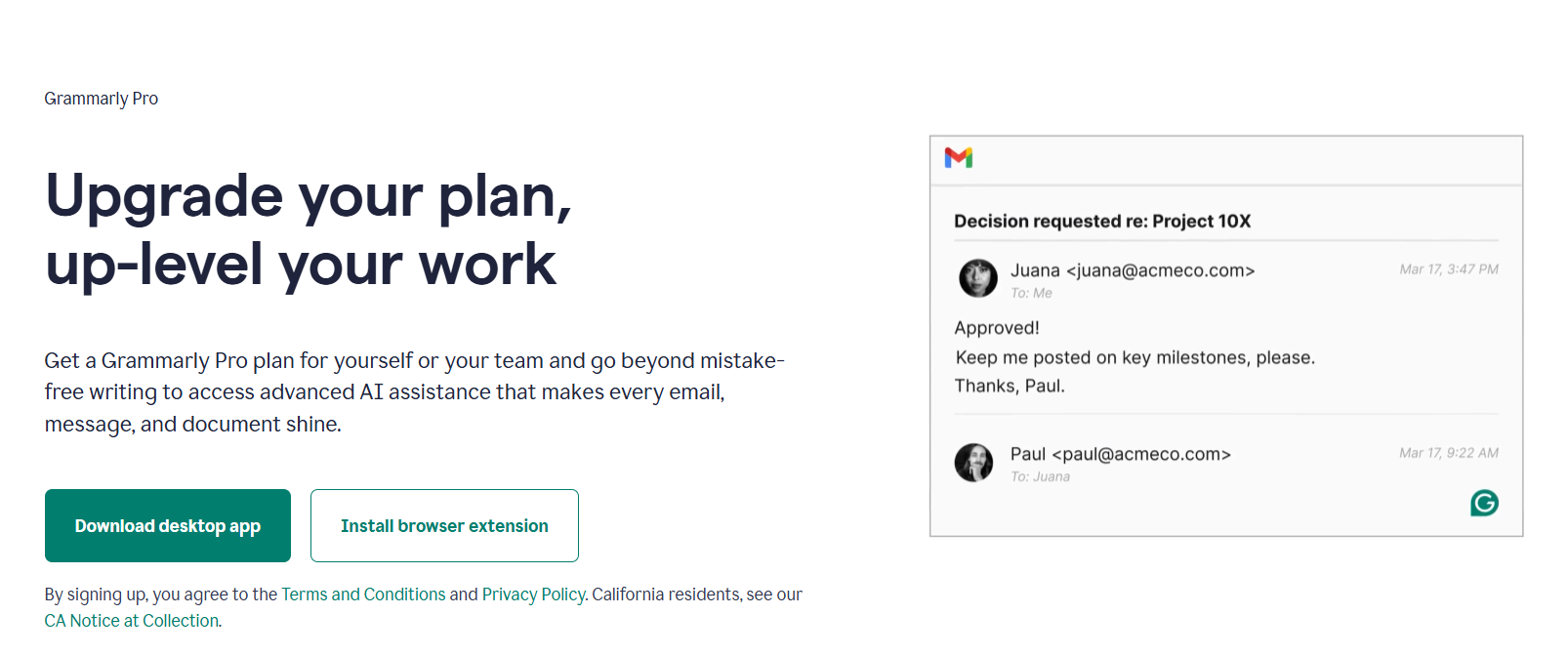
Grammarly started out as a basic grammar and spelling checker. But that was over 10 years ago. Now, it’s one of the most popular AI tools for academic writing. A reliable AI writing assistant. More than just improving clarity, grammar, and readability, it now offers a smart writing assistant, a plagiarism checker, an AI detector, a humanizer, a paraphraser, and more. All in all, Grammarly delivers advanced writing support, combined with AI agents, for brainstorming, stronger arguments, and predicting reader response.
Key Features:
- Real-time support in over 25 languages
- Precise grammar, punctuation, and spelling checker
- Matching writing tone for different audiences
Pricing:
- Free Package
- Plus Package – $30 per month
- Enterprise Package – Custom Pricing
Real Use Case:
Grammarly can help overcome a proofreader’s illusion. After exhausting the mind writing for hours, a student can use this tool to correct errors, adjust tone, and improve overall writing clarity.
Consensus
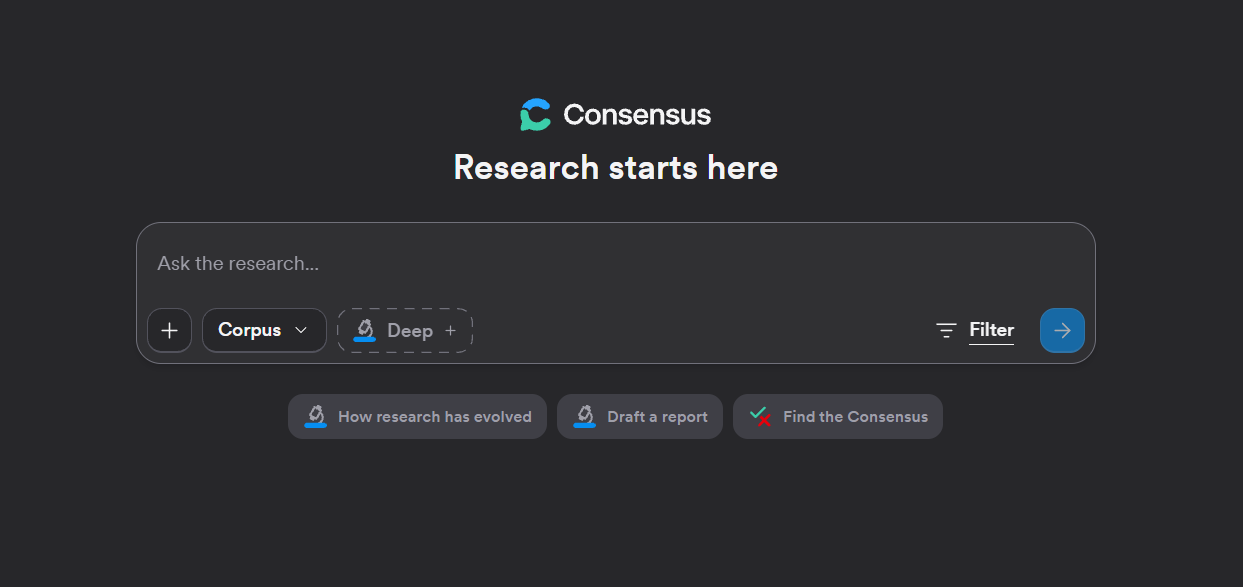
Like Perplexity AI, Consensus is an AI-powered academic search engine. It’s made specifically around peer-reviewed research papers. This makes it particularly valuable for evidence-based writing. In practice, it helps academics find factual resources. None of those fabricated ones or AI hallucinations. The standout capability is summarizing multiple studies with links to the actual references. It works as a reliable companion when supporting arguments with credible sources.
Key Features:
- Synthesizing information from different resources
- Research answers through published studies
- Fact-based academic writing
Pricing:
- Free Package
- Pro Package – $20 per month
- Deep Package – $65 per month
Real Use Case:
College students in medical courses can produce evidence-based essays with Consensus. Like a paper investigating the effectiveness of a medical intervention. By citing peer-reviewed findings, they can support their arguments and avoid unsupported claims.
Choosing the Smartest AI Tools for Academic Writing in 2026
The market is full of AI writing tools. But many would notice that most of the options are tailored for general works or marketing content. They fall short in academic prose and other scholarly writing standards.
But with these five AI tools for academic writing, you’re assured to access assistance in brainstorming, researching, structuring, refining, and rewriting. From finding credible evidence to polishing manuscripts, PaperPal, ChatGPT, Perplexity AI, Grammarly, and Consensus optimize the entire process.
At this point, it all boils down to responsible use. Submitting AI-generated outputs as the final work ruins their purpose. Again, they’re meant to assist. These tools help academics spend less time on repetitive tasks.

