

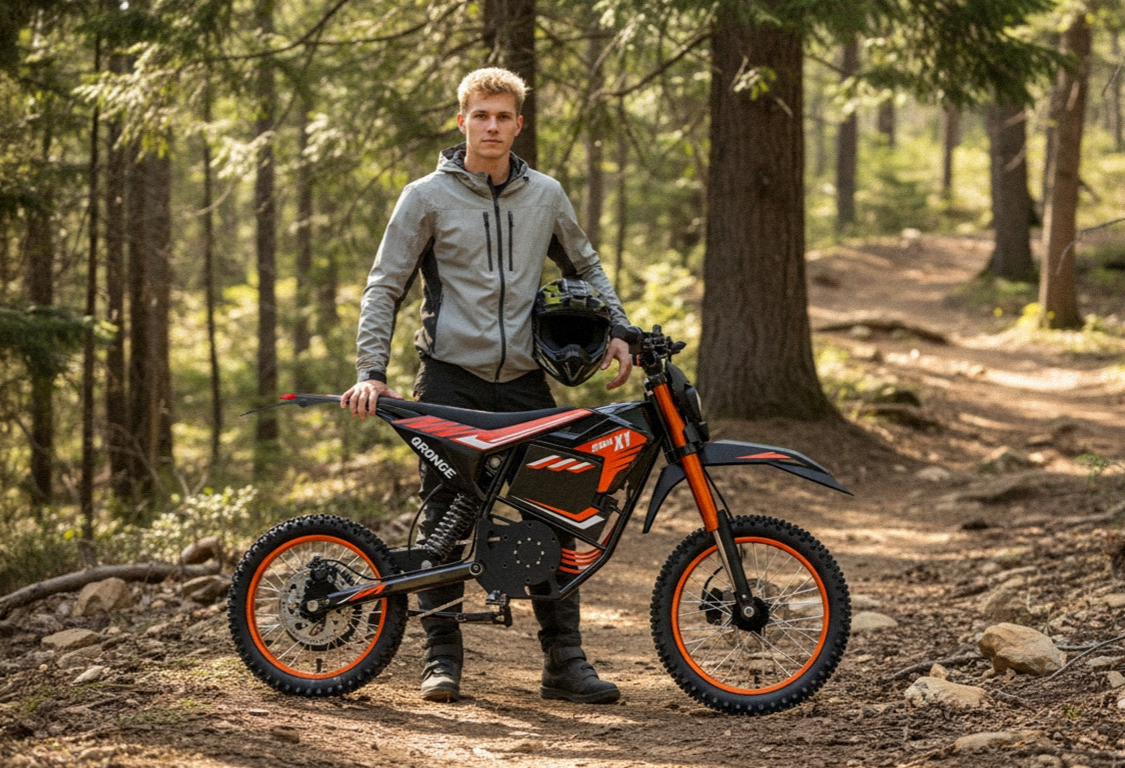
Outdoor culture is changing. For many people, spending time outside no longer has to mean a long expedition, a difficult hike, or a fully planned adventure. More people are looking for activities that sit somewhere between relaxation and participation—something active enough to feel meaningful, but not so intense that it turns the weekend into a challenge.
Electric off-road riding fits into this shift. It does not need to be framed around noise, speed, or extreme performance. At its best, it offers a quieter, more controlled, and more modern way to explore camp roads, private land, farm paths, and light trail environments.
For many weekend riders, an electric dirt bike is interesting not only because of its power but because it changes how people interact with outdoor spaces. Instead of watching the landscape pass from inside a vehicle, riders can feel the ground, adjust their pace, and become more physically involved in the route.
Outdoor Experiences Are Becoming More Participatory
A lot of travel and outdoor recreation focuses heavily on the destination. People drive to a viewpoint, take a photo, and move on. Hiking offers a deeper connection, but it is not always practical for every person, route, or schedule.
Electric off-road riding creates another rhythm. It covers more ground than walking, but it still feels more connected to the environment than driving. Riders can notice changes in the surface, feel the wind, slow down near a bend, or stop when the landscape feels worth taking in.
This is part of a broader cultural shift. People do not only want to arrive somewhere. They want the journey itself to feel real.
Quiet Riding Changes The Mood
Many people assume the main advantage of electric off-road vehicles is that they are quieter. That is true, but the impact is bigger than lower noise.
In outdoor spaces, quietness changes the feeling of the ride. The sound of wind, gravel, leaves, and open land becomes easier to notice. Around campgrounds, rural areas, and private properties, a quieter ride can also feel less disruptive when used responsibly.
This does not mean electric off-road bikes belong everywhere. Riders still need to respect land rules, trail access, wildlife areas, and local regulations. But in the right places, a quieter machine can make outdoor riding feel less intrusive and more connected to the setting.
Know Your Riding Style Before You Buy
Many buyers begin by comparing power, speed, and range. Those details matter, but they should not be the starting point.
The first question should be: how do you actually plan to ride?
A person riding near a campground, cabin, ranch, or private trail will have different needs from someone exploring longer and rougher off-road routes. For light outdoor use, handling, stability, and confidence may matter more than maximum output. For more advanced riding, suspension, brakes, tires, and range planning become more important.
Not every electric off-road bike should be judged by the same standard. The right model depends on the rider, the terrain, and the purpose of the ride.
Compact Bikes Make Light Adventure More Accessible
Compact electric off-road bikes are becoming more popular because they can make the experience feel less intimidating. For newer riders, being able to start smoothly, turn at low speed, and stop with control is more valuable than having the most powerful machine available.
For example, the X1 Spark M is a mini electric dirt bike with a 4500W peak mid-drive motor, a 60V 28.8Ah battery, 283 Nm of torque, and 14″/12″ wheels, making it a relevant option for riders who want compact handling and light off-road capability.
A smaller model is not about making the ride less serious. It is about helping more riders build confidence in appropriate outdoor settings before moving into more demanding terrain.
Technology Should Support Confidence
The technology inside an electric off-road bike should not be treated only as a list of numbers. The motor, battery, ride modes, suspension, and brakes should all work together to create a more controlled experience.
Ride modes are a good example. A lower-output setting can help beginners learn. A middle setting may suit relaxed trail or camp road riding. A higher-output setting is better left to experienced riders in suitable environments. Smart riding is not about using maximum power all the time. It is about choosing the right response for the terrain and the rider’s ability.
Suspension and braking are just as important. Outdoor surfaces are rarely perfect. Gravel, roots, grass, soft dirt, and small slopes all affect stability. Good suspension can reduce harshness, while reliable brakes help riders manage speed before turns, descents, and obstacles.
Electric Motorcycle Technology Needs Clear Boundaries
As battery and motor systems improve, more electric motorcycle products are being designed for outdoor recreation and light off-road use. But buyers should understand that these vehicles are not the same as standard commuter e-bikes.
Rules can vary by state, city, land manager, park system, campground, and trail network. Before riding, users should confirm where the vehicle is allowed and whether additional safety or access rules apply.
For most recreational riders, the safest way to understand this category is as outdoor equipment for specific environments, not everyday transportation that can be used anywhere.
Safety Gear Is Part Of The Experience
Outdoor riding should never be separated from safety gear. A helmet, gloves, knee protection, elbow protection, eye protection, and proper riding shoes should be considered basic equipment, even for short rides.
Before riding, check the battery level, tire pressure, brakes, chain, bolts, throttle response, and suspension condition. If it is your first time on the bike, practice in a wide, flat, open area away from people and vehicles before entering a trail or camp road.
Safety does not make the ride less enjoyable. It makes the rider more relaxed. A good ride is one where you understand the bike, respect the terrain, and know when to slow down.
Outdoor Riding As A Lifestyle Choice
From a cultural perspective, the rise of electric off-road riding is not only about vehicle technology. It reflects a wider desire for more flexible outdoor experiences.
Many people want to step away from screens and city routines without committing to extreme sports. They want movement, fresh air, and a stronger sense of place. Electric off-road riding can meet that middle ground. It offers mobility, physical involvement, and a bit of technical curiosity without requiring every outing to become a major expedition.
In the right setting, it can become part of camping weekends, cabin stays, ranch visits, and light trail exploration. It does not replace hiking, cycling, or road trips. It simply adds another way to experience the outdoors.

